ANALYSIS | João Almeida's win over Vingegaard on the Angliru continues a crazy Vuelta a Espana stat
Cycling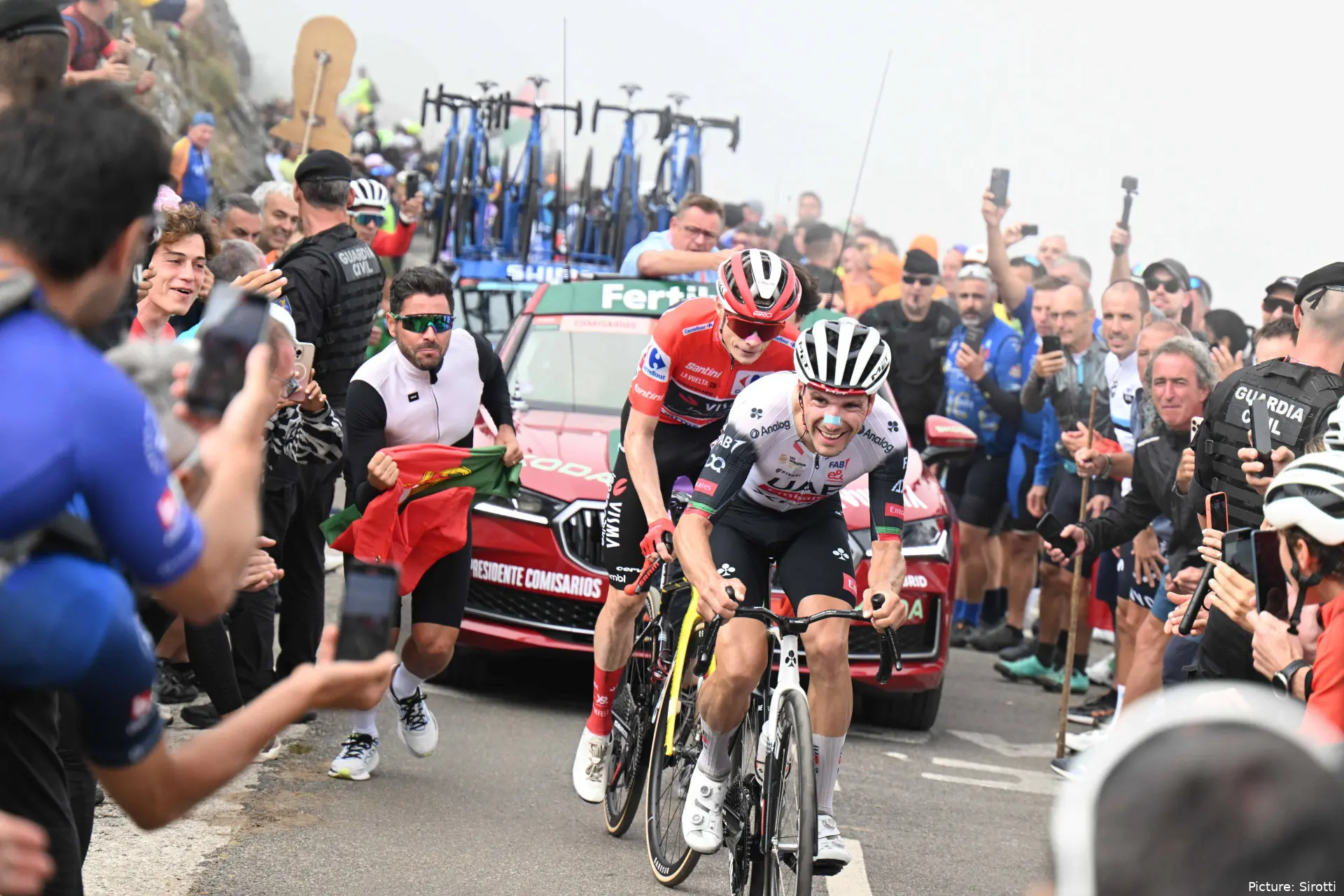
The Alto de l’Angliru once again lived up to its fearsome
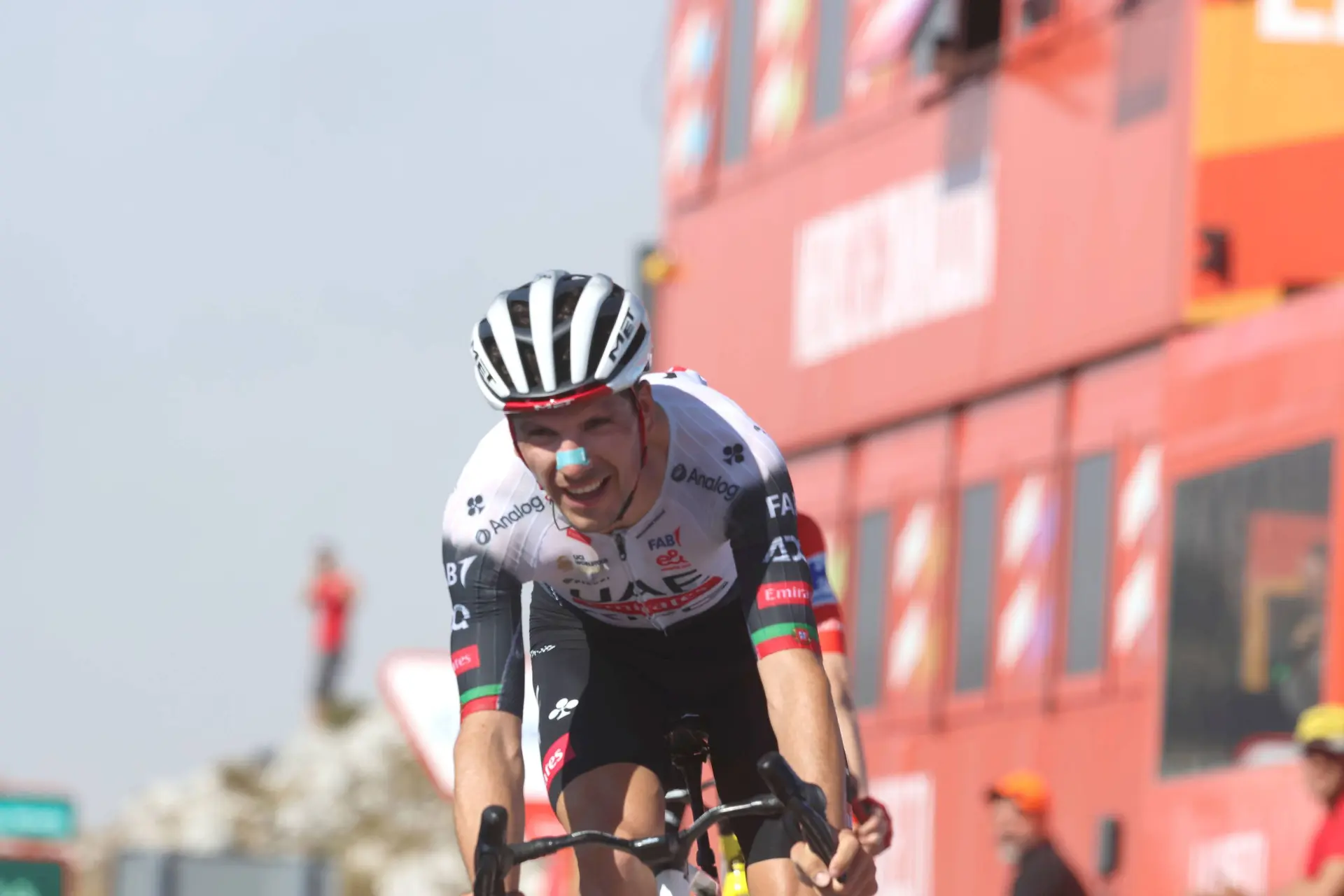
reputation on Friday’s Vuelta a Espana stage 13. Joao Almeida stunned Jonas
Vingegaard to take victory on the iconic Asturian climb, and in doing so, the
Portuguese rider extended one of the strangest statistical streaks in modern
cycling. According to Cycling Statistics, every single time the Vuelta a España
has tackled the Angliru, the race leader on the day has failed to win. Thanks
to Joao Almeida that rule held firm once again in 2025.
This was the biggest win of Almeida’s career to date, there
is no doubt about that. For a long time he has been seen as one of the world’s
best climbers, and a potential GC podium threat. Today, he elevated himself
into the elite category. Jonas Vingegaard has a problem on his hands, and
Almeida is keeping the fight for red alive.
Almeida was not only celebrating his own win, but reflecting
on how his rival had chosen to ride. “I was waiting for an attack anytime,”
Almeida admitted after crossing the line first. “I was surprised with Jonas’
conservativism in the showdown.” Those words summed up the surprise felt by
many in the peloton and by fans who had expected the Dane to go on the
offensive on one of the toughest climbs in professional cycling. But maybe,
Vingegaard simply couldn’t attack.
The Angliru is cycling’s great equalizer, a brutal wall of
asphalt that strips away any illusion of comfort for even the strongest
climbers. Its maximum gradients tilt toward 25%, while the final six kilometers
average over 13%. Over two decades of history at the Vuelta, the climb has
consistently defied those who carry the leader’s jersey into its slopes.
Vingegaard became the latest to learn the lesson. Despite arriving in red after
2 victories in the race so far, he could not match Almeida’s finishing kick and
had to settle for second.
What do the numbers say?
“Win? You’ll have to beat Jonas,” Joao Almeida had said a
day earlier, acknowledging the weight of expectation on Vingegaard’s shoulders.
“That will be a tough task. Hopefully, I have good legs.” He backed up that
statement on the hardest road of them all, and defeated the two time Tour de
France champion. His victory is now written into the Angliru’s lore, alongside
a roll call of riders who have shown that being the race leader is more curse
than blessing on its slopes.
The numbers are striking. In 1999, Abraham Olano wore red
but finished only fifth on the Angliru. The following year, Robert Heras placed
third, unable to seal the climb despite his reputation as one of the best in
the mountains. Oscar Sevilla’s 11th place in 2002 continued the trend, while
Egoi Martínez faded to 23rd in 2008. Even all-time greats have been humbled
here: Chris Froome could manage only third in 2017, Chris Horner came second in
2013, Bradley Wiggins was fifth in 2011, and Primoz Roglic ended up fifth in
2020. When Sepp Kuss wore red in 2023, he crossed the line third. Now in 2025,
Jonas Vingegaard has finished second.
Each edition reinforces the same conclusion: no matter how
dominant, the man in red has never conquered the Angliru itself. The pattern
demonstrates more than coincidence, it shows just how punishing and
unpredictable the climb is.
The tactical dynamic highlighted another truth of the
Angliru: timing matters as much as raw power. Many leaders have approached the
climb wary of overextending themselves, especially with days still to come in
the Vuelta. But that caution has cost them the chance to etch their names into
the Angliru’s history. Almeida’s victory shows that boldness, not conservatism,
is often rewarded. But will he pay for that effort in the coming days?

Vingegaard could not take a third stage win of the 2025 Vuelta
For Vingegaard, finishing second still protected his general
classification ambitions. He remains in control of the red jersey, but his fans
left the mountain with questions about his choices. Why did he not attack?
Could he have changed the outcome with a more aggressive approach? In the
moment, Almeida proved that waiting for the inevitable attack can be the right
move if the attack never arrives.
Riders who have won here, Roberto Heras in 2002, Alberto
Contador in 2008, Primoz Roglic in 2023, are among the true legends of our
sport, and Almeida has written his name amonstg the greats in Angliru. His
victory will be remembered not only because it came against Vingegaard, but
because it extended the stat that defines the climb’s role in Vuelta history.
But really, it was the day the Portuguese rider announced himself as elite.
Do you think Vingegaard chose not to attack, or did Almeida’s
pace simply exhaust him? And can Almeida take the red jersey from Vingegaard in
the coming days? Let us know in the comments below.
Read also

Fin MajorCycling Journalist
Fin Major is a UK-based writer at CyclingUpToDate and has been part of the team since 2024. He is the site’s main writer for FAQs and evergreen explainers and has written around 2,000 pieces for the platform. Alongside this work, he focuses on in-depth analysis and covers the biggest races on the calendar, including the Tour de France, the Giro d’Italia, and La Vuelta a España, providing clear context around performance trends, tactics, and key storylines.
In his reporting, Fin uses reputable data sources such as ProCyclingStats for results, statistics, and historical context. He places strong emphasis on careful sourcing, editorial accuracy, and updating articles promptly when new, verified information becomes available. Outside of writing, Fin is an active cyclist, which supports his practical understanding of the sport and its demands.
claps 3visitors 3
Just in
Popular news
Latest comments
- What a cheater Jay Vine is. Remco gained on everyone else pretty much evenly. But Vine? After he was caught, the gap grew at a suspiciously slow rate. Typical UAE
 Rafionain-Glas18-10-2026
 - Strade? Never saw him as a gravel rider that can handle it.mij18-10-2026
- It surprises me that anyone still believes any professional (or amateur!) sport is clean--much less wants it to be. The best you can hope for is a reasonably level playing field that doesn't expose young, ambitious athletes to health risks they don't understand. In that regard, World Tour cycling appears to do a better job than almost any sport with independent, random testing. There are certainly fewer mysterious midnight "heart attacks" these days. If you want to see what an uneven playing field looks like, show up to masters nationals. It is also certainly the case that no major pharmaceutical corporation has developed a multi-billion dollar miracle drug just to give it only to one or two anointed ectomorphs in a minor non-revenue sport. If you don't like that all sports run on PEDs these days and you can't be bothered to contribute as a tester, a federation official, or pharmaceutical representative, then just turn off the TV and play outside.
 MarkFour18-10-2026
 - Good grief, who proofreads this stuff? Errors abound.wrsty18-10-2026
- You can add weight to a bike and limit gears or make it single speed if you like. I doubt that would reduce crashes. It would just add another dymanique. All good and well, but It wont stop cars getting on to the course.Cyclingsbestfan18-10-2026
- Seixas is probably second best in the World on short climbs. But that hasn't translated as well to long climbsRafionain-Glas18-10-2026
- Idiotic fellaRafionain-Glas18-10-2026
- Nothing. Against Pogi nothingabstractengineer18-10-2026
- He didn't even try to sprint all outvappaxbipmv18-10-2026
- Campenaerts looked like a rolling pumpkin with that all orange leaders skinsuit !frieders318-10-2026
Loading
Write a comment