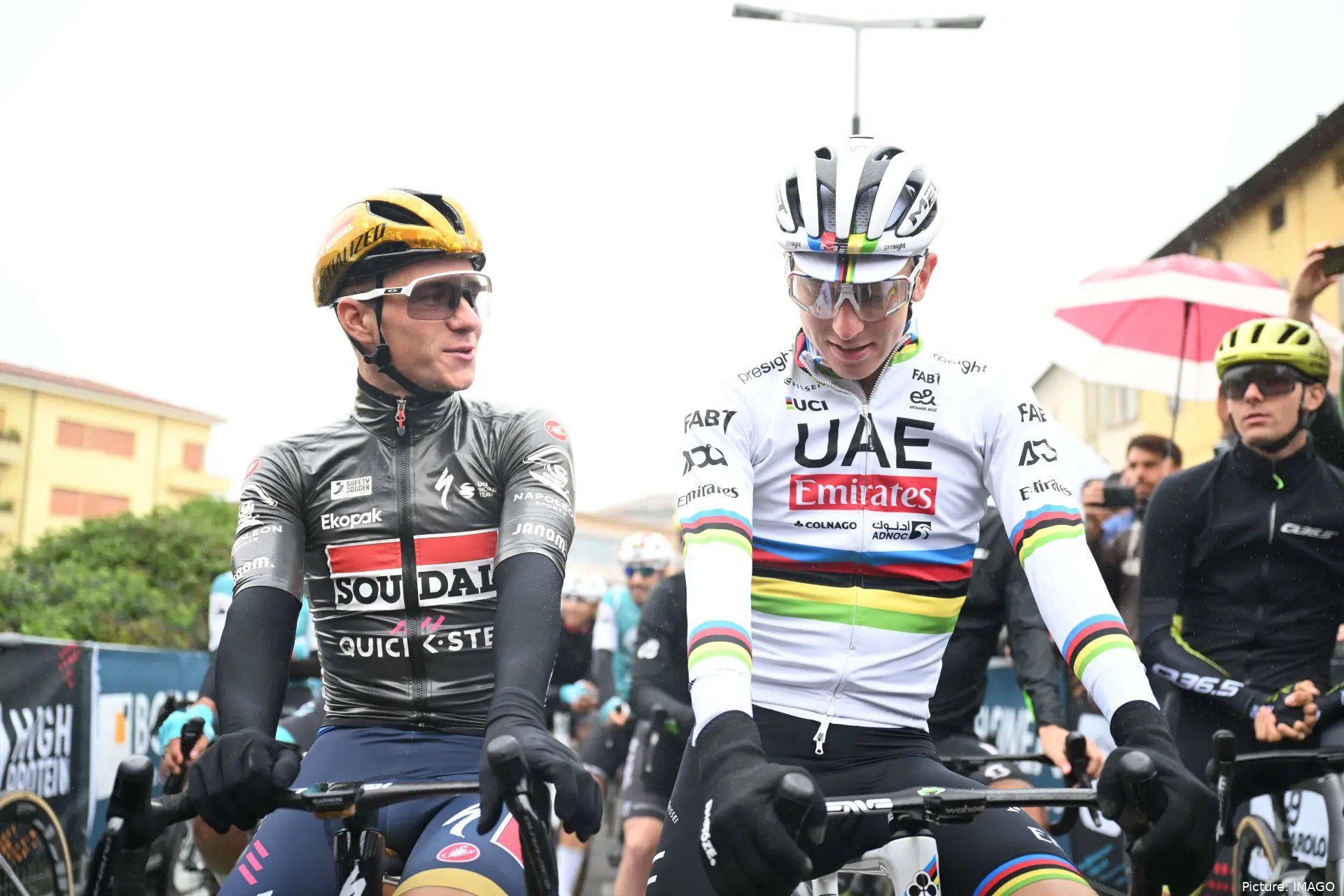
The men’s world championship road race in Kigali has been
sold for months as a climbers’ paradise, a race that will strip the peloton
down to its lightest and most efficient mountain specialists. In other words,
Tadej Pogacar, and perhaps Remco Evenepoel after his performance on Sunday in
the time trial. Organisers and pundits alike have compared it to some of the
hardest courses in history. With 5,478 metres of climbing packed into 267.5
kilometres, it is the most mountainous world championship route since
Sallanches in 1980. On that day Bernard Hinault won on home soil after 268
kilometres and 6,247 metres of climbing, a race that lasted over seven and a
half hours and left only 15 riders classified.
This comparison is not made lightly. Kigali’s circuit
features altitude, cobbles, and repetition on a scale rarely seen in the
sport’s biggest one-day race. It is no surprise then that bookmakers in the UK
list Tadej Pogacar as the overwhelming favourite. Sky Bet have him priced at ½,
with Remco Evenepoel the next in line at 3/1, Mexican talent Isaac Del Toro at
7/1, and Tom Pidcock further back at 14/1. Of the ten riders shortest in the
odds, every single one is considered a climber first and foremost.
Yet the question lingers: is this course truly one for pure
climbers, or can others survive the attrition and strike on Sunday?
The circuit

The course for the men's elite road race 2025
If we take a look at the course above, we can see that it
actually looks like a spring classic on the cobbles. No alpine climbs, no hour
long seemingly vertical efforts. Instead, lots of short, punchy climbers. So
why are we being led to believe that the puncheurs have no chance?
The Kigali circuit is 15.5 kilometres long and will be
tackled a punishing number of times. Its defining features are two climbs. The
first is the Côte de Kigali Golf, 800 metres at an average of 8%, and it crests
with six kilometres remaining on each lap. After a short descent the riders hit
the Côte de Kimihurura, 1.3 kilometres at 6.4% on cobblestones, finishing just
one kilometre from the line. From there, 300 metres of respite give way to a
final 700 metres of uphill drag to the finish at gradients above 5%.
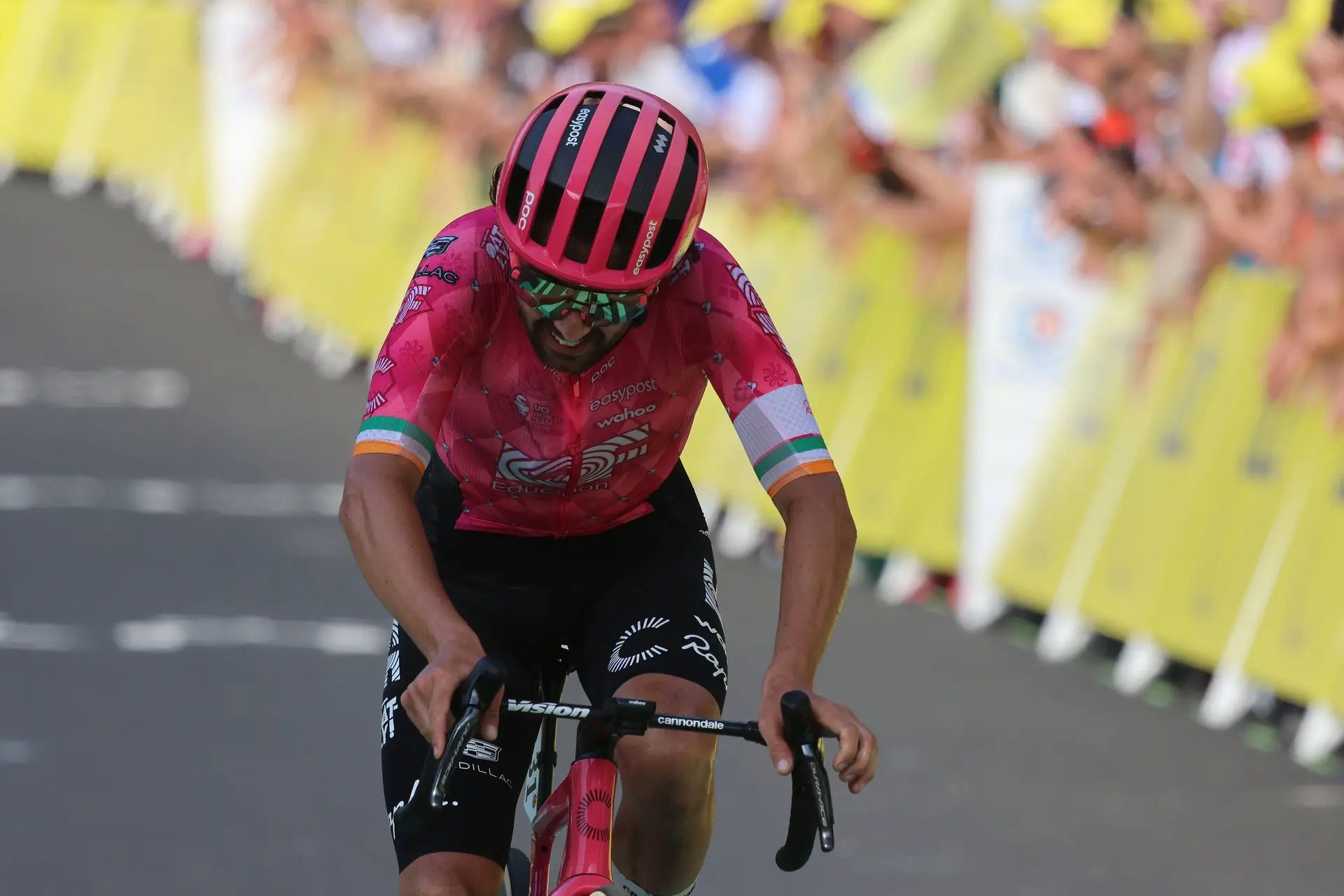
This closing sequence is explosive. Normally, a cobbled
climb like Kimihurura would have Mathieu van der Poel or Wout van Aert written
all over it. But neither of the two great Classics riders will start on Sunday.
Their absence shifts the spotlight firmly onto the grand tour specialists who
can carry their climbing ability deep into a six-hour race.
One of the reasons for this is the altitude, as the entire
course is run at around 1,500 metres above sea level. It is not Alpine or
Andean thin air, but it is enough to make every effort bite a little harder and
sap the recovery between climbs.
Comparisons with Zurich 2024
The contrast with last year’s championship in Zurich is
instructive. That race was longer, 274 kilometres, but had “only” 4,200 metres
of climbing. The decisive climb into Witikon was 1.9 kilometres at 6.2%, longer
than either of Kigali’s ascents. Pogacar made the difference not through
altitude or cobbles, but because he was simply unstoppable last year, launching
a 100-kilometre solo raid to take the rainbow jersey and complete his triple
crown.
Read also
Kigali’s climbs are shorter. None reach the length of
Witikon, let alone an Alpine pass. On paper, they seem more suited to puncheurs
than to diesel climbers. The gradients of 6–8% are stiff but not monstrous, the
length of one to two minutes at race pace rather than ten to fifteen. A rider
like Pidcock, who thrives on short, sharp efforts, or Evenepoel, who can
unleash a devastating acceleration on a punchy rise, would normally welcome
such a profile.
But the volume of climbing tells another story. Tackling
more than 5,400 metres of ascent, spread across lap after lap, transforms these
modest climbs into something far heavier. It is not their individual severity,
but their repetition, that will drain the peloton. The cumulative fatigue will
eventually break the legs of riders who rely on short bursts. By the final
laps, it is the pure climbers who will have more left to give.
And as we have seen time and time again, Tadej Pogacar is
usually the last rider to hit the red zone, and still have enough for a brutal
attack.
A course that looks like a Classic but rides like a Grand Tour
Yes, on paper, Sunday’s course evokes Flanders more than the
Alps. Yet the distance and elevation make it something altogether different. To
ride it once is to tackle a hard one-day semi-Classic. To ride it fifteen times
at race pace is to endure a day of attritional climbing more akin to the third
week of a grand tour.
This dual character is what has confused the previews. The
finale looks tailor-made for a Classics rider with a cobbled punch, but the
length, altitude, and sheer climbing volume turn it into a war of attrition,
favouring the grand tour men.
What favours Tadej Pogacar even more, is that he is a true
cobbled monuments specialist as well as a grand tour great. He has won the Tour
of Flanders twice, including this spring, and was on the podium at his debut
Paris-Roubaix in April. He’s been on the podium at Milano-Sanremo and won
Liege-Bastogne-Liege and Il Lombardia multiple times.
So yes, the course is made for Tadej Pogacar.
Lessons from Sallanches
The comparison with 1980 is valid. That year, Hinault’s
victory in Sallanches came on a circuit that destroyed the field. The climbs
were not monstrous by Alpine standards, but the repetition over 268 kilometres
created the hardest championship of all time. Hinault himself called it the
race of his life, and only a climber of the very highest calibre could win such
a day.
Kigali is not quite as brutal, 6247 metres versus 5478, but
it is closer to Sallanches than to any other course in the last 40 years. The
demands are similar: not one climb too difficult in isolation, but an endless
procession of ascents that slowly crush every pretender.
Can anyone beat Pogacar?
Pogacar’s candidacy is obvious. He has shown in every grand
tour and one-day race that he can sustain repeated climbing and still deliver a
winning attack. Evenepoel, while shorter and more explosive, has proved he can
handle altitude and high-volume climbing, as seen in his Liège victories and
his world titles. If Evenepoel can replicate his time trial performance from
Sunday, and Pogacar is not quite at his best, he is a genuine contender to
reclaim the title he won in 2022.
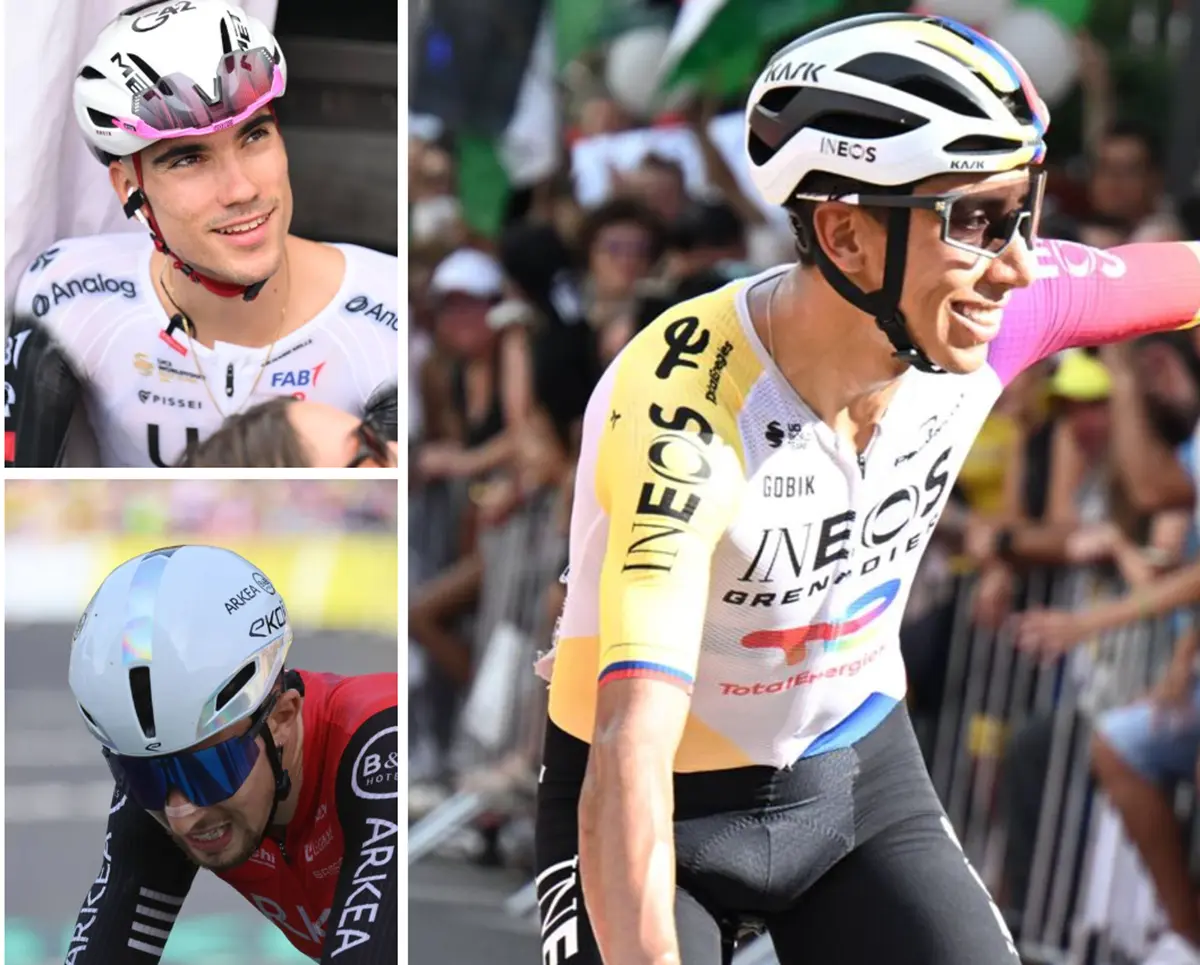
Del Toro, at just 21, already looks like a natural in the
mountains. Pidcock has proven his worth in the classics, and showed at the
recent Vuelta that he can mix it with the GC men on the climbs.
In short, to the naked eye Kigali offers the illusion of a
Classics circuit: short cobbled climbs, steep kicks near the finish, a finale
for the bold. But its reality is that of a climbers’ championship: 5,478 metres
of ascent, 267 kilometres of racing, six hours at altitude. The climbs may be
short, but the volume is crushing. The cobbles may look inviting to the punchy
specialists, but the accumulation ensures only the grand tour men will survive.
It is, in short, the hardest world championship course of
the century. The comparison with Sallanches is justified. And if history is a
guide, only a climber of the very highest class will wear the rainbow jersey by
Sunday evening.

Fin MajorCycling Journalist
Fin Major is a UK-based writer at CyclingUpToDate and has been part of the team since 2024. He is the site’s main writer for FAQs and evergreen explainers and has written around 2,000 pieces for the platform. Alongside this work, he focuses on in-depth analysis and covers the biggest races on the calendar, including the Tour de France, the Giro d’Italia, and La Vuelta a España, providing clear context around performance trends, tactics, and key storylines.
In his reporting, Fin uses reputable data sources such as ProCyclingStats for results, statistics, and historical context. He places strong emphasis on careful sourcing, editorial accuracy, and updating articles promptly when new, verified information becomes available. Outside of writing, Fin is an active cyclist, which supports his practical understanding of the sport and its demands.
claps 0visitors 0
Just in

Popular news
Latest comments
- disrespectful thats a joke ...
 Davide20-10-2026
 - EF’s “island of misfit toys” squad is probably one of my favorites in the peloton. They are fun to watch, always trying stuff - they ride with heart and panache, and their kits are excellent.wrsty20-10-2026
- 'Children these days'... Wout, since the caveman learned to say "Ug", older generations have always said this about younger generations. Not every young rider is a cowboy. So what's to say that the fact that Poels was respectful meant that his peers were equally so?
 Rafionain-Glas19-10-2026
 - "...In a weakened field" Most definitely ! YAWN !frieders319-10-2026
- Noted. But I had to appease his fans.MajorPayne19-10-2026
- I wonder if he'll race Challenge MallorcaRafionain-Glas19-10-2026
- Head to head time-splits: Jay Vine vs Remco Evenepoel: 10.5 km - Vine lost 45 seconds to Evenepoel 34.2 km - Vine lost a further 1:10, and was caught in the vicinity of that checkpoint. Note: I remember Vine getting caught before the second checkpoint, and ProCyclingStats log supports that, however, the gap at the second checkpoint was less than 2 minutes. 45.4 km - Vine lost only 16 seconds Of course, Vine lost less time in the middle section than the early section, but at the final segment rate, he'd have lost 15 seconds in the opening section and and 34 seconds in the middle. It is possible that Vine paced himself very well but that seems unlikely. In comparison with Stefan Küng: Kung lost: 26 seconds at T1. A further 1:11 by T2. A further 40 seconds by the finish. Relative to Evenepoel, Küng did slow down by the end. Maxime Decomble: Lost 47 seconds at T1. A further 1:20 by T2. A further 26 seconds by the finish. Mikkel Bjerg: Lost 37 seconds at T1. A further 1:34 by T2. A further 46 seconds by the finish. It is not concrete evidence that Vine cheated though it certainly doesn't absolve him. However, watching the race, I am 100% sure that Vine did not pull over and follow a different line when Remco passed him. Remco pulled away quite quickly, but the gap did not balloon and Vine definitely got aero assistance.Rafionain-Glas19-10-2026
- That ship has sailed years agovappaxbipmv19-10-2026
- He doesn't have to. I'd be perfectly happy if he loses SB if he then wins everything elsevappaxbipmv19-10-2026
- Please don't put Remco in the same sentence as Tadej. It's disrespectful to Tadej. Please make a note of this.KissinKate19-10-2026
Loading
1 Comments