"Almeida is better than Remco Evenepoel" - Portuguese expert believes UAE man has the edge on Evenepoel
Cycling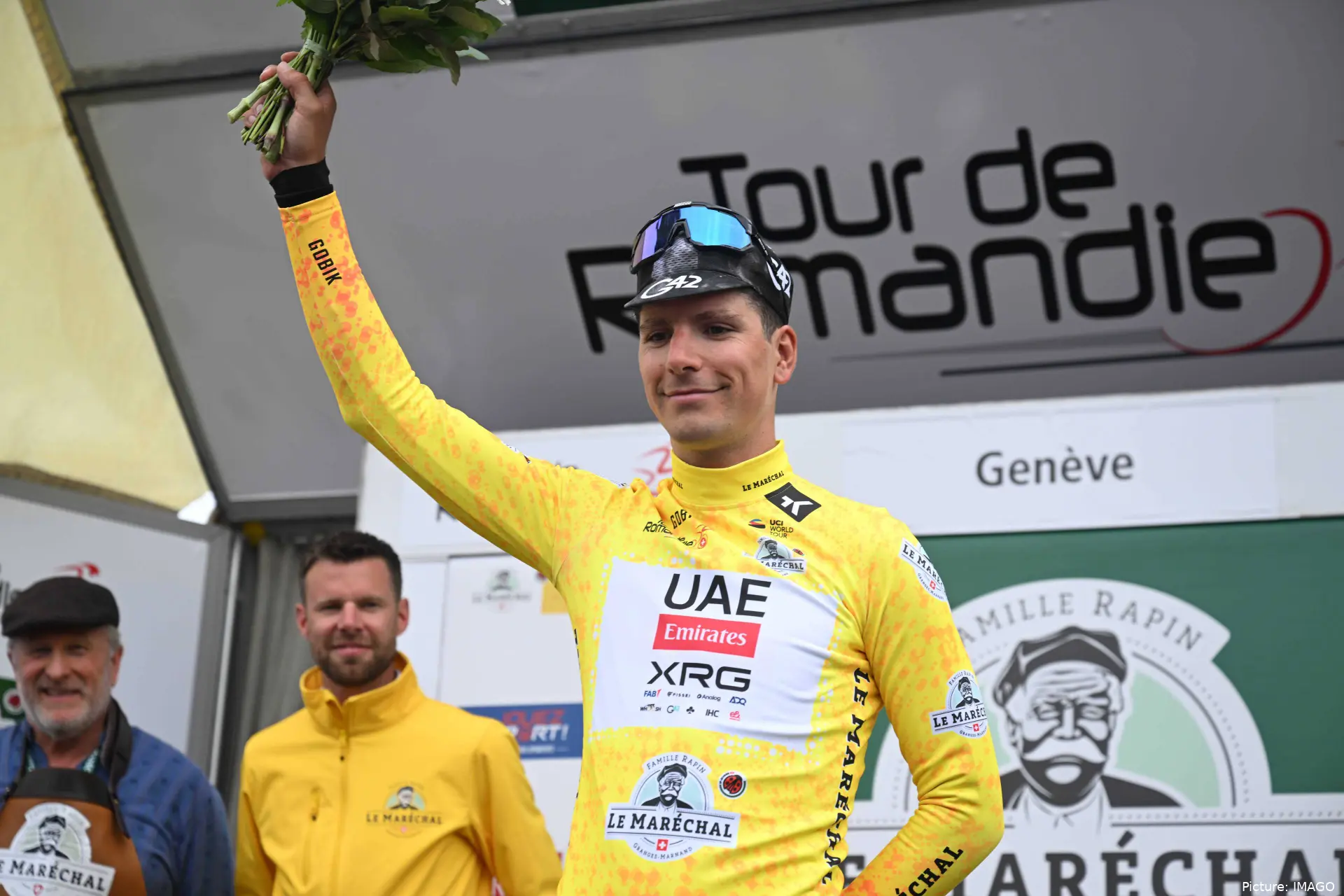
At 59, Manuel Correia has earned the nickname “the Mourinho
of cycling,” and not without reason. As sports director of Gi Group Holding -
Simoldes - UDO, he has played a pivotal role in shaping the careers of many of
Portugal’s top riders. Four of the current seven Portuguese cyclists in the
World Tour, Rui Costa, Ruben Guerreiro, and twins Ivo and Rui Oliveira, began
under his guidance. His influence has reached even further, with riders like Zé
and Domingos Gonçalves, André Cardoso, Ricardo Vilela, and André Carvalho
passing through his ranks.
“There are more of us who were out there. The brothers Zé
and Domingos Gonçalves, André Cardoso, Ricardo Vilela and André Carvalho. I
must be forgetting a few…” Correia says, before clarifying that João Almeida is
a special case. “I didn't actually sign with João. We had an agreement. If he
continued racing in Portugal, it would be with our team, which at the time was
Liberty Seguros-Carglass. But he already had the legitimate expectation of
leaving. Then came the invitation from Hagens Axeon and we were happy to let
him go. It was 2018 and he was 19.”
Correia never doubted Almeida’s potential. “I'm keeping an
eye on him, but in his case I didn't even need to. With João Almeida, the
difference was so big that we all knew there was someone special out there.”
Correia’s reputation comes not just from the riders he’s
developed, but from his philosophy. “My main characteristic has always been my
closeness to the players, which there are no experts here. If we had the budget
for it, and in those years we did, even to make a good international calendar
for the Under-23s, we gave them the tools to develop and we didn't even need to
recruit the best. Many wanted to join that team, we had to reject runners. But
a lot of people didn't value that project, which raced against French and Dutch
teams and got results. Today I can say that's what I'm most proud of in my
career.”
Read also
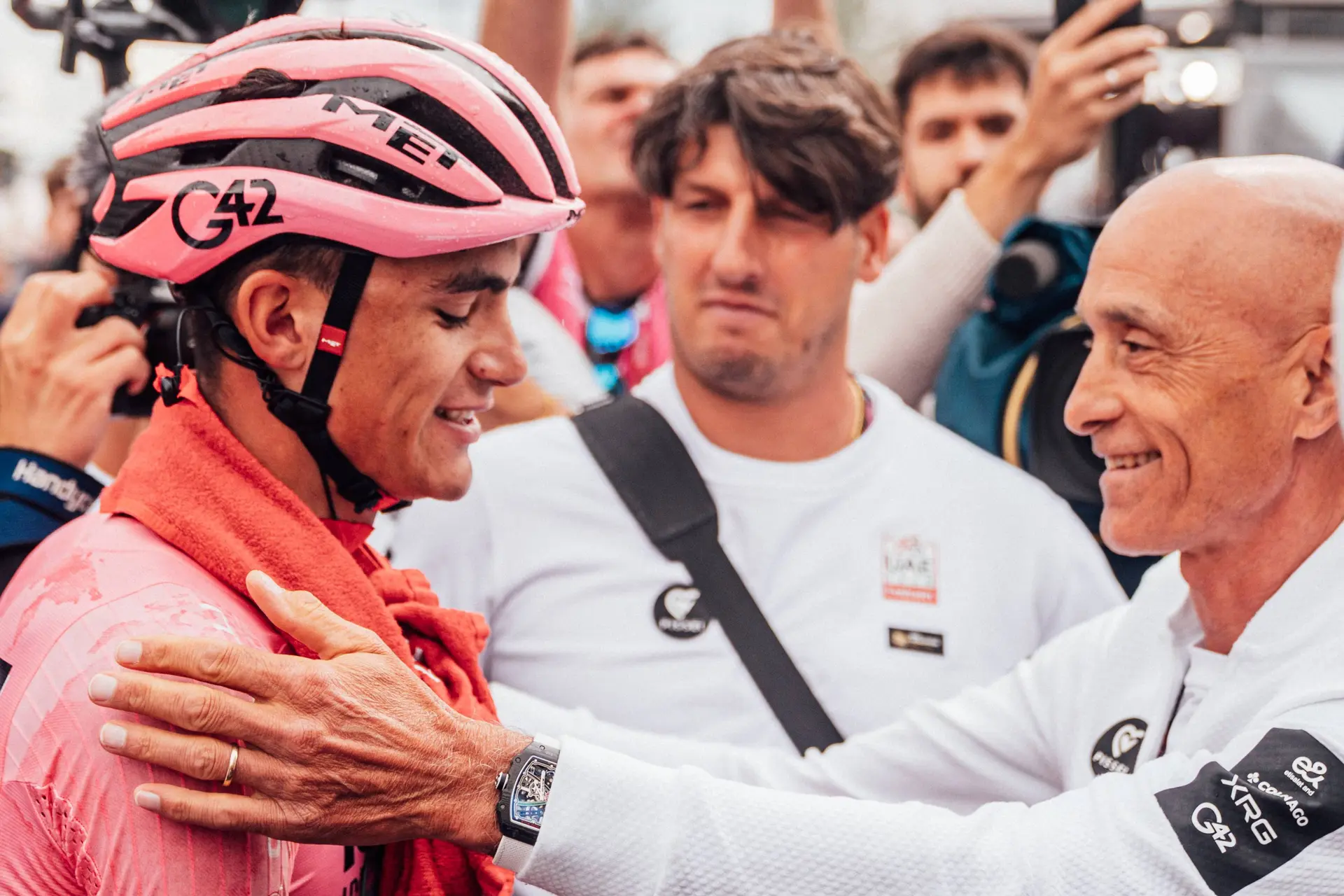
That Under-23 team, Liberty Seguros-Carglass (later replaced
by Oliveirense) was widely regarded as the best in Portuguese cycling history
at that level. It provided young riders with an international racing calendar,
essential for breaking into the global scene.
Correia insists his work has never been about personal
recognition. “I do this out of passion, because I love cycling, never for my
own benefit or to be in the limelight, which my way of being doesn't allow. I'm
reserved. In fact, it's time to give the lead to Luís Pinheiro, who has been my
right-hand man and very soon he should be running the team. He's a very valid
person and it was he who challenged me to launch this project.”
While his eye for talent is well known, Correia hints at
another reason riders, and their families, trust his team: a strict commitment
to clean racing. “This has been a requirement since the days of Liberty
Seguros, who also wanted to change the paradigm when they sponsored us. It's
always been a struggle of mine, to the point of putting it in the contracts. If
one day I have a problem, they can withdraw my sponsorship. I hope the roof
doesn't fall in on me one day... What I can guarantee is that for the team, for
my structure, you never go down a bad path.”
In a sport with a long history of doping scandals, such a
guarantee carries weight. It makes Oliveirense not just a development team, but
a trusted environment for athletes at the start of their careers.
Correia’s memories of Almeida’s junior years remain vivid.
“João Almeida was always a serious case. He won the Junior Tour of Portugal
with all the stages, or leaving one for a colleague (Daniel Viegas ed.)... He
made such a big difference that I've never seen the like.” From those early
days, Almeida’s potential was obvious, culminating in a Liège-Bastogne-Liège
Under-23 victory before he joined Quick-Step.
“He was never a classics racer. When he wore the pink in his
first Giro, he said on RTP that I wasn't surprised.” That debut Giro d’Italia
in 2020 put Almeida in the global spotlight, with the Portuguese rider wearing
the leader’s jersey for more than two weeks.
Correia believes Almeida’s 2025 season could have been even
bigger. “This year he was unlucky in the Tour, otherwise he would have been on
the podium, even working for Pogacar. But behind the other two, because
Vingegaard is also a few points up. To win a Grand Tour, you have to race it
without Pogacar and Vingegaard, who are two phenoms. I could say three, but in
my humble opinion, João is already better than Remco Evenepoel in three-week
races.”
Rúben SilvaEditor-in-Chief
A founding contributor to CyclingUpToDate since its launch in January 2022, Ruben Silva has played a central role in shaping the site’s editorial direction and long-term growth. Before joining the project, he built his experience through independent blogging at Echelons Hub and by producing race previews for Ciclismo Internacional, developing a strong analytical voice rooted in daily engagement with professional cycling.
Beyond editorial work, he has been closely involved in the expansion and coordination of CyclingUpToDate’s wider network, helping establish and support sister platforms across multiple languages. This includes ongoing collaboration with CiclismoAlDia (Spanish), CiclismoAtual (Portuguese), WielrennenUpToDate (Dutch), and RadsportAktuell (German), contributing to a shared editorial vision and consistent international coverage.
He also helps oversee editorial governance across the network, setting standards for accuracy and consistency and coordinating updates or corrections when needed.
Originally from the Porto metropolitan area in Portugal, he holds a bachelor’s degree in Geography. His path into cycling journalism was shaped not through formal media training, but through independent reporting, community engagement, and sustained on-the-ground involvement in the sport.
Over the course of his career, he has conducted approximately 100 interviews across road cycling and cyclocross, ranging from one-to-one conversations and online formats to press conferences and on-site pre- and post-race coverage. His interviews include leading riders, team managers, and prominent figures within cycling media: Tadej Pogacar, Jonas Vingegaard, Mathieu van der Poel, Primoz Roglic, Wout van Aert, Joao Almeida and Tom Pidcock; managers like Patrick Lefevere and Joxean Matxin; and YouTube personality Bryan Kennedy (BKXC)...
Within 18 months of launch, he helped grow CyclingUpToDate’s English-language platform into one of the most-read cycling news websites, built entirely from the ground up. As both a professional journalist and lifelong cycling enthusiast, his focus remains on delivering accurate, timely, and well-contextualized coverage.
claps 8visitors 5
Just in
Popular news
Latest comments
- Nothing. Against Pogi nothingabstractengineer18-10-2026
- He didn't even try to sprint all outvappaxbipmv18-10-2026
- Campenaerts looked like a rolling pumpkin with that all orange leaders skinsuit !frieders318-10-2026
- He can take his dumb a$$ politics somehwere else !frieders318-10-2026
- good to have her back. fingers crossed she‘ll be able to stay!Ketterechts17-10-2026
- A tenner and he wins the Tour next year, too 😂anonymouscyclist17-10-2026
- the answer is either stick to classics or GTs but not bothabstractengineer17-10-2026
- the exodus already stared with Ciccone. Already they were struggling with two sprinters, now there are three. Also Ganna will demand leadership. Gall is the most proven GC, Ayuso has the most potential. GC leadership for everybody will be impossible. Literally a UAE style mess without pogi.abstractengineer17-10-2026
- I raced as an amateur for 12 years, including six years on my country’s national road cycling team. I secured two national titles and competed in three World Championships plus more than 15 international stage races. At 23, we travelled to Italy for a training camp—or so I assumed. On a rest day, we watched a presentation about adopting a more “professional” training approach. It was crystal clear what “professional” meant. That moment first exposed me to this dilemma. After returning from Italy, I left cycling—at least at the competitive level I had known. Over the following two years, the whole team was caught doping. I hold that everyone is innocent until proven guilty. In my view, current stakeholders operate on a different scale, and the sums involved are vast. I am unsure whether any doping would ever be revealed. I try to stay positive and enjoy the show. My 2c.
 vannpelt17-10-2026
 - Fiver he wins 🤣
 leedorney17-10-2026
Loading
3 Comments