"After an attritional race, Pogacar goes solo and no one can catch him" - Johan Bruyneel anticipates Tour of Flanders domination
CyclingWednesday, 01 April 2026 at 10:55
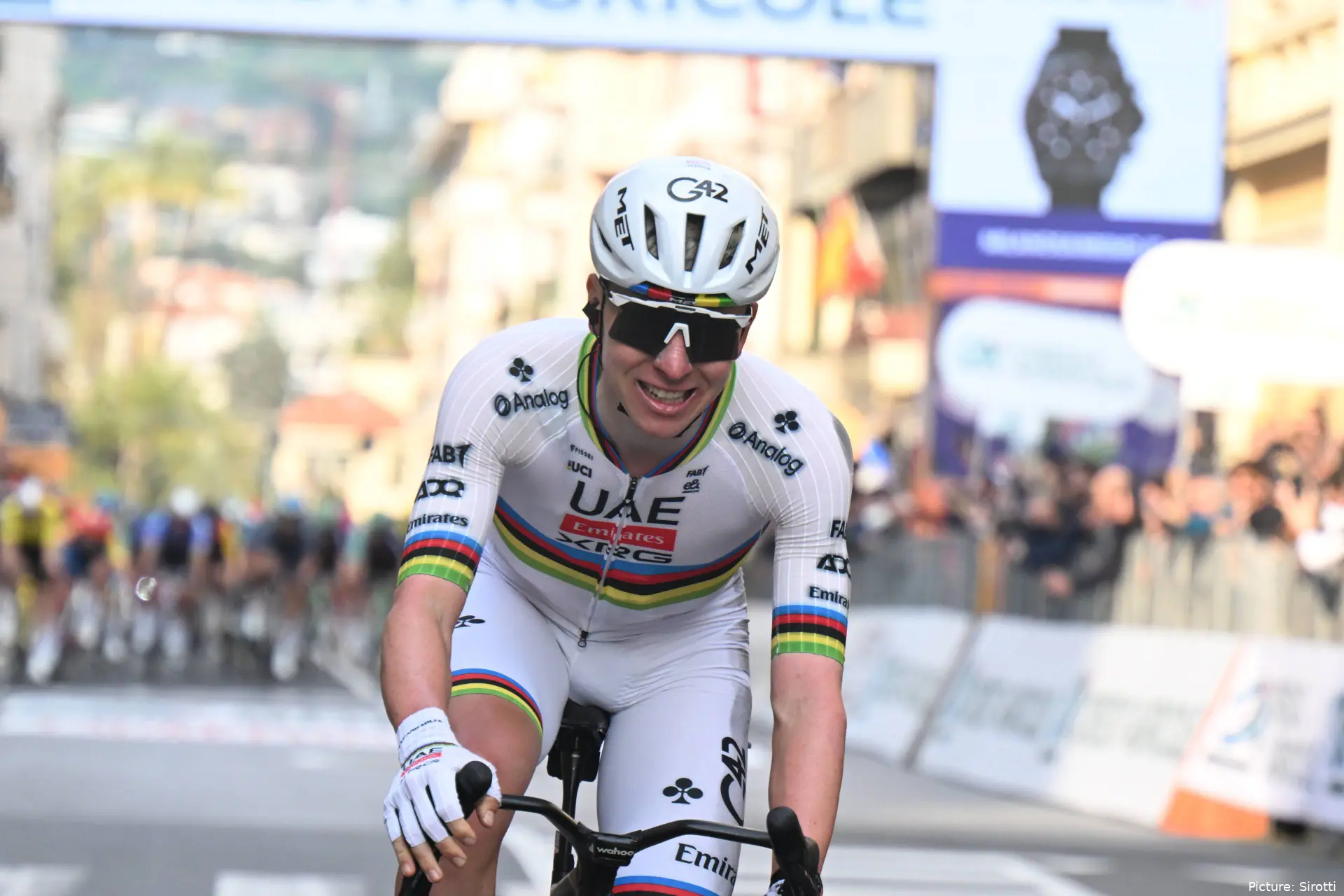
The Move podcast, regularly brings together George Hincapie, Johan Bruyneel, and Spencer Martin to dissect pro cycling from the inside, blending racing and managerial experience with an analytical lens. They have discussed the upcoming Tour of Flanders and Tadej Pogacar; Mathieu van der Poel and Wout Van Aert's recent racing in the classics; and Jonas Vingegaard's dominance over Remco Evenepoel at the Volta a Catalunya.
This time, the trio focus on the recent Classics and the Volta a Catalunya, as well as the Tour of Flanders, with headline acts such as Tadej Pogacar, Mathieu van der Poel, Wout van Aert and Jonas Vingegaard.
A plot twist in the Classics
Recent Classics are showing a clear tactical shift: less unanswerable individual dominance and more ability from the peloton to reorganise and neutralise long-range moves. Spencer Martin introduces the idea by stressing how compelling the current landscape is: “In many ways, we hadn’t seen this in the big Classics lately. It was one rider dominating and going solo, which could get a bit dull. But this was fun. You didn’t know what would happen until the last 500 metres.” In the same vein, Johan Bruyneel points straight to a tactical trend: “I think the peloton has realized it can’t panic. It’s not about chasing chaotically, it’s about organizing to shut the gaps.”
Van der Poel and Van Aert: Power, but debatable choices
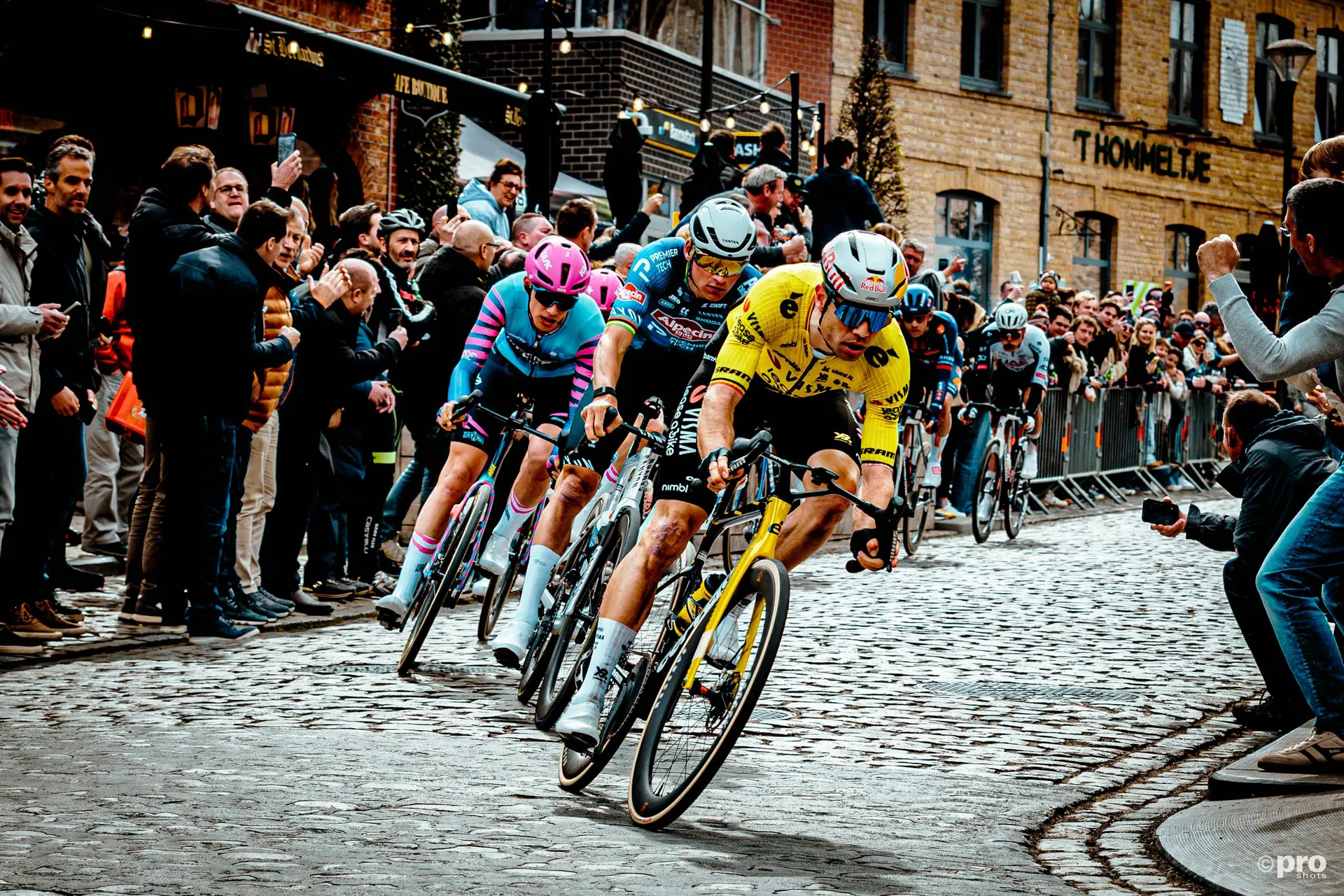
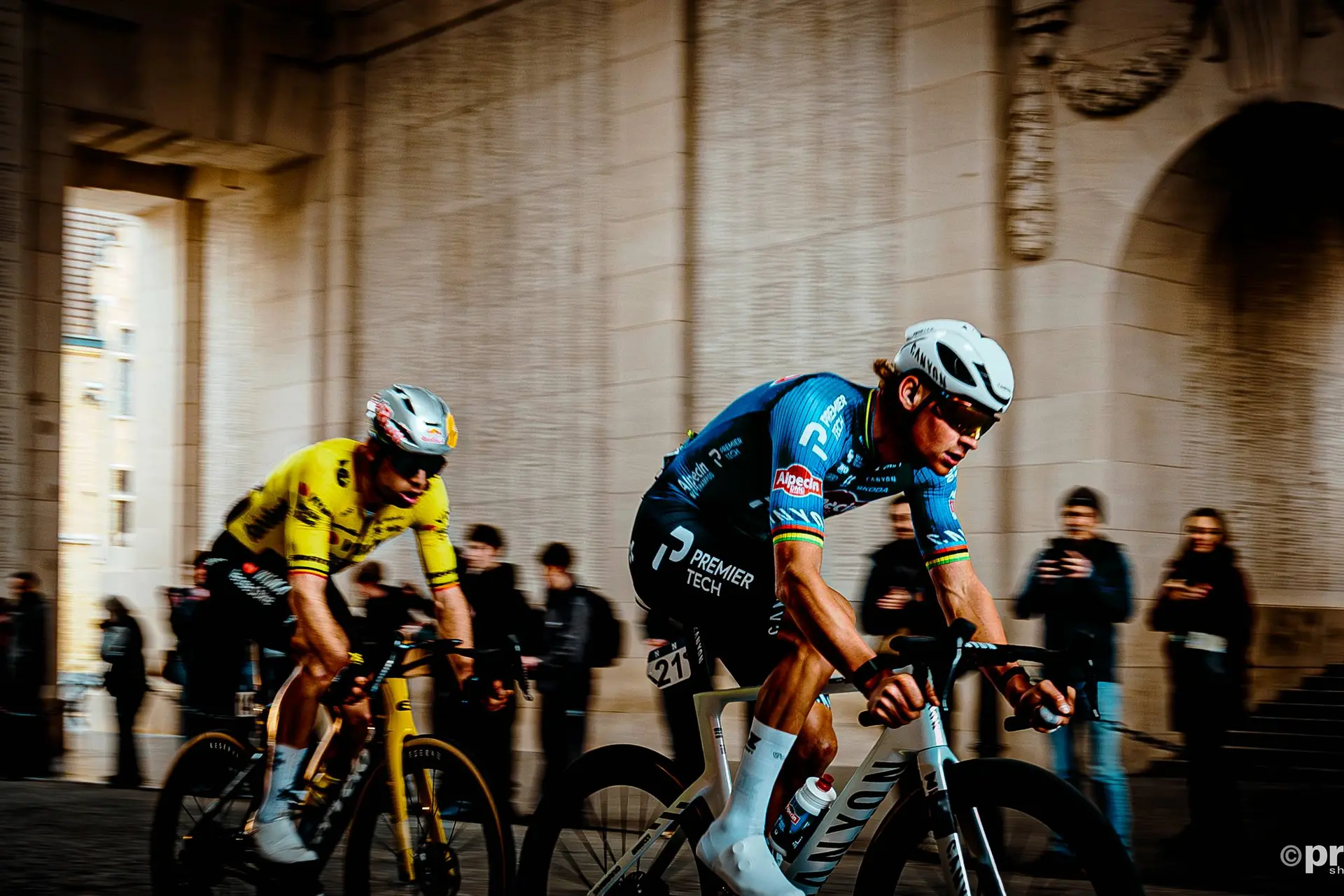
Much of the race analysis orbits around Mathieu van der Poel and Wout van Aert, protagonists in a key move that was ultimately brought back.
George Hincapie is stunned by how it ended: “I was really surprised they were caught. We’re talking about two of the strongest riders in the world with more than 40 seconds. Normally that’s enough, especially with a tailwind.”

Mathieu van der Poel clung on dramatically to win the E3 Saxo Classic 2026
Bruyneel, however, adds a key tactical nuance: “I think the big mistake was dropping Florian Vermeersch on the final ascent of the Kemmelberg. If the three had stayed together, they would have made it to the line for sure.” He also suggests Van der Poel didn’t fully empty the tank: “After the race there was talk that maybe Van der Poel wasn’t at 100%. That makes sense if you know you’ve got Philipsen behind.”
The team factor and collective intelligence
Beyond individual strength, collective work proved decisive. Jasper Philipsen’s team played its cards with precision. Spencer Martin sums it up: “Having Van der Poel up the road and Philipsen tucked in the chase is impressive teamwork. And both are big stars who embrace that dynamic.” Bruyneel reinforces the point by underlining peloton logic: “Teams without a rider ahead had to chase. Either you race for the win or you settle for third.”
Read also
The Philipsen factor: the most complete sprinter
The debate over the best current sprinter arises naturally after his victory.
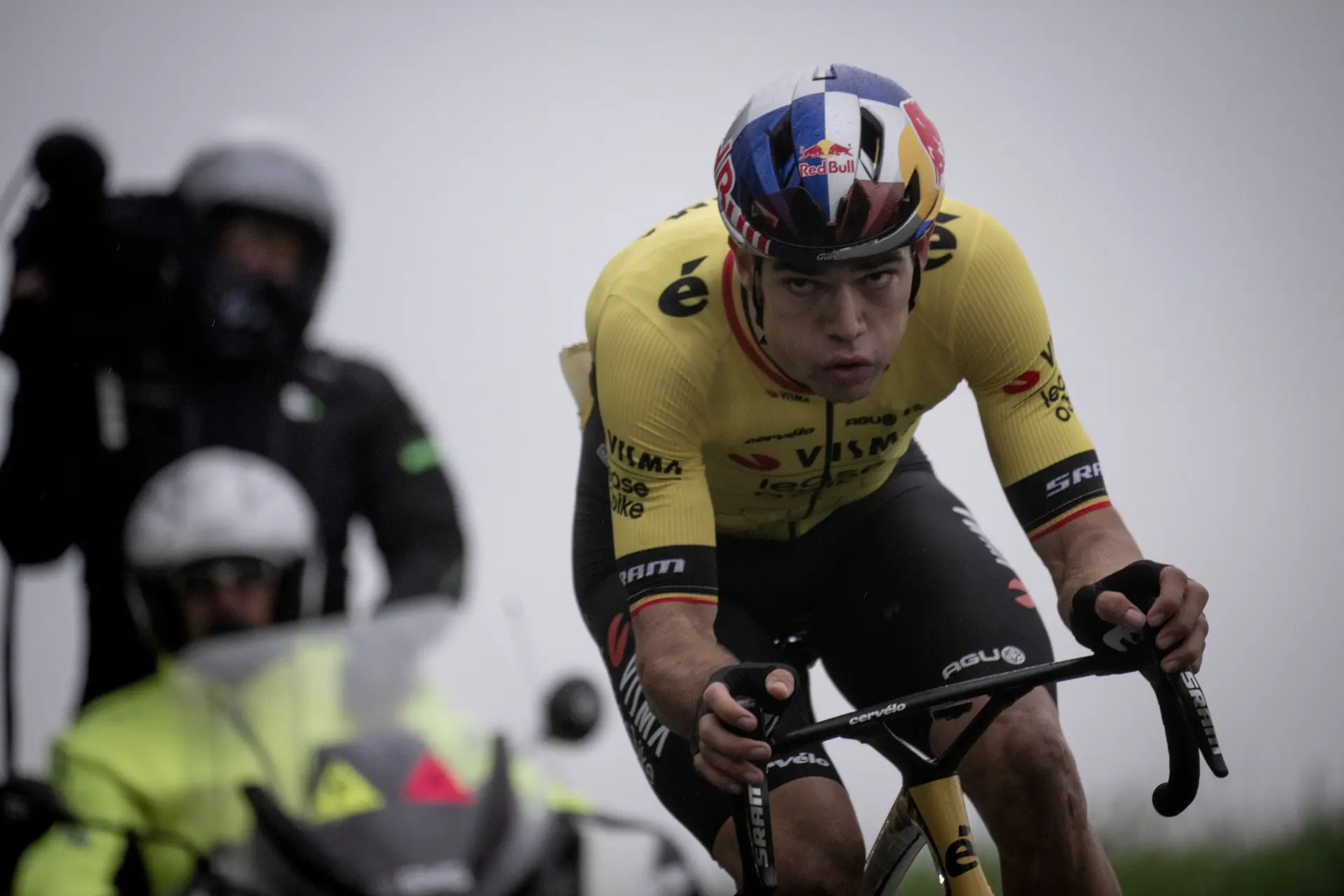
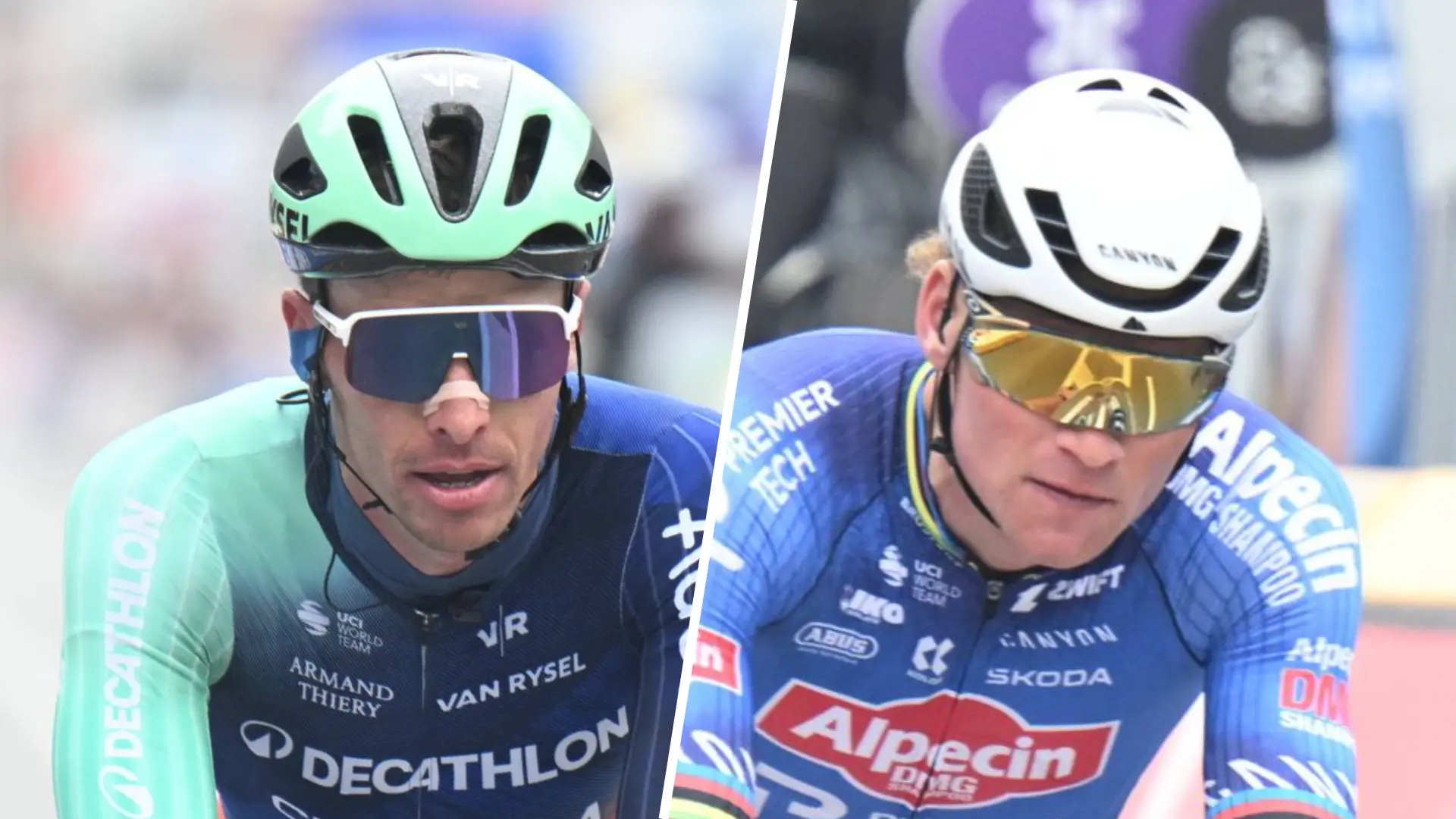
Johan Bruyneel is unequivocal: “It’s hard to say who’s the best sprinter, but I’d say he’s the best when it really matters. After hard races, in Classics, at the Tour… he’s always there.” Hincapie agrees on his range: “He can win in Sanremo, podium in Roubaix, and be in the mix in Flanders. He’s undoubtedly one of the most complete sprinters.”
Pogacar and the Tour of Flanders: clear favourite
The focus shifts to Tadej Pogacar and his chances in Flanders, where consensus is almost unanimous. Bruyneel is forthright: “If everything goes as expected, Pogacar wins solo. It’s a tougher race than anything we’ve seen so far and I don’t see who can follow him.” He adds a crucial point: “If you can’t stay on his wheel in Sanremo, where drafting is easier, then in Flanders, after a war of attrition, it will be even harder.” Hincapie, while leaving room for tactical uncertainty, recognises his superiority: “What he did in Sanremo is something we’d never seen. It’s hard to argue with that.”
Van Aert and his progression
Another key thread is Van Aert’s recent trajectory, as he seems to be regaining top form. Hincapie calls it clearly: “He was the only one able to follow Van der Poel on the Kemmelberg. He’s getting better with every race.” Bruyneel adds context: “What he did in Sanremo was also impressive. After the crash, to come back and finish third says a lot about his current level.”
Volta a Catalunya: Vingegaard in control
In Catalunya, the spotlight falls on Jonas Vingegaard, whose dominance was clear. Bruyneel sums it up: “Logic prevailed. We saw his level at Paris–Nice, but here he was even better.” On one of his standout displays: “On the first mountain stage, he was outstanding. And in the next, he simply attacked and held the gap.” George Hincapie adds an inside-the-race view: “It was a brutal race. As soon as they hit the coast the peloton shattered completely. Nothing like it used to be.”
The evolution of modern cycling
Finally, they reflect on the upward trend across the peloton. Bruyneel explains: “Every year the level rises a bit, maybe one or one and a half percent. That’s why comparing climb times makes no sense: conditions are always different.”
Juan LarraCycling Journalist
Juan Larra is a writer for Cyclinguptodate and editor-in-chief of Ciclismoaldia, where he has played a central role since its inception. Under his leadership, the website has become a trusted source for professional cycling coverage, offering in-depth analysis, news, and feature stories.
A sports journalist with over 20 years of experience, Juan earned his degree in Journalism from the University of Seville in 2007. He began his career covering a wide range of sports—including football, basketball, Formula 1, MotoGP, tennis, and cycling—for platforms such as the official La Liga app, Vodafone and Movistar websites, NBA Blogdebasket, and Cadena Cope, honing his skills in writing and editorial management.
In addition to his work at Ciclismoaldia, Juan contributes to Cyclinguptodate and serves as editor-in-chief for the tennis-focused site Tenisaldia. Throughout his career, he has conducted exclusive interviews with cyclists and sports figures, provided detailed analysis of competitions ranging from local Spanish races to major international events, and acted as a special correspondent at prestigious races including Paris-Roubaix, the Tour de France, and the Vuelta a España.
Juan’s combination of experience, expertise, and direct access to athletes has established him—and the platforms he leads—as authoritative voices in professional cycling.
claps 2visitors 2
Just in
Popular news
Latest comments
- Try being an escape artist then, free yourself from the chains that bind you hereJumpyjohn09-09-2026
- Peak Roglic maybe. Roglic today very doubtful.mobk09-09-2026
- Roglic is the better time trialist, but taking more than two minutes on Mas over 32km? That would be one hell of a ride. I just don’t see it happening.TheSoigneur09-09-2026
- It's not AI... I'm an artist.PogiSloFans09-09-2026
- maybe if he wins every race left on the calendar offering UCI pointswrsty09-09-2026
- agreed. they have 2 cards depending on what the opposition does and who is strong that daymij09-09-2026
- First see how Wout does in Granada. It is a very similar course
 Rafionain-Glas09-09-2026
 - WVA to follow MVDP, Remco to follow Del Toro/Sexias. Simple. otherwise attack at different pointsabstractengineer09-09-2026
- All riders think they can become World Champion now Pogacar is not there. That could be fun. 😁
 DareDevil09-09-2026
 - Is Remco theoretically able to jump over Pogacar? By winning the World Championships, Lombardia, maybe something extra?DareDevil09-09-2026
Loading
1 Comments