“A winter without cyclocross will come” – Expert sees Tadej Pogacar as key to Mathieu van der Poel’s rumoured CX retirement
Cycling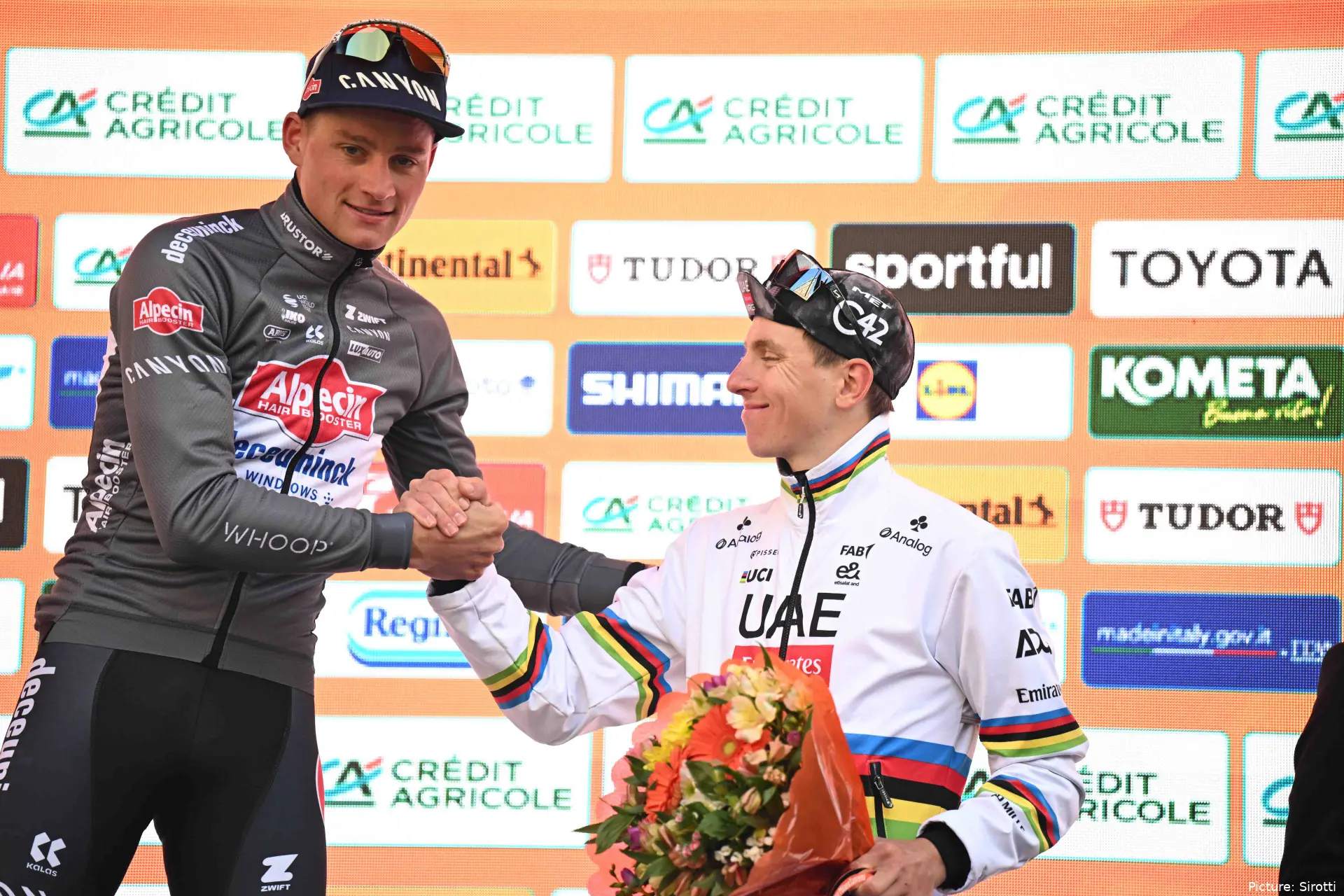
Mathieu van der Poel’s future in cyclocross is no longer being discussed only in terms of trophies or dominance. It is now being framed around something far bigger: how much the road, and especially the challenge of Tadej Pogacar, is starting to reshape the choices in front of him.
The idea that Van der Poel might one day step away from a full cyclocross winter is no longer fringe talk. It is being spoken about openly by voices inside the sport, including veteran analyst Jose De Cauwer, who addressed the subject while working at the World Cup round in Benidorm for PlaySports.
Asked whether a season without cyclocross could realistically happen, his answer was simple: “A winter without cyclocross will come, I think, yes.”
That is not a retirement announcement. But it is a clear signal that even for a rider as tied to cyclocross as Van der Poel, the balance between disciplines is shifting.
Why Pogacar changes the conversation
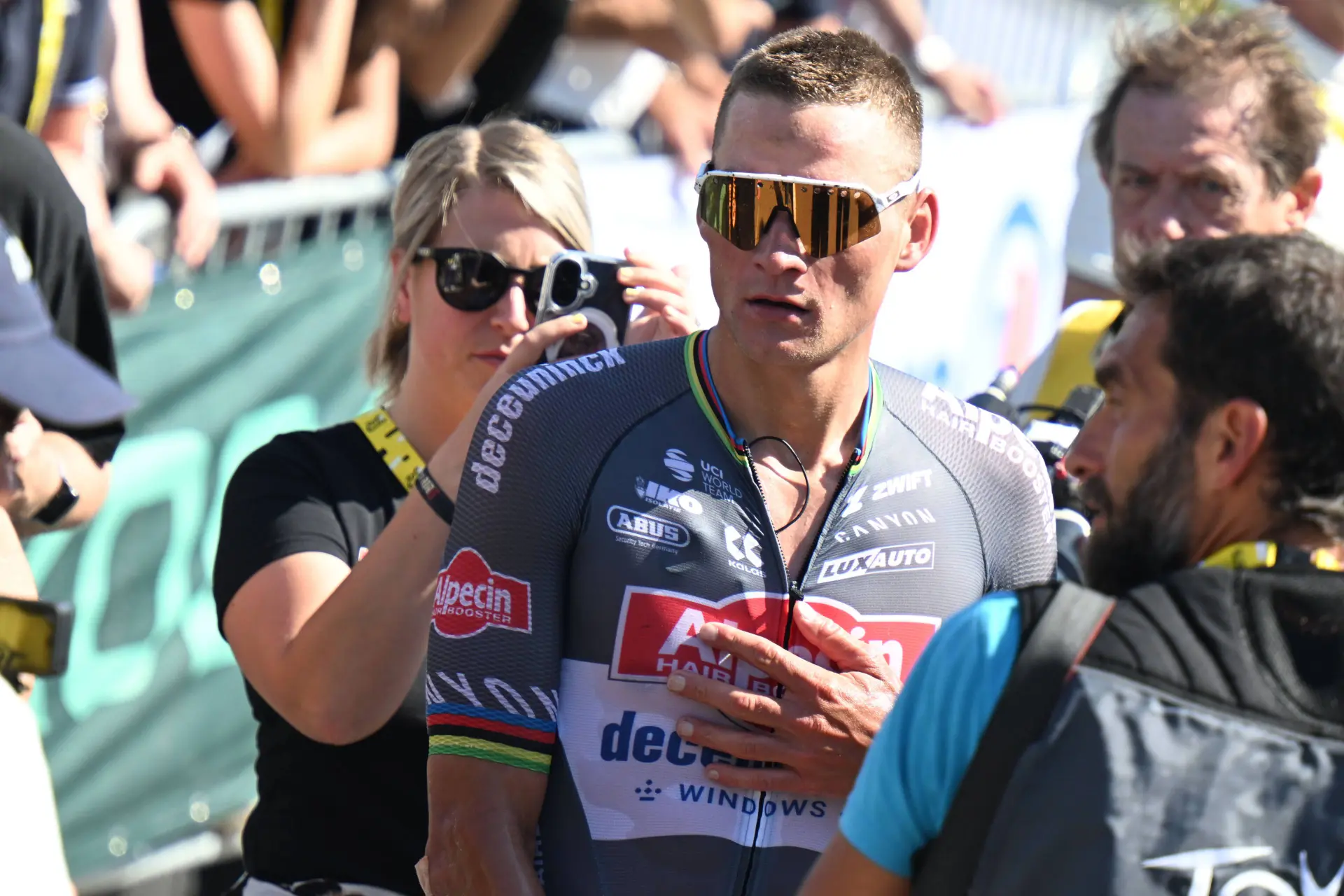
The driver behind that shift is not boredom, and not a lack of motivation. For De Cauwer, it is the growing difficulty of winning the biggest spring races in an era dominated by Pogacar.
He pointed directly at the Tour of Flanders as the reference point, saying: “The battle with Pogacar in the Tour of Flanders is a very difficult one. I hope that Mathieu, just like Van Aert and many others, searches and asks himself: is there something else, is there maybe still something I can improve?”
That line explains why cyclocross is even part of this discussion. If Van der Poel wants to keep beating riders like Pogacar in races such as Flanders, he has to look for every possible margin. That does not only mean training harder. It means questioning whether racing a full winter in the mud is still the best preparation for the road.
Cyclocross brings sharpness, explosiveness and race instinct. But it also brings constant high-intensity racing, travel and recovery demands that eat into long-term road preparation. If the goal becomes beating Pogacar in the hardest spring races, then the calendar itself becomes a tactical choice.
Not retirement, but a pause
De Cauwer was careful not to frame this as the end of Van der Poel in cyclocross. He made it clear he is not talking about an immediate farewell. “A winter without cyclocross will come,” he said, but he also stressed that he does not see this as an imminent goodbye to the discipline.
He even made clear what he personally hopes to see: “I hope we see him in the peloton until Hoogerheide. By that I mean the cyclocross world championships in Hoogerheide in 2028.”
So the picture is not one of walking away, but of choosing. A skipped winter. A reduced programme. A season built more around what happens on the road than around what happens between the tape.
The real decision belongs to Van der Poel
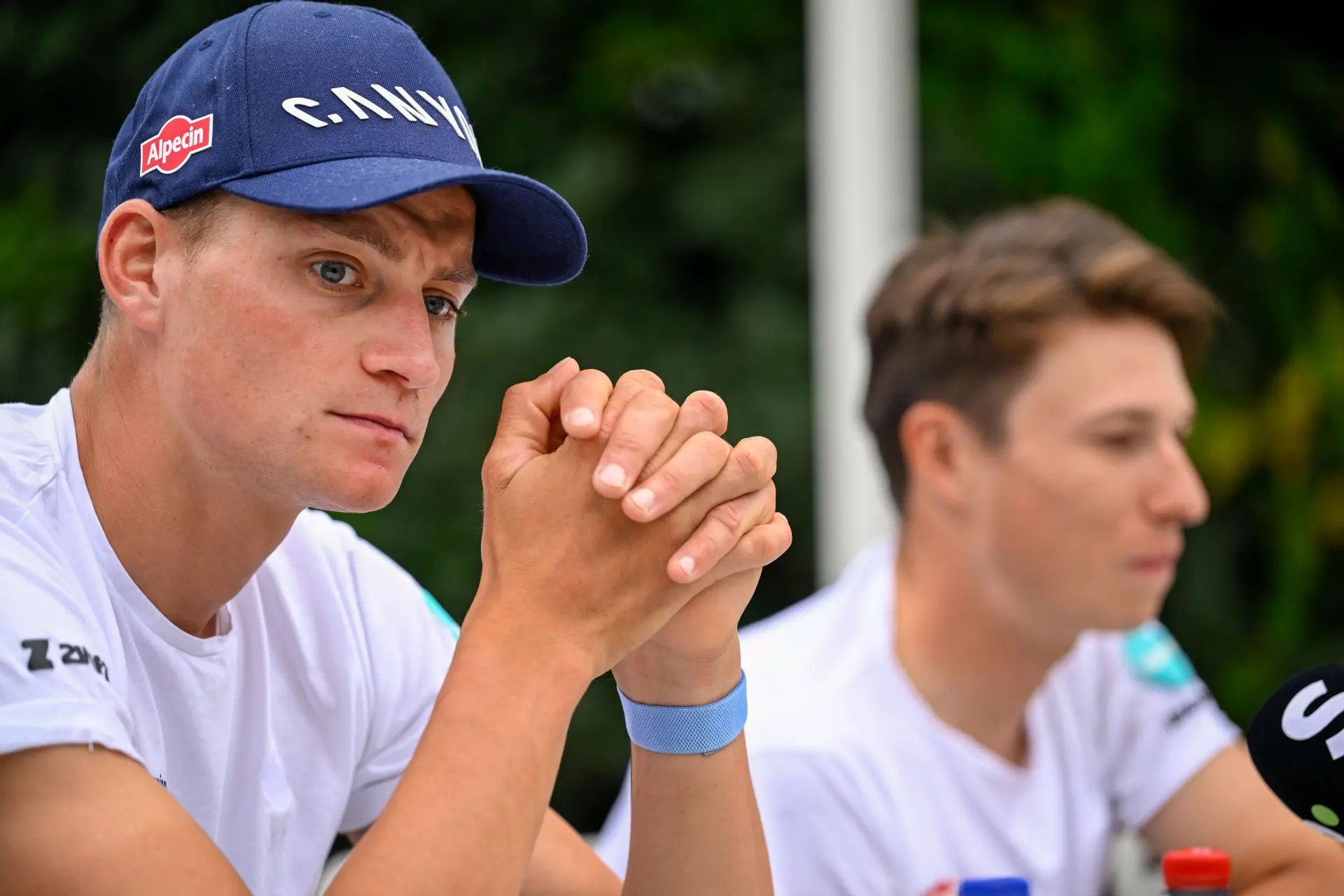
No analyst, rival or commentator can make that call for him. As De Cauwer himself acknowledged, only Van der Poel can decide how much cyclocross still fits into the future he wants.
What makes the debate sharper is what is happening on the road around him. Pogacar is no longer a rider who picks and chooses the classics. He is committing more deeply to them, lining up for both the Tour of Flanders and Paris-Roubaix again, turning the spring into a direct battleground between the biggest names in the sport.
That raises the stakes. For Van der Poel, cyclocross is not just a passion. It is now part of a strategic puzzle. How much of it can he afford if his biggest ambition is to keep winning the races where Pogacar is now a central figure.
A winter without cyclocross, if it comes, will not be about turning his back on the discipline that shaped him. It will be about deciding how far he is willing to go to stay on top when the fight on the road keeps getting harder.

Kieran WoodDeputy Editor-in-Chief
Kieran Wood is a sports journalist based in Wales and has been active in journalism since 2022. He regularly contributes to DartsNews.com and CyclingUpToDate.com, where he covers professional cycling and darts. In cycling, his work includes liveblogs from major races, including the Tour de France, the Giro d’Italia, and La Vuelta a España, alongside race reports and analysis. He has also conducted interviews with professional riders.
His reporting spans the full racing calendar, from one-day classics to stage races, with a focus on accurate, real-time coverage and clear contextual analysis. For statistics, results, and historical context, he regularly uses resources such as ProCyclingStats. To support reporting on rider activity and training context where relevant, he also references Strava.
In his work, Kieran places strong emphasis on careful sourcing, editorial accuracy, and updating articles as new, verified information becomes available.
claps 6visitors 6
Just in

Popular news
Latest comments
- He didn't even try to sprint all outvappaxbipmv18-10-2026
- Campenaerts looked like a rolling pumpkin with that all orange leaders skinsuit !frieders318-10-2026
- He can take his dumb a$$ politics somehwere else !frieders318-10-2026
- good to have her back. fingers crossed she‘ll be able to stay!Ketterechts17-10-2026
- A tenner and he wins the Tour next year, too 😂anonymouscyclist17-10-2026
- the answer is either stick to classics or GTs but not bothabstractengineer17-10-2026
- the exodus already stared with Ciccone. Already they were struggling with two sprinters, now there are three. Also Ganna will demand leadership. Gall is the most proven GC, Ayuso has the most potential. GC leadership for everybody will be impossible. Literally a UAE style mess without pogi.abstractengineer17-10-2026
- I raced as an amateur for 12 years, including six years on my country’s national road cycling team. I secured two national titles and competed in three World Championships plus more than 15 international stage races. At 23, we travelled to Italy for a training camp—or so I assumed. On a rest day, we watched a presentation about adopting a more “professional” training approach. It was crystal clear what “professional” meant. That moment first exposed me to this dilemma. After returning from Italy, I left cycling—at least at the competitive level I had known. Over the following two years, the whole team was caught doping. I hold that everyone is innocent until proven guilty. In my view, current stakeholders operate on a different scale, and the sums involved are vast. I am unsure whether any doping would ever be revealed. I try to stay positive and enjoy the show. My 2c.
 vannpelt17-10-2026
 - Fiver he wins 🤣
 leedorney17-10-2026
 - “…measures to reduce speeds.” Might as well shorten the race course to just 50km as well? ASO generates at minimum €300m a year and 30- 40% profit. Maybe stop being greedy and spend more of the profit to protect the riders instead.b3tlla17-10-2026
Loading
Write a comment