“Take away the journalists and the crowds...” – Mathieu van der Poel’s father reveals the hidden burden pushing world champion away from cyclocross
Cyclocross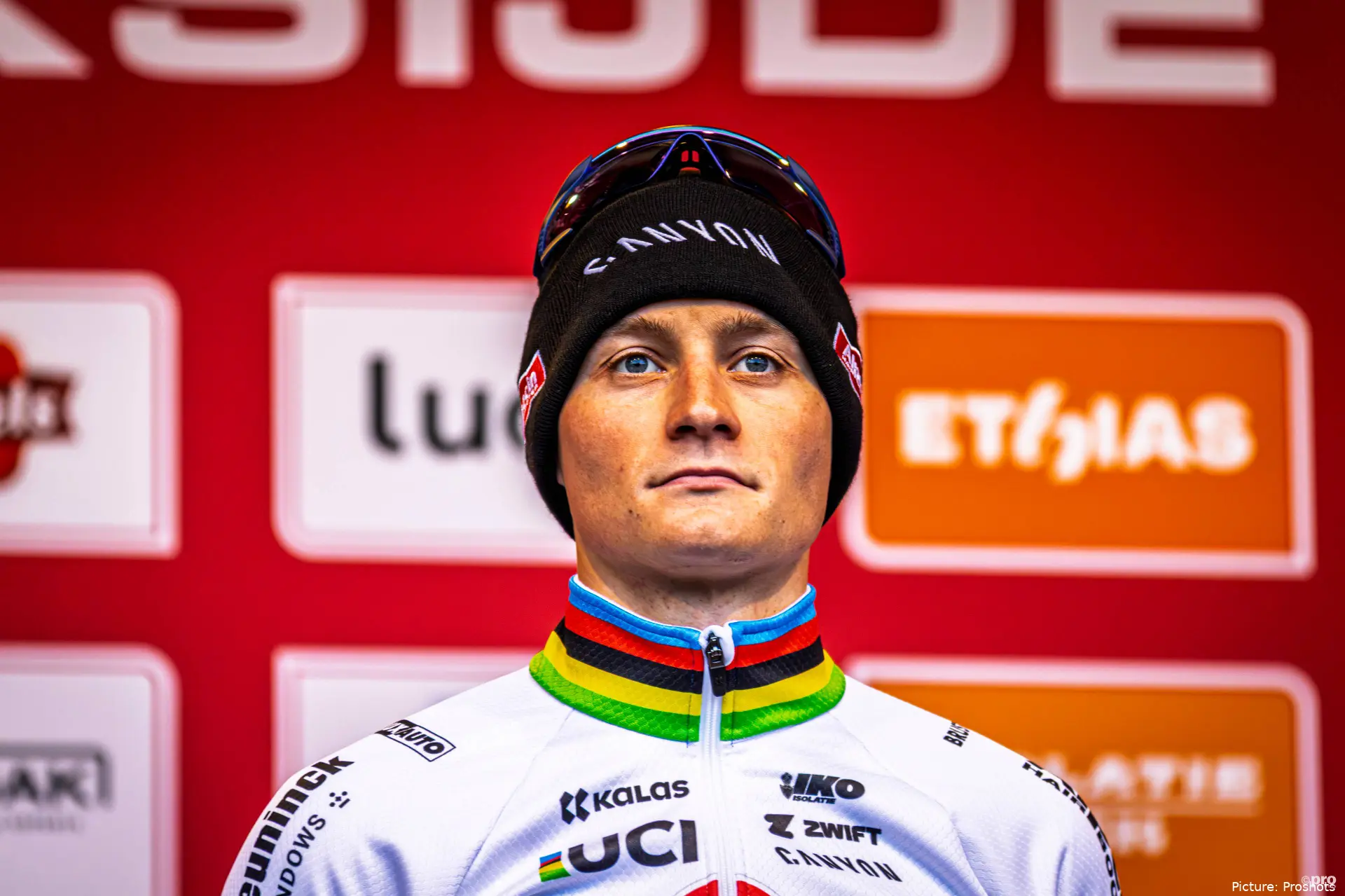
There was a telling shift in tone this week when Adrie van der Poel spoke alongside Sven Nys in Het Nieuwsblad. It was not a discussion about mud, legs, or tactics. It was about time. Pressure. Obligation. And about what happens after the finish line.
“Mathieu gets home two hours later than everyone else after a cross,” Adrie explained. “How long did the ceremony in Maasmechelen take? Not normal. And then you get back to the camper, and it’s full of people.”
That is the part of cyclocross the public never sees. The bit that does not show up on lap splits or podium photos. The part that increasingly frames the rumours that this winter could, genuinely, be the last one in the discipline for Mathieu van der Poel.
The burden that comes with the rainbow jersey
The easy narrative is to assume Van der Poel is bored of cyclocross. That the mud no longer excites him. That the road has simply become more important.
Adrie’s words point in a completely different direction.
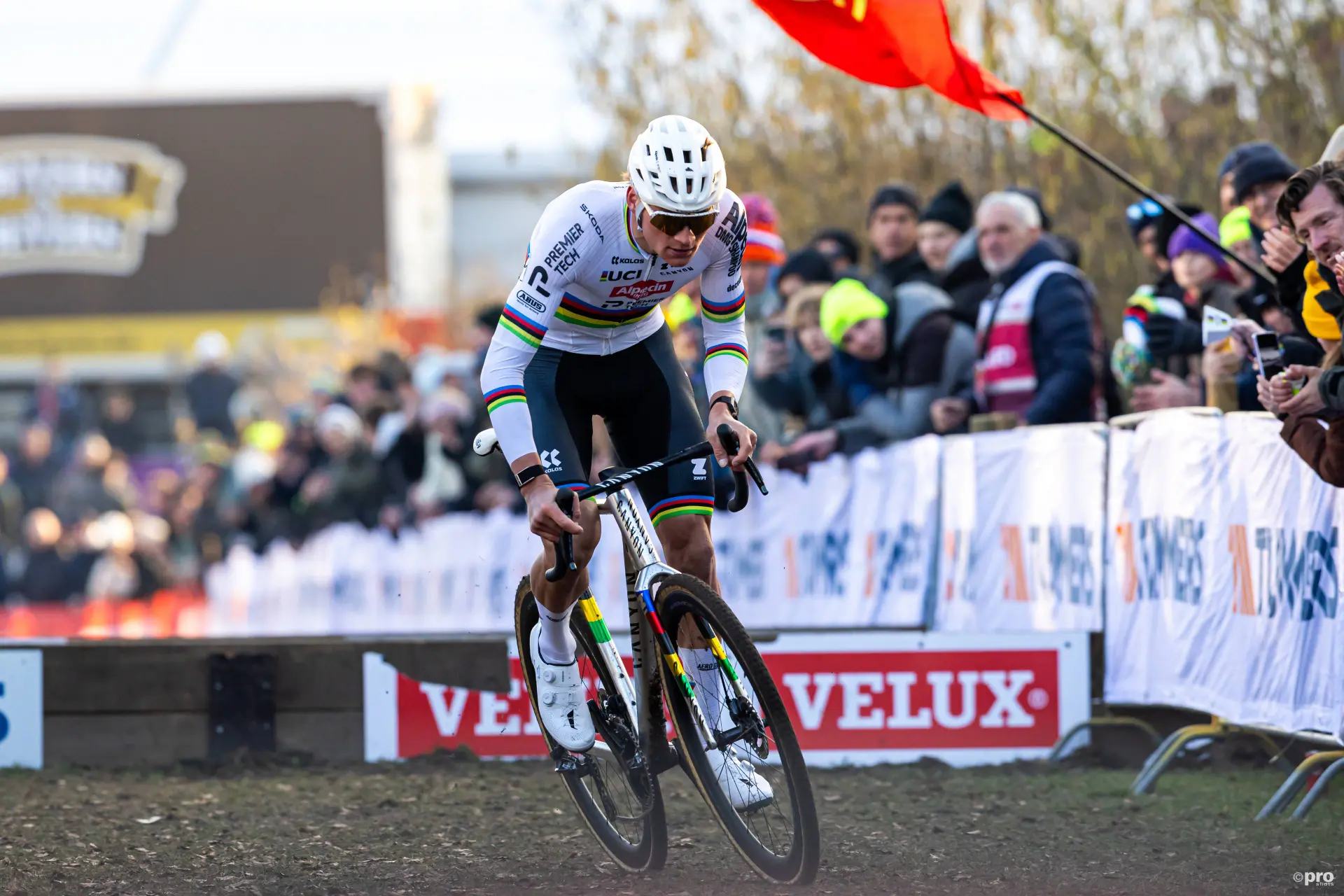
The issue is not racing. The issue is everything attached to racing when you are the headline act, the attraction, the world champion, and the man everyone has come to see. “I often say, take away the journalists and the crowds and those guys would race ten more crosses a year.”
It is a striking line because it flips the retirement conversation on its head. This is not about a rider wanting to do less cyclocross. It is about a rider who might happily do more, if the surrounding weight did not make it so draining.
Why this winter feels like a natural crossroads
This is not speculation created by outsiders. Van der Poel himself has openly acknowledged in recent weeks that there “has to be an end someday” to his cyclocross career. He has spoken about the idea of stopping on a high. He has wondered aloud what skipping a winter might do for his spring condition on the road.
That context matters.
Because the 2025 and 2026 winter has not looked like a farewell tour from a sporting perspective. Quite the opposite. It has looked like a carefully selected, high-level programme built around peaking for the World Championships and maintaining absolute dominance whenever he has pinned on a number.
Which is exactly why the timing feels significant.
If there were ever a moment where walking away would make sense, it is at the point where there is nothing left to prove in the discipline.
A strategic question, not just an emotional one
Nys added another layer to the discussion. “I can imagine him thinking: ‘What if I skip a winter of cross? How will my body respond in the spring?’”
That is not a romantic idea. That is a performance question.
Adrie agreed this is a realistic option, especially depending on how Van der Poel structures his road season. A calendar that leans towards the Vuelta and the Road World Championships rather than the Tour de France suddenly shortens the gap between road campaigns. A full cyclocross winter becomes harder to justify, not emotionally, but physiologically.
The combination of road and cross, as Nys put it, is “not straightforward”.
He referenced his son Thibau having only nineteen days of holiday last year. “On race days you are always ‘on’,” Nys said.
For Van der Poel, that ‘on’ switch is brighter and louder than for anyone else in the sport.
It is not the mud he is tired of
This is the key detail running through all of it.
There is no suggestion that Van der Poel has fallen out of love with cyclocross. Quite the opposite. The implication is that the love for racing is being crowded out by the obligations that surround it.
Ceremonies that drag on. Autograph sessions that stretch late into the evening. The expectation to be present, available, visible, every single time.
The very things that make him the sport’s biggest draw are, according to his father, the things that make the discipline harder to sustain year after year.
Which is why the retirement rumours have a different texture this time. They are not based on declining results or fading motivation. They are rooted in the human cost of being at the very top for so long.
The coming months will say a lot
Nothing has been decided. Van der Poel has not announced anything. He has not committed to this being his last winter, nor ruled out returning next year.
But when his father frames the conversation not around racing but around the weight of everything else, it becomes easier to understand why this moment feels like a genuine turning point.
The question is no longer whether Mathieu van der Poel still wants to race cyclocross.
It is how long he feels the rest of it is worth it.


Kieran WoodDeputy Editor-in-Chief
Kieran Wood is a sports journalist based in Wales and has been active in journalism since 2022. He regularly contributes to DartsNews.com and CyclingUpToDate.com, where he covers professional cycling and darts. In cycling, his work includes liveblogs from major races, including the Tour de France, the Giro d’Italia, and La Vuelta a España, alongside race reports and analysis. He has also conducted interviews with professional riders.
His reporting spans the full racing calendar, from one-day classics to stage races, with a focus on accurate, real-time coverage and clear contextual analysis. For statistics, results, and historical context, he regularly uses resources such as ProCyclingStats. To support reporting on rider activity and training context where relevant, he also references Strava.
In his work, Kieran places strong emphasis on careful sourcing, editorial accuracy, and updating articles as new, verified information becomes available.
claps 6visitors 6
Just in

Popular news
Latest comments
- He's 20, in two years or so he will be the guy winning everything.awp24-10-2026
- You're talking about being lucky if someone crashes out... I'm talking about quality.PogiSloFans24-10-2026
- He finished 2nd this year at the Tour. Pogacar crashed out of the Vuelta. If he had crashed out of the Tour, Remco would have won.acem8224-10-2026
- Lance never won a TdF, so not sure why he and Hincapie are listed here. I thought this was best domestiques for TdF winners.mij24-10-2026
- Pelizzaari is not Remco's domestiqueabstractengineer24-10-2026
- YetJumpyjohn24-10-2026
- Nibali got into the lead because he wanted the team car further forward in the caravan (I love this as a sign of tactical thinking). He solidified the lead on the rainy cobbles day when he was just brilliant, while other contenders crashed out on the wet roads. Strategic and skillful, yes, but the English roads weren’t as decisive as they might seem.RidesHills24-10-2026
- The Domedancy is the one designed for Seixas - anaerobic short climbs. Seixas isn't as good with the long climbs
 Rafionain-Glas24-10-2026
 - no i just type inivitable facts, nothing else. I wish UAE wasnt so damn good but hey the reality is they are. Visma on opposite direction crashing with no money and riders, coaches leaving mid contract ffs..i wish that wasnt the case but im not pretednig its not real when it is reality... RbH and Lidl i UAE cloesst opponents now thats clear. But if were real how can you stop that team with del toor and pogacar (greatest ever rider they made him) and you have mcnulty as a dom with (who would be captain in other teams and wins world and 10 more behind him..) history also says their the best team by far so what you want me to say? fake and be delusional and tell myself things? Its not a matter for praising anyone its a matter of beeing real nothing else, i wish visma for instance was better and like before but they cant buy any proper climbing guys cause their broke...heck they cant even keep their riders and coaches who flee mid contract what you want me to do lol.miguel24-10-2026
- Far as I recall, Nibali used the 2012 tdf UK stages to win it, most wanting to get them over with, cept he built his lead in them.. Armstrong's wrong, IF and it's an IF, the summers good in '27 like 26 then it'll be attritional.. if it's 'normal, then it'll be 50/50 on the weather, also the roads are VERY VERY narrow, very windng + on the 2nd steep short little climbs I know cause it goes thru my arse 👍
 leedorney24-10-2026
Loading
Write a comment