“It was a special moment”: Tibor del Grosso reflects on fleeting Maasmechelen lead as Van der Poel rewrites history
Cyclocross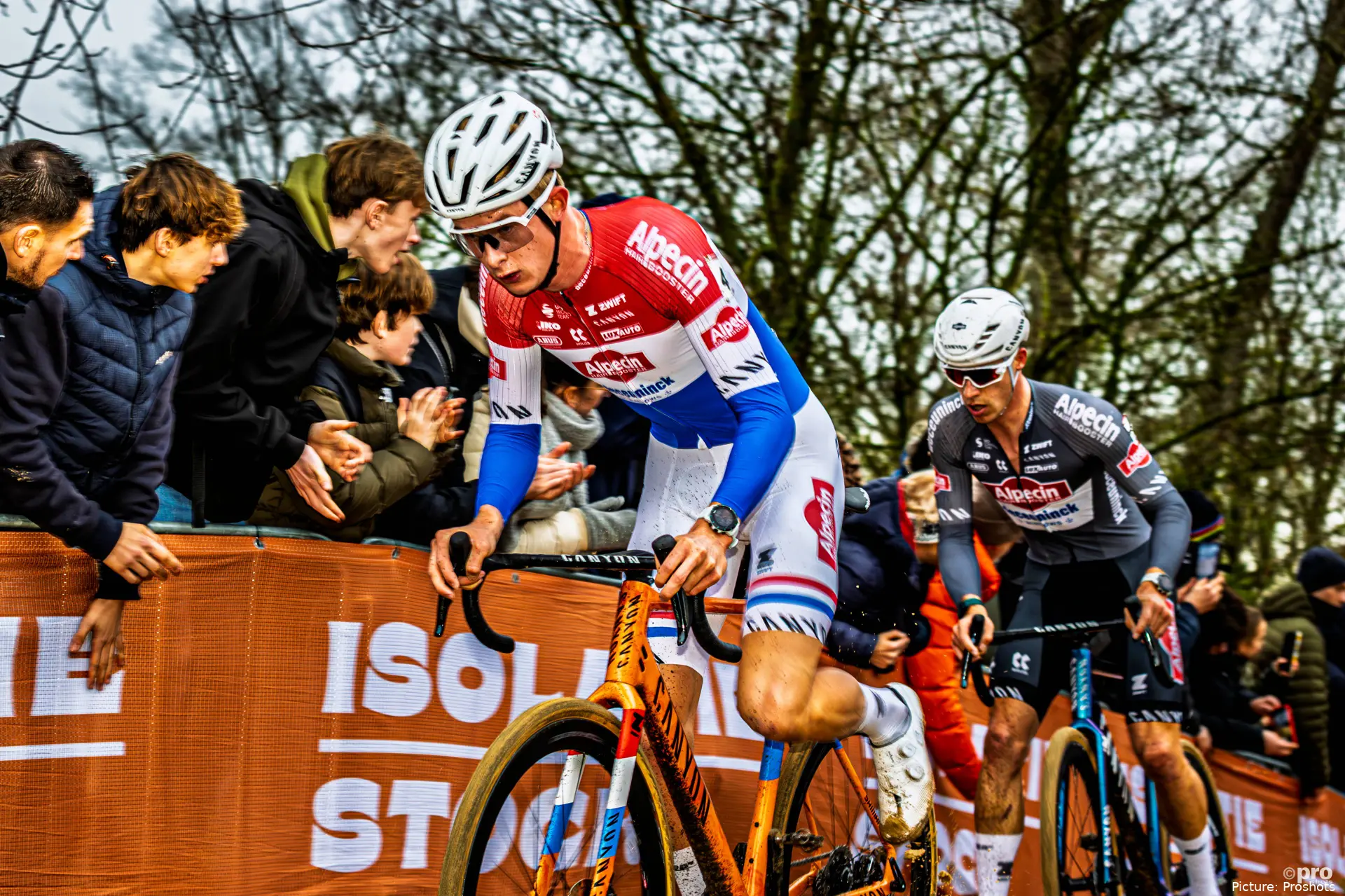
For a brief spell in Maasmechelen, Tibor del Grosso found himself in a position few riders have occupied this winter, alone at the front with Mathieu van der Poel temporarily out of the picture. It did not last, but it said plenty about the race, and about the rider who ultimately reclaimed control.
Del Grosso moved into the lead after Van der Poel suffered one of two punctures that defined his most dramatic outing of the season. The opportunity was real, even if the reality of what was coming quickly set in. “It was special for a moment,” Del Grosso admitted afterwards. “But I realised quite quickly that Thibau and Niels were coming back. And Mathieu was also coming quickly.”
A chance created, and taken seriously
That awareness did not stop Del Grosso from committing fully to the moment. With Van der Poel chasing and Thibau Nys and Niels Vandeputte closing in, the Dutch rider chose to ride his own race rather than wait for the inevitable.
“Did I think about winning? Yes, definitely,” he said. “And I tried as well. It just wasn’t hard enough.”
Those words neatly captured the dynamic of the day. Maasmechelen offered openings, but only briefly, and only to those prepared to take risks. Del Grosso did exactly that, riding assertively when the race fractured and forcing Van der Poel to work his way back the hard way.
Measuring yourself against the benchmark
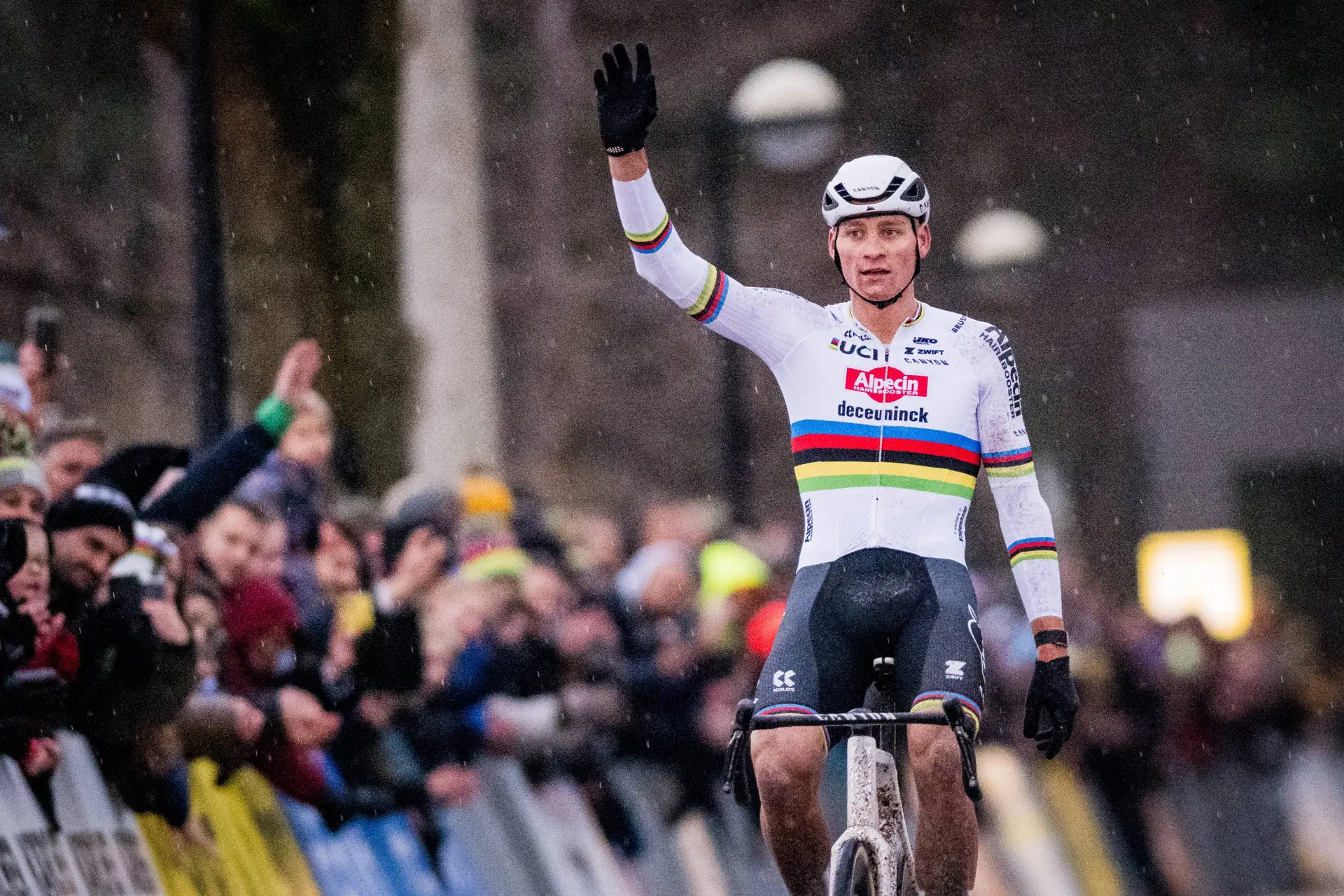
Del Grosso’s perspective mattered because it came from inside the race rather than from the outside looking in. He saw first hand how quickly the balance shifted once Van der Poel began his recovery, and how little margin there was for error when the world champion lifted the pace again.
Within a lap, the race had been reset. Van der Poel closed the gap, regrouped, and later delivered the decisive move that carried him clear to his 50th World Cup victory. What looked like a genuine opening became another example of how difficult he is to contain even on his most vulnerable days.
For Del Grosso, the moment at the front was still meaningful. It offered a measure of where he stands, and how small the margins are at the very top of the sport. For Van der Poel, it was another reminder that even when control is stripped away by punctures and pressure, his presence alone reshapes the race.
Maasmechelen will be remembered for Van der Poel matching a legendary record. But for those who briefly rode ahead of him, it also underlined a simple truth of this winter: chances exist, but they close fast, and sooner or later, everything bends back towards the same rider.

Kieran WoodDeputy Editor-in-Chief
Kieran Wood is a sports journalist based in Wales and has been active in journalism since 2022. He regularly contributes to DartsNews.com and CyclingUpToDate.com, where he covers professional cycling and darts. In cycling, his work includes liveblogs from major races, including the Tour de France, the Giro d’Italia, and La Vuelta a España, alongside race reports and analysis. He has also conducted interviews with professional riders.
His reporting spans the full racing calendar, from one-day classics to stage races, with a focus on accurate, real-time coverage and clear contextual analysis. For statistics, results, and historical context, he regularly uses resources such as ProCyclingStats. To support reporting on rider activity and training context where relevant, he also references Strava.
In his work, Kieran places strong emphasis on careful sourcing, editorial accuracy, and updating articles as new, verified information becomes available.
claps 1visitors 1
Just in

Popular news
Latest comments
- He didn't even try to sprint all outvappaxbipmv18-10-2026
- Campenaerts looked like a rolling pumpkin with that all orange leaders skinsuit !frieders318-10-2026
- He can take his dumb a$$ politics somehwere else !frieders318-10-2026
- good to have her back. fingers crossed she‘ll be able to stay!Ketterechts17-10-2026
- A tenner and he wins the Tour next year, too 😂anonymouscyclist17-10-2026
- the answer is either stick to classics or GTs but not bothabstractengineer17-10-2026
- the exodus already stared with Ciccone. Already they were struggling with two sprinters, now there are three. Also Ganna will demand leadership. Gall is the most proven GC, Ayuso has the most potential. GC leadership for everybody will be impossible. Literally a UAE style mess without pogi.abstractengineer17-10-2026
- I raced as an amateur for 12 years, including six years on my country’s national road cycling team. I secured two national titles and competed in three World Championships plus more than 15 international stage races. At 23, we travelled to Italy for a training camp—or so I assumed. On a rest day, we watched a presentation about adopting a more “professional” training approach. It was crystal clear what “professional” meant. That moment first exposed me to this dilemma. After returning from Italy, I left cycling—at least at the competitive level I had known. Over the following two years, the whole team was caught doping. I hold that everyone is innocent until proven guilty. In my view, current stakeholders operate on a different scale, and the sums involved are vast. I am unsure whether any doping would ever be revealed. I try to stay positive and enjoy the show. My 2c.
 vannpelt17-10-2026
 - Fiver he wins 🤣
 leedorney17-10-2026
 - “…measures to reduce speeds.” Might as well shorten the race course to just 50km as well? ASO generates at minimum €300m a year and 30- 40% profit. Maybe stop being greedy and spend more of the profit to protect the riders instead.b3tlla17-10-2026
Loading
Write a comment