“If you want to avoid risks, there is really only one solution: stay indoors” - Van der Poel’s boss blunt on crash risk after Van Aert’s winter-ending fall
Cyclocross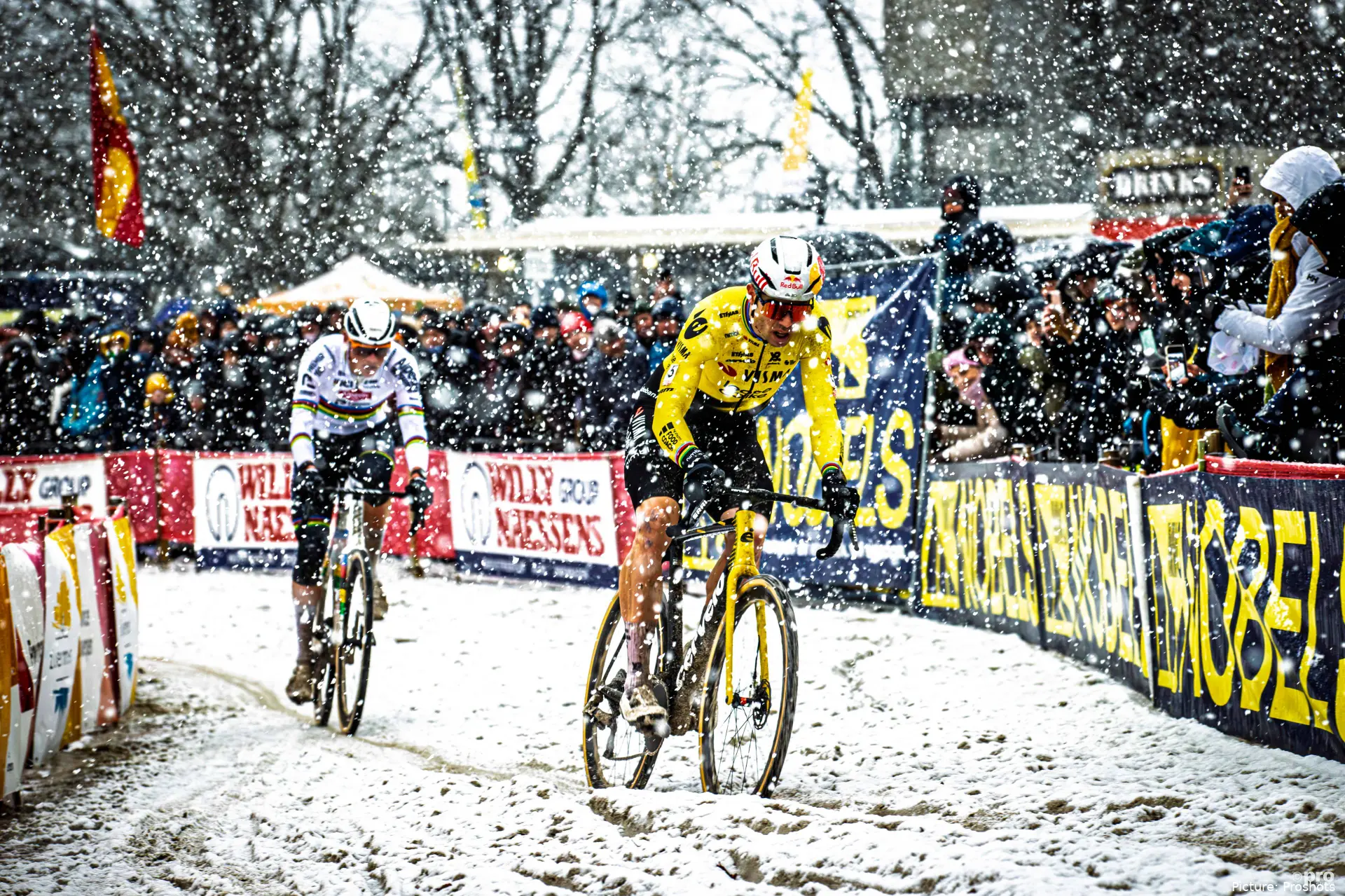
Cyclocross risk has returned to the centre of the conversation this winter, sharpened by Wout van Aert’s latest serious crash and the abrupt end of his campaign. But inside Alpecin-Premier Tech, panic has never been part of the response.
For team manager Christoph Roodhooft, crashes remain an unavoidable part of elite cycling, regardless of discipline, surface, or calendar slot. Asked about the inherent danger of racing, his view was blunt and unsentimental.
“In the end, you can run risks anywhere, even in training. You can say that there is the competitive aspect, and that is of course true. But if, as a rider, you want to avoid risks everywhere, then there is really only one solution: stay indoors,” Roodhooft tells Wielerflits.
Those words were not aimed at any individual rider or team, but they land in a winter where cyclocross risk is again under scrutiny. Roodhooft’s stance is clear. Risk is not something to be selectively feared. It is a constant that must be managed, not eliminated.
Dominance without complacency
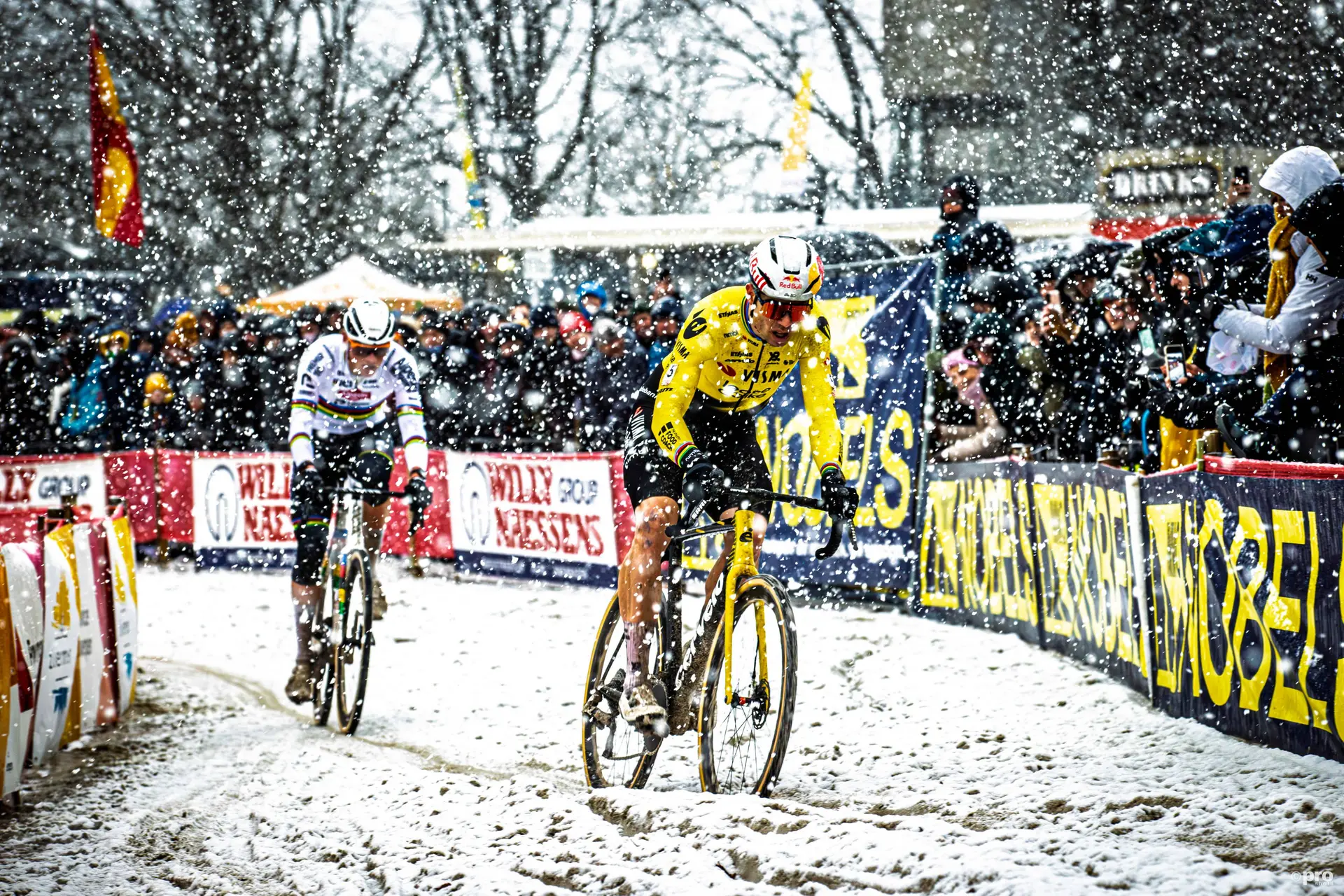
That pragmatic outlook has underpinned a remarkable Christmas period for Alpecin-Premier Tech, whose riders won almost every elite men’s cyclocross race over the festive stretch. Even so, Roodhooft was careful not to frame that success as inevitable or assumed. “The past few weeks have exceeded our own expectations.”
The results did not rely solely on Mathieu van der Poel’s familiar dominance. Tibor Del Grosso and Niels Vandeputte also converted opportunities when the world champion was absent, a depth of success Roodhooft had not pencilled in beforehand. “Somewhere we had hoped for one standout result for Del Grosso and one for Vandeputte, but they both won two races, which is very good.”
Efficiency, rather than superiority, was the internal takeaway. “They struck at the right moments, which is not always easy.”
Del Grosso and the next generation
Among those performances, Del Grosso’s emergence stood out most clearly. Yet even here, Roodhooft avoided definitive proclamations, preferring measured assessment over hype. “Whether Tibor can actually grow to that level, we will have to wait and see. But there is something there.”
The qualities that separate frequent winners from strong riders are not always visible in numbers alone. “Riders who win a lot often have a certain X-factor. And that Tibor has that, you cannot deny.”
That places Del Grosso firmly among the leading figures of his generation. “In that respect, he has become the challenger to Thibau Nys.”
For Roodhooft, the significance lies as much in age as in results. “It has been a long time since we have had such a talent at that age in the team. That can only be a good thing.”
Van der Poel, form, and restraint
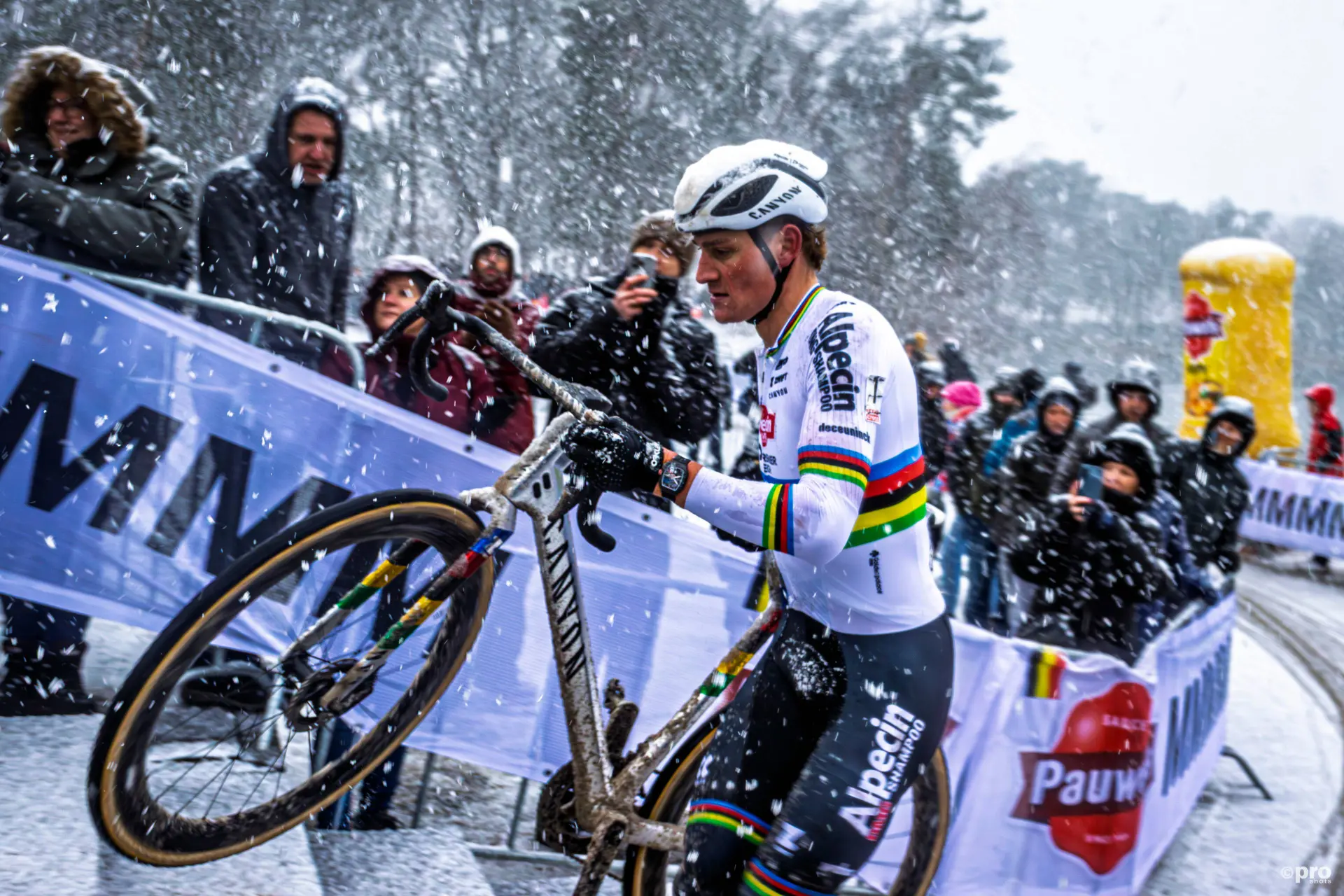
While winter results continue to pile up, Roodhooft remains resistant to drawing straight lines between cyclocross dominance and spring readiness. “The relevance of winning all those races is something different from being completely in order or good enough for the spring.”
He was clear that victory alone does not equate to completeness. “Just because he dominates these races now does not mean that he is in order in every respect. And vice versa, if he had lost a race, that also would not have meant that he is not good.”
Internally, there was no sense of alarm or over-correction, just continuity. “It was simply as it should be. Beyond that, I did not see anything special with Mathieu.”
Risk accepted, not dramatised
That same philosophy extends to crash risk, even in a winter shaped by high-profile incidents elsewhere in the peloton. For Roodhooft, there is little value in selective fear. “You can run risks anywhere.”
Cyclocross, training, road racing, all carry exposure. The response is not avoidance, but balance. “His cross campaign was compact, but in between he was also able to take his rest.”
The wider takeaway from Roodhooft’s remarks is not indifference, but realism. Crashes remain part of elite cycling. Dominance does not guarantee perfection. And risk, whether embraced or feared, cannot be engineered out of the sport.
Sometimes, the only alternative is the one he jokingly dismissed from the outset.

Kieran WoodDeputy Editor-in-Chief
Kieran Wood is a sports journalist based in Wales and has been active in journalism since 2022. He regularly contributes to DartsNews.com and CyclingUpToDate.com, where he covers professional cycling and darts. In cycling, his work includes liveblogs from major races, including the Tour de France, the Giro d’Italia, and La Vuelta a España, alongside race reports and analysis. He has also conducted interviews with professional riders.
His reporting spans the full racing calendar, from one-day classics to stage races, with a focus on accurate, real-time coverage and clear contextual analysis. For statistics, results, and historical context, he regularly uses resources such as ProCyclingStats. To support reporting on rider activity and training context where relevant, he also references Strava.
In his work, Kieran places strong emphasis on careful sourcing, editorial accuracy, and updating articles as new, verified information becomes available.
claps 6visitors 6
Just in

Popular news
Latest comments
- The article makes it sound like a great thing and something to be applauded. The reality is is gives the Americans another 6 years to fleece European cycling fans or force them to hunt around Europe with VPN’s for free feeds. Not something to be celebrated in my book. Before someone points out that coverage of this depth costs money, yes, I agree but not £30+ per month a fee I will wager will gradually increase now this deal has been cemented.Paul53119-10-2026
- Great. Thrilled. (Satire) Oh, how I miss the days of GCN. Still wear my GCN hoodie with pride.anonymouscyclist19-10-2026
- You could also look at it another way. How many riders have had better or more consistent results since the Tour?Jumpyjohn19-10-2026
- Whilst I love Tadej (and Remco, who deserves to be mentioned here, too), @JumpyJohn makes a valid point, and he isn’t wrong @MajorPayne. It is a fact that today’s official broadcasters of cycling struggle to keep our attention once the likes of Tadej (or Remco) attacks at ~80km or so. In the 142nd issue of Rouleur, Ned Boulting reflects on the often stressful paradox of commentating on a race that is effectively over before the broadcast window even hits its stride. In this edition, he centres on Remco’s 1hr solo at the Challenge Mallorca this year, and captures the panic and dread shared by the commentators when a dominant rider kills off the racing tension early. I recommend you read it, it’s a fascinating insight into the world of commentary, and the true viewing figures of today’s cycling. I must add here, I love Tadej and Remco, but I would be lying if my heart rate wasn’t higher when watching the World Championships this year. And I’m sure Rob Hatch would say something akin regarding his commentary!anonymouscyclist19-10-2026
- The shattered women’s marathon record was clean and highly surprising and then a few months later the athlete was very positive in another test for something not taken by mistake when recording far less impressive results. Sounds to me like the problem is still the age old one, detection is often way behind. Just like with crime, it’s not because you can’t catch the criminals that you aren’t aware of the crime.Jumpyjohn19-10-2026
- Listen, you have a point but on the other hand in cycling, once some of the riders go solo and build a minute’s gap, there’s hardly any action left to watch. Cycling is definitely not for today’s generations of accelerated viewing. Other people find skydiving or chess exciting but you can’t force everyone to feel the same.Jumpyjohn19-10-2026
- That’s a funny one. Yeah obviously he’s more aero than some but most of the aero effect at elite level is the bike. Now you have me starting to feel sorry for the guy behind him when he pulls a groupetto.Jumpyjohn19-10-2026
- Knew a World Tour promotion was coming for Ben this season. Thrilled for him, and can't wait to see what he can do at this level. Another one to watch at the TTs.anonymouscyclist19-10-2026
- It honestly breaks my heart to see this. I had a feeling this might happen over the last few years, but I kept praying it wouldn't, and that Joey would find his niche, especially back racing alongside his brother. After growing up racing alongside PH-MAS, the Pidcock brothers have always felt like one of our own, as we’ve watched them grow from Club level all the way up to PC and WT. I wish Joey nothing but the best of luck in whatever he does next, but selfishly… I do wish for him to move into the role of Q36.5 team staff.anonymouscyclist19-10-2026
- Predictable, sure! But boring??? OMG! Was Mike Tyson predictable and boring in his prime? Air Jordan? Schumacher or Senna? OMG!!!MajorPayne19-10-2026
Loading
2 Comments