Young American cyclist who almost upset Quinn Simmons at 2025 Nationals handed a 16-month ban for breach of whereabouts rules
Cycling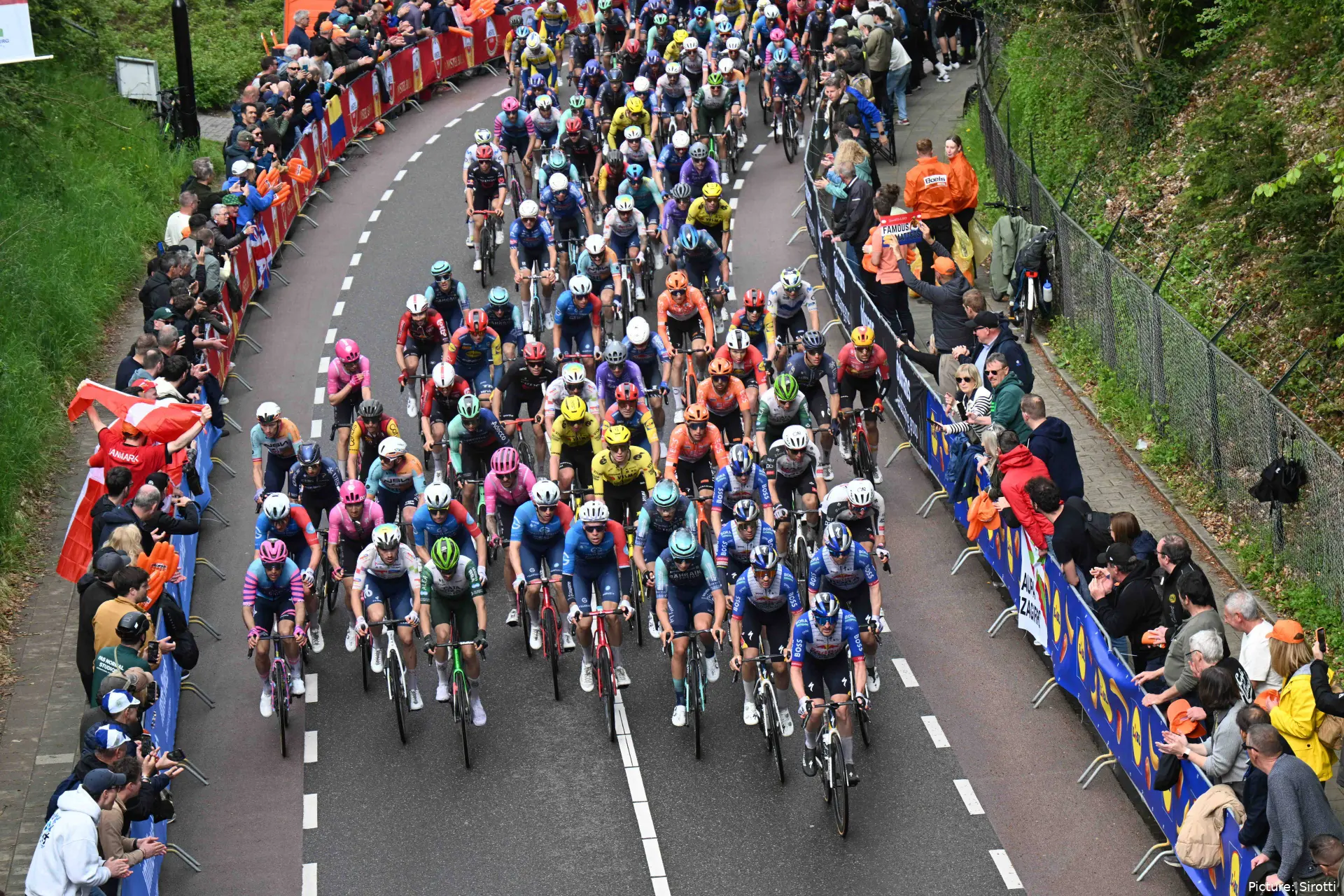
US cycling is back under the doping spotlight after the sanction handed to Evan Boyle. The 21-year-old has accepted a 16-month ban after accumulating three whereabouts failures within a 12-month span, as confirmed by the United States Anti-Doping Agency.
The case involves one of the promising young riders on the national scene, especially after his results at the US National Championships, where he claimed silver in the elite road race after a superb effort which saw only the American breakaway star Quinn Simmons surpass Boyle. He had also finished second in the under-23 time trial in 2023, and represented United States at the under-23 World Championships twice.
The sanction stems directly from the out-of-competition testing system to which the rider was subject. As USADA explained in its statement, Boyle was part of the registered testing pool, which requires athletes to provide their whereabouts for anti-doping controls at any time.
"Within a 12-month period, Boyle recorded three whereabouts failures: the first on 16.07.2025, the second on 16.08.2025, and the third on 02.10.2025," the official statement reads.
The rules are clear on this point: "Accumulating three whereabouts failures within a 12-month period constitutes a violation of the USADA Protocol for Olympic and Paralympic Movement Testing, the United States Olympic & Paralympic Committee National Anti-Doping Policy, and the Union Cycliste Internationale Anti-Doping Rules, all of which have adopted the World Anti-Doping Code."

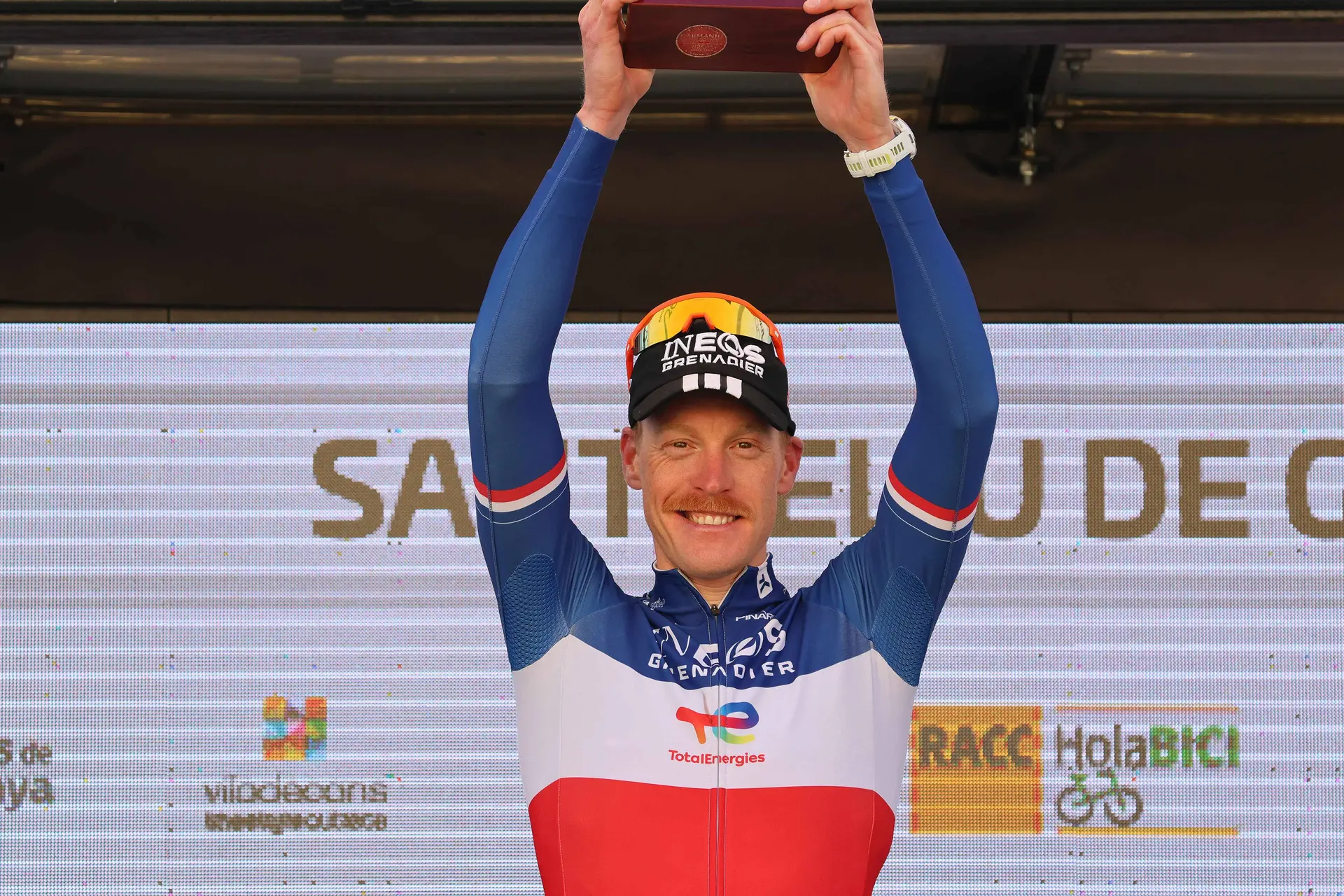
Quinn Simmons almost lost in the battle for 'Stars and Stripes' to Evan Boyle last summer
A sanction within the expected range
The US body also detailed the criteria applied to set the sanction. "The period of ineligibility for whereabouts violations ranges from one to two years, depending on the athlete’s degree of fault," the statement notes.
"In this case, USADA determined that a 16-month period of ineligibility was appropriate given the circumstances."
The suspension began on 08.12.2025, the date the third failure was notified, and will have retroactive effect on his results. Since 02.10.2025, Boyle has been disqualified from all competitions, forfeiting medals, points, and prizes obtained.
Immediate sporting impact
The rider, who had competed over the past two seasons with the development squad Hagens Berman Jayco, was set to start a new chapter with the Team Winston Salem-Flow in 2026. However, he never made his debut with the new setup.
His targets included racing the Ronde de l'Isard in May, a regular proving ground for upcoming riders. The sanction now halts his sporting momentum and sidelines him during a key phase of his development.
The case again underscores the importance of strict compliance with whereabouts rules in the international anti-doping system, where repeated administrative failures can still trigger significant sanctions.

Ondrej ZhasilCycling Journalist
Ondřej Zhasil is a cycling journalist at CyclingUpToDate and has been part of the team since 2023. He is based in Ostrava, the third-largest city in the Czech Republic, and covers professional cycling across the main UCI competitions, including the Tour de France, the Giro d’Italia, and La Vuelta a España. A key focus of his work is startlist analysis and pre-race coverage, where he examines team selections, rider line-ups, and tactical scenarios ahead of major events.
Alongside WorldTour coverage, Ondřej has developed specific expertise in junior cycling and in racing across East Asia, including competitions in China and Japan. He also maintains a broad working knowledge of other disciplines and levels, including cyclocross, while continuing to expand his understanding of mountain bike racing.
Ondřej holds a bachelor’s degree in Mathematics and Physics, which supports his analytical, data-driven approach to performance and race analysis. In his reporting, he regularly uses ProCyclingStats for results, statistics, and historical context. He places strong emphasis on careful sourcing, editorial accuracy, and updating articles promptly when new, verified information becomes available.
claps 10visitors 1
Just in

Popular news
Latest comments
- I watched Il Lombardia today... :) What a loser Remco is!MajorPayne10-10-2026
- Couldn’t agree more, @RidesHills. CyclingUpToDate endeavours to ban him, but he continues to create new accounts. He was banned from CyclingNews. Whilst I used to argue against his negativity, I’ve simply lost interest. He is so utterly boring. I was initially worried he'd bully other fans, but nobody's having it. Most of us simply pay him no mind, anymore. At this point, everybody just scrolls right past him. He is quite a coward though, I’ll tell you that. His toxic comments on this site are nothing compared to what he is able to post on Twitter.anonymouscyclist10-10-2026
- C’mon, don’t follow in Horner’s footsteps. At least he had the courage to post HIS prediction ahead, I didn’t see many others disagreeing or claiming it was ridiculous.Mistermaumau10-10-2026
- @SLO: Your ridiculously rude language about riders makes it really hard to read your consistently condescending comments. "BS losers," how is it ok to talk about people like that? Also, you truly sound like you do not understand that this is a team sport, where del Toro rides for his leader and therefore doesn't follow his attacks. We can all agree that we are watching a once in a generation (really, a once in a century) rider in Pogačar, and that's great, but come on, you don't have to be a jerk when it comes to other riders. It's clear that I prefer to praise the positive in what I see, mostly because I am in awe of what these humans can do (including the ones who don't win), but your negativity about anyone but your idol is just so very very exhausting.RidesHills10-10-2026
- Huh??? You’ve obviously forgotten all the contrary you’ve been trying to sell us the last weeks. Shall I dig some out for you?Mistermaumau10-10-2026
- Doesn’t sound like it from his post-race interview. That old record you’re still playing is starting to jump a bit too often.Mistermaumau10-10-2026
- Sorry but who is this guy? If HE doesn’t know that « much » about Seixas by now, I’m recalibrating my opinion of his finish line questioning. As for PS, the most amazing thing about him so far is not what he’s won or almost won at this age, although that’s already phenomenal, it’s how consistent, numerous and long this seasons’ results have been. I don’t think there’s ever been a 19/20 year old quite as developed. Of course, you can’t expect development at this level to go backwards in time but it’s amazing to witness a rider you assume won’t be able to keep things up forever prove you wrong.Mistermaumau10-10-2026
- I agree, it was a good feeling to end the season this way... and only hope the knee injury held Del Toro back. Some how I have a feeling it wasn't just that... I wish my feelings are wrong.PogiSloFans10-10-2026
- Seixas is an amazing rider. Remco disappointed. Del Toro should rather have withdrawn if he had an injury linked to over-training. Anyway, a satisfying end to the season.Hills3310-10-2026
- History books won't care who had good legs or bad legs, or who did or didn't get laid last night; what the history books say is that Del Toro and Remco are two losers, while Seixas is a Monument winner at the age of 20. Let's not forget who was the only one that could follow Pogi in Strade Bianche. Paul Seixas, not Del Toro. Ad acta!!!PogiSloFans10-10-2026
Loading
Write a comment