"You don't go to the Tour to learn, you go to win": Expert suggests Paul Seixas shouldn't make any half-attempts
Cycling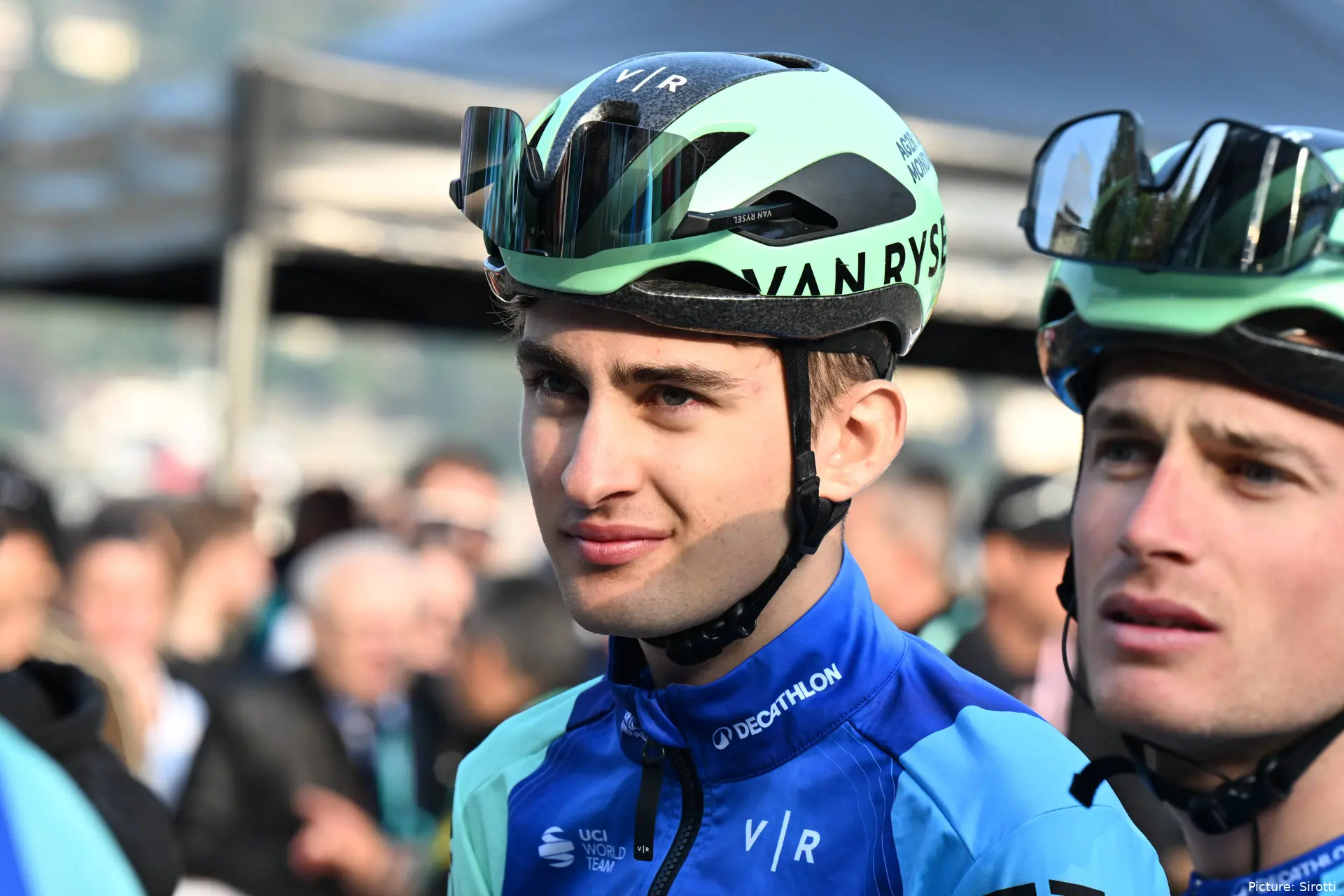
The 2025 season was similar to 2024 in the sense that Tadej Pogacar won anywhere he landed his feet, unless his opponent was Mathieu van der Poel. Next year, we cannot expect a massive shift in the world's order, however French cycling has an ace up their sleeve for the foreseeable future. That card has a name of Paul Seixas written on it. The young prodigy's uprise this year was closely followed by every cycling fan, including former French national coach Cyrille Guimard.
"I think we've had a great year, marked by some real exploits," Guimard analyzed the past year in an interview with Cyclism'Actu. "Above all, I feel that cycling is rediscovering what has always been its strength: rivalries."
In recent years, it was Jonas Vingegaard against Tadej Pogacar at the Tour de France, but now mainly the Slovenian's battles with Mathieu van der Poel at Classics are what attracts crowds.
"In the days of Anquetil, Poulidor, and Robic, that's what thrilled the public. Today, we have Pogacar, but he lacks a real long-distance opponent. Vingegaard is a great rider, but there's no established duel between them. Cycling thrives on rivalries between stars, not just between 'great champions.'"
"In the Grand Tours, there's only one star: Pogacar. In the Classics, we have Van der Poel, Pogacar, and Evenepoel as the third man. And I have the feeling that we'll quickly shift towards a real confrontation between two generations: Pogacar and Paul Seixas."
The French expert and former national coach then reminds how privileged the French cycling is to have the extremely talented riders such as Paul Seixas coming through these days. And it's not only about the young climber.

Paul Seixas on podium in Ardeche, next to Remco Evenepoel and Tadej Pogacar
"When riders have talent, panache, a smile, and a real connection with the public, it changes everything. And we're lucky in France, because with Seixas and Paul Magnier - who is becoming one of the world's leading sprinters - we may have two riders of popularity capable of regenerating the interest of the general public."
The freshly 19-year-old supertalent already convinced everyone of his tremendous potential this year with 3rd place at the European Championships, 7th at Lombardia, or 8th overall at Critérium du Dauphiné. In years to come, the young rider could well replace Tadej Pogacar, then his name will be brought up more often than others. But won't the pressure be too much?
"We talk about it a lot, and that's normal. What he's been doing for the past two years is huge. The real risk isn't to 'burn him out' physically; talent doesn't burn. It's to shake him up psychologically with excessive expectations."
Tour de France - if and when?
French crowds, as impatient as ever, would love to have their next GC star immediately compete for yellow jersey at the Grande Boucle, but wouldn't 2026 be too soon?
"We hear the same arguments as in Hinault's time: 'Should we put him on the Tour straight away?' I've experienced these debates. And I repeat: you don't go to the Tour to learn, you go to win. A rider like Seixas can't just come and finish 6th or 8th. When he comes, it will be to fight for victory."
"Today, he doesn't yet have the physiological and mental maturity. That comes around at 21-22 years old. 2026 must be a year of construction, based on the classics, the one-week races, learning the cobblestones, the eaves, the trajectories... learning to rub shoulders. That's what it means to become a complete rider. Then he can aim for a Grand Tour. But not before he's equipped to win, not to 'participate,'" Guimard concludes.

Ondrej ZhasilCycling Journalist
Ondřej Zhasil is a cycling journalist at CyclingUpToDate and has been part of the team since 2023. He is based in Ostrava, the third-largest city in the Czech Republic, and covers professional cycling across the main UCI competitions, including the Tour de France, the Giro d’Italia, and La Vuelta a España. A key focus of his work is startlist analysis and pre-race coverage, where he examines team selections, rider line-ups, and tactical scenarios ahead of major events.
Alongside WorldTour coverage, Ondřej has developed specific expertise in junior cycling and in racing across East Asia, including competitions in China and Japan. He also maintains a broad working knowledge of other disciplines and levels, including cyclocross, while continuing to expand his understanding of mountain bike racing.
Ondřej holds a bachelor’s degree in Mathematics and Physics, which supports his analytical, data-driven approach to performance and race analysis. In his reporting, he regularly uses ProCyclingStats for results, statistics, and historical context. He places strong emphasis on careful sourcing, editorial accuracy, and updating articles promptly when new, verified information becomes available.
claps 0visitors 0
Just in

Popular news
Latest comments
- He didn't even try to sprint all outvappaxbipmv18-10-2026
- Campenaerts looked like a rolling pumpkin with that all orange leaders skinsuit !frieders318-10-2026
- He can take his dumb a$$ politics somehwere else !frieders318-10-2026
- good to have her back. fingers crossed she‘ll be able to stay!Ketterechts17-10-2026
- A tenner and he wins the Tour next year, too 😂anonymouscyclist17-10-2026
- the answer is either stick to classics or GTs but not bothabstractengineer17-10-2026
- the exodus already stared with Ciccone. Already they were struggling with two sprinters, now there are three. Also Ganna will demand leadership. Gall is the most proven GC, Ayuso has the most potential. GC leadership for everybody will be impossible. Literally a UAE style mess without pogi.abstractengineer17-10-2026
- I raced as an amateur for 12 years, including six years on my country’s national road cycling team. I secured two national titles and competed in three World Championships plus more than 15 international stage races. At 23, we travelled to Italy for a training camp—or so I assumed. On a rest day, we watched a presentation about adopting a more “professional” training approach. It was crystal clear what “professional” meant. That moment first exposed me to this dilemma. After returning from Italy, I left cycling—at least at the competitive level I had known. Over the following two years, the whole team was caught doping. I hold that everyone is innocent until proven guilty. In my view, current stakeholders operate on a different scale, and the sums involved are vast. I am unsure whether any doping would ever be revealed. I try to stay positive and enjoy the show. My 2c.
 vannpelt17-10-2026
 - Fiver he wins 🤣
 leedorney17-10-2026
 - “…measures to reduce speeds.” Might as well shorten the race course to just 50km as well? ASO generates at minimum €300m a year and 30- 40% profit. Maybe stop being greedy and spend more of the profit to protect the riders instead.b3tlla17-10-2026
Loading
Write a comment