"We're 3 minutes from the winner – that’s an achievable gap": Tom Pidcock's Grand Tour winning dream more realistic than ever after breakthrough Vuelta podium says coach
Cycling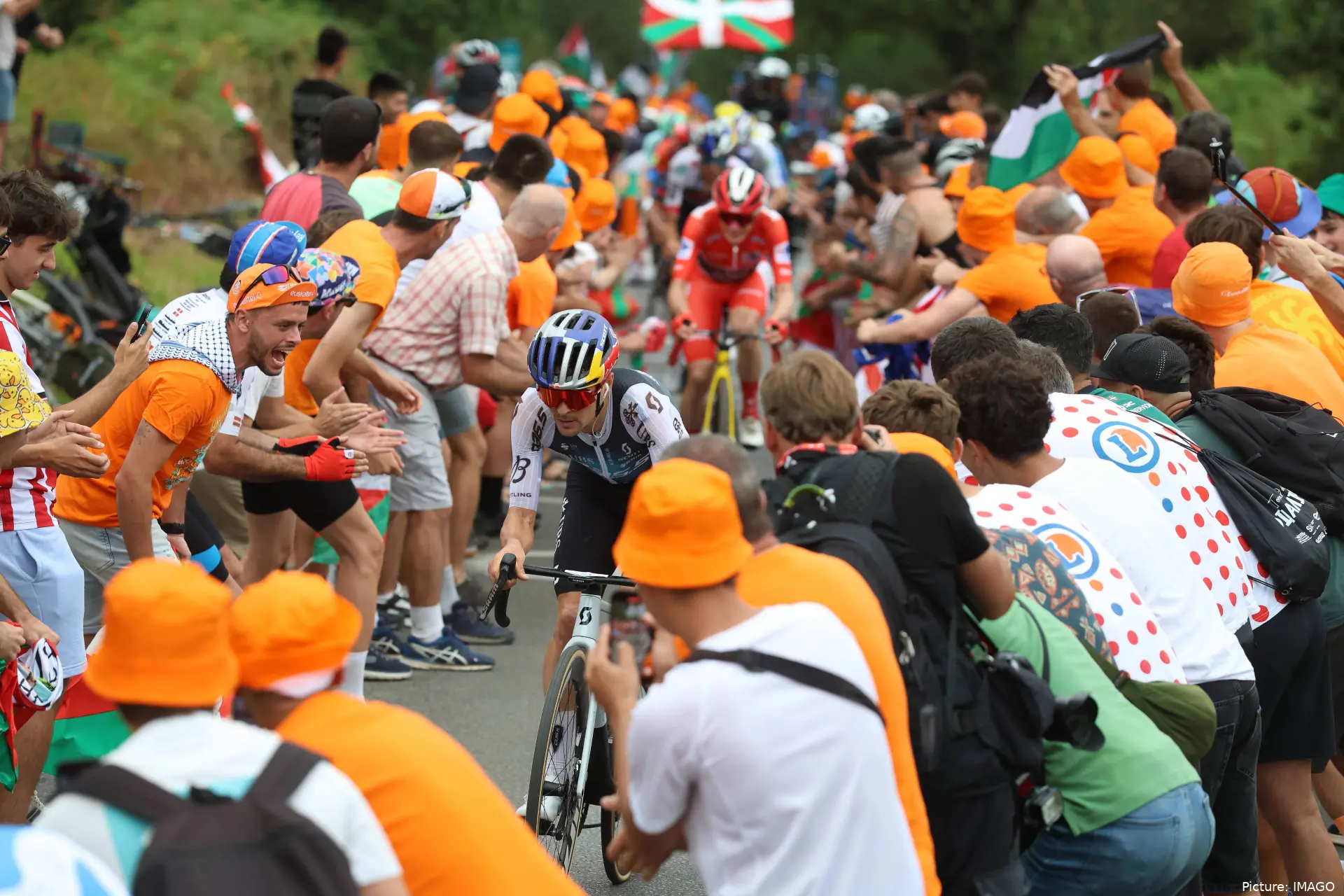
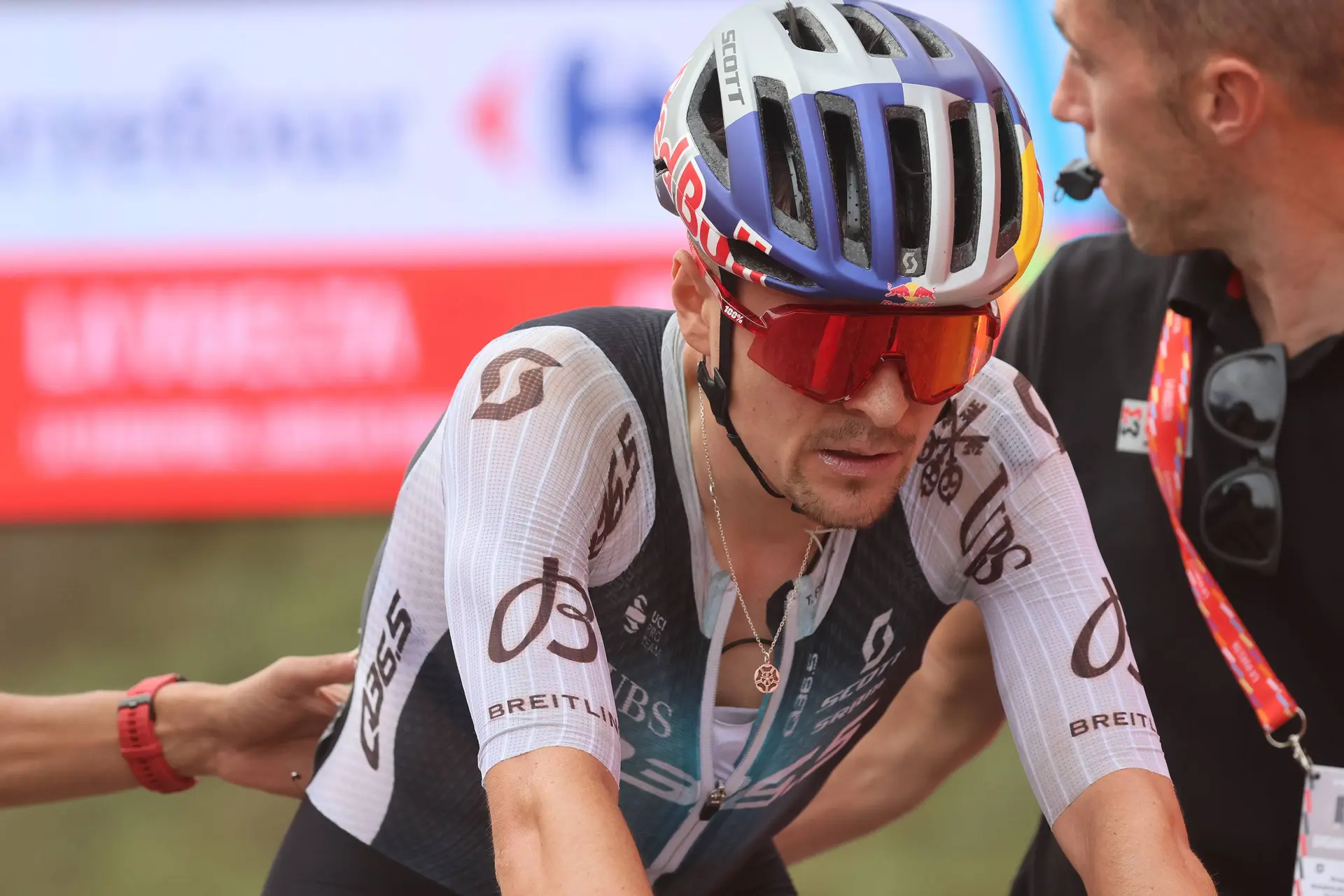
Tom Pidcock’s third-place finish at the 2025 Vuelta a España may not have dethroned the sport’s Grand Tour elite, but for his long-time coach Kurt Bogaerts, it marked something just as significant — proof that the British rider is now knocking loudly on the door of overall victory.
“We are three minutes from the winner. And now we know that if we will potentially win a Grand Tour one of these days, we need to close a minimum of three to four minutes,” Kurt Bogaerts told The Cycling Podcast this weekend. “I think that’s an achievable gap.”
Riding in the colours of Q36.5 Pro Cycling Team, Pidcock delivered a measured and mature three-week performance in Spain — comfortably his best GC showing to date. For Bogaerts, the result wasn't just about where Pidcock stood on the final podium in Madrid, but how he got there. “This is only the Vuelta, but it’s a step in the right direction for Tom with the numbers he was doing,” the Belgian said. “I think his body got a signal that it can recover during stages.”
That, perhaps more than anything, is the breakthrough. Pidcock’s talent has never been in question — he was winning mountain stages at the Tour de France as early as 2022, and has already worn rainbow stripes in cyclocross and Olympic gold in mountain biking. But sustaining GC form over 21 days had remained the unknown. The Vuelta showed he can now endure, adapt, and even thrive deep into the third week.

A measured path to Le Tour
Despite the breakthrough, Bogaerts was quick to temper expectations for the Tour de France, reiterating that neither he nor the team are in a rush. “I don’t think we need to go next year to try to win it, or only to go for the podium,” he said. “I think we try to copy this and analyse this event in detail. What can we do better? And what do we do well already?"
“Let’s make it achievable, the progression,” he added. “And you also need to know that the opposition will progress.”
That opposition — still defined by the sport’s ‘big four’ of Tadej Pogacar, Remco Evenepoel, Primoz Roglic and Vuelta winner Jonas Vingegaard — sets a high bar. But Pidcock and Q36.5 appear to be playing a long game, one based on performance data, maturity, and learning rather than headline-chasing ambition.
“If he puts his mind towards something…”
Still, ambition isn't lacking — least of all in Pidcock himself. “If he puts his mind towards something, he doesn’t fail much,” Bogaerts said of his rider’s mental resilience. That trait, coupled with his ability to race instinctively and recover deeply, has long hinted at GC potential. Now, there’s proof to back the theory.
Pidcock’s move to Q36.5 raised eyebrows when it was announced — leaving the proven Grand Tour machine of INEOS for a team still growing into its World Tour ambitions seemed a risk. But in hindsight, it may have given the Yorkshireman the freedom and focus he needed.
Less pressure. More responsibility. Clearer goals. And, most importantly, the chance to build something around him.

Kieran WoodDeputy Editor-in-Chief
Kieran Wood is a sports journalist based in Wales and has been active in journalism since 2022. He regularly contributes to DartsNews.com and CyclingUpToDate.com, where he covers professional cycling and darts. In cycling, his work includes liveblogs from major races, including the Tour de France, the Giro d’Italia, and La Vuelta a España, alongside race reports and analysis. He has also conducted interviews with professional riders.
His reporting spans the full racing calendar, from one-day classics to stage races, with a focus on accurate, real-time coverage and clear contextual analysis. For statistics, results, and historical context, he regularly uses resources such as ProCyclingStats. To support reporting on rider activity and training context where relevant, he also references Strava.
In his work, Kieran places strong emphasis on careful sourcing, editorial accuracy, and updating articles as new, verified information becomes available.
claps 2visitors 2
Just in
Popular news
Latest comments
- What a cheater Jay Vine is. Remco gained on everyone else pretty much evenly. But Vine? After he was caught, the gap grew at a suspiciously slow rate. Typical UAE
 Rafionain-Glas18-10-2026
 - Strade? Never saw him as a gravel rider that can handle it.mij18-10-2026
- It surprises me that anyone still believes any professional (or amateur!) sport is clean--much less wants it to be. The best you can hope for is a reasonably level playing field that doesn't expose young, ambitious athletes to health risks they don't understand. In that regard, World Tour cycling appears to do a better job than almost any sport with independent, random testing. There are certainly fewer mysterious midnight "heart attacks" these days. If you want to see what an uneven playing field looks like, show up to masters nationals. It is also certainly the case that no major pharmaceutical corporation has developed a multi-billion dollar miracle drug just to give it only to one or two anointed ectomorphs in a minor non-revenue sport. If you don't like that all sports run on PEDs these days and you can't be bothered to contribute as a tester, a federation official, or pharmaceutical representative, then just turn off the TV and play outside.
 MarkFour18-10-2026
 - Good grief, who proofreads this stuff? Errors abound.wrsty18-10-2026
- You can add weight to a bike and limit gears or make it single speed if you like. I doubt that would reduce crashes. It would just add another dymanique. All good and well, but It wont stop cars getting on to the course.Cyclingsbestfan18-10-2026
- Seixas is probably second best in the World on short climbs. But that hasn't translated as well to long climbsRafionain-Glas18-10-2026
- Idiotic fellaRafionain-Glas18-10-2026
- Nothing. Against Pogi nothingabstractengineer18-10-2026
- He didn't even try to sprint all outvappaxbipmv18-10-2026
- Campenaerts looked like a rolling pumpkin with that all orange leaders skinsuit !frieders318-10-2026
Loading
2 Comments