Tom Dumoulin on Yates' retirement and Visma: "I completely understand Yates, because I was in the same situation as him"
Cycling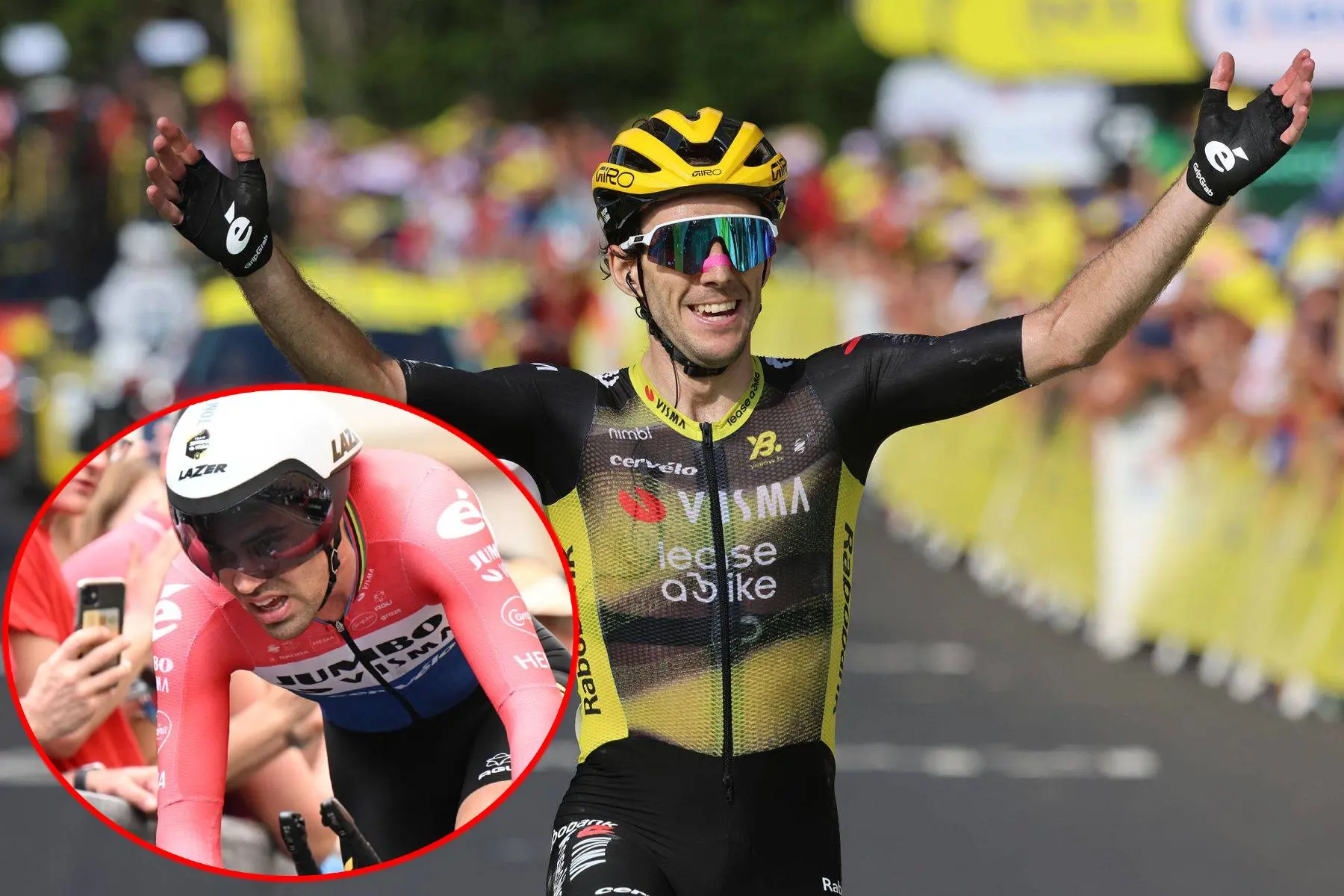
Tom Dumoulin was part of Team Visma | Lease a Bike for several years up to his retirement, and despite being a top level rider, he succumbed to the demands of the sport and the team he was part of. It can almost be said that he is the rider who understand Simon Yates the best, after the Briton decided to retire from the sport earlier this month.
"I was incredibly surprised when I saw it in the press. It was even unexpected for his teammates, so I can imagine the shock within the team. I completely understand Yates, because I was in the same situation as him," Dumoulin said in an interview with El País. From 2020 to the summer of 2022, Dumoulin was part of the Dutch team, after his prime years at Sunweb - now Picnic PostNL.
However in his previous team, he had more leadership, more freedom, and the ability to bring out the best in him. In modern cycling, there is little space for pro riders of any level to let their guard down, and the pursuit for progress is a constant, that is never abandoned throughout the year.
"Ultimately, cycling is one of the most demanding sports in the world, if not the most demanding. We're away from home all year round, the hours and intensity of training are extremely high, and then there's the pressure to win and the inherent risk of cycling. The demands are relentless."
"And there are riders who can handle those demands perfectly well, but there are also those who, despite being tough guys, perhaps have a better idea of where their limits are," he explains. He believes he was one of them, at a certain point. "I couldn't break out of that vicious circle. For years, my life revolved around cycling, cycling, and more cycling. Nothing else. Of course, with the pressure and the need to perform every day".
Professionalism can lead to depression and obsession
Dumoulin is a former Giro d'Italia winner and World Champion, whilst as recently as 2018, he rode to second place at both Giro and Tour de France. He is one of the riders who has achieved the most in recent years, but this doesn't open up space for there to be more ease.
"For years, I felt like I wasn't in control of my career. And in my case, not being in control of my career meant that I wasn't in control of my life. I felt like I always had to bow to the needs and wishes of others."
The need for improvement does not go away, and that specially applies over recent years as nutrition and training methods have changed significantly, and have forced riders previously at the top to adapt just to remain competitive at a similar level.
This can then take a toll psychologically. "Everyone had an idea of what I had to do at any given moment, but at the same time—and it's hard to say—no one ever asked me 'hey Tom, how are you?' It was exhausting. So much so that I became depressed. I even started to hate cycling. I hated the bike. I didn't want it in my life anymore."
Dumoulin believes that in Visma specifically, there is a higher risk of such a burnout happening. "Visma is the most professional and advanced team in the world, even more advanced than Pogacar's UAE. They base everything on data, on detailed analysis. Their system is so refined and everything is so structured that as a cyclist you can sometimes feel trapped".
Besides Dumoulin himself, the retirement of Yates and the potential retirement from 23-year old cyclocross World Champion Fem van Empel had already hinted at that. "That obsession isn't bad in itself, as the results clearly show, but at the same time, it creates such a heavy atmosphere that the pressure ultimately suffocates you."
The Dutchman argues that Yates' move to Visma helped accelerate a decision that Yates potentially had in mind already. Whilst it led to his Giro d'Italia victory, and a stage win at the Tour de France; the Briton likely lost the freedom he had when it came to his preparation, and this wasn't something he was keen on continuing.
"At Visma, every decision is debated. If you're not feeling well one day and decide to skip your training intervals, that leads to a lot of discussion within the team. I'm convinced a rider like Yates had more freedom at other teams. I'm sure he could put his phone down at Jayco and train the way he wanted, because those small adjustments to the schedule were accepted and understood. Visma is different. Everything is more demanding."
However, this is the nature of pro athletes, specially in cycling, where every detail matters. Dumoulin is aware that such sacrifices can very well shorten careers and take mental tolls on the riders, but this is not something that is going to change.
"I put it this way: if we were to ask any rider, young or old, what they would prefer: having fun, performing at 90% of their level and having no chance of winning, or giving 100% and risking their time, body, and mental health to try? Everyone, without exception, would choose the second option," he believes. "I did it myself. And yes, it led to me overtraining, burning out, and completely derailing. But looking back, I wouldn't have done it any differently. I wouldn't have known".
Rúben SilvaEditor-in-Chief
A founding contributor to CyclingUpToDate since its launch in January 2022, Ruben Silva has played a central role in shaping the site’s editorial direction and long-term growth. Before joining the project, he built his experience through independent blogging at Echelons Hub and by producing race previews for Ciclismo Internacional, developing a strong analytical voice rooted in daily engagement with professional cycling.
Beyond editorial work, he has been closely involved in the expansion and coordination of CyclingUpToDate’s wider network, helping establish and support sister platforms across multiple languages. This includes ongoing collaboration with CiclismoAlDia (Spanish), CiclismoAtual (Portuguese), WielrennenUpToDate (Dutch), and RadsportAktuell (German), contributing to a shared editorial vision and consistent international coverage.
He also helps oversee editorial governance across the network, setting standards for accuracy and consistency and coordinating updates or corrections when needed.
Originally from the Porto metropolitan area in Portugal, he holds a bachelor’s degree in Geography. His path into cycling journalism was shaped not through formal media training, but through independent reporting, community engagement, and sustained on-the-ground involvement in the sport.
Over the course of his career, he has conducted approximately 100 interviews across road cycling and cyclocross, ranging from one-to-one conversations and online formats to press conferences and on-site pre- and post-race coverage. His interviews include leading riders, team managers, and prominent figures within cycling media: Tadej Pogacar, Jonas Vingegaard, Mathieu van der Poel, Primoz Roglic, Wout van Aert, Joao Almeida and Tom Pidcock; managers like Patrick Lefevere and Joxean Matxin; and YouTube personality Bryan Kennedy (BKXC)...
Within 18 months of launch, he helped grow CyclingUpToDate’s English-language platform into one of the most-read cycling news websites, built entirely from the ground up. As both a professional journalist and lifelong cycling enthusiast, his focus remains on delivering accurate, timely, and well-contextualized coverage.
claps 1visitors 1
Just in
Popular news
Latest comments
- Crashes happen to everyone, he got sick in 2023 with covid when he was leading. He's not magic but he's currently the third best in the world. Not for long though, Seixas is coming!awp24-10-2026
- He has crashed, got sick or had a bad day even if Pogi and jonas were not there, There is no way 6+ is even possible.he manages to screw himself no matter who is there and of course everything else but himself is to blame. one day performance is not equal to GT performanceabstractengineer24-10-2026
- In 2024 Tadej, Jonas and Remco took over the first three places in a few mountain top finishes. Making them pretty much the best three climbers in the history of those climbs since they have been keeping records. If Tadej and Jonas weren't here Remco would have already won over six grand tours.awp24-10-2026
- Remco could conceivably take two minutes out of Tadej over 70km of time trials. That said, Tadej could take ten to fifteen minutes out of Remco in the mountains. The real tell about the time trials will be how comfortable Tadej will be after his back fracture, I had a burst fracture of my L1 in a bad cycling crash, when I returned it was hard to tt fast because I couldn't make power being so low in the ski's like I did before the crash.awp24-10-2026
- I believe you should support your argument with relevant examples. Pogi’s wasn’t an organisational problem and the TdF has a pretty good track record regarding rider safety (comparing to other organisers). You could also make a few suggestions to help those who don’t seem to manageJumpyjohn24-10-2026
- If you want peoples to believe you’re called Miguel, at least make the kind of errors a Miguel would and stop being so Mouey. All you do is repeat how much you love anything UAE and hate anything Visma, you can’t even make it seem as if you enjoy cycling, all your enthusiasm goes towards bashing and pumping those 2.Jumpyjohn24-10-2026
- I actually expect Remco to crash or have a bad day due to the aircon or something.abstractengineer24-10-2026
- Pogi took 3 minutes in one stage over Remco and Remco gave up. Pogi beat Pantani's record by a Minute on Alpe DHuez while taking 2 minutes over Remco. Remco only relies in crashes and TTs for his GC.abstractengineer24-10-2026
- He wont get the moneyabstractengineer24-10-2026
- PogiFanSlobberBoy once again clowning here! Look in the mirror and you'll see the foolish one!frieders324-10-2026
Loading
Write a comment