"This year something may change for Pogacar" Jayco SD on Mathieu van der Poel’s Sanremo problem
Cycling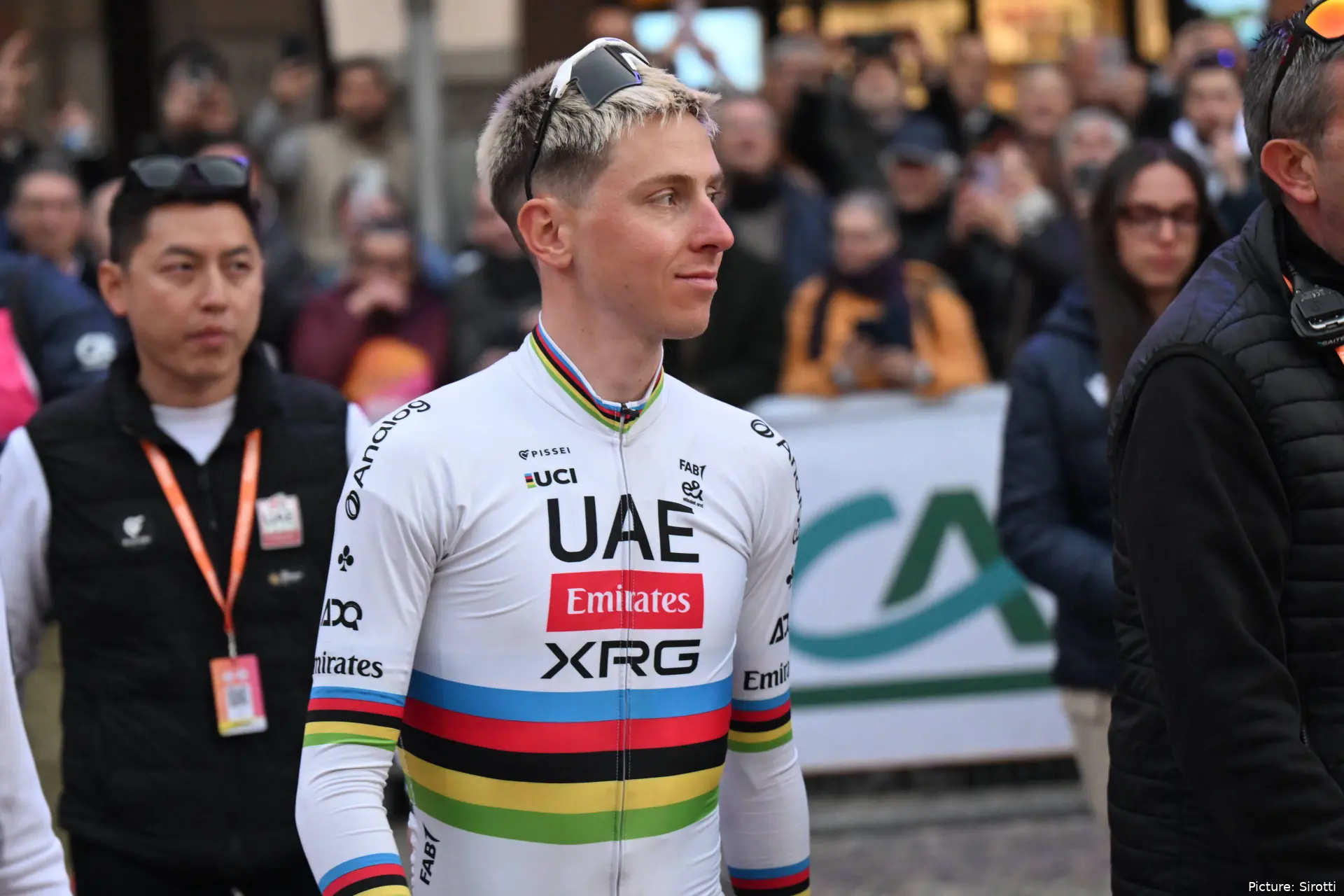
Valerio Piva, sports director at Team Jayco AlUla, believes that the presence of Isaac Del Toro alongside Tadej Pogacar could fundamentally change the tactical balance of Milano-Sanremo, giving UAE Team Emirates - XRG a strategic advantage the Slovenian has not always had in previous editions of La Classicissima.
Speaking to BiciPro, the experienced Italian director revisited a comment he made some time ago, one that has become even more relevant heading into this year’s race.
"To win Sanremo, Tadej Pogacar needs a teammate who can win it too."
According to Piva, Del Toro could be exactly that rider. The Mexican has already shown he has the strength and explosiveness to survive the decisive phases of major races, and his presence forces rivals such as Mathieu van der Poel, Wout van Aert or Filippo Ganna to react differently.
Instead of focusing solely on Pogacar, they may have to cover multiple threats, something that could open the door for UAE Team Emirates - XRG to play a more complex tactical game.
Piva outlined a possible scenario in which Tadej Pogacar attacks early, perhaps already on the Cipressa, forcing the race to split. In that situation, riders like Mathieu Van der Poel or Filippo Ganna would be expected to respond, but Isaac del Toro could then counterattack, creating hesitation behind.
"Having a rider like him in the team allows you to play the final differently. He can attack from behind and force the others to move, because they also have to watch him."
The Italian pointed out that this kind of situation is very different from when Pogacar is the only clear favourite and the only rider capable of making a decisive move. With Del Toro present, rivals cannot afford to wait only for the Slovenian, which could make the race more unpredictable.
However, Valerio Piva also admitted that such a strategy carries a risk.
"It is certainly different from when you are the only favourite and the only rider who can really attack hard. But it is also true that this way you risk the other rider winning."
For UAE, though, that may not necessarily be a problem, as the main objective would still be to win the race, regardless of which rider crosses the line first. Piva recalled a similar tactical situation from his time at BMC, when the team used Samuel Sánchez to force moves before Philippe Gilbert delivered the decisive attack.
"In the BMC era, for example, we won an Amstel Gold Race by playing it tactically against Samuel Sánchez. I encouraged him to attack on the Cauberg, and that opened the door for Philippe Gilbert to go clear. Everyone reacted to Sánchez’s move, and that allowed Gilbert to launch the counter-attack."
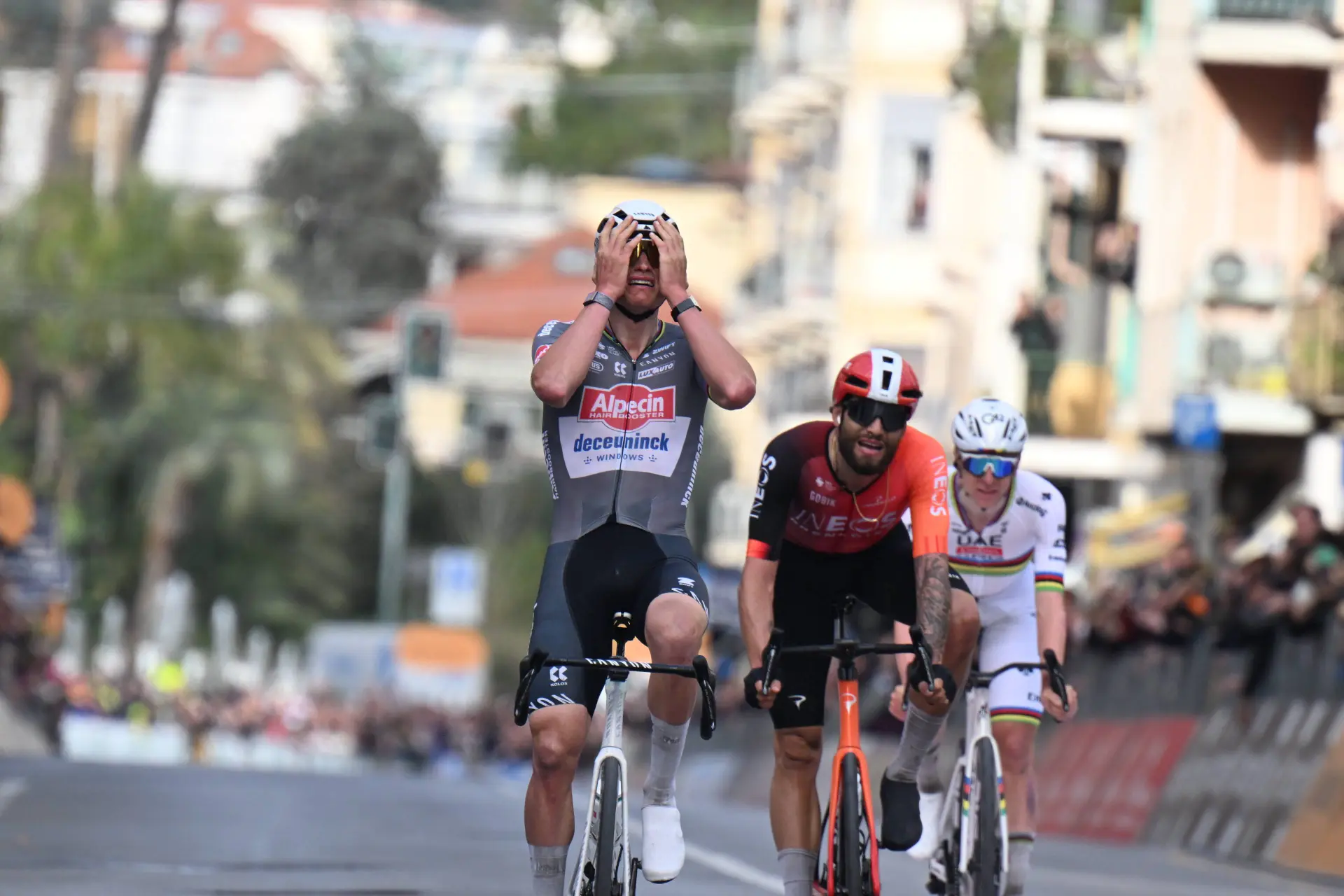
When discussing Pogacar’s chances specifically, Piva once again highlighted the same issue that has followed the Slovenian for several years in Milano-Sanremo: the Poggio may simply be too short for him to make the difference on his own.
"The Poggio is too short for him. He needs to drop everyone, and there is always someone who stays there: Van der Poel, Van Aert or some young rider."
Because of the high speeds and the relatively moderate gradient of the climb, it is extremely difficult to create a decisive gap, especially against riders who combine climbing ability with sprint speed. That is why Piva believes the key could be to make the race as hard as possible before the final ascent.
"The goal is to make the rivals as tired as possible on the Poggio. And Del Toro can do a lot there, he can make the race difficult well before the final climb."
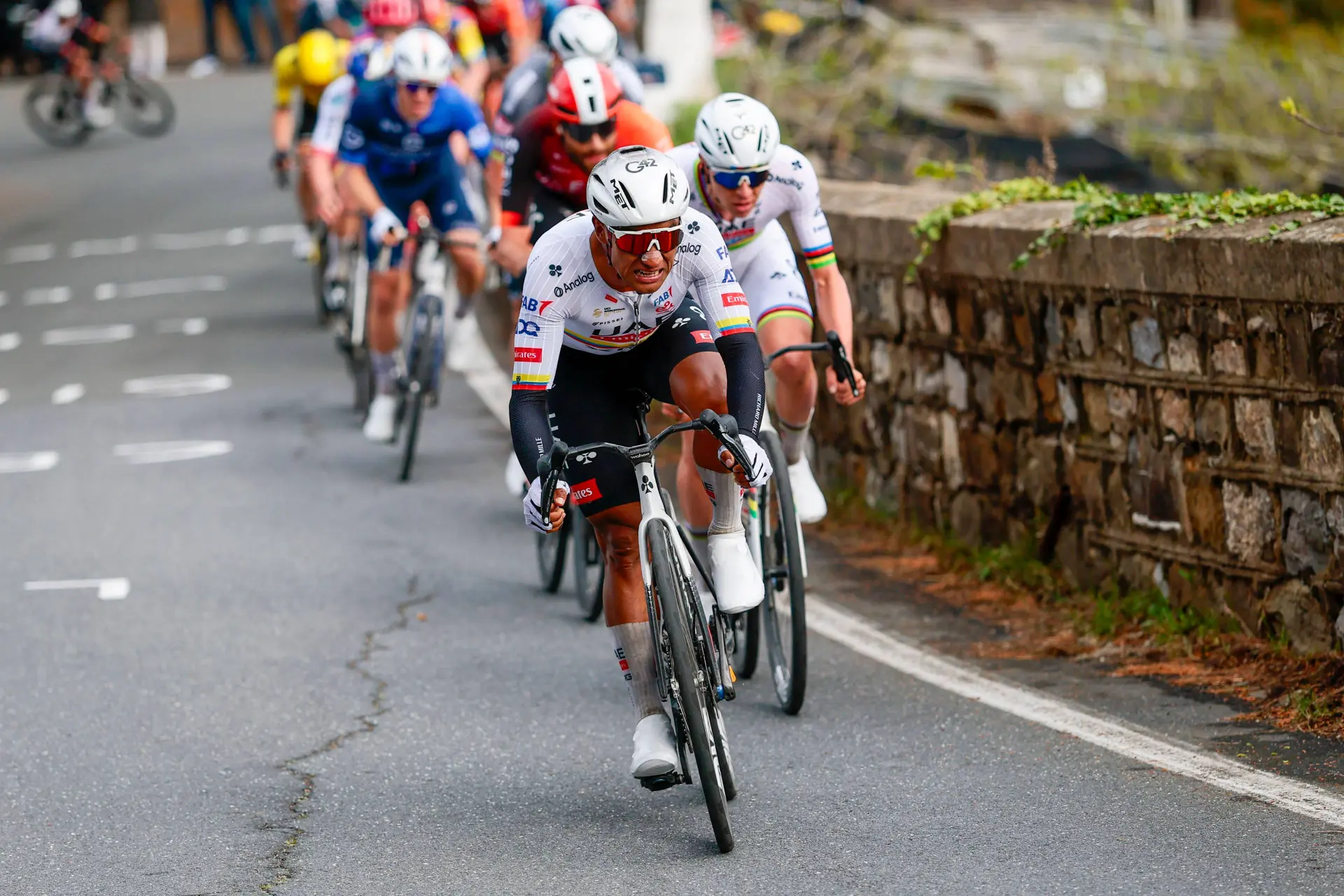
In Piva’s view, the Cipressa could be the real turning point this year if UAE decides to race aggressively. Instead of waiting for the Poggio, the team could start the selection earlier, forcing the strongest riders to respond repeatedly.
"I would go hard on the Cipressa… I would launch Del Toro first, trying to change things... At least with the team’s success in mind. On the other hand, if the goal is to make Pogačar win, then I would try to arrive at the Poggio and have Del Toro start the move there at full gas, and then launch Pogačar afterwards. The problem is that the only really selective point is those 300–400 metres near the top, and now everyone knows it."
Such a move could force riders like Van der Poel to chase, potentially costing them valuable energy before the final kilometres. If Pogacar then attacks on the Poggio after sitting in the wheels, the balance of power could shift in his favour.
Still, Piva warned that even with aggressive tactics, Milano-Sanremo remains one of the most unpredictable races on the calendar. A rider attacking too early risks being caught by a small group working together behind, especially on the flat run-in towards the Poggio.
"Even 20–30 seconds may not be enough… Sanremo is based on these delicate balances."
He explained that if Pogacar finds himself alone with a small advantage while several riders cooperate behind him, the effort required to stay away could leave him vulnerable in the final climb or the sprint. That is why timing is everything in La Primavera.
Read also
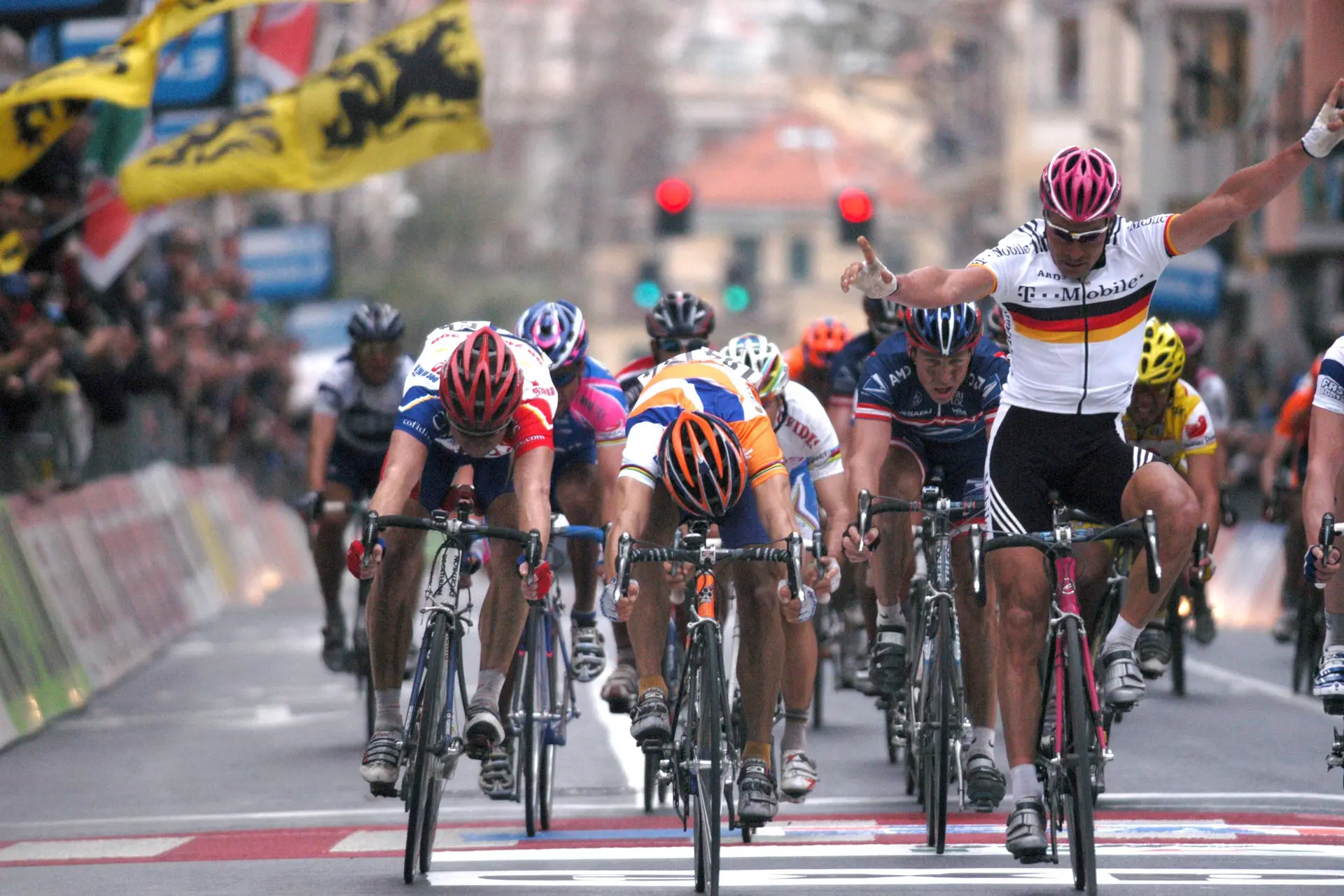
Piva also stressed that Pogacar cannot approach Milan-Sanremo the same way he approaches many other races, where his climbing ability allows him to decide the race whenever he wants.
"Sanremo is not like other races for Pogacar, where he decides when to go and can win by big margins."
Despite the uncertainty, the Italian believes that this year’s edition could offer a different opportunity precisely because Pogacar is not alone.
"This year, having a very strong partner who can really win, maybe something changes."
In the end, Piva summed up the essence of Milan-Sanremo with a reflection that captures why the race remains so fascinating for riders and fans alike.
"It is Sanremo. Even if you are the favourite, it is not guaranteed that you win."
With Pogacar chasing one of the few monuments still missing from his palmarès, Van der Poel defending his status as one of the masters of the race, and Del Toro potentially playing the role of tactical wildcard, the stage is set for another edition where strategy, timing and endurance will matter just as much as pure strength.
Carlos Silva is a writer for CyclingUpToDate.com, where he contributes race reports, interviews, analysis pieces, and live coverage of the international cycling calendar. Holding a degree in Sports from the Jean Piaget Institute, he combines academic knowledge of performance, training, and competition with hands-on journalism experience in professional cycling.
Throughout his career, Carlos has conducted interviews with leading figures in the sport, including Alberto Contador, Joaquim Rodríguez, Óscar Pereiro, João Almeida, Isaac del Toro, Derek Gee, John Degenkolb and Geraint Thomas. These conversations reflect direct engagement with Grand Tour winners, Classics specialists, and emerging talents.
He has provided on-site coverage at major events ranging from the Vuelta a España to the Tour de France, alongside stage races such as Vuelta a Andalucía, Volta ao Algarve, Volta a Portugal and O Gran Camiño. Covering the mythical climbs of the Giro d'Italia remains one of his professional ambitions.
Carlos is responsible for liveblog coverage of all major WorldTour races and beyond, including the Tour de France, Giro d'Italia and Vuelta a España. His reporting integrates verified data from ProCyclingStats to ensure statistical accuracy, contextual depth, and analytical precision.
A lifelong cycling enthusiast, he approaches storytelling across written, photographic, and video formats with a focus on credibility, tactical insight, and informed race interpretation.
claps 0visitors 0
Just in
Popular news
Latest comments
- An ILLUSION is something that appears real or true, but is actually false, fake BS or a misinterpretation of reality. Saying that, the anti-doping bodies are an important part of cycling. Thanks to their hard work, the community can live in an ILLUSION that the current cycling is a "clean sport." In other words, cyclists like Pogi, Remco, Jonas, MVDP, Van Aert, Pidcock, Mads Pedersen, tilted head Ben Healy... might all be doped to the gills but we'll never know it.PogiSloFans15-10-2026
- i hope they DO, so sven has to eat this stupid argument he’s making.OCexile15-10-2026
- They’ll retire anyway sooner or later, so get over it!Lozza15-10-2026
- Hope it’s not gone for good!Lozza15-10-2026
- I can no longer take you seriously here. I suppose you don't want to be a part of our community.awp15-10-2026
- Keep it coming Fabio!Cyclingsbestfan15-10-2026
- I was sorry to hear of the death of your Mother. My condolencies Valentina. The article started talking about doping and said "Thanks to their hard work, the community can live in an "illusion" that the current cycling is a clean sport." Has there been a translation error, or is the author of the piece making a comment on the state of doping within the peleton? The former surely?Cyclingsbestfan15-10-2026
- It does not take a genius to understand the situation.abstractengineer15-10-2026
- No, but if they're working for him, they cant work for a rival team/GC guy either. Cycling is more complex than "this one guy by himself cant beat Pogi ergo he's unbeatable" - Pog has a team capable of strangling the peloton before he makes his attacks. If he didn't have that, and another team/multiple other teams had that depth.. then things would get interesting.wrsty15-10-2026
- Great to see him finish strongmij15-10-2026
Loading
Write a comment