Analysis | How Milano–Sanremo is won: sprint, long-range attack, on the descent, Cipressa, Poggio…
Cycling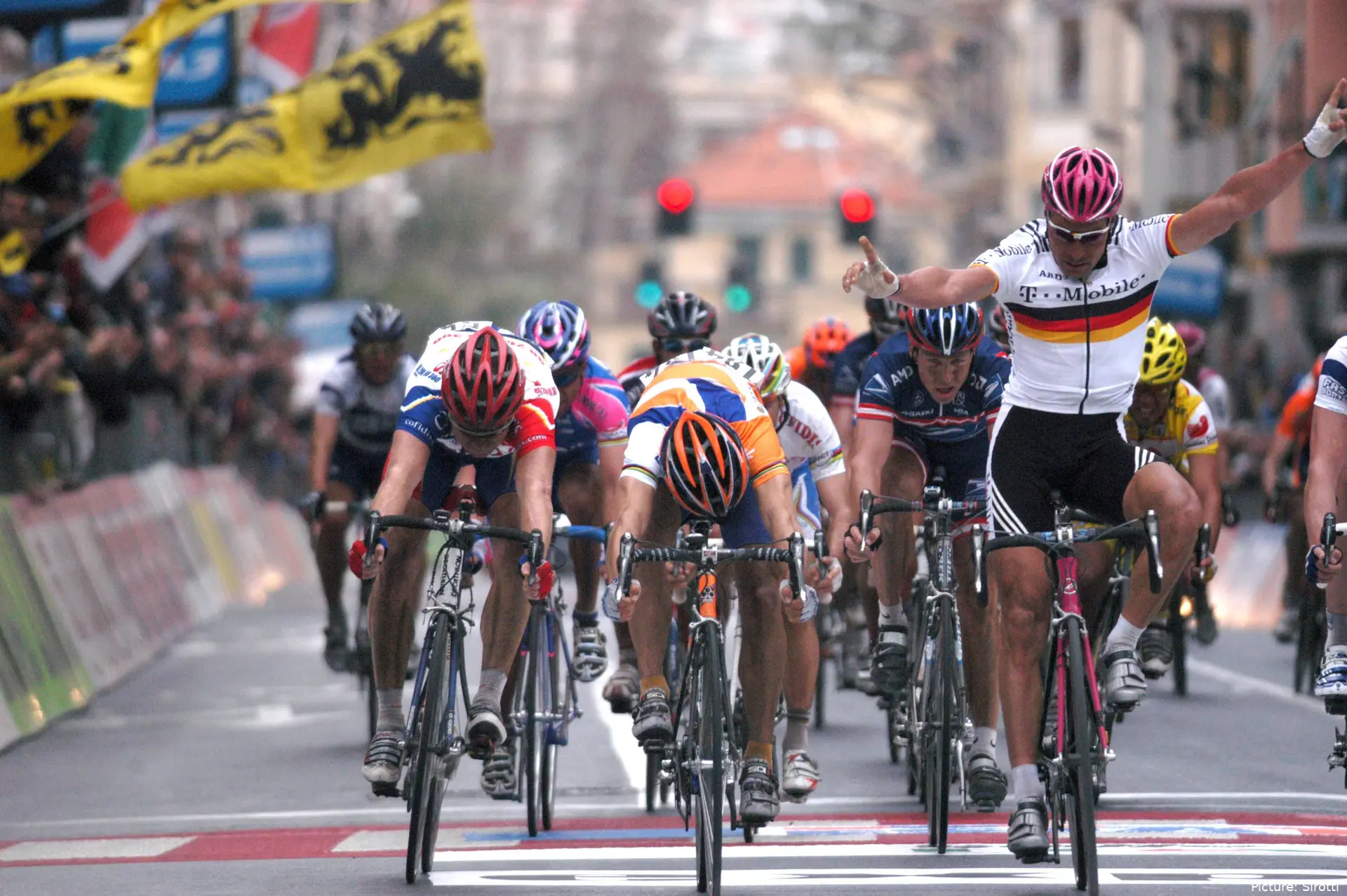
Although in recent years race strategy has been shaped by UAE’s brutal pace on the Cipressa and Tadej Pogacar’s repeated digs at Mathieu van der Poel, historically Milano–Sanremo has been the most unpredictable Monument on the calendar, and its finales have evolved clearly from 1982 to today. We review the past decades with the help of an infographic by our colleagues at Spiegone Ciclistico.
In the 1980s, the race offered a broader range of scenarios. Wins could come from long-range moves, late attacks in the final kilometres, or even from the Cipressa. In 1982, for instance, Marc Gomez won after an attack on the Poggio descent, a formula later repeated by riders such as Moreno Argentin or Laurent Fignon. That variety reflected a less controlled era, with less structured teams and more room for individual initiative.
Cipressa vs. Poggio - which climb decides Milano-Sanremo?
One key point has been the Cipressa, 5.6 kilometers at just over 4%, a climb that ends within the final 10% of the 300-kilometer-long monument. However, it has only rarely proved decisive. The clearest example is Gianni Bugno in 1990, who attacked there to anticipate the favourites. Despite its relative difficulty, the Cipressa has seldom made a definitive selection, largely due to peloton control and the challenge of holding an advantage all the way to Sanremo.
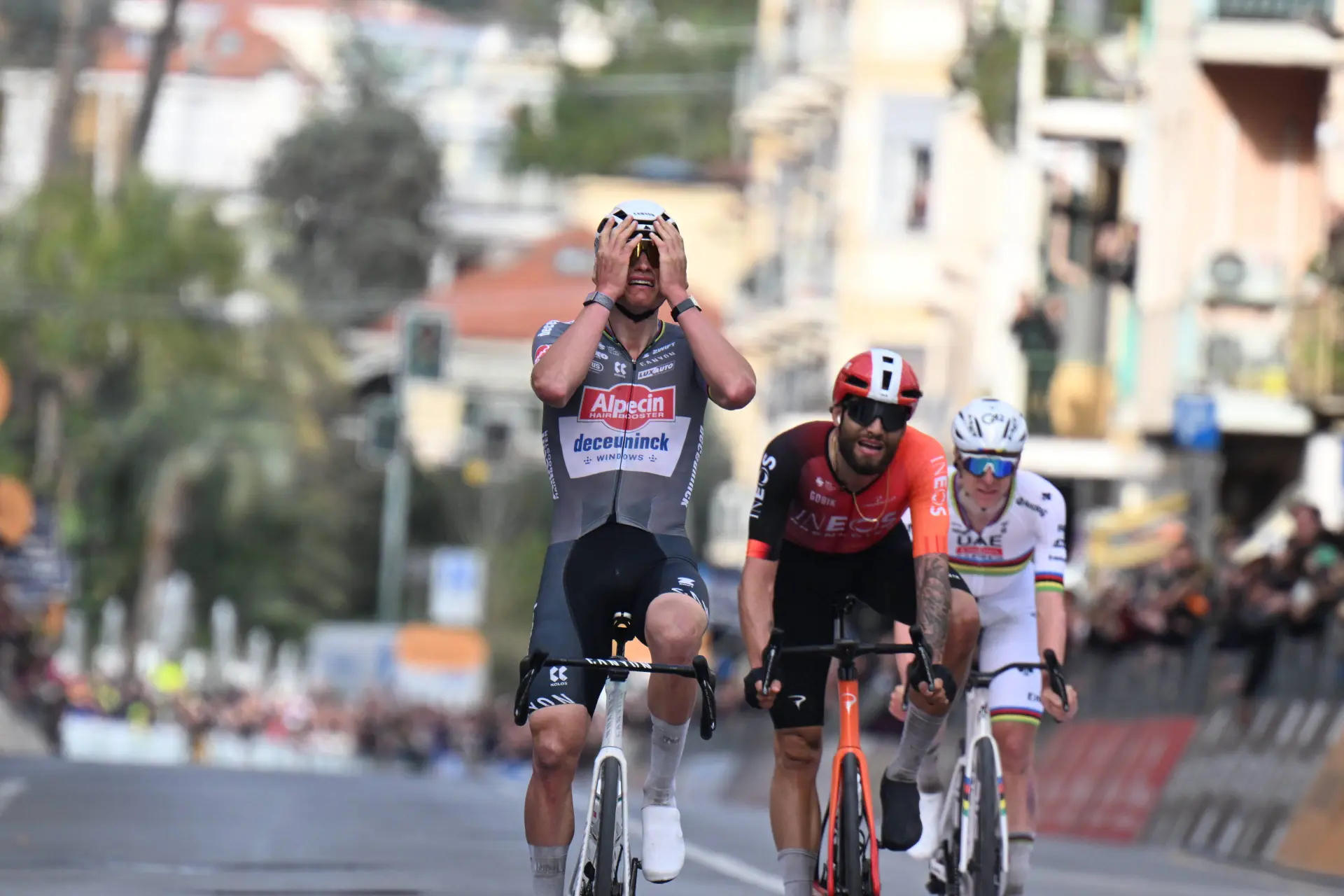
The Poggio di Sanremo, by contrast, has become the decisive battleground. From the late 1980s and especially through the 1990s, many winners forged victory on this climb. Riders like Claudio Chiappucci, Maurizio Fondriest, and Gabriele Furlan used this point to split the race. More recently, names such as Vincenzo Nibali in 2018 or Mathieu van der Poel in 2023 showed the Poggio remains the ideal springboard for winning moves.
How the Poggio descent wins Monuments
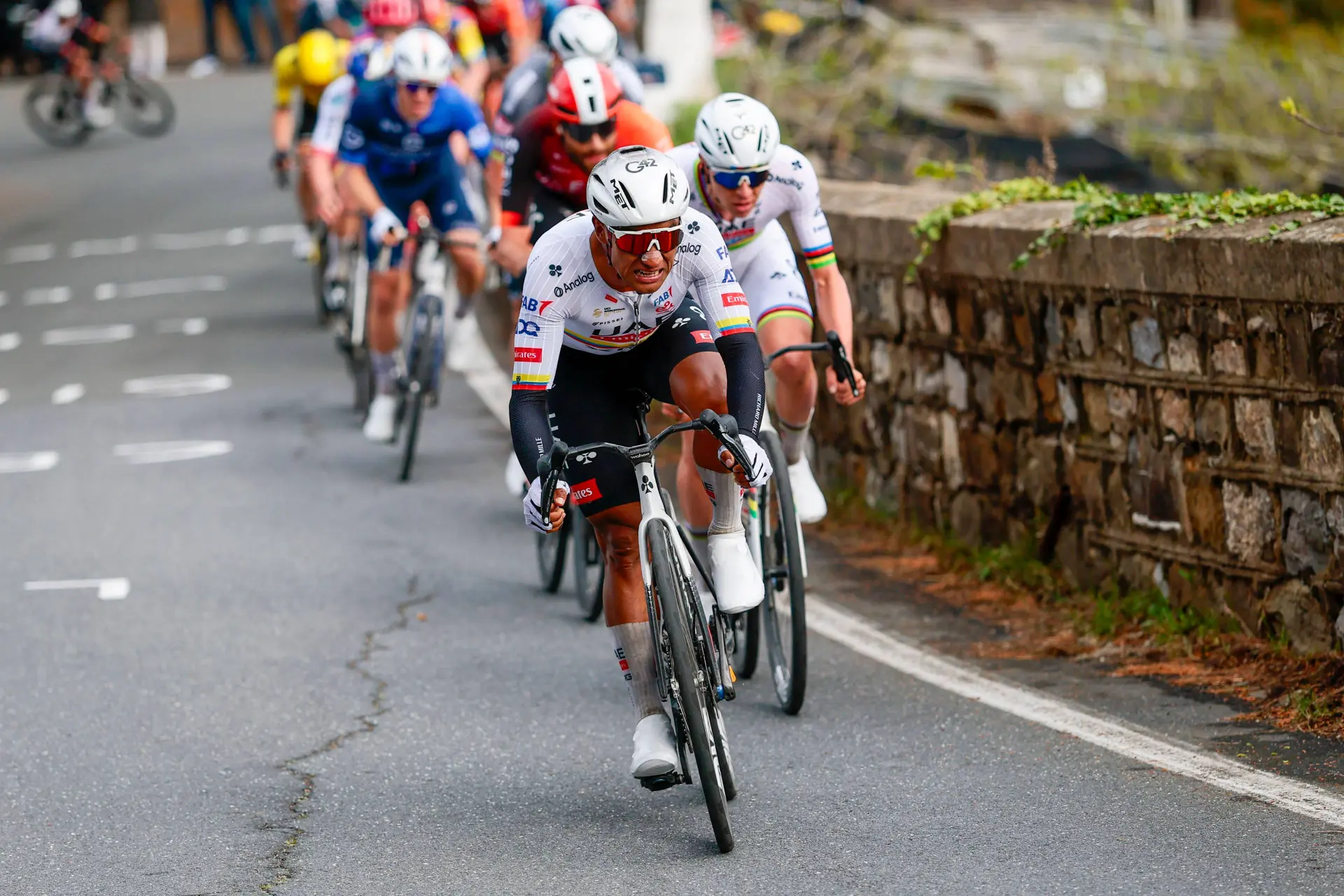
Beyond the climb, the Poggio descent has played a key role in several editions. It is a technical run-in that allows gaps to open if riders are willing to take risks. In 2022, Matej Mohoric produced a stunning descent to seal his attack, which was also made memorable by the use of a seat drop post on his bike. These outcomes show that climbing power is not the only determinant; technical skill matters too.
Another crucial phase is the final two kilometres, where some riders have struck late. Cases like Fabian Cancellara in 2008 or Filippo Pozzato in 2006 prove that, even after the Poggio, it is still possible to avoid a sprint if the timing is perfect. However, this avenue has become less frequent over time.

Milano–Sanremo is the first cycling Monument each year
The sprint as the decider
The sprint, whether from a small group or a large bunch, gained prominence across the last decades up to the mid-2010s. The trend towards tighter team control favoured sprint finishes and wins by riders like Óscar Freire. In 2016, Arnaud Démare prevailed from a large sprint, the last time it finished that way. In any case, the reduced sprint of a small group is the most common outcome, especially when Poggio attacks drop the pure fast men.
In recent years, the race has taken a new turn. More complete riders have lifted the pace on the Cipressa, hardening the race before the Poggio. Teams with marquee leaders have applied more aggressive strategies, reducing the chances of traditional sprinters. Mathieu van der Poel’s 2023 win with an attack on the Poggio, or Matej Mohoric’s 2022 success with a fearless descent, reflect this modern trend.
Read also
Milano–Sanremo winners since 1982
| Year | Winner | Decisive point | Type of move |
| 1982 | Marc Gomez | Poggio descent | Attack |
| 1983 | Giuseppe Saronni | Poggio descent | Attack |
| 1984 | Francesco Moser | Poggio descent | Attack |
| 1985 | Hennie Kuiper | Final 2 km | Attack |
| 1986 | Sean Kelly | Sprint | Group |
| 1987 | Erich Mächler | Poggio climb | Attack |
| 1988 | Laurent Fignon | Poggio climb | Attack |
| 1989 | Laurent Fignon | Poggio climb | Attack |
| 1990 | Gianni Bugno | Cipressa climb | Attack |
| 1991 | Claudio Chiappucci | Poggio climb | Attack |
| 1992 | Sean Kelly | Sprint | Group |
| 1993 | Maurizio Fondriest | Poggio climb | Attack |
| 1994 | Giorgio Furlan | Poggio climb | Attack |
| 1995 | Laurent Jalabert | Reduced sprint | Group |
| 1996 | Gabriele Colombo | Final 2 km | Attack |
| 1997 | Erik Zabel | Sprint | Group |
| 1998 | Erik Zabel | Sprint | Group |
| 1999 | Andrei Tchmil | Final 2 km | Attack |
| 2000 | Erik Zabel | Sprint | Group |
| 2001 | Erik Zabel | Sprint | Group |
| 2002 | Mario Cipollini | Sprint | Group |
| 2003 | Paolo Bettini | Poggio climb | Attack |
| 2004 | Óscar Freire | Sprint | Group |
| 2005 | Alessandro Petacchi | Sprint | Group |
| 2006 | Filippo Pozzato | Final 2 km | Attack |
| 2007 | Óscar Freire | Sprint | Group |
| 2008 | Fabian Cancellara | Poggio descent | Attack |
| 2009 | Mark Cavendish | Sprint | Group |
| 2010 | Óscar Freire | Sprint | Group |
| 2011 | Matthew Goss | Reduced sprint | Group |
| 2012 | Simon Gerrans | Reduced sprint | Group |
| 2013 | Gerald Ciolek | Reduced sprint | Group |
| 2014 | Alexander Kristoff | Reduced sprint | Group |
| 2015 | John Degenkolb | Reduced sprint | Group |
| 2016 | Arnaud Démare | Sprint | Group |
| 2017 | Michał Kwiatkowski | Reduced sprint | Group |
| 2018 | Vincenzo Nibali | Poggio climb | Attack |
| 2019 | Julian Alaphilippe | Reduced sprint | Group |
| 2020 | Wout van Aert | Reduced sprint | Group |
| 2021 | Jasper Stuyven | Final km | Attack |
| 2022 | Matej Mohorič | Poggio descent | Attack |
| 2023 | Mathieu van der Poel | Poggio climb | Attack |
| 2024 | Jasper Philipsen | Reduced sprint | Group |
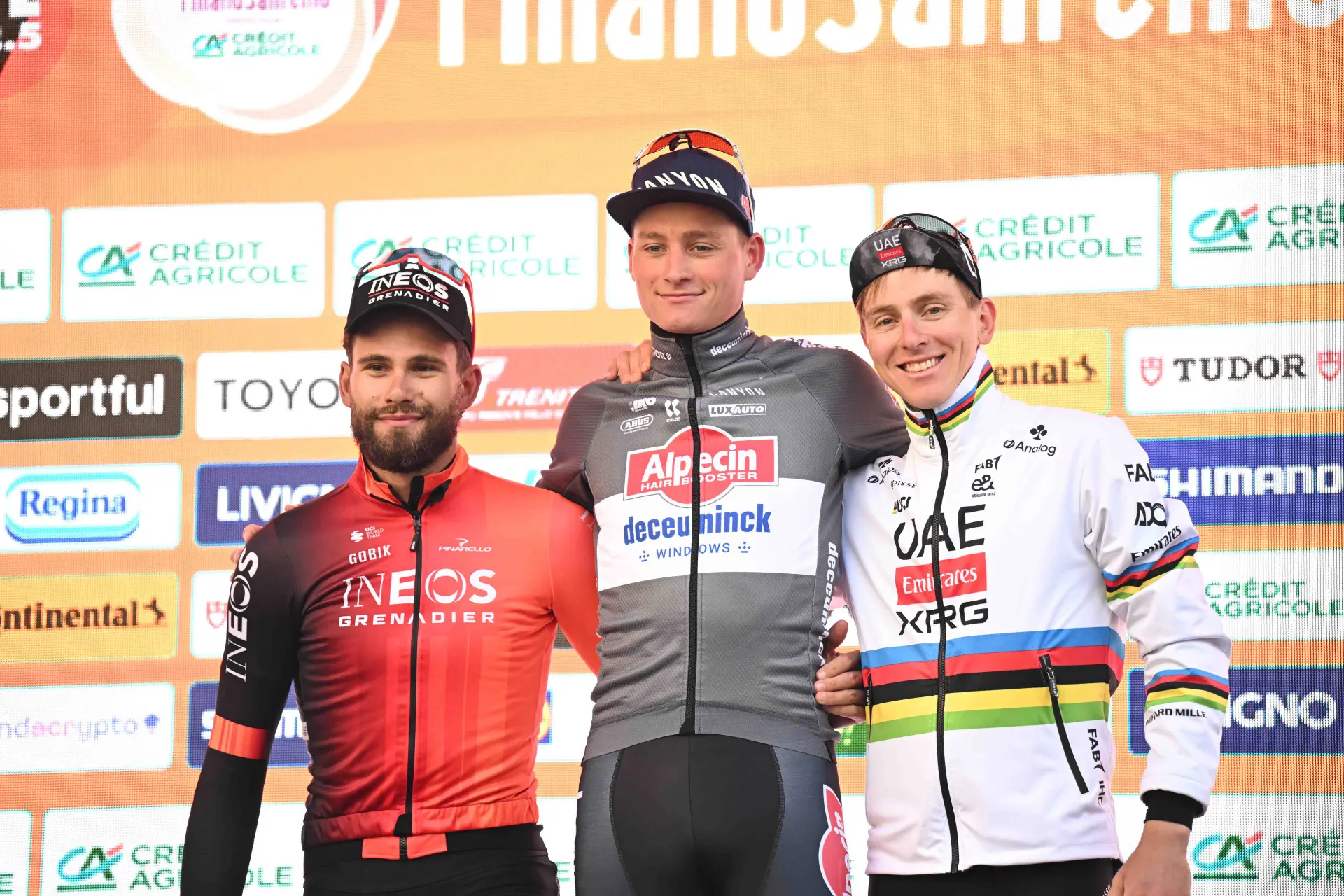
| 2025 | Mathieu van der Poel | Reduced sprint | Group |
Juan LarraCycling Journalist
Juan Larra is a writer for Cyclinguptodate and editor-in-chief of Ciclismoaldia, where he has played a central role since its inception. Under his leadership, the website has become a trusted source for professional cycling coverage, offering in-depth analysis, news, and feature stories.
A sports journalist with over 20 years of experience, Juan earned his degree in Journalism from the University of Seville in 2007. He began his career covering a wide range of sports—including football, basketball, Formula 1, MotoGP, tennis, and cycling—for platforms such as the official La Liga app, Vodafone and Movistar websites, NBA Blogdebasket, and Cadena Cope, honing his skills in writing and editorial management.
In addition to his work at Ciclismoaldia, Juan contributes to Cyclinguptodate and serves as editor-in-chief for the tennis-focused site Tenisaldia. Throughout his career, he has conducted exclusive interviews with cyclists and sports figures, provided detailed analysis of competitions ranging from local Spanish races to major international events, and acted as a special correspondent at prestigious races including Paris-Roubaix, the Tour de France, and the Vuelta a España.
Juan’s combination of experience, expertise, and direct access to athletes has established him—and the platforms he leads—as authoritative voices in professional cycling.
claps 1visitors 1
Just in
Popular news
Latest comments
- "few years" Not now, not last Saturday, not next year... Few years!!!MajorPayne14-10-2026
- Of course not. That said, had my speculation and opinion been true, I'm not sure Tadej could have beaten him last Saturday. But with his experience he may have been able to. Tadej is nearing thirty and will start to slow down as compared to the young guns like Paul in a few years.awp14-10-2026
- Well said @RideHills 👏🏼anonymouscyclist14-10-2026
- OMG!!! As I wrote in the post below the other article, Paul is incredibly good, but he isn't quite at Tadej's level yet.MajorPayne14-10-2026
- The season is over, so there has to be something to write about. No one disputes that Paul is a top-tier young cyclist. But in the absence of other news, comparing him to Tadej is utter nonsense. He still has a lot of developing to do before he can win Grand Tours or Monuments that Tadej also competes in.MajorPayne14-10-2026
- It is easy to celebrate those who won the grand tours and the monuments. and the world championships. What I notice more are the ones who were at the world tour and kept going on the pro tour level for that little bit longer, still wanting to ride after their bodies had aged, after their teams no longer needed them. It is good to see the domestiques. as well. Congratulations to all these folks on an impressive career, no matter the wins. Cycling is a team sport, and it’s the ones we don’t see much of that allow the leaders to stand out and win the accolades.RidesHills14-10-2026
- Biestrebos is a real sprinting talent. Initially it was thought that he'd be a classics domestíque but his sprinting has improved dramatically over the course of the year. He's the only thing going well with Picnic now and for that reason it is likely that he'll leave
 Rafionain-Glas14-10-2026
 - well this one definitely makes my STUPIDEST ARTICLES OF 2026 list. chapeau…OCexile14-10-2026
- Cyclocross is nothing without stars like MVDP, WVA, Pidcock... etc. Out of all cycling disciplines, road racing is the most popular discipline in professional cycling, especially in terms of global prestige, major-event audiences, and the historical status of its greatest riders. People that don't follow cycling as a sport have heard of Merckx, Hinault, Pantani, Armstrong, Remco, Vingegaard, MvDP, Van Aert, Pogačar etc. So if we're talking about professional cycling and the sport's most famous athletes, road racing is the clear number one. Road cycling's greatest champions are judged across such a wide scale. E.g. - Pogačar can win the Tour de France and then go after Paris–Roubaix and other prestigious one day races. These races also have a wide range of versatility: cobbles, gravel, punchy, hilly, TT. This versatility is a huge part of why road racing is No.1 in cycling. Maybe Sven Nys is a dutch cycling "legend"... but that's where it starts and ends. Ad acta.PogiSloFans14-10-2026
- “at some point those guys will turn their backs on OUR sport”? after dedicating so much of their lives to cyclocross and in mathieu’s case winning more world championships than anyone, it would seem to me like they’ve earned the right for it to be always be THEIR sport, too, even after they retire from it.OCexile14-10-2026
Loading
Write a comment