"Then it can get dangerous" - Former teammate of Jonas Vingegaard worries about consequences of fan incidents in Spain
Cycling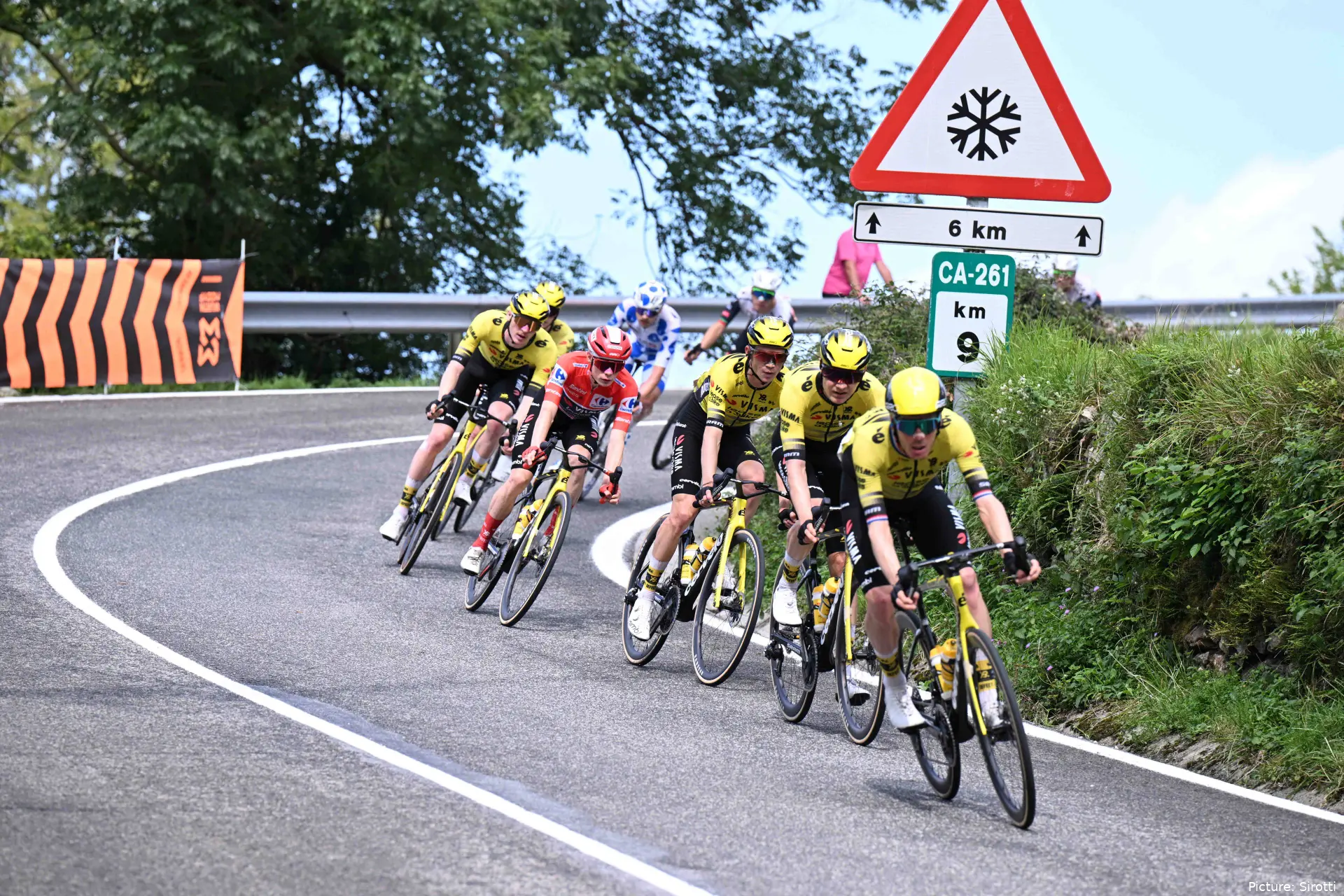
Jonas Vingegaard's crash this Monday in training has sparked a debate that seemed to be in the making for a long time. Pro cyclists train on open roads, and often alone - even if they are on training camps - however when does the request for pictures and following wheels become too much? It is a fine line to navigate; Tiesj Benoot and Greg van Avermaet have weighted in on the topic.
"It's become much busier there in recent years. As juniors, we stayed in Belgium and didn't go to training camp in Spain. Now, a lot of young people cycle there," Benoot said in words to Sporza. "Last week, you saw a lot of cycling tourists on the Coll de Rates who just wanted to watch the pros at work or ride among them." This is a constant between the months of December and January, where the pros travel to the Costa Blanca to train; and thousands of amateur and youth categories do the same, whilst having in mind also possibly running into the sports' best for a memorable moment.
The proximity that fans can have to the big stars is certainly one of the sport's most praised aspects, however it can become a downside to the athletes - the most well-known ones, usually. Whilst it won't cause of an issue in the grand majority of the times, Tadej Pogacar for example was quite clear that he wanted to not be disturbed during training last summer as he rode with a personalized shirt; and this week the leader of Team Visma | Lease a Bike may have crashed due to a rider that was trying to follow him.
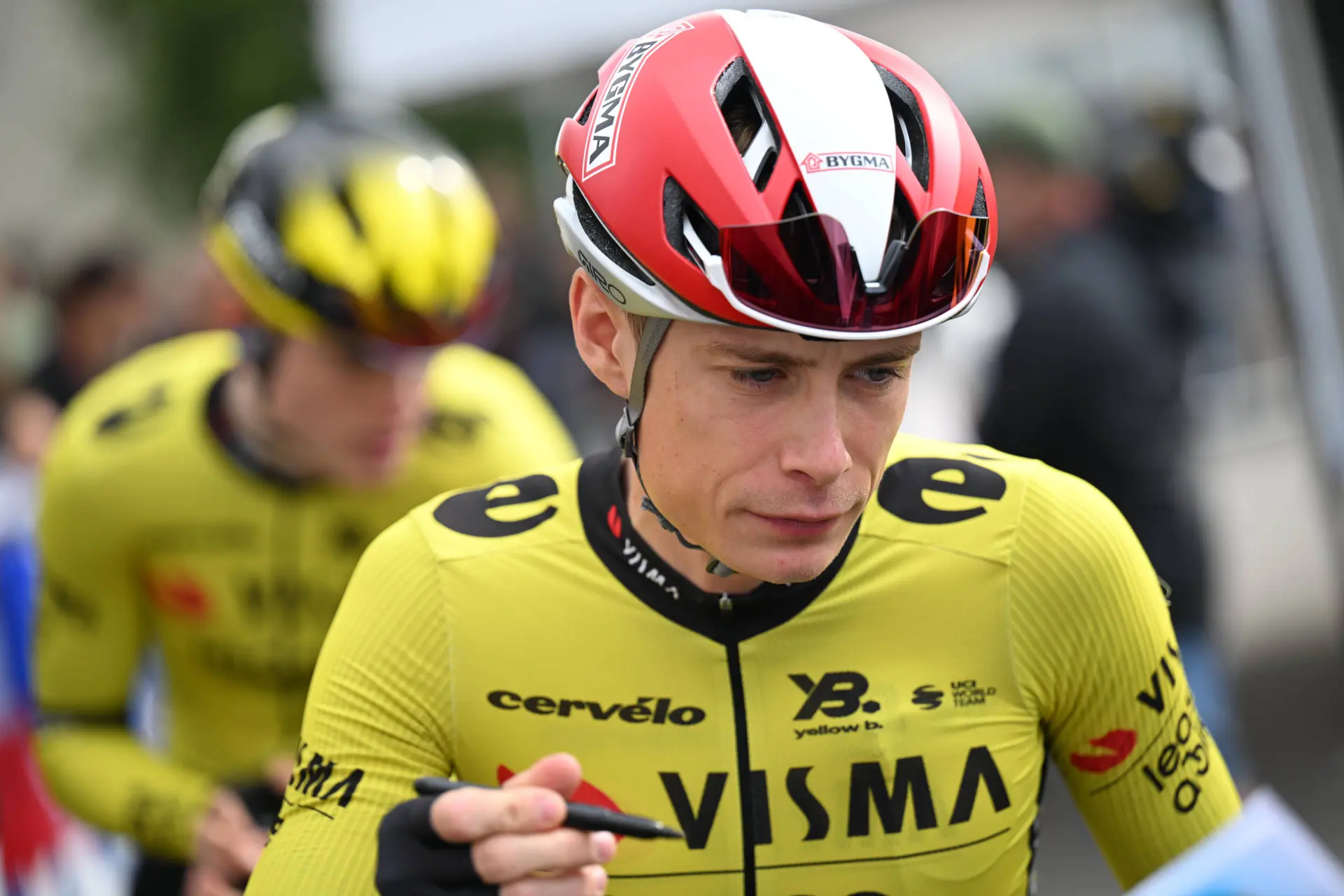
Visma confirmed the Dane did have a crash, but not the exact context. However according to one rider who was following him, this happened as the Dane looked to distance him. This is to be taken with a grain of salt on whether the Dane was indeed trying to isolate himself on the road, however the amateur athlete posted a picture behind Vingegaard and shared the story on Strava before Visma wrote the update on the Vuelta a España winner.
So where do you draw the line? "It becomes a problem when those cyclists ride next to you to take photos or if they nestle into the group. Then it can get dangerous. Those cycling tourists aren't as agile as we are," Benoot argues. "And it's simply not allowed. If it can be done respectfully and safely, it's not a problem. But it's a fine line where mutual respect is necessary to guarantee safety."
This also may become an issue for the popular riders, who travel for winter in these popular cycling destinations greatly over the calm roads, but no longer have that privilege anymore. "Just ask, and not many riders will refuse. I don't have a problem with it myself, as long as those people stay behind us. Then there's no problem."
Van Avermaet notices the chance
Greg van Avermaert is no longer a pro, but continues to make his way into Spain often, and certainly notices the change from back in the days where he was the man on the spotlight. "Many people escape the winter and book a cycling holiday in Spain. It's nice for them to run into famous pros. But some colleagues simply keep riding if there are too many people at the spot where they want to stop for a coffee."
He provides a comparison with football, to try and put some sense onto a few riders who become disruptive to the pros: "If I, as a big football fan, were to encounter a top player, I would also dare to ask to take a photo but it shouldn't become disruptive. You don't ask to be on the pitch with Cristiano Ronaldo, do you? You do that before or after training."
However the former Olympic champion also cannot say what is the ideal way to tackle the issue, as the responsibility usually lies on the rider following to ask to act right - whilst this does not always happen.
"It never bothered me per se, and sometimes I even had to laugh when we passed a cyclist who then tried to follow us anyway. But if you're training in a group of eight riders, for example, I wouldn't do it. What I do like is that people simply ask if it's okay to ride along. Some riders don't mind, others do. Just ask them."
"If it happens once, you just accept it. But guys like that get recognized everywhere," he understands. "Then maybe some kind of regulation is needed, or the team director's car, if there even is one, has to follow you and warn those people not to ride."
Rúben SilvaEditor-in-Chief
A founding contributor to CyclingUpToDate since its launch in January 2022, Ruben Silva has played a central role in shaping the site’s editorial direction and long-term growth. Before joining the project, he built his experience through independent blogging at Echelons Hub and by producing race previews for Ciclismo Internacional, developing a strong analytical voice rooted in daily engagement with professional cycling.
Beyond editorial work, he has been closely involved in the expansion and coordination of CyclingUpToDate’s wider network, helping establish and support sister platforms across multiple languages. This includes ongoing collaboration with CiclismoAlDia (Spanish), CiclismoAtual (Portuguese), WielrennenUpToDate (Dutch), and RadsportAktuell (German), contributing to a shared editorial vision and consistent international coverage.
He also helps oversee editorial governance across the network, setting standards for accuracy and consistency and coordinating updates or corrections when needed.
Originally from the Porto metropolitan area in Portugal, he holds a bachelor’s degree in Geography. His path into cycling journalism was shaped not through formal media training, but through independent reporting, community engagement, and sustained on-the-ground involvement in the sport.
Over the course of his career, he has conducted approximately 100 interviews across road cycling and cyclocross, ranging from one-to-one conversations and online formats to press conferences and on-site pre- and post-race coverage. His interviews include leading riders, team managers, and prominent figures within cycling media: Tadej Pogacar, Jonas Vingegaard, Mathieu van der Poel, Primoz Roglic, Wout van Aert, Joao Almeida and Tom Pidcock; managers like Patrick Lefevere and Joxean Matxin; and YouTube personality Bryan Kennedy (BKXC)...
Within 18 months of launch, he helped grow CyclingUpToDate’s English-language platform into one of the most-read cycling news websites, built entirely from the ground up. As both a professional journalist and lifelong cycling enthusiast, his focus remains on delivering accurate, timely, and well-contextualized coverage.
claps 4visitors 2
Just in
Popular news
Latest comments
- He didn't even try to sprint all outvappaxbipmv18-10-2026
- Campenaerts looked like a rolling pumpkin with that all orange leaders skinsuit !frieders318-10-2026
- He can take his dumb a$$ politics somehwere else !frieders318-10-2026
- good to have her back. fingers crossed she‘ll be able to stay!Ketterechts17-10-2026
- A tenner and he wins the Tour next year, too 😂anonymouscyclist17-10-2026
- the answer is either stick to classics or GTs but not bothabstractengineer17-10-2026
- the exodus already stared with Ciccone. Already they were struggling with two sprinters, now there are three. Also Ganna will demand leadership. Gall is the most proven GC, Ayuso has the most potential. GC leadership for everybody will be impossible. Literally a UAE style mess without pogi.abstractengineer17-10-2026
- I raced as an amateur for 12 years, including six years on my country’s national road cycling team. I secured two national titles and competed in three World Championships plus more than 15 international stage races. At 23, we travelled to Italy for a training camp—or so I assumed. On a rest day, we watched a presentation about adopting a more “professional” training approach. It was crystal clear what “professional” meant. That moment first exposed me to this dilemma. After returning from Italy, I left cycling—at least at the competitive level I had known. Over the following two years, the whole team was caught doping. I hold that everyone is innocent until proven guilty. In my view, current stakeholders operate on a different scale, and the sums involved are vast. I am unsure whether any doping would ever be revealed. I try to stay positive and enjoy the show. My 2c.
 vannpelt17-10-2026
 - Fiver he wins 🤣
 leedorney17-10-2026
 - “…measures to reduce speeds.” Might as well shorten the race course to just 50km as well? ASO generates at minimum €300m a year and 30- 40% profit. Maybe stop being greedy and spend more of the profit to protect the riders instead.b3tlla17-10-2026
Loading
Write a comment