“The Red Bull KM could decide the Giro d'Italia” - Vincenzo Nibali sends warning to Vingegaard, Almeida and co with Maglia Rosa tipped to go down to the seconds
Cycling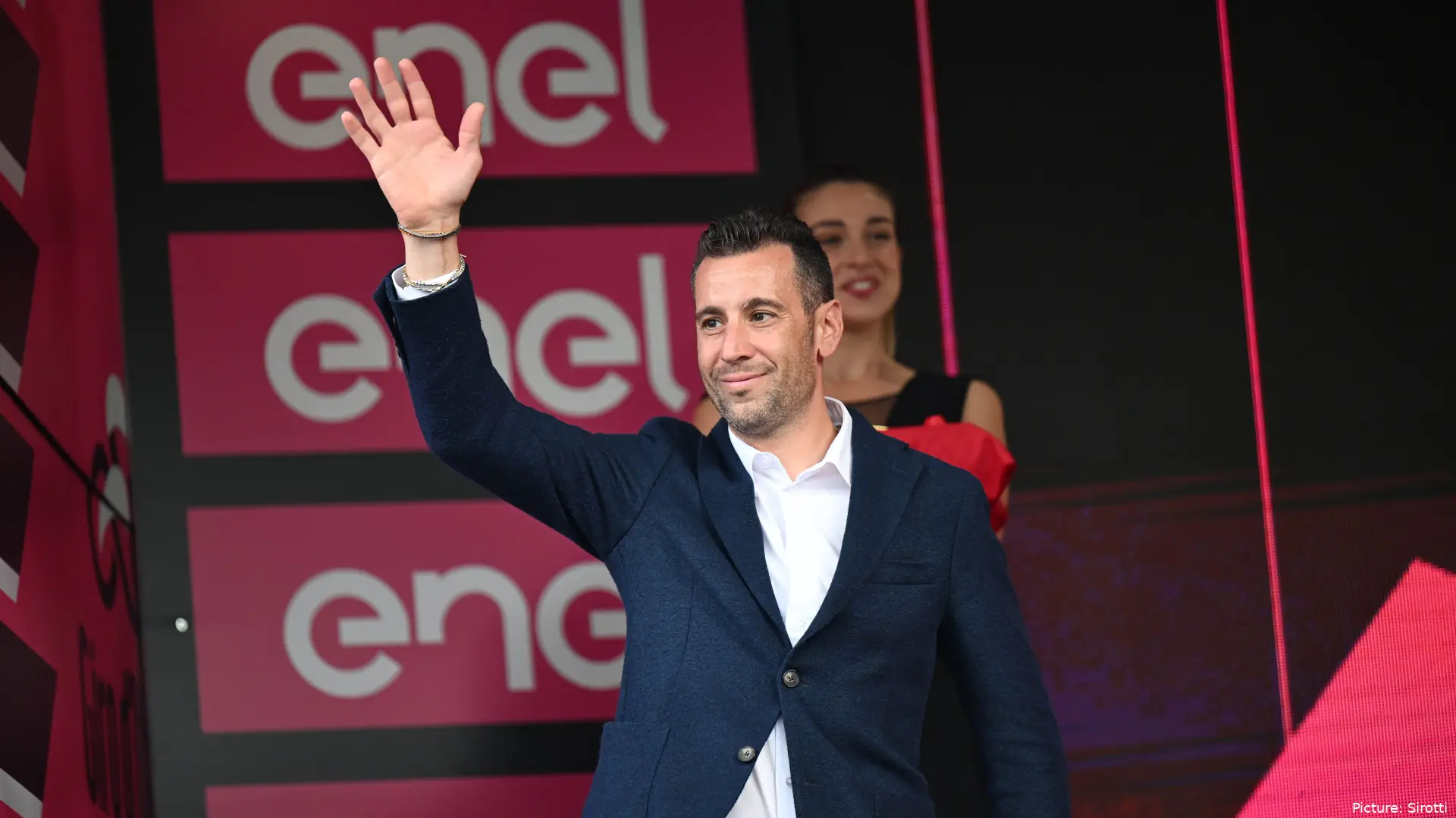
The Red Bull kilometre is no longer just an added layer to the Giro d’Italia. In 2026, it could become one of the defining factors in the fight for the Maglia Rosa, with Vincenzo Nibali making it clear just how significant those bonus seconds may prove.
With the intermediate sprint set to feature on 20 of the 21 stages and now positioned much closer to the finish than in its debut year, the scope for time gains away from the line itself has increased dramatically. In a race already designed to encourage a tighter general classification battle, that opens the door for the smallest margins to carry the greatest weight. “The Red Bull KM can also decide the race,” Nibali said in conversation with Gazzetta dello Sport.
The former Giro winner is not speculating without context. He pointed directly to the history of the race to underline how decisive even minimal gaps can be over three weeks.
“In 2012, time bonuses were decisive in Ryder Hesjedal’s victory over Joaquim Rodriguez, with only 16 seconds between them. With the Red Bull KM, tactical management of the race will be even more important to prevent riders with GC ambitions from passing under the second arch too many times in the top three positions.”
Bonus seconds set to shape early race
That emphasis on control and positioning becomes even more relevant when placed against the structure of this year’s route. The 2026 Giro is expected to hold its most decisive mountain stages until the final week, meaning the opening phases could see riders fighting for gains wherever they are available.
For Nibali, that makes the Red Bull kilometre particularly influential in the first part of the race, where gaps are still minimal and every second counts. “In the opening stages, the bonus seconds are crucial because even the smallest gaps make a difference, so sprinters could be forced to do almost a double sprint.”
That dynamic has the potential to reshape even the most straightforward days on paper. Sprint stages are no longer purely the domain of the fastest finishers, while general classification teams may be forced to commit resources earlier in the finale to avoid conceding time.
Blockhaus to reveal early contenders
Despite the increased importance of bonus seconds, Nibali still expects the overall shape of the race to follow a familiar pattern, with the hardest climbing tests coming later in the Giro. However, he highlighted the early summit finish at Blockhaus as a key moment in establishing the hierarchy among the favourites.
“I think it will be similar to the 2025 edition because the hardest stages will come at the end. However, the Blockhaus will require excellent condition even in the first part of the race. It is a real climb. I wouldn’t say it will decide the Giro, but it will show which five or six riders can fight for the final victory.”
Among those expected to be central to that battle, Nibali pointed to Jonas Vingegaard as the standout favourite, while also highlighting the consistency of Joao Almeida and leaving the door open for a breakthrough performance from a younger outsider. “The big favourite is obviously Jonas Vingegaard, although I am curious to see riders like Joao Almeida in action. I also expect a young outsider to emerge.”
With the Red Bull kilometre now embedded across almost every stage and placed deeper into the decisive phase of each finale, the fight for the Maglia Rosa may be shaped long before the high mountains of the final week. As Nibali’s assessment makes clear, in a Giro where seconds are likely to prove decisive, every opportunity to gain or lose time carries far greater consequence.

Kieran WoodDeputy Editor-in-Chief
Kieran Wood is a sports journalist based in Wales and has been active in journalism since 2022. He regularly contributes to DartsNews.com and CyclingUpToDate.com, where he covers professional cycling and darts. In cycling, his work includes liveblogs from major races, including the Tour de France, the Giro d’Italia, and La Vuelta a España, alongside race reports and analysis. He has also conducted interviews with professional riders.
His reporting spans the full racing calendar, from one-day classics to stage races, with a focus on accurate, real-time coverage and clear contextual analysis. For statistics, results, and historical context, he regularly uses resources such as ProCyclingStats. To support reporting on rider activity and training context where relevant, he also references Strava.
In his work, Kieran places strong emphasis on careful sourcing, editorial accuracy, and updating articles as new, verified information becomes available.
claps 9visitors 1
Just in
Popular news
Latest comments
- Well i have no idea why he cooperated at 2.5 k from finish, that was possibly the worst decision ever. That decision could have given him an inch to win.abstractengineer05-10-2026
- For someone as good as you say, his top results as per pcs pale into comparison with Evenepoel’s, as for jerseys, he might run out of anything to wear soon. Perhaps tell your boy’s boy to get some flesh on his resumé before ridiculing yourself. PS (not the rider) this is criticism of YOU, not him.Jumpyjohn04-10-2026
- Yes Mouguel, thank you, we understand it’s important to you.Jumpyjohn04-10-2026
- Why are you reading post race comments if you want to keep the suspense? Do you do this with election results too? Next time, maybe think of warning us not to post until you’re ready.Jumpyjohn04-10-2026
- If you’d have created alias26 that might have worked or have you noticed anyone taking you seriously here?Jumpyjohn04-10-2026
- Del Toro is not even close to Remco, not in a single metric. But he may be within the next couple of years.awp04-10-2026
- Who knows, he may never reach his top level after this accident. Nothing else to prove and retirement may be the best option at this point
 Front24204-10-2026
 - With the injuries he has, it's probably best not to rush back, so it's ok if is form is poor for a while.Hills3304-10-2026
- He will come back next year and smoke everyone we all know it. With vengeance. The worriying part is that noone can beat UAE even when pogacar is hurt, other teams and captains cant beat Pogacaer domestiques lol...Montreal and WC was insane and if were honest how on the world can anyone beat pogacar on that team when noone can even beat his teammates. Del Toro is probably 2 best overall rider in world already.. Absolutely crazy team..miguel04-10-2026
- A deserved win by the Aero Bullet. I know he isn’t loved by all cycling fans, but I for one am looking forward to seeing him in the European bands! Chapeau Remco.anonymouscyclist04-10-2026
Loading
Write a comment