“A lot of teams will probably watch us and wait for our move” – Remco Evenepoel warns Amstel could turn cagey with all eyes on him
Cycling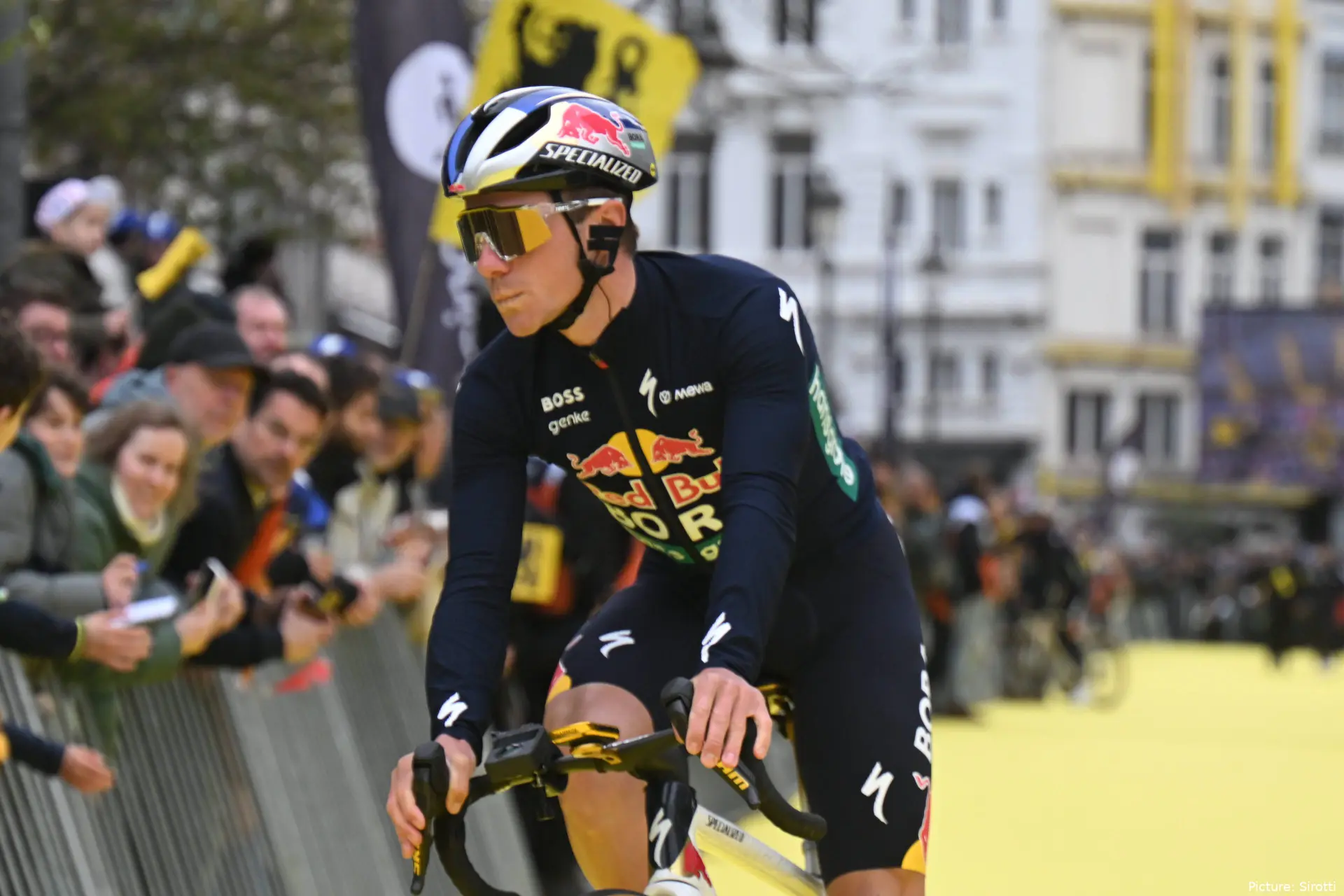
The shape of the men’s Amstel Gold Race 2026 may be decided as much by hesitation as aggression, with Remco Evenepoel already anticipating a tactical stand off before a pedal has even been turned in anger.
With several of the sport’s biggest names absent from the startlist, the burden of control has shifted firmly onto the shoulders of the Red Bull - BORA - hansgrohe leader, a dynamic that could fundamentally alter how the race unfolds on the Limburg roads.
Speaking ahead of the race in conversation with Cycling Pro Net, Evenepoel made it clear that the redistribution of responsibility across the peloton could lead to a far more cautious finale than usual, even if he believes the race is typically at its best under different circumstances.
“It’s always better to have multiple favourites at the start. There are still guys who can win, of course, but when the attention is spread, the final can be more open and more chaotic. Now, a lot of teams will probably watch us and wait for our move,” he explained.
Read also
Favourite status reshapes the race dynamic
That expectation of being marked rather than marking others is central to the Belgian’s outlook. Without the presence of riders such as Tadej Pogacar, Mathieu van der Poel and Wout van Aert, the usual balance of power has shifted.
Rather than multiple teams sharing responsibility in the decisive phases, the peloton is more likely to look towards Evenepoel and his team to dictate the key moves. That, in turn, raises the prospect of a slower burn towards the finale, where hesitation and second-guessing could play as big a role as outright strength.
Evenepoel acknowledged that dynamic, but also hinted at the contrast with how he believes the race can unfold when responsibility is shared more evenly across the peloton. “It’s always better to have multiple favourites at the start… when the attention is spread, the final can be more open and more chaotic,” he said, underlining how the absence of several major contenders could ultimately narrow the race rather than open it up.
Evenepoel stopped short of revealing exactly how he intends to break that pattern. “We have our plan and strategy, and we’ll try to go for it. At the end of the day, we’ll see if the tactics were good,” he added, before replying with a smile when pressed on where he might attack: “I cannot reveal that, I’m sorry.”

Can Evenepoel take advantage of Van der Poel, Pogacar and Van Aert all being absent?
A race he still wants to conquer
Beyond the immediate tactical picture, the Amstel Gold Race remains a clear personal objective in Evenepoel’s career. While last year’s result provides added motivation, he framed his ambition in broader terms rather than as simple revenge.
“Not necessarily because of last year. It’s just a race I would really like to win in my career,” he said. “Of course, last year gives that extra small push to do better this time, but it’s a very beautiful race and I really like this type of parcours.”
Preparation for the Ardennes block has followed a familiar pattern, with a short reset after the Tour of Flanders followed by a focused training block in Spain. “I had a bit of rest after Flanders, but I was always on the bike. Then I went to Spain for the last preparations. Everything went pretty well, we had good weather and enjoyed our time there, so everything should be good,” he explained.
A cold sore causing issues?
In a separate pre-race interview with the Belgian media pre-race, Evenepoel admitted that his build-up from Flanders to Amstel hasn't been totally issue free. As shown by the fact he takes to the start with a cold sore.
"That cold sore appeared immediately after the Tour," he explained. "I usually get them when something isn't quite breaking through or when I'm building up to peak form. Hopefully, it's the latter."
Control or chaos on the Limburg roads?
The tension between control and chaos is nothing new at Amstel, a race whose layout often resists domination from a single rider or team. Yet the absence of several major contenders has sharpened that dilemma this year.
If Evenepoel and Red Bull take responsibility early, they risk setting up the race for opportunists. If they wait, they invite the very stalemate he has predicted.
Either way, the Belgian finds himself at the centre of the race before it has even begun, a position that could define not just his own chances, but the entire character of the 2026 edition.
Kieran WoodDeputy Editor-in-Chief
Kieran Wood is a sports journalist based in Wales and has been active in journalism since 2022. He regularly contributes to DartsNews.com and CyclingUpToDate.com, where he covers professional cycling and darts. In cycling, his work includes liveblogs from major races, including the Tour de France, the Giro d’Italia, and La Vuelta a España, alongside race reports and analysis. He has also conducted interviews with professional riders.
His reporting spans the full racing calendar, from one-day classics to stage races, with a focus on accurate, real-time coverage and clear contextual analysis. For statistics, results, and historical context, he regularly uses resources such as ProCyclingStats. To support reporting on rider activity and training context where relevant, he also references Strava.
In his work, Kieran places strong emphasis on careful sourcing, editorial accuracy, and updating articles as new, verified information becomes available.
claps 0visitors 0
Just in
Popular news
Latest comments
- He didn't even try to sprint all outvappaxbipmv18-10-2026
- Campenaerts looked like a rolling pumpkin with that all orange leaders skinsuit !frieders318-10-2026
- He can take his dumb a$$ politics somehwere else !frieders318-10-2026
- good to have her back. fingers crossed she‘ll be able to stay!Ketterechts17-10-2026
- A tenner and he wins the Tour next year, too 😂anonymouscyclist17-10-2026
- the answer is either stick to classics or GTs but not bothabstractengineer17-10-2026
- the exodus already stared with Ciccone. Already they were struggling with two sprinters, now there are three. Also Ganna will demand leadership. Gall is the most proven GC, Ayuso has the most potential. GC leadership for everybody will be impossible. Literally a UAE style mess without pogi.abstractengineer17-10-2026
- I raced as an amateur for 12 years, including six years on my country’s national road cycling team. I secured two national titles and competed in three World Championships plus more than 15 international stage races. At 23, we travelled to Italy for a training camp—or so I assumed. On a rest day, we watched a presentation about adopting a more “professional” training approach. It was crystal clear what “professional” meant. That moment first exposed me to this dilemma. After returning from Italy, I left cycling—at least at the competitive level I had known. Over the following two years, the whole team was caught doping. I hold that everyone is innocent until proven guilty. In my view, current stakeholders operate on a different scale, and the sums involved are vast. I am unsure whether any doping would ever be revealed. I try to stay positive and enjoy the show. My 2c.
 vannpelt17-10-2026
 - Fiver he wins 🤣
 leedorney17-10-2026
 - “…measures to reduce speeds.” Might as well shorten the race course to just 50km as well? ASO generates at minimum €300m a year and 30- 40% profit. Maybe stop being greedy and spend more of the profit to protect the riders instead.b3tlla17-10-2026
Loading
Write a comment