"The human dimension is being somewhat neglected" - Damiano Caruso hopes cycling can learn to slow down a bit at times
Cycling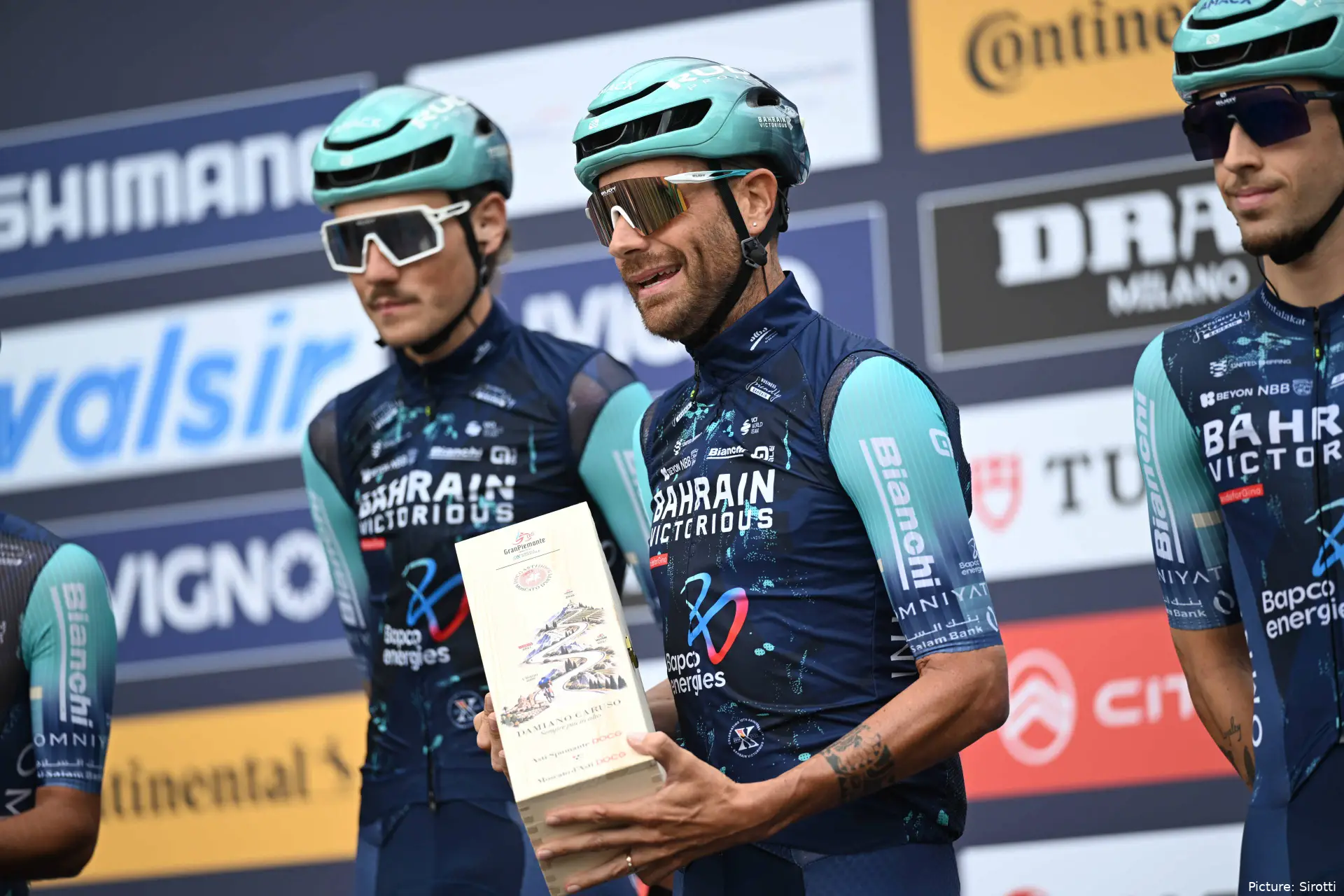
Damiano Caruso put an end to his seventeen-year-long career at the end of this season. But that does not mean that Caruso disappears from the cycling world; quite the contrary. The 39-year-old Italian will merely switch from saddle to behind a steering wheel as he becomes a new sports director at Bahrain - Victorious.
And even though the season had just ended for Caruso three weeks ago with a farewell at Gran Piemonte, the Italian already has to get himself busy with a trip to UCI's cycling center in Switzerland to complete his sports director course and acquire a new license.
That will be a point of no return in Caruso's life. But it's a change he's more than ready for.
"I just got the call-up," Caruso smiles in an interview with bici.pro. "Next week I'll be at the performance meeting. In the sports directors column, it says Caruso, and that seems really strange..."
Over nearly two decades, Caruso had a perfect spot to observe as the sport of cycling evolved. Especially in the most recent years, the pace had become almost impossible to keep up with. Caruso elaborates on both the pros and cons of the changes.
"I'm leaving behind a different cycling style," Caruso reasons, "one that's much more high-performance, more scientific, and even more obsessive about attention to detail. And I'd put this among the positives. The only flaw, in my opinion, is that the human dimension is being somewhat neglected."
Mental strain is almost greater than physical
Caruso refers to the many instances from recent times of riders who have chosen to stop pursuing their cycling careers. Not because of lack of talent or health problems, but rather due to a severe mental strain caused by the extremely performance-driven sport.
"The athlete is increasingly turning into a machine, and sometimes the human aspect is lacking. Nutrition and performance are taken care of, but less attention is paid to their happiness. What's emerging with Picnic doesn't surprise me."
"So I asked myself a question: 'Damiano, aren't you seeing this because you're old and tired?' But that's not actually the case. I also read about many young people who quit and complain about this. Burnout used to be linked to overload or overtraining, but today it seems more mental than physical."
Pogacar changed the game
The root cause for this is teams being extremely cautious—if not anxious—about possibly missing out on the 'next Tadej Pogacar.' No wonder why the Slovenian changed the way cycling races are being ridden. In Grand Tours, he never passes on a chance to win a stage. In Classics and Monuments, he blows the race to pieces sometimes with two hours left to race.

Tadej Pogacar was leading the Vuelta a España at the time of his withdrawal
To his opponents—even more than to the "average" riders—this is greatly demotivating. Without the Slovenian, the autumn part of the season produced some new, at times unexpected winners as races became much more open, Caruso noticed.
"I believe Pogacar is the history of cycling, and we shouldn't beat around the bush: in my opinion, he's the strongest cyclist of all time, and he's right to do what he does. We're paid and we have the mentality of racing to win. So Tadej is right to win whenever he can. That said, when he's not there, 99 percent of the peloton rekindles their hope of winning."
Italian fans should learn to appreciate what they already have
Finally, Caruso expresses a hope that Italian public and press can create a slightly less toxic environment for the upcoming talents. In order to achieve that, Caruso proposes to focus more on the currently successful riders, such as Giulio Ciccone, Giulio Pellizzari, or Davide Piganzoli, before looking beyond for "who's next" at Lorenzo Finn and others who are yet to even turn professional.
"I think a good part of it depends on Italian journalism and the average Italian fan. We always look at what we would like," says Caruso, "and we don’t look at what we have. I’m following the way Mercedes is protecting Kimi Antonelli from the Italian press, filtering a lot, because they’re afraid the boy will be harassed."
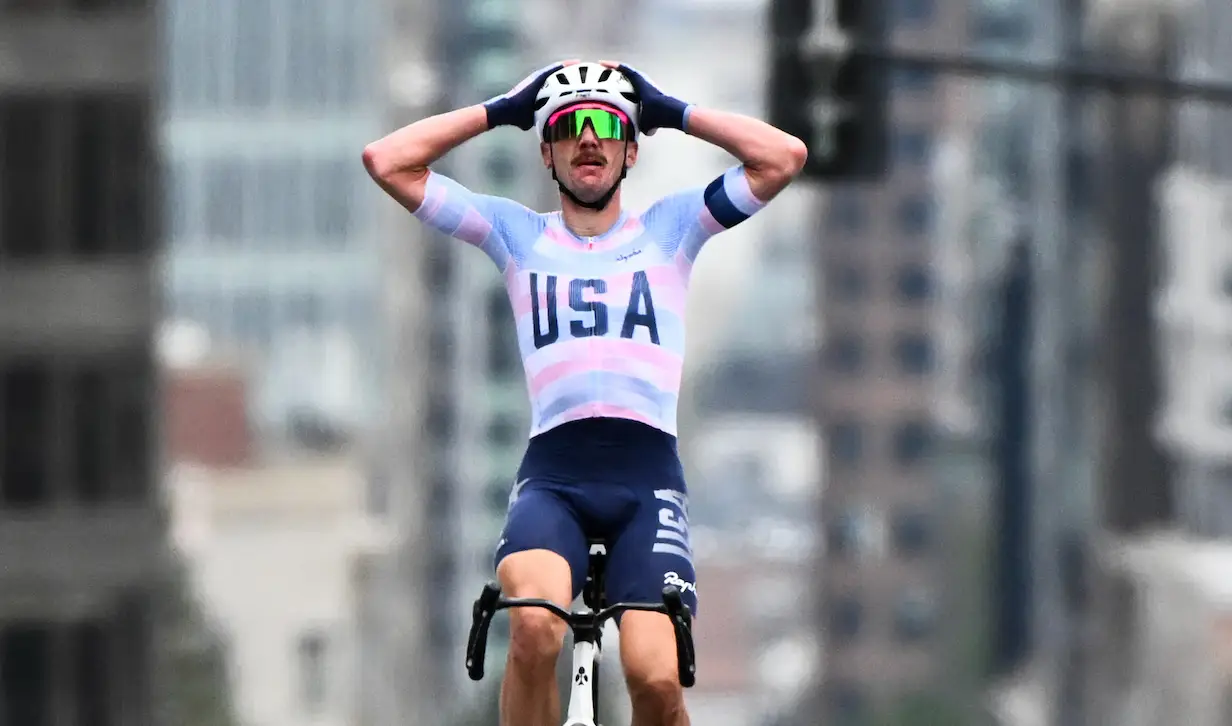
"I remember when I finished ninth in the 2014 Vuelta, where Aru finished fifth. I didn't do much worse than him, but no one talked about me. Then I went to BMC. I won team time trials and helped my teammates win. I finished second in the Tirreno-Adriatico, but just a few headlines. It was the Nibali era, which clearly deserved the maximum attention. Yet the big headlines were already pumping Aru up."
Ondrej ZhasilCycling Journalist
Ondřej Zhasil is a cycling journalist at CyclingUpToDate and has been part of the team since 2023. He is based in Ostrava, the third-largest city in the Czech Republic, and covers professional cycling across the main UCI competitions, including the Tour de France, the Giro d’Italia, and La Vuelta a España. A key focus of his work is startlist analysis and pre-race coverage, where he examines team selections, rider line-ups, and tactical scenarios ahead of major events.
Alongside WorldTour coverage, Ondřej has developed specific expertise in junior cycling and in racing across East Asia, including competitions in China and Japan. He also maintains a broad working knowledge of other disciplines and levels, including cyclocross, while continuing to expand his understanding of mountain bike racing.
Ondřej holds a bachelor’s degree in Mathematics and Physics, which supports his analytical, data-driven approach to performance and race analysis. In his reporting, he regularly uses ProCyclingStats for results, statistics, and historical context. He places strong emphasis on careful sourcing, editorial accuracy, and updating articles promptly when new, verified information becomes available.
claps 0visitors 0
Just in


Popular news

Latest comments
- What he said!!Lozza29-10-2026
- If Tadej stays healthy, I don’t see the slightest chance of Remco winning the Tour. And then there are Jonas and Paul.MajorPayne29-10-2026
- @Guavaking, what are you talking about? Since 2024 no one alive climbs like Pogi and everyone knows it. Capish?PogiSloFans29-10-2026
- I reckon it would be neat if Jonas skipped the Tour, and went for getting the Giro and Vuelta again. Having every GT twice would be a flex. That's a shorter list, within a short one already. He doesn't "need" to win the Tour again. And why waste time going for second or worse as a former winner when you could lock in a really solid showing across all three? Plus Visma can go for the Green Jersey with Brennan and Wout, stages etc.wrsty29-10-2026
- That is exactly my opinion. I would rather see him winning Itzulia Basque country than risking it all at Paris-Roubaix. Than he will have all 7 major one week stage races in his pocket and since 2028 season he can try to win PR every single year. I also had a fractured vertebra, a broken collarbone and a dislocated shoulder and it took me more than a year before I could ride my bike without feeling any pain. Pog has access to incomparably medical care, but some things just can´t be rushed. And the Paris-Roubaix cobbles are absolute hell...Lukicinho29-10-2026
- smart move and good for cross!Ketterechts29-10-2026
- what is difficult to understand in ‚largely agree‘? the rest referred to his arrogance.Ketterechts29-10-2026
- I know. the tragedy of getting paid money to ride a bike. I could only dream of it.mij29-10-2026
- USA has the U23 and elite men’s world champion - very impressive.mij29-10-2026
- it is his name, his image, his likeness. he deserves every penny regardless of how much it is. I hope he enjoys a Michelin star restaurant every meal. no one should profit off his NIL other than him his argument isn’t destroyed at all. the people using him illegally is stealing from him.mij29-10-2026
Loading
Write a comment