“The dream is to win it, which is quite hard these days with Tadej Pogacar” – Tour de France standout eyes next step after breakthrough season
Cycling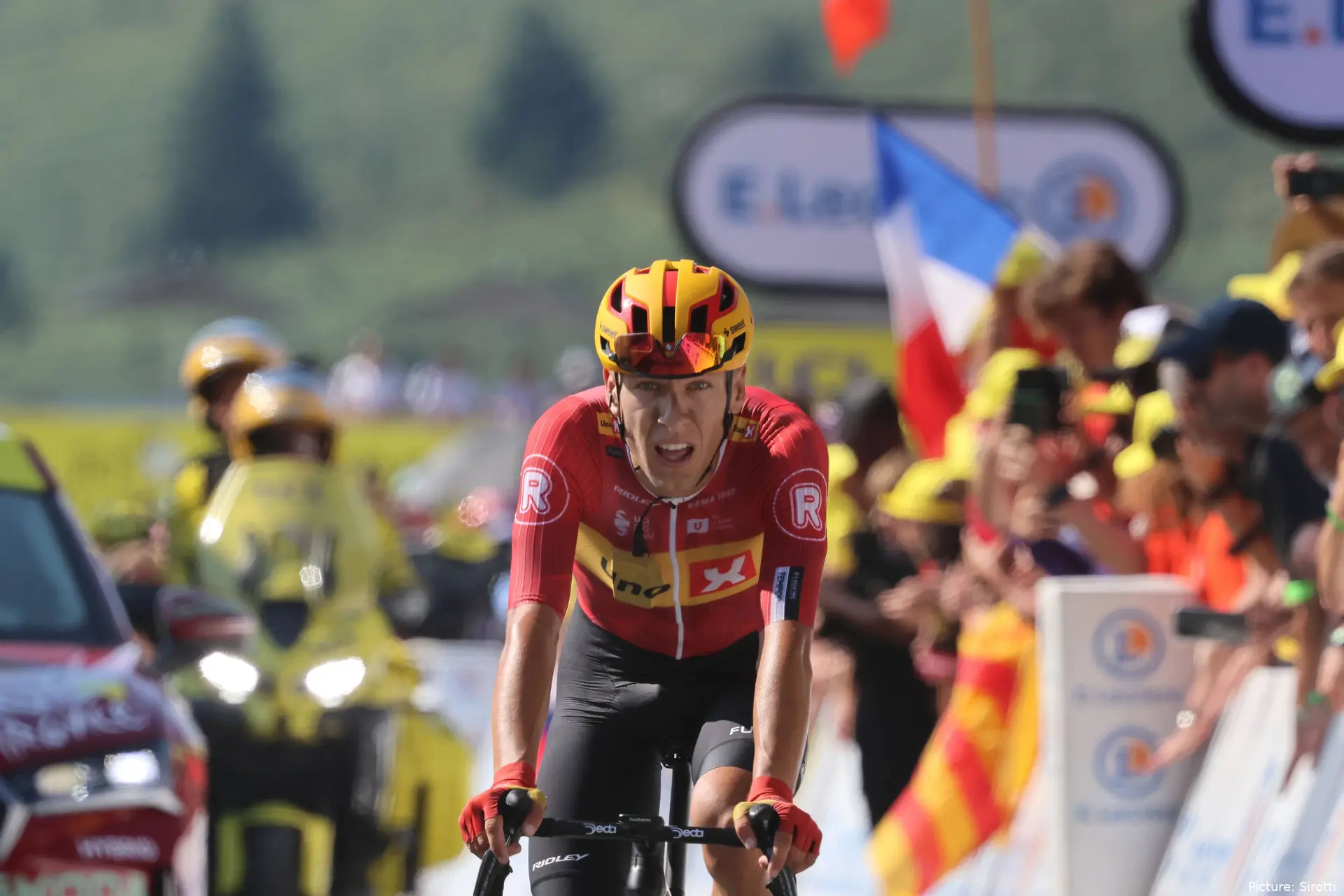
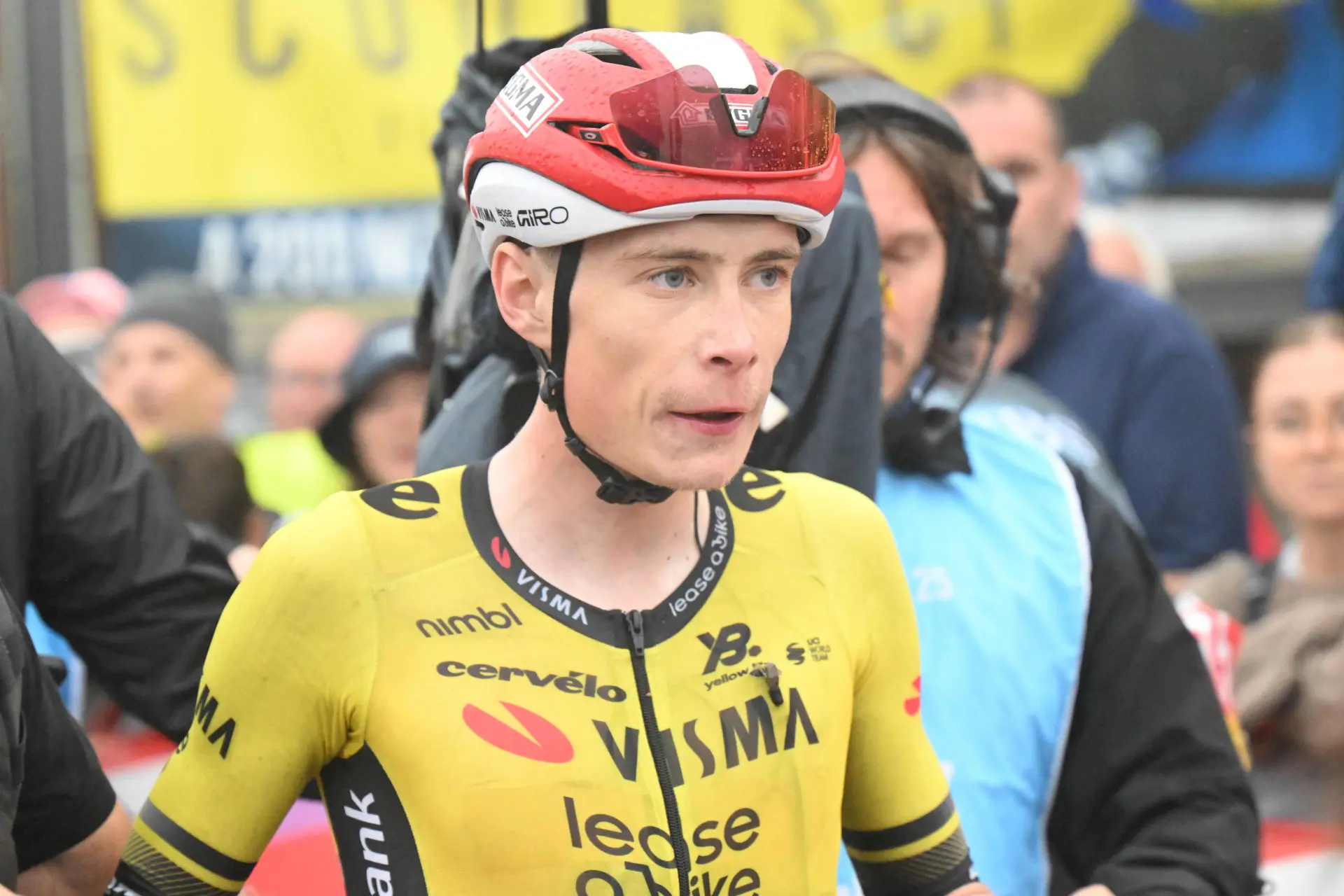
Tobias Johannessen is not talking louder after his breakthrough Tour de France. He is talking more precisely. The ambition is clear, the limits are acknowledged, and the focus for 2026 is firmly on refinement rather than reinvention.
After finishing sixth overall at the 2025 Tour de France, the best result by a Norwegian rider in the race’s history, Johannessen has emerged from the category of promising GC talent and into a more demanding space.
Expectations rise. Margins narrow. And the difference between contending and merely confirming often lies in the details.
That reality runs through Johannessen’s latest reflections, where the language is less about hope and more about process. The podium remains the dream, but the work is centred on eliminating inefficiencies that cost him last summer and turning a very strong three weeks into something closer to a complete Tour.
Learning from a breakthrough Tour
Johannessen’s sixth place in Paris carried more weight than the final result alone suggested. He rode into the top ten while battling illness during the opening week, a period that nearly ended his race altogether.
“I struggled quite a lot with a cough, and I was quite sick the first week of the Tour. I think it was stage 7 on Mur de Bretagne where I was feeling so bad halfway that I was almost pulling the plug,” Johannessen told Domestique. “I was the last one in the race, and I was not feeling good, but then I decided to just go all out to the finish and then just take it from there.”
Rather than framing that experience as an act of resilience, Johannessen now views it as lost energy that can be avoided. “I think there is for sure more gains we can do than being sick the first week of a Grand Tour because that took a lot of energy out of me. I think we can do it even better this year,” he said.
That perspective matters. The difference between sixth and a podium place at the Tour is rarely about capacity alone. It is about how much is spent early, how steady the three weeks feel, and how often a rider can perform close to his best rather than chasing form.
Why the Tour podium is the target
Johannessen does not shy away from stating the ambition that now follows him. “I hope I can do the podium one time because that would be quite big,” he said. But the statement is immediately tempered by realism. He accepts that improvement does not guarantee movement up the standings if others also raise their level.
What underpins the confidence is not bravado, but the sense that 2025 was far from optimal. “I feel like I did not do it close to perfect last year,” he said, pointing to illness, energy management and consistency across stages as areas where time and freshness can still be found.
That framing turns his Tour result from a ceiling into a reference point. For a rider who finished sixth despite compromised preparation, the logic of aiming higher in a cleaner campaign is difficult to dismiss.
Time trials, details and a changing Tour
A major part of Johannessen’s winter focus has been aerodynamics and time trial performance, an area that could prove decisive in 2026. The Tour will open with a team time trial where riders take individual times, followed later by a key individual test on stage 16. For GC contenders, those days will demand both raw speed and composure under pressure.
“The setup is super impressive. I will not tell every gain, but it was quite massive,” Johannessen said of recent aerodynamic work. “The position is more comfortable and seems faster, which makes it easier to train and perform.”
Comfort is not a throwaway detail. Riders who can train more consistently on the time trial bike tend to race it better, and Johannessen’s growing ease in that position aligns with his broader push for steadier three-week performances.
“You get your own time for GC, so the GC rider needs to sprint to the line,” he said of the opening team time trial. “It is important to be well-drilled. We have a lot of good guys, and we enjoy working together.”

Johannessen impressed at more than just the Tour de France in 2025, finishing on the final podium at Milano-Torino
Ardennes ambition and unfinished business
Before July, Johannessen’s spring will again be shaped around the Ardennes, a block that felt unresolved last year after a crash ended his campaign prematurely.
“The Ardennes Classics is always a big goal for me, and last year it got ruined by a crash I had, which took out my back for a couple of months. So I hope to be back there in good shape, and that is one of the main goals of the spring,” he said.
La Fleche Wallonne stands out as the race most closely aligned to his punchy climbing style, but it is Liege-Bastogne-Liege that carries the deeper ambition. “The dream is to win it, which is quite hard these days with Tadej Pogacar,” Johannessen admitted. “It is such a hard race, and I think it is one of the hardest races I will do in my life.”
The comment captures the broader tone of his season. The goals are big, but the hierarchy is respected, and the difficulty is fully acknowledged.
A rider and a team stepping up together
Johannessen’s rise also coincides with a significant shift for Uno-X Mobility, who enter their first full season at WorldTour level in 2026. The emphasis within the team, he says, has been on incremental improvement rather than sudden transformation.
“We have been quite professional for the last years. We are just trying to do everything better,” he said. “We are a young group, every year we develop, the training and the setup included.”
That environment has allowed Johannessen to grow without being rushed into declaring himself a finished product. Instead, his 2025 Tour has become a foundation. A strong one, but not yet complete.
The dream remains to win at the very highest level. Johannessen knows how hard that is. But after a breakthrough season built on resilience and restraint, the next step no longer feels like a leap of faith.

Kieran WoodDeputy Editor-in-Chief
Kieran Wood is a sports journalist based in Wales and has been active in journalism since 2022. He regularly contributes to DartsNews.com and CyclingUpToDate.com, where he covers professional cycling and darts. In cycling, his work includes liveblogs from major races, including the Tour de France, the Giro d’Italia, and La Vuelta a España, alongside race reports and analysis. He has also conducted interviews with professional riders.
His reporting spans the full racing calendar, from one-day classics to stage races, with a focus on accurate, real-time coverage and clear contextual analysis. For statistics, results, and historical context, he regularly uses resources such as ProCyclingStats. To support reporting on rider activity and training context where relevant, he also references Strava.
In his work, Kieran places strong emphasis on careful sourcing, editorial accuracy, and updating articles as new, verified information becomes available.
claps 3visitors 1
Just in
Popular news
Latest comments
- Seixas is probably second best in the World on short climbs. But that hasn't translated as well to long climbs
 Rafionain-Glas18-10-2026
 - Idiotic fellaRafionain-Glas18-10-2026
- Nothing. Against Pogi nothingabstractengineer18-10-2026
- He didn't even try to sprint all outvappaxbipmv18-10-2026
- Campenaerts looked like a rolling pumpkin with that all orange leaders skinsuit !frieders318-10-2026
- He can take his dumb a$$ politics somehwere else !frieders318-10-2026
- good to have her back. fingers crossed she‘ll be able to stay!Ketterechts17-10-2026
- A tenner and he wins the Tour next year, too 😂anonymouscyclist17-10-2026
- the answer is either stick to classics or GTs but not bothabstractengineer17-10-2026
- the exodus already stared with Ciccone. Already they were struggling with two sprinters, now there are three. Also Ganna will demand leadership. Gall is the most proven GC, Ayuso has the most potential. GC leadership for everybody will be impossible. Literally a UAE style mess without pogi.abstractengineer17-10-2026
Loading
Write a comment