“The crash actually helped him win” – American ex-pro Tom Danielson makes bold Tadej Pogacar claim after Milano-Sanremo
Cycling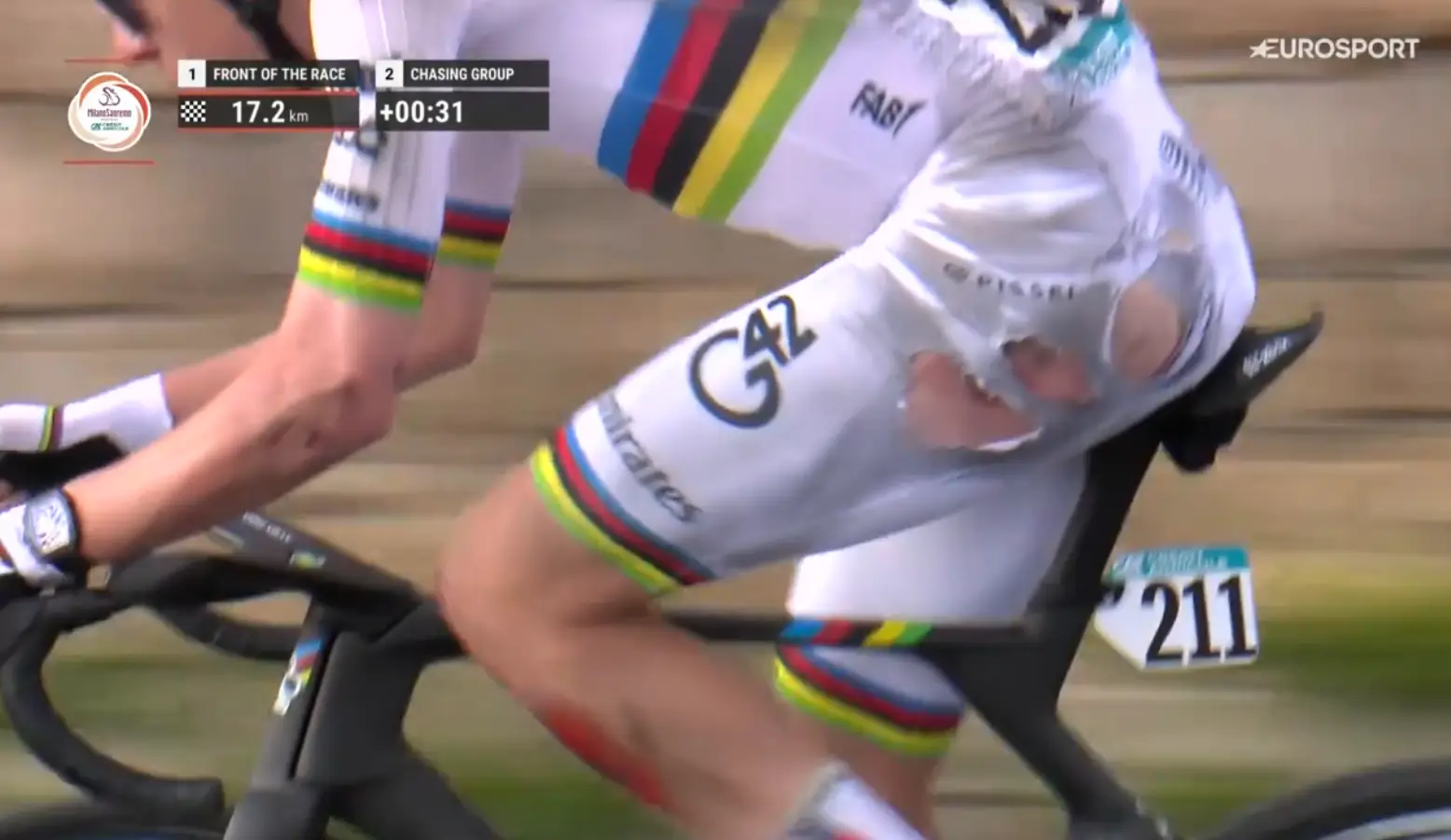
Tadej Pogacar’s Milano-Sanremo win has already been dissected from every angle, from the crash before the Cipressa to the relentless pace that followed and the sprint on Via Roma. Most readings land in the same place: chaos survived, brilliance delivered.
Tom Danielson sees it differently. “The crash actually helped Tadej,” the American wrote on X after the race.
It is a claim that runs against the instinct of the race itself. Pogacar hitting the deck just before the Cipressa looked like the moment his chances disappeared. Instead, Danielson’s analysis centres on how that moment reshaped the race.
How chaos changed the battleground
While the crash clearly cost Pogacar energy, it also forced both him and Mathieu van der Poel into sustained efforts earlier than planned. As Danielson explains, “both riders had to use their threshold zones to chase back,” turning the Cipressa into something closer to “a battle between the two on a longer climb.”
That shift proved decisive. The effort before the climb changed what came after it, with the break forming under very different conditions. “This also made the break afterwards come at the end of a longer effort, much like a longer climb.”
In that context, the balance tilted towards Pogacar. “I do think it helped him win the race by putting him in a more favourable situation against Van der Poel.”

A new level from Pogacar
That tactical explanation only holds because of the level Pogacar produced on the day. Danielson was clear on that point. “He definitely came to this season and this race stronger than ever,” he said, pointing to the way Pogacar immediately imposed himself after returning to the front.
His effort onto the Cipressa stood out in particular, with Danielson describing the move into position as “insane” before Pogacar attacked straight away and rode to a fastest-ever ascent despite the headwind.
The intensity carried through the entire finale. Pogacar drove the pace on the Poggio, dropped Van der Poel, and forced Tom Pidcock to the limit, before still having enough to lead out and win the sprint on Via Roma.

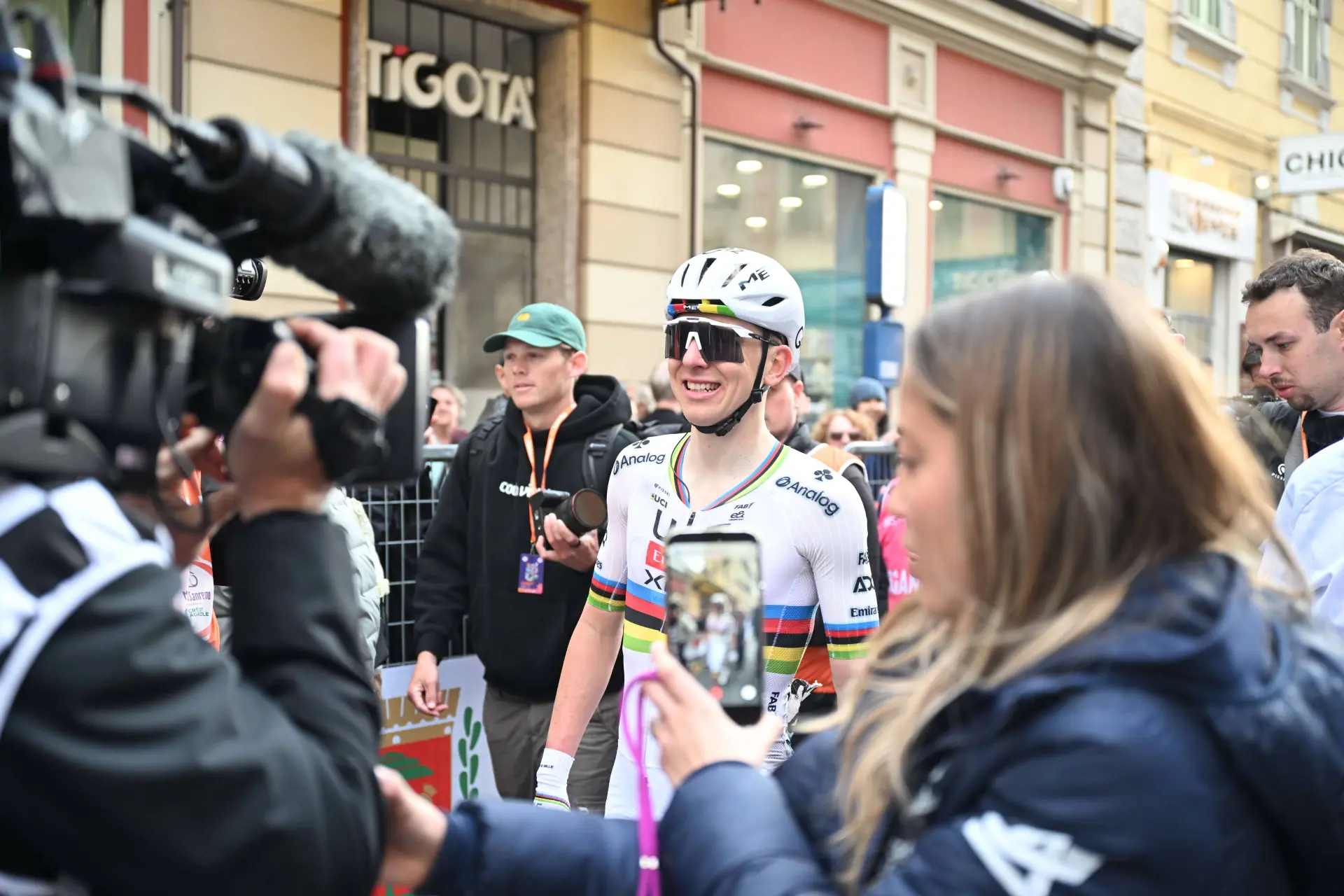
Tadej Pogacar all smiles on the podium after winning Milano-Sanremo 2026
UAE deliver under pressure
Danielson also highlighted the role of UAE Team Emirates-XRG in turning a chaotic moment into a winning position. “They had riders to help Tadej chase on, McNulty to help move him up and start the leadout, and Del Toro fresh to make a crazy, explosive launch.”
It was, in his view, a decisive response in a phase of the race where structure is often lost. “Very high-level execution under pressure, fatigue as it was late in the race, and chaos.”
He did suggest there may have been a miscommunication involved in the crash itself, but framed that as an interpretation rather than certainty.
A race that reshapes expectations
Beyond Pogacar, Danielson pointed to the significance of the riders closest to him. Pidcock’s ability to stay with Pogacar marked him out as the only rider capable of matching that level on the day, while Van Aert’s ride to third showed resilience after being put on the back foot.
But the defining takeaway remains Pogacar.
A crash that appeared to end his race instead altered it. Combined with what Danielson sees as a higher level than ever, it created a performance that not only delivered a long-awaited Milano-Sanremo win, but may also signal something more for the season ahead.
Kieran WoodDeputy Editor-in-Chief
Kieran Wood is a sports journalist based in Wales and has been active in journalism since 2022. He regularly contributes to DartsNews.com and CyclingUpToDate.com, where he covers professional cycling and darts. In cycling, his work includes liveblogs from major races, including the Tour de France, the Giro d’Italia, and La Vuelta a España, alongside race reports and analysis. He has also conducted interviews with professional riders.
His reporting spans the full racing calendar, from one-day classics to stage races, with a focus on accurate, real-time coverage and clear contextual analysis. For statistics, results, and historical context, he regularly uses resources such as ProCyclingStats. To support reporting on rider activity and training context where relevant, he also references Strava.
In his work, Kieran places strong emphasis on careful sourcing, editorial accuracy, and updating articles as new, verified information becomes available.
claps 2visitors 2
Just in

Popular news
Latest comments
- writing about yourself in third person ... please, at least have someone else from your staff author these self-coverage articles!Ketterechts25-11-2026
- Don’t forget Yates’s podium at 2023 TdF!Lozza25-11-2026
- It was stage 14 to Morzine that Carlos Rodriguez won in 2023, not Puy de Dome. And Kwiato actually won the previous stage himself to Grand Colombier!Lozza25-11-2026
- Go Pogi!! 🐐❤️Lozza25-11-2026
- They didn’t have or need “extraordinary information”. All they needed was for a French judge to sign off on the night-time testing for it to go ahead.Lozza25-11-2026
- If the sponsors voted for Primoz then you get him, otherwise not.flyer25-11-2026
- It sure can feel or seem that way but I wonder if the same amount of prodigious performances (compared to the others) would occur if no one was ever doping at all.flyer25-11-2026
- Given the similarity of two articles (published on I think the same date), I'm reusing (copy-n-pasting) my post from the twin: I've always thought the last day of each of the grand tours was problematic mostly in that the GC is considered completed before the race starts when that is not really true. There is some tension, but not desirable tension. What saves the awkward practice is the race finish is legit for those who participate - so it's not wholly different from the other stages. That neutralizations usually make good sense demonstrates their necessity so if that has to be the way to go I agree that the design plan for the neutralization should be completed before the race starts. This years end stage in the Vuelta had one of the best first half's I've seen in that many of the riders looked to be thoroughly enjoying themselves making it a joy to watch. But I think it was slightly closer to the exception rather than the rule.flyer25-11-2026
- Even I often win without being there at all, not even breaking a sweat. Beat that!flyer25-11-2026
- It is not about rest and peaking again - 5 weeks is not enough for that. It is about recovery while maintaining form. 4 weeks is easier for that. With a Giro-Vuelta, the 12 week break is enough to rest and then peak again. Not for the Tour
 Rafionain-Glas25-11-2026
Loading
1 Comments