Tadej Pogacar and Jonas Vingegaard - Destined to do this forever: The story of their five Tour de France battles
Cycling
Like eternal dance partners, we head into the sixth Tour de France in a row that Jonas Vingegaard and Tadej Pogacar will trade blows and do battle at the front of the Tour de France - some would say they're destined to do it forever.
Of their five meetings at La Grand Boucle, Pogacar has won three yellow jerseys and Vingegaard three, making it a rivalry that has dominated half a decade of cycling's greatest show.
The pair have lit up iconic climbs like Mont Ventoux, Alpe d'Huez and Grand Colombier, and paint interesting contrasts when it comes to styles, tactics and their personalities off the bike.
Ahead of the two renewing hostilities once more, we've looked at a snapshot of how the two came to be the greatest rivals and the ultimate picture of what the general classification of the Tour for five years.
A new challenger rises
The first of the Pogacar-Vingegaard saga is more of a prelude for what's to come. Vingegaard started as domestique for Primoz Roglic, but when the Slovenian crashed out, the Dane and Visma found themselves with a new focus - stages and a chance for Vingegaard to measure himself in GC.
Meanwhile, Pogacar had established himself as the yellow jersey and was in cruise control ahead of the rest of the contenders before Mont Ventoux came. On the legendary climb, Vingegaard infamously pulled out a gap on Pogacar, wearing the white jersey.
Nothing more would come, however, as Pogacar sealed a second yellow jersey in a row.
Isolating the smiling assassin
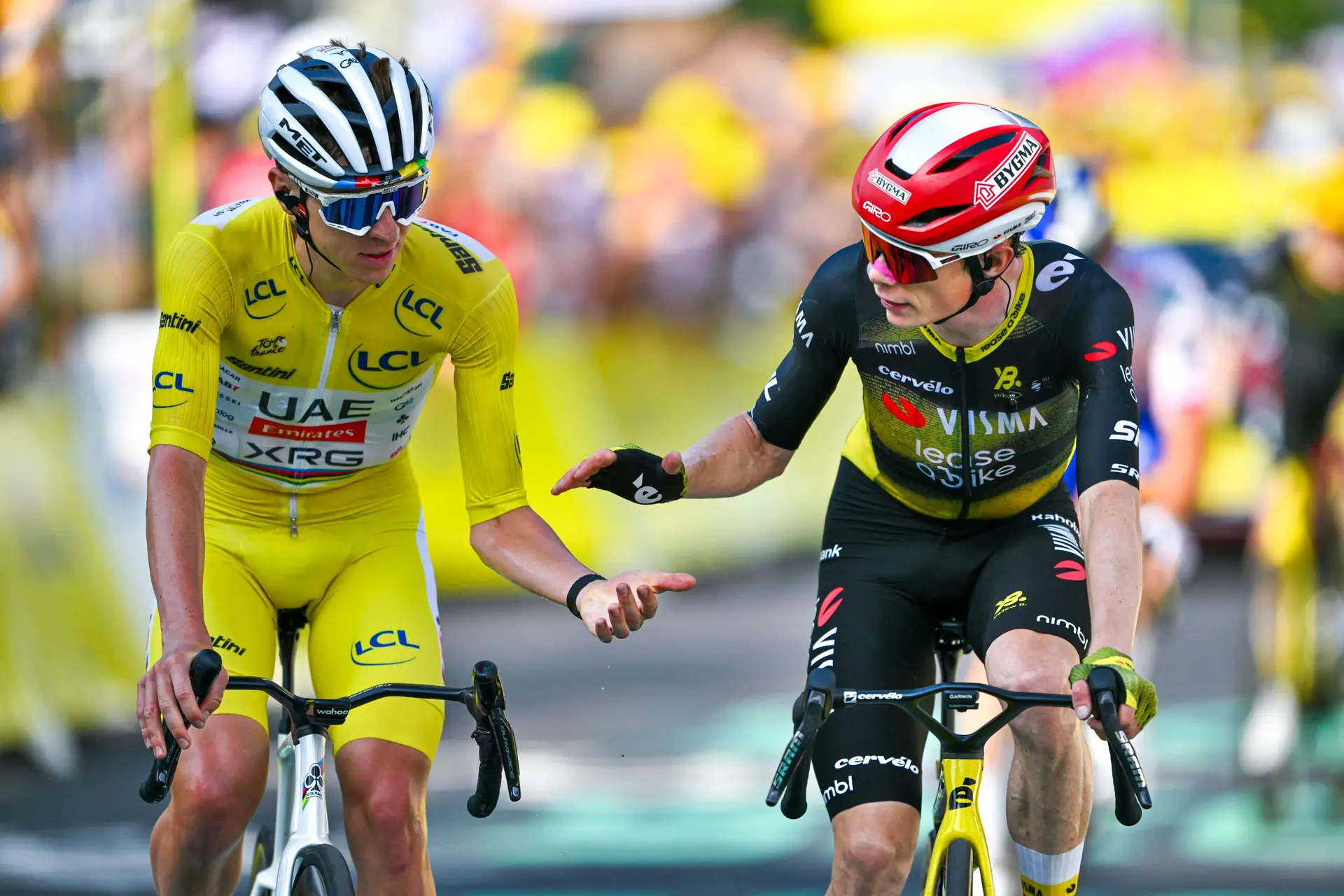
Fast forward twelve months and their rivalry grows. Now a co-leader with Roglic and the Slovenian suffering a week one crash that effectively ended his GC challenge - Vingegaard hatched a plan to challenge his smiling assassin rival.
The pair were locked in battle on GC stages, often leaving the rest in their wake. The crucial moment came on stage 11's Col du Galibier as Visma isolated and then attacked Pogacar in turns - eventually cracking him later in the stage on Col du Glandon.
With more arm-wrestling in the stages after, Vingegaard delivered the killer blow on the Hautacam. With satellite rider Wout van Aert meeting the duo ahead of a summit finish, van Aert and Vingegaard broke the elastic and the Dane set off into a yellow jersey sunset.

Tadej Pogacar and Jonas Vingegaard
I'm gone, I'm dead
The 2023 Tour can be remembered for the pair once again locking horns for over two weeks before one could really put the other to bed. But when Vingegaard did lay his marker, it was unlike any defeat Pogacar ever tasted.
A frighteningly strong time trial from Vingegaard saw him put 1:38 into the Slovenian, but that was just the appetiser - the main course lives long in cycling's memory.
Visma and Vingegaard put in a huge performance to make stage 17 a suffer-fest before the iconic Col de la Loze came. As the peloton flew into its lower slopes, Pogacar had been beaten.
He uttered the now famous phrase to his UAE Team Emirates sports directors: "I'm gone. I'm dead" as he dropped from the group of favourites and lost several minutes.
Revenge of the fallen
One major talking point followed Pogacar and Vingegaard into the 2024 Tour de France, had the Dane recovered well enough from his crash at Itzulia Basque Country that saw him suffer multiple broken ribs, a collapsed lung, and a broken collarbone?
The answer, in short, was yes. However, in a Tour de France that saw the peloton climb faster than in previous editions, Pogacar had clearly grown stronger - particularly gaining an edge on high energy-expenditure days - his previous weakness against Vingegaard.
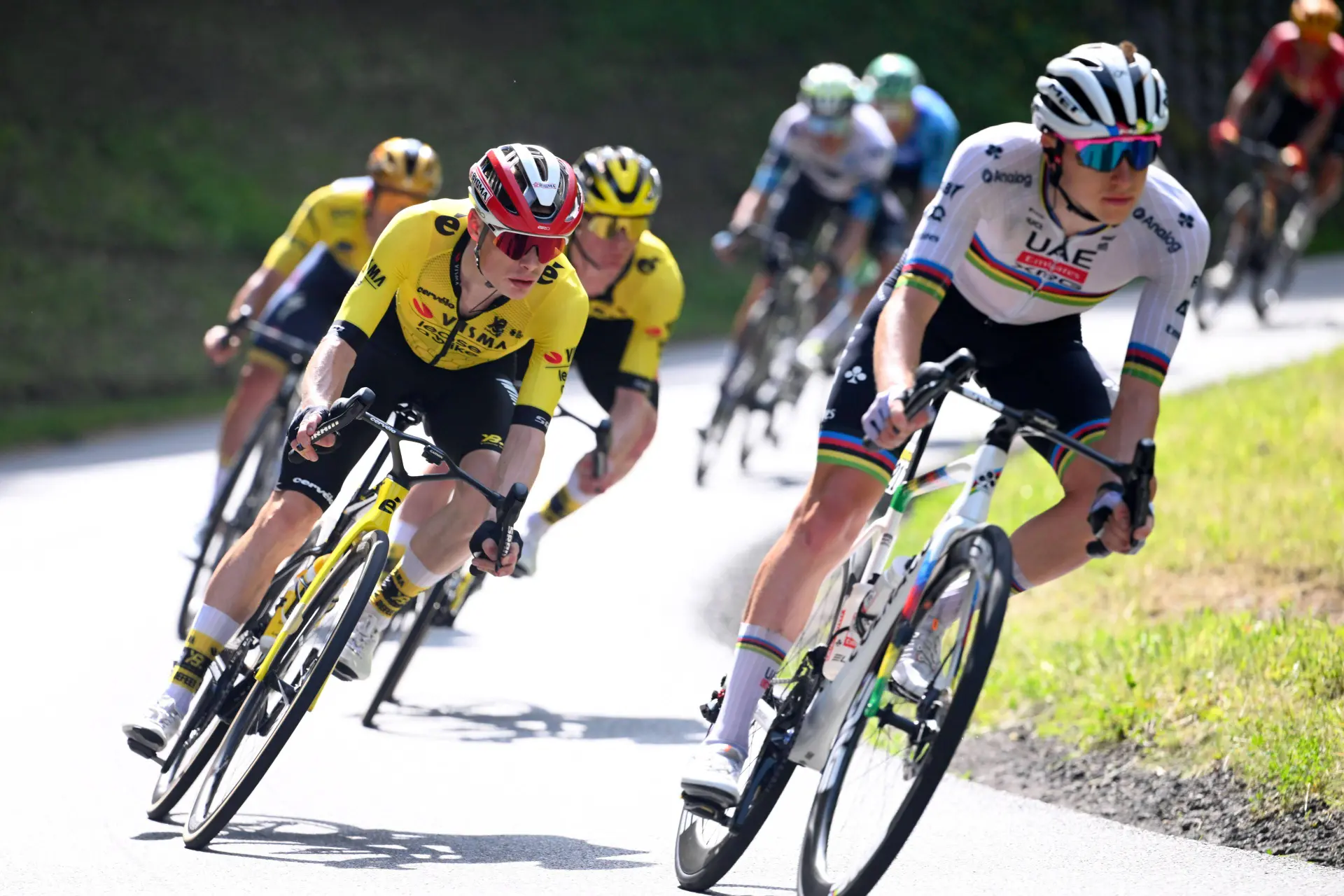
Pogacar repeatedly showed Vingegaard a clean set of heels when the race went uphill, and on Vingegaard's last stand on stage 15's Plateau de Beille summit finish, Pogacar masterfully paced his effort to absorb everything he had then leave him in his wake.
Pogacar comfortably reclaimed the yellow jersey over the coming stages with a dominant finish in Nice.
Read also
Total domination
If Pogacar laid a marker at the 2024 Tour de France, he circled, underlined and highlighted it the following year - taking a comprehensive yellow jersey.
Vingegaard looked strong throughout the first week of the race, offering explosivity to match the Slovenian on punch climbs and finishes. However, his challenge would falter in the high mountains.
For example, on stage 12 he put over two minutes into Vingegaard in a dominant solo victory. In a slightly more low-key final week, Pogacar defended his lead with ease, shutting down attacks from Vingegaard and other GC contenders.

Gavin QuinnCycling Journalist
Gavin Quinn is a cycling journalist and ultra-distance cyclist with a BA in Journalism from Dublin City University. Formerly the Press & Communications Officer for Cycling Ireland, Gavin has worked inside the national team at the World Championships and has reported for the Irish Mirror, Mirror UK, and The42.
His expertise is backed by elite-level access, having interviewed stars like Sam Bennett and Ben Healy, as well as immense personal endurance. In 2025, he completed a 12,000km solo cycle from Ireland to Vietnam, following a 4,600km tour across Europe. From the cobbles of Paris-Roubaix to the gradients of the Tourmalet, Gavin’s writing focuses on the "romance and brutality" of the sport. Having visited 50+ countries, he brings a global, cultural perspective to his coverage of the pro peloton for CyclingUpToDate.
claps 3visitors 3
Just in

Popular news
Latest comments
- TT But he won by a minute so he could have cut down on some of it
 Rafionain-Glas13-10-2026
 - weight is measurable. power is measurable. So why didn't he prepare that way from the TDF if he wanted to beat Pogi and after Pogi wasn't going to be there, to win.abstractengineer13-10-2026
- I hope Thibau and Tibor don't do the sameRafionain-Glas13-10-2026
- Seixas is exactly what I would like Pogi to be mentally and in his statements. Both come across as shy and who don't talk much but with Seixas, you can see that he enjoys success, that it boosts his ego, unlike Pogačar who seems to feel increasingly uncomfortable the more he wins. He's won so many times, people are saying he's boring. The french media hate him for winning so much, the french cycling fans are booing him... etc. etc. But remember one thing, Seixas will never physically reach Pogi's level. He's excellent, but he isn't at that level nor will ever be. His talking to the media, his relationship with people is already at a high level.PogiSloFans13-10-2026
- Paul Seixas is now the second-best rider in the world.megasmacky13-10-2026
- When will they start dropping Pogi? Oh yeah, when Pogi reaches 40+ years, that's when young cyclists will start dropping him. But until then... eat your hearts out and cry. Pogi will remain the G.O.A.T. for years to come. Capish?PogiSloFans13-10-2026
- I figure he would have found out how to outsprint Paul and take the win, maybe. He's 28 now but I would say he's right at the peak of his powers. It was great race though, Paul showed me something different about himself.awp13-10-2026
- Slowly, very slowly... 5-7 yrs. ;)MajorPayne13-10-2026
- Up to this point: "It is just not yet at the level of Vingegaard and Pogacar." First Jonas, and then level of Tadej. Period!MajorPayne13-10-2026
- The sport has long had a divide between the more diesel-like riders and the more explosive riders. Where does Pogačar fit? His explosive attacks are followed by a high speed diesel climb and he's rarely been caught in the past 5 years (people can name the moments, it's so rare). Seixas is young and we have no idea where his body will end up on this spectrum (just like we didn't with Pogačar when he was 20 and being a diesel up the Vuelta mountains of 2019). Speculation is fun, being a fan while it unfolds is going to be more fun.RidesHills13-10-2026
Loading
Write a comment