OPINION: Tadej Pogacar already ranks above Eddy Merckx as we list the top ten riders of all time
Cycling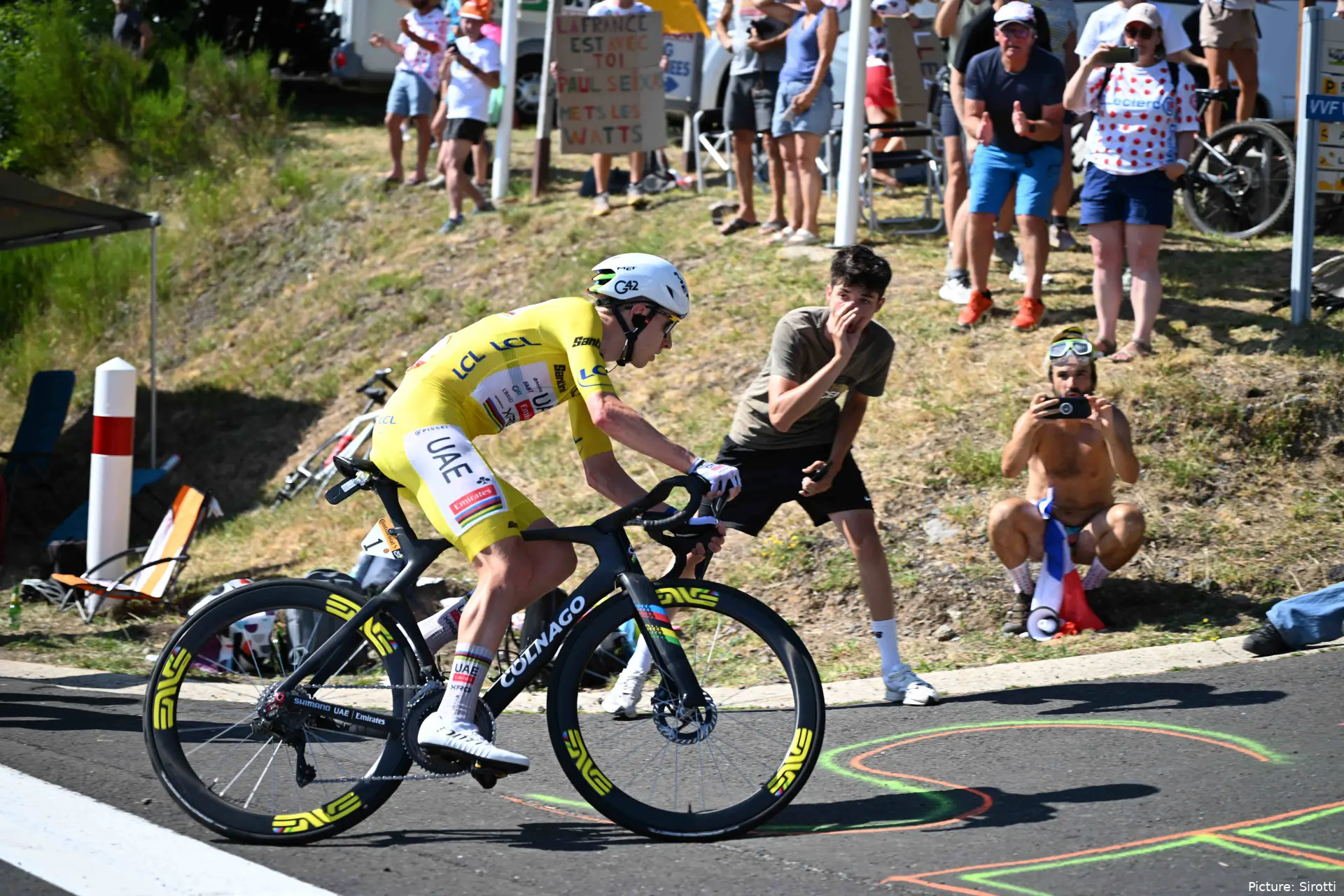
Determining the greatest cyclist of all time is inevitably subjective. Palmarès offer data, but they cannot capture competitive context, the sport’s evolution, training, technology, rivals’ specialisation, or peloton depth. Any historical list must accept a degree of debate.
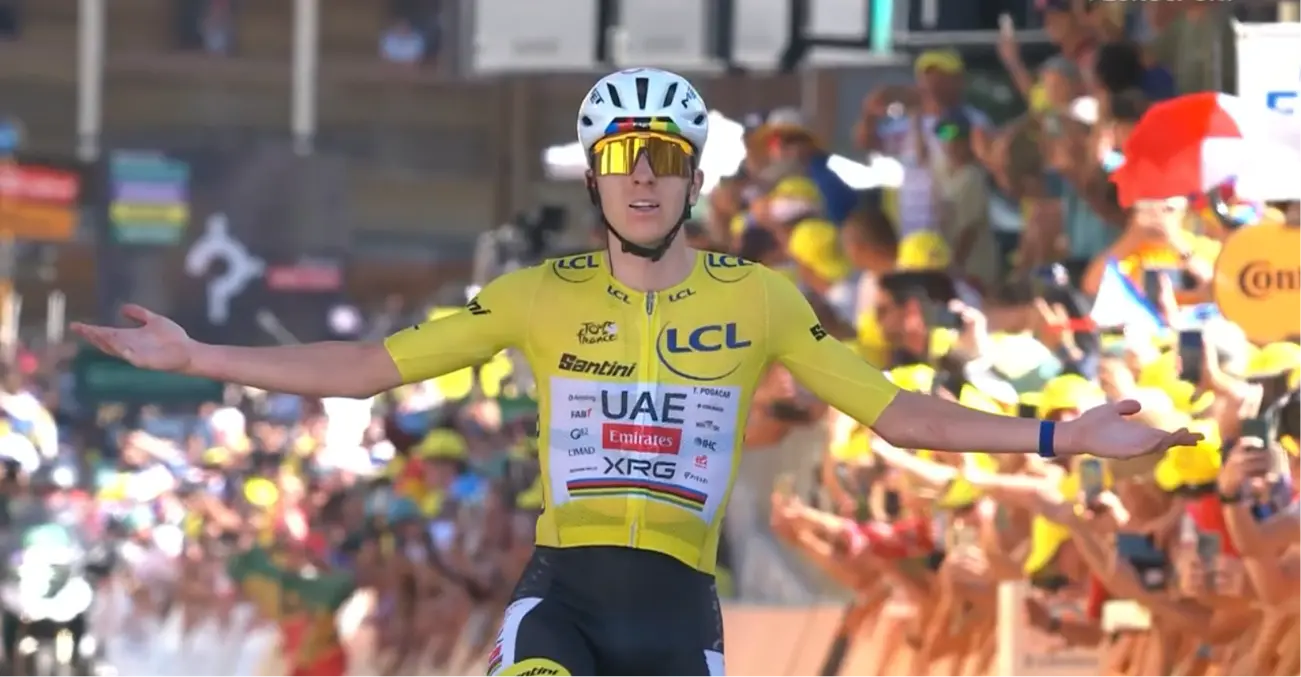
With that in mind, and considering achievements up to August 2026, there is a fundamental shift from traditional rankings: Tadej Pogacar can already be considered the greatest cyclist of all time ahead of Eddy Merckx.
The Slovenian has just won his fifth Tour de France, matching one of the sport’s great benchmarks, and he has done it in a far more global, professional, and competitive era. He races like “The Cannibal,” something unthinkable barely six years ago when soporific mountain trains ruled.
The debate is not limited to the eternal Pogacar–Merckx comparison. Bernard Hinault, Fausto Coppi, Jacques Anquetil, Miguel Indurain, and Sean Kelly belong to a historic elite in which each represents a distinct way of understanding cycling: Grand Tour dominance, winning on all terrains, time trial supremacy, consistency, or an extraordinary flair for the Classics. Here’s a legendary top 10 with the greatest cyclists in history.
10. Alejandro Valverde: longevity made rider
Closing the top 10 with Valverde recognises an extraordinarily long and competitive career. The rider from Murcia won a World Championships road race, a Vuelta a España, four Liège–Bastogne–Liège, and five Flèche Wallonne, while amassing an impressive haul of podiums and victories over almost two decades. A pity that for nearly a decade he preferred racing in Murcia over Flanders.
His main argument is precisely that longevity. Valverde stayed at the elite level from the early 2000s to the end of his career, competing across very different generations. He never reached the absolute dominance of the nine riders above him, but few can match his blend of consistency, versatility, and duration at the highest level.
9. Gino Bartali: a legend between two eras
Bartali’s career is among the most complex to assess historically. He won two Tours and three Giros, but his prime years were curtailed by the interruption of World War II. That context demands special care when interpreting his statistics.
His mastery in the mountains, longevity, and historical significance keep him in the top ten. Bartali did not amass Merckx or Pogacar numbers, but he was one of the riders who defined cycling before and after the war.

Roger De Vlaeminck, a Belgian cycling legend: one of the greatest Classics riders ever
8. Roger De Vlaeminck: the emperor of the Classics
De Vlaeminck was a Monument-winning machine. His four Paris–Roubaix wins and victories in all five Monuments place him among the greatest specialists in history, though calling him merely a specialist is unfair. He also won the Giro d’Italia and competed at the highest level across very different terrains.
His ranking rests on the difficulty of sustaining such dominance in the Classics for so many years. In an era teeming with top specialists, De Vlaeminck became a cross-era reference. The drawback for a higher place is the smaller scale of his Grand Tour palmarès.
7. Sean Kelly: the complete rider
Kelly was arguably one of the most complete riders ever. He won the Vuelta a España, seven Paris–Nice, two Paris–Roubaix, two Milano–Sanremo, two Liège–Bastogne–Liège, and three Il Lombardia, and tallied 158 professional victories according to ProCyclingStats.
His great asset was versatility. Kelly could fight for a general classification, survive in the mountains, win sprints, and dominate the toughest Classics. He sits behind Indurain because he never reached the same level of Grand Tour dominance. His palmarès is extraordinarily broad, but the Navarrese rider’s peak superiority was greater.

Miguel Indurain, in action in a Tour de France time trial
6. Miguel Indurain: the giant who reshaped the Tour
Indurain deserves to sit ahead of Sean Kelly because his Grand Tour dominance reached another level. The Navarrese won five consecutive Tours between 1991 and 1995 and added two Giros d’Italia, becoming an absolute benchmark in time trials and in the mountains.
His greatness also lies in how he won. Indurain could rip up the standings in a time trial and then defend with immense authority in the high mountains. He did not need to attack constantly: his ability to control races turned the Tour into a stage where his rivals often competed for second. His early-90s peak performance justifies placing him sixth.
5. Jacques Anquetil: precision turned into dominance
Anquetil was the first rider to conquer five Tours de France and built his reign around a discipline in which he was virtually unbeatable: the time trial. His ability to take minutes against the clock dictated his rivals’ strategies and allowed him to manage the mountains with extraordinary coolness.
His Giro victory and his capacity to win in different scenarios complete a far broader profile than is sometimes remembered. He didn’t have Pogacar’s explosive flair nor Merckx’s aggression, but he turned consistency and precision into a true form of domination.
4. Fausto Coppi: the man ahead of his time
Coppi belongs to another era, but his influence transcends statistics. Five Giros and two Tours form the base of an exceptional palmarès, though his historical importance goes much further. The Italian changed how the sport understood preparation, nutrition, recovery, and race strategy.
He was also a rider capable of opening huge gaps in the mountains and of dominating time trials. His figure symbolises cycling’s transformation towards a far more scientific and professional approach. That’s why, even when others’ numbers are superior, Coppi remains among the indispensable greats.
3. Bernard Hinault: the last great authority
Hinault comes closest to the blend of dominance and versatility of the top two. He won five Tours de France, three Giros d’Italia, and two Vueltas a España, plus a World Championships. He wasn’t simply a Grand Tour specialist: he raced with a personality and attacking force that also carried him to victory in the major classics.
His place on the historical podium is explained by the breadth of his palmarès and by having maintained extraordinary authority for years. In a ranking that doesn’t just count wins, Hinault stands as one of the finest examples of a complete rider.

Eddy Merckx en acción durante su legendaria carrera
2. Eddy Merckx: the eternal Cannibal
Placing Pogacar ahead of Merckx doesn’t diminish the Belgian. On the contrary. Merckx remains the standard against which every subsequent phenomenon is measured. His five Tours, five Giros, and one Vuelta make eleven Grand Tours, while his 19 Monument wins and 525 professional victories explain why he was considered, for decades and almost unanimously, the greatest rider in history.
The difference lies in how we interpret that dominance. Merckx was extraordinarily superior to his contemporaries, to the point of turning a significant part of racing into a display of individual power. The Slovenian, however, is reproducing that behaviour in a peloton where establishing such hegemony is far harder. The Belgian still holds the most spectacular absolute palmarès; the UAE Team rider offers, in this ranking’s view, the most extraordinary demonstration of superiority relative to the competitive difficulty of his era.
1. Tadej Pogacar: the new number one
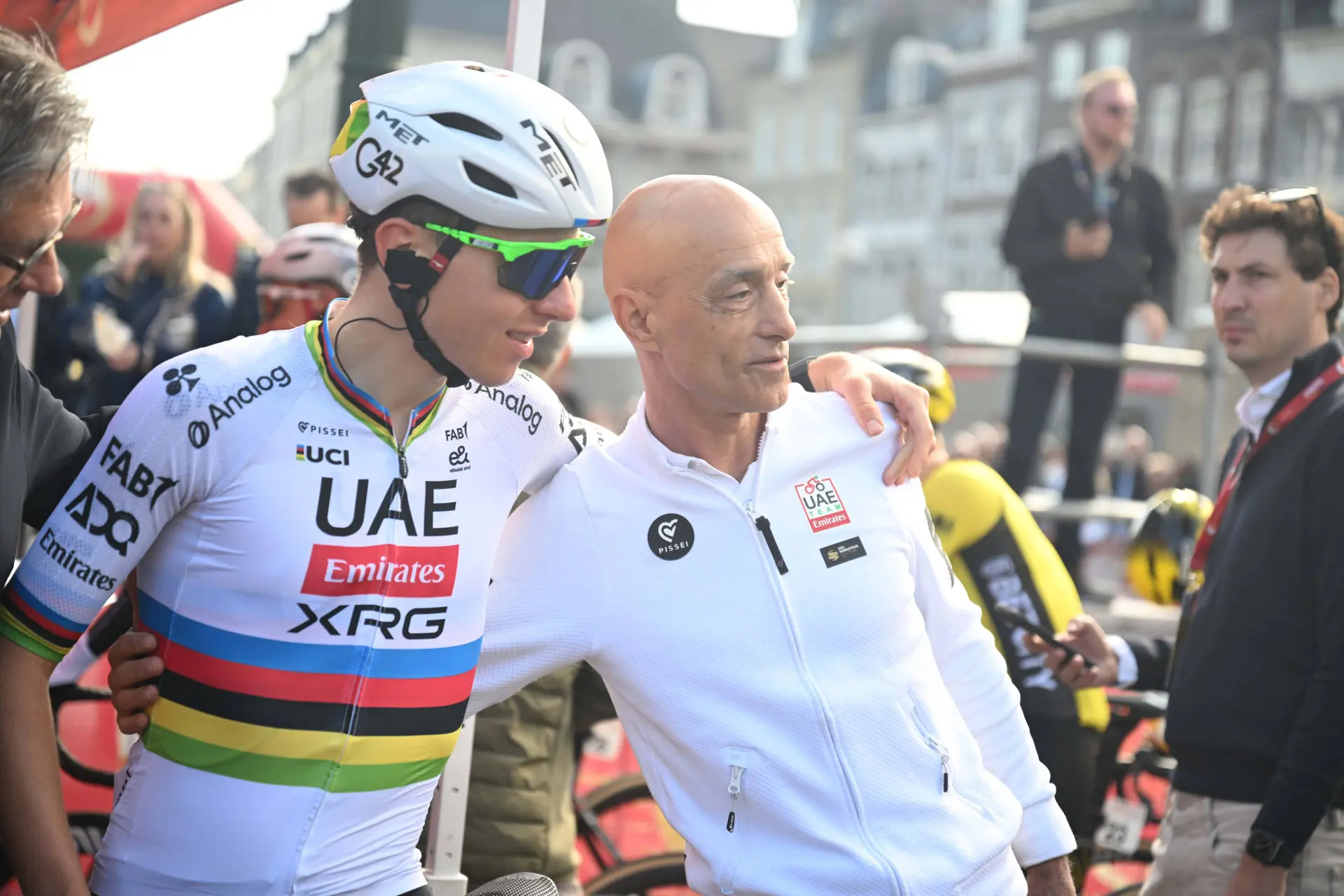
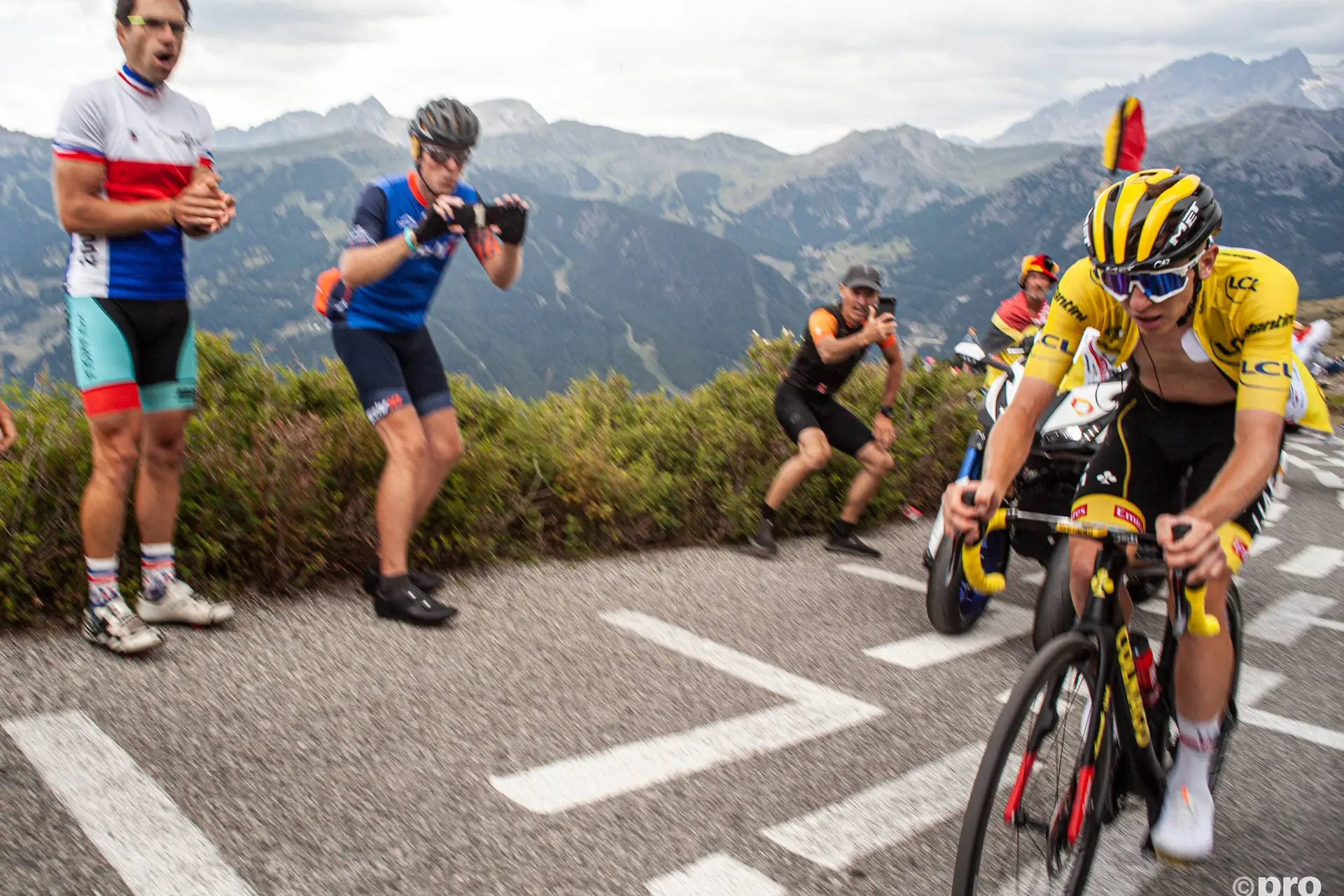
Pogacar doesn’t need history to wait. At 27 he already has five Tours, a Giro d’Italia, two World Championships and thirteen Monuments, including wins at Milano–Sanremo, Tour des Flandres, Liège–Bastogne–Liège, and Lombardia. His palmarès blends Grand Tours and classics in a way that inevitably recalls Merckx.
But the comparison takes on another dimension when you analyse the context. The young legend competes in a far more level, scientific, and global cycling than that of the 1960s and 70s. Teams have sophisticated preparation structures, data analysis, advanced nutrition, and rivals who can spend months targeting a single objective.
And yet the Slovenian races like Merckx did: he attacks, wins time trials, climbs, can prevail on the cobbles, and hunts victory even when he doesn’t need it. His dominance isn’t just about stacking wins: it’s about winning in virtually every possible way.
Read also
A number one who changes history
This ranking doesn’t aim to erase Merckx from the historical summit. It asks a different question: which rider has proved the most extraordinary relative to the era in which he competed? And there Pogacar has ample arguments to take first place.
Merckx will keep the numbers that seem untouchable: 11 Grand Tours and 19 Monuments. One of the most complete cyclists any generation has seen, he set the benchmark while a new champion is building an extraordinary palmarès at unprecedented speed in a sport where specialisation, information, and competitive depth make the rise of an absolute dominator immensely difficult.
Tadej Pogacar is not fighting other cyclists but history. Not only against Eddy Merckx but against Michael Jordan, Roger Federer, Valentino Rossi, Lionel Messi, or Michael Phelps.

Jorge BorregueroWriter
Jorge Borreguero is a journalist with a degree from the Complutense University of Madrid and has been a writer for Cyclinguptodate and Ciclismoaldia since early 2023. In this role, he has played a key part in the evolution of the website, particularly as a specialist covering Movistar Team. He regularly writes race reports, analytical pieces, and in-depth features about the team, and has conducted exclusive interviews and attended multiple team presentations, providing readers with firsthand insights into one of the leading professional cycling squads.
Throughout his career, Jorge has maintained a strong focus on sports journalism, gaining experience across a variety of disciplines, including basketball and football. However, his current work is almost entirely dedicated to cycling, contributing extensively to Ciclismoaldia and its sister website Cyclinguptodate. For these platforms, he combines thorough research with detailed reporting to deliver high-quality content, ranging from race previews and results to expert analysis of teams and riders.
Jorge’s reporting is marked by accuracy, depth, and a commitment to providing readers with reliable and authoritative information. His direct engagement with teams, athletes, and events ensures that his coverage reflects firsthand knowledge and professional insight. Through his work, he has established himself as a trusted voice in professional cycling journalism, bridging the gap between the sport and its global audience while maintaining rigorous editorial standards.
claps 55visitors 11
Just in
Popular news
Latest comments
- > Sven Nys believes van der Poel-Van Aert factor is damaging cyclocross calendar Stop whining and just be better than him bro...averagecyclist14-10-2026
- “at some point those guys will turn their backs on OUR sport”? after dedicating so much of their lives to cyclocross and in mathieu’s case winning more world championships than anyone, it would seem to me like they’ve earned the right for it to be always be THEIR sport, too, even after they retire from it.OCexile14-10-2026
- It takes two to tango. Riders also have a say. Maybe they didn't see any opportunities on a stacked team such as Visma's? Who knows, but could be a multitude of reasons why deals fall through.Pogboom14-10-2026
- Eventually Pogi will get older and slower. Father Time will favor the young. The question is whether he can beat Pogi before Pogi decides to retire. You never know... Pogi may retire after winning paris-roubaix :)b3tlla14-10-2026
- i think he can continue to race for maybe another 2 years till he drops out of podium contention. With his TT and his follow the leader in the Mountains,he should not need too many teammates too.abstractengineer14-10-2026
- Aren't they still shopping around for a main sponsor for next year?wrsty14-10-2026
- How broke is visma now? wtf they cant even fight moviestar and decathlon for riders and lose both their mid targets based on their budget and they cant even get those? Crazy...:/miguel13-10-2026
- TT But he won by a minute so he could have cut down on some of it
 Rafionain-Glas13-10-2026
 - weight is measurable. power is measurable. So why didn't he prepare that way from the TDF if he wanted to beat Pogi and after Pogi wasn't going to be there, to win.abstractengineer13-10-2026
- I hope Thibau and Tibor don't do the sameRafionain-Glas13-10-2026
Loading
31 Comments