Stages & Profiles Tour de France 2026 - Alpe d'Huez on stage 19 and 20; 8 mountain stages and Montmarte cobblestones
CyclingThursday, 18 June 2026 at 09:41
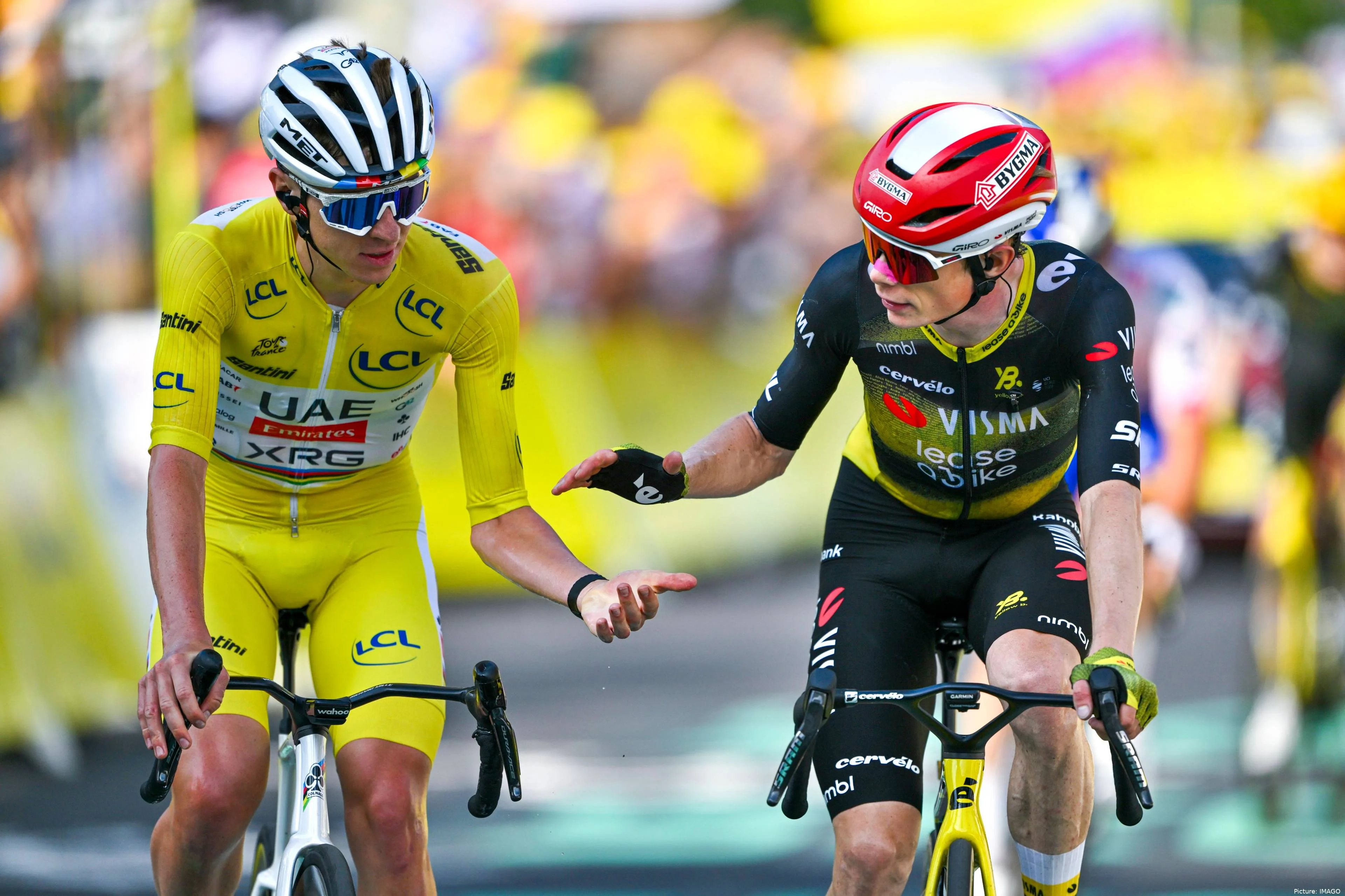
The 2026 Tour de France will take place from the 4th to the 26th of July. Throughout the 21 stages, the peloton will be racing through the mountains, sprint stages, cobblestones, individual and team time trials even. We take a look at all stages and their official profiles - including climbs such as the Alpe d'Huez, the Col du Galibier and the Plateau de Solaison.
This is an edition that features a team time trial and also individual time trial on stages 1 and 16 respectively, set to test out the riders' abilities against the clock in a very meaningful way, with the GC not only being decided in the mountains. The Grand Depart takes place in Barcelona, with stages 2 and 3 featuring hilltop finishes where minor differences and explosive finishes are expected.
The race will feature seven stages that are very likely to finish in a bunch sprint (5, 7, 8, 11, 12 and 17) although the finales into Foix (4) and Paris (21) could also see sprint finishes, although there will be climbs on the way.
Stages 9 and 13 are designed for the breakaway specialists, who will have in both first weeks golden opportunities to succeed in hilly profiles.
The mountain stages will consist of a day in the Pyrenees (6) with a summit finish in Gavarnie-Gedré after climbing the Col du Tourmalet; Le Lioran (10) in the Massif Central after a few explosive and steep ascents and Le Markstein (14) after a few climbs on the Vosges; with the three mountain ranges being represented before the arrival into the Alps.
In the Alps there will be the summit finish to Plateau de Solaison (15) which can make big differences at the end of the second week; whilst in the final week there will be a summit finish in Orcieres-Merlette (18) before two arrivals at the Alpe d'Huez. One on stage 19 will have that ascent as the highlight of the day, whilst stage 20 will be a colossal day through the mountains featuring for example the Col du Galibier, before finishing in the ski station once again after ascending the Col de la Sarenne.
| Stage | Distance (km) | Start | Finish | Start Time (CET) | Finish Time (CET) |
| 1 (TTT) | 19.7 | Barcelona | Barcelona | 17:05 | 19:15 |
| 2 | 182 | Tarragona | Barcelona | 13:45 | 17:25 |
| 3 | 196 | Granollers | Les Angles | 12:10 | 16:55 |
| 4 | 182 | Carcassonne | Foix | 13:10 | 17:25 |
| 5 | 158 | Lannemezan | Pau | 14:05 | 17:35 |
| 6 | 186 | Pau | Gavarnie-Gèdre | 12:25 | 17:30 |
| 7 | 175 | Hagetmau | Bordeaux | 13:15 | 17:15 |
| 8 | 182 | Périgueux | Bergerac | 13:15 | 17:20 |
| 9 | 185 | Malemort | Ussel | 13:35 | 17:45 |
| 10 | 167 | Aurillac | Le Lioran | 13:10 | 17:10 |
| 11 | 161 | Vichy | Nevers | 13:50 | 17:30 |
| 12 | 181 | Circuit Nevers Magny-Cours | Chalon-sur-Saône | 13:30 | 17:30 |
| 13 | 205 | Dole | Belfort | 13:00 | 17:45 |
| 14 | 184 | Mulhouse | Le Markstein Fellering | 13:10 | 17:25 |
| 15 | 169 | Champagnole | Plateau de Solaison | 13:10 | 17:40 |
| 16 (ITT) | 26 | Évian-les-Bains | Thonon-les-Bains | 13:00 | 17:50 |
| 17 | 169 | Chambéry | Voiron | 13:20 | 17:18 |
| 18 | 171 | Voiron | Orcières-Merlette | 12:35 | 17:10 |
| 19 | 130 | Gap | Alpe d'Huez | 14:00 | 17:24 |
| 20 | 110 | Le Bourg-d'Oisans | Alpe d'Huez | 11:20 | 16:10 |
| 21 | 132 | Thoiry | Paris (Champs-Élysées) | 16:15 | 19:30 |
Read also
Profile Stage 1 (TTT): Barcelona - Barcelona

Stage 1 (TTT): Barcelona - Barcelona, 19.6 kilometers
The race begins in Barcelona with a 19-kilometer long team time trial that should set the early differences in the race. The start is flat and quite technical, going through some of the Catalan city's main monuments - including an intermediate point at the Sagrada Familia cathedral.
The first 15 kilometers will be the moment in which a few of the most powerful riders will be used, to keep the speeds as high as possible on the flat terrain. The last part of the TTT is quite hilly, the usual in modern cycling.
There will be two small ascents, the first of which the so called 'Côte de Montjuic' which is around 1.5 kilometers long at 5% with an intermediate point halfway throughout it. The climb ends wit 2.6 kilometers to go and then after a small and fast descent, the riders take on the final uphill 800 meters that have a gradient of 7% to it - the end of this climb, by the Olympic stadium, coincides with the finish line.
Profile Stage 2: Tarragona - Barcelona

Stage 2: Tarragona - Barcelona, 168.5 kilometers
Stage 2 of the Tour begins in the city of Tarragona and will take the riders through the Catalan coast throughout the first 85 kilometers. The riders will return to Barcelona, and on its outskirts they will have the ascent to the Côte de Begues - which is around 6 kilometers long at 6%. This climb ends with 74 kilometers to go, but is only a warm-up for what's to come after.
A stage that would ordinarily be planned for the classics specialist, but ultimately most modern GC men are some of the best puncheurs in the world, meaning that this will be the second consecutive day that will be important for the overall classification.
The riders reach Barcelona and will take on a circuit that is well familiar to them... Or is it? On paper it looks virtually the same as the Volta a Catalunya one, however there are a few differences. Firstly between laps, there is an extension of the 'flat' section meaning that there is more rest inbetween climbs. This makes it less likely for there to be long-range attacks, because they cannot benefit as much from the explosive nature of the circuit.
Secondly, whilst the climb to the Montjuic castle ends on the same location, it begins on a different road, which effectively makes it harder. Whilst the climb is mostly just the final ramp in Catalunya, at the Tour they take up a whole 1.6 kilometers at 9.3%.
This is meaningful. The final ramps of the climb go up to 13%, but now the riders won't necessarily wait for them. The fight for positioning will be crucial, and the first part of the climb also features several switchbacks which makes attacks and/or splits more viable.
The riders go through it with 27 and 15 kilometers to go. But they will go through the final circuit on three occasions. The last lap sees the riders summit the hilltop with a mere 2.5 kilometers to go. What is left until the finish is the very short and fast descent; and the same final ascent to the line (only slightly shortened) which on this day will be a 600 meters long at 5.5% - hence, an uphill finish.
Profile Stage 3: Granollers - Les Angles

Stage 3: Granollers - Les Angles, 195.9 kilometers
No smiles for the sprinters as the race leaves Spain but heads into France through the Pyrenees for its first summit finish. It's not a day in the high mountains, but it is another finale for the puncheurs and the GC men. The fast men can be happy with the early intermediate sprint on the day which allows them to fight for some points, but they will still have to wait a few days until they have a proper opportunity to fight for their stage win.
It is not impossible that some can survive and be in contention for a result, despite this. The riders begin in Granollers, and head north towards the French border. There are three climbs towards the finale which need to be taken into consideration.
The first is the Col de Toses, 9.3 kilometers at 6.5% which ends at 68 kilometers to go. The second one is the Col du Calvaire, which is 11.4 kilometers at 4% and ernds with 23 kilometers to go. Neither are brutal, but if the pace is anything but very calm, some sprinters will get dropped - also because the altitude factor, at around 1800 meters, will play a factor. Tosses also features 9% in its final kilometers, meaning that not many will go through with good legs.
The riders have a small hilltop finishing with 12 kilometers to go, and then take their last good breath before the race's first summit finish.
The final 7 kilometers average 3%, so it's a slight rise to the line in Les Angles; where the final 1.7 kilometers average 6.5%. This is not terrain where an attack can reap much benefit as the speeds will be very high, but instead a matter of waiting for the final few hundred meters and trying to conserve as much energy as possible for a potential sprint.
Profile Stage 4: Carcassonne - Foix

Stage 4: Carcassonne - Foix, 181.9 kilometers
The sprinters get no luck on stage 4 as the riders go through the Pyrenees and find 2700 meters of climbing. A sprint is possible on this day, but certainly not a regular bunch sprint. With 181 kilometers its not a big day distance-wise, with a flat first 30 kilometers providing space for a breakaway to go up the road before the peloton starts going uphill.
After an early sequence of climbs, the riders find an intermediate sprint 93 kilometers into the day, right before the start of its main climbs. These, like the previous day, are not overly hard, but its the sprinters that have to hang on in them and that is not always an easy task. The Col de Coudons firstly is over 10 kilometers long at 5.5%, ending with 74 kilometers to go. There is no descent off of it as well, only a long plateau section that follows for long kilometers.
Then lastly, the riders take on the Col de Montsegur, which is 6.9 kilometers long at 6.6%, ending with 35 kilometers to go. Some sprinters may survive it, but there is a balance between putting in a hard pace, and having teammates able to keep the high pace after the climb both to keep the sprinters away and to prevent other attacks from succeeding.
The latter is a serious concern, as from that point to the finish in Foix the riders lose almost 700 meters in altitude, meaning these kilometers will go by very quickly. There is also a small hilltop finishing with 12 kilometers to go that can be a launchpad for an attack.
Profile Stage 5: Lannemezan - Pau

Stage 5: Lannemezan - Pau, 158.3 kilometers
The first actual opportunity for the sprinters comes in the form of a flat finale into the city of Pau, a regular feature in the Tour. The start of the stage takes place in Lannemezan and the riders will only have 158 kilometers on the menu. Still, it is not a stage that is as simple as some would hope for.
Most of the day is pan-flat, and the intermediate sprint is placed with 45 kilometers to go. From there on the riders enter a slightly hilly area, with a few small climbs that will cause the peloton to have some positioning battles - and potentially some attacks.
With 36, 31 and 26 kilometers to go, there are some features in the profile. The last of which is the only categorized of the three climbs, averaging almost 9% for 1 kilometer. Don't underestimate it, at a high pace, quite a few sprinters can get dropped here, and there will not be a lot of time to recover position in the peloton.
The riders have a flat finale and in Pau, a city which is a benchmark of the region, they will move towards the Place de Verdun where the fast men will have a chance to shine.
Profile Stage 6: Pau - Gavarnie-Gedré

Stage 6: Pau - Gavarnie-Gedré, 186.2 kilometers
Stage 6 is the first day in the high mountains and the only one on the first week of the race. In good Tour tradition, the start of the stage is actually flat, in order to not put the sprinters under tremendous stress.
There will be a few hilltops but only after 75 kilometers will the riders actually begin climbing more seriously - and after the intermediate sprint. What everyone will be focused on will be the trio of climbs towards the finale of the stage: Col d'Aspin, Col du Tourmalet and the climb to Gavarnie-Gèdre.
The first is 12 kilometers long at 6.5, and ends with 68 kilometers to go. This combination is often used, and the riders then go up the mythical Tourmalet - the climb that has been used the most in the Tour's history.
But its reputation lies not only in its frequency, but difficulty. 17.1 kilometers at 7.3, climbed from the La Mongie side. It is a difficult climb, marked by its constant gradients throughout a very extensive length, and also the altitude factor - 2115 meters at the top.
If we are to see big attacks on this day, it will be on this climb - and there are good reasons to think this may happen. It is also a stage where tactics can be key, as having satelite riders in the breakaway can then save (or boost an attack) after the climb. The ascent ends with 39 kilometers to go, but half of the way to the finish is the fast downhill.
When the riders reach Luz Saint-Sauver, they turn towards Gavarnie. The climb in total is 18.7 kilometers long at 3.7%. In these gradients, having teammates can make all of the difference, the final climb may see attacks and opportunists making their moves, if this doesn't happen beforehand.
But the climb in itself is not a very difficult effort, for the Grand Tour specialists of course. There is the chance to attack towards the end, but the gradients never go above the 6-7%. It is also a 'valley climb', meaning that it is almost fully in a straight line and so there are no obvious places to attack - whilst it is hard for the riders to ever leave their rivals' line of sight.
Profile Stage 7: Hagetmau - Bordeaux

Stage 7: Hagetmau - Bordeaux, 175.1 kilometers
The race heads off from the Pyrenees and into Bordeaux for the 'real' start of the race for the sprinters. They will have earned it, and stage 7 of the race goes from Hagetmau to Bordeaux.
Profile wise, there actually isn't a way to get around it. There is one categorized climb on the stage, however it doesn't present any difficulty, even for the purest of sprinters. The climb ends with 38 kilometers to go whilst the intermediate sprint was placed with 55 kilometers to go.
It is a transition stage, heading north almost in its entirety, through territory that is often very hot and also exposed to the elements - the tradition fields of the French interior. The riders reach Bordeaux after 175 kilometers.
The final will be by the river and will not feature any meaningful technical features, making it a day for the fast men in every way.
Profile Stage 8: Périgeux - Bergerac

Stage 8: Périgeux - Bergerac, 180.4 kilometers
Stage 8 will once again suit the sprinters. After a very difficult and hilly start to the Tour, the fast men now get two days in a row where they can benefit from the race's profile, in a stage where it will be very hard to prevent the inevitable scenario of a bunch sprint.
The day's intermediate sprint will take place with 58 kilometers to go, and there will be two small categorized climbs right before and after that point of the stage. The day begins in Périgeux and heads towards Bergerac.
It is not a technical finale, however not a straight line one either. It avoids the city enter and finishes in a park, however positioning will always be crucial.
Profile Stage 9: Malemort - Ussel

Stage 9: Malemort - Ussel, 185.9 kilometers
Stage 9 from Malemort to Ussel is a transition day and an unusual one. The peloton, on its second Sunday, heads towards the Massif Central for a stage that can only be described as a breakaway's dream.
it's an explosive day, featuring 185 kilometers, 3300 meters of climbing but not a single major climb. The rolling roads are a characteristic of the region, which often leads to interesting stages and outcomes - as the fatigue often builds up in a different way than a regular stage, and tactics usually take up a much larger percentage of the way the stage will be decided.
Right from the first kilometer the peloton begins climbing slightly. Both categorized and uncategorized, the climbs will be felt and all have that gradient of 3-5%, where the heavy men and classics specialists can make just as much of an impact as the climbers.
This is terrain where controlling a race is very hard, and GC men may try to sneak into the breakaway as it is not expected that any team will want to take control of the entire stage. Hence, many sub-plots can develop on the stage.
The riders have four categorized climbs. The meaningful ones are Suc au Mau (3.8Km; 7.7%; 80 kilometers to go) and the Côte de la Croix du Pey (4.8Km; 6%; 56Km to go). On these, the climbers that make it in front will want to push the pace in order to create differences but above all thin down the group on terrain that won't suit a few riders and thus increase their own chances of succeeding.
Those final 55 kilometers will then be a constant up and down. There will be a small categorized climb at Mont Bessou but it is only a 900-meter long ramp at 7% (differences can be made, but the race won't be turned on its head).
That ascent marks the end of the long plateau section, which is 24 kilometers away from the finish line. A descent follows which can be key for the outcome of the stage. Gaps can be expanded, and those out front can recover, in time for the final big effort.
There are two more small hilltops that end inside the final 15 kilometers to go, but at this point it is more a matter of who has the legs, who can sprint and what tactics will come at play. A sprint at the end of this stage is not impossible, but hard to see.
Profile Stage 10: Aurillac - Le Lioran

Stage 10: Aurillac - Le Lioran, 166.6 kilometers
On Bastille Day the riders head into the Massif Central for a day packed with short climbs, but some where a lot has happened in the past - most recently 2024, where in the same finale Tadej Pogacar and Jonas VIngegaard had an epic showdown.
It is a hilly day, but one that is much harder than the previous stage, and is better suited to the climbers - whilst we may also well see a GC battle on terrain that is not comfortable for all climbers. 3800 meters of climbing, 3600 meters and a flat start. With the math made, this does actually reveal an incredibly hard last two thirds of the stage, even if it misses a large climb in duration or gradient.
The riders find an intermediate sprint early on and then move towards the climb. All of them average between 5 and 8%, and there wll be seven categorized ascents all in less than 100 kilometers. 3Km at 7.2%; 5.9Km at 6.7%; 3.1Km at 6.5%; 5.2Km at 5.3%...
The real action then should begin on the climb to Pas de Peyrol, which is 7.8 kilometers long at 6.8%. The climb ends with just over 30 kilometers to go, at the end of a hard sequence of climbs and with a descent right after that leads directly onto the other ones. it should be the longest effort of the day and the gradients can be enough for an explosive attack that would blow up the peloton.
The descent is technical and leads the riders directly onto the base of the Col de Perthus, which is the steepest (and perhaps hardest) of the day. 4.4 kilometers at 8.5% is an effort that can't be understated, specially at this point of the day. The climb ends with 13 kilometers to go.
After a short descent there is yet another hilltop in the form of the Col de Font de Cère, which is 3.1 kilometers long at 5.8% and ends with a mere 2.7 kilometers of the line. The riders are in sight of the finish in Le Lioran, but do still find the same uphill sprint finish where Pogacar and Vingegaard sprinted it out 24 months ago.
Profile Stage 11: Vichy - Nevers

Stage 11: Vichy - Nevers, 161.3 kilometers
Stage 11 sees the peloton have an easier day, with no climbs on the profile and a route that favours the sprinters. The stage starts out in Vichy, and has its intermediate sprint with a mere 27 kilometers ridden. But there are no ascents on a day that covers 161 kilometers, towards Nevers which will host the finale.
The final kilometers will feature a few slight corners but nothing too technical or within the city center, meaning it will be rather safe for the riders. The fight for the green jersey has, here, an important day.
Profile Stage 12: Magny-Cours Circuit (Nevers) - Chalon-sur-Saone

Stage 12: Magny-Cours Circuit (Nevers) - Chalon-sur-Saone, 179.1 kilometers
Stage 12 is another opportunity for the sprinters to give it their all and fight for a stage win. It is not a difficult day, starting out in Nevers - this time around in the Magny-Cours racing circuit. Once again, the riders don't find difficulties out the gate, and have an intermediate sprint early on.
There are three categorized climbs on the day, but they are all almost replicas of themselves - with around 2 kilometers at 4%. The last of which ends with 24 kilometers to go, which has to be taken into consideration for the finale, however shouldn't be a climb that will really put sprinters into difficulties.
The riders head towards Chalon-sur-Saone where, after 179 kilometers, they will reach the stage finish. The riders head eastwards all day long and then in the final city itself, will have a few difficult corners that will require a lot of attention inside the final 10 kilometers. It will be a tense and likely very fast finale, with the teams fresh after a flat day.
Profile Stage 13: Dole - Belfort

Stage 13: Dole - Belfort, 205.8 kilometers
The race heads northeast towards the Vosges and presents an interesting day, one on paper designed for the success of a breakaway, however with possibilities for different types of riders. The stage begins in Dole and is the longest of the race - and in fact, the only one above 200 kilometers throughout the whole three weeks.
But it will also be a fast one, certainly, as most of it is pan-flat. The start of the stage, and in fact the first two thirds of the day don't have a single meaningful difficulty, categorized climb or intermediate sprint. Everything is paced inside the final 75 kilometers.
Climbing wise, the Col des Croix opens things up with 5.1 kilometers at 4.8%, ending with 48 kilometers to go. The race then begins heading south, with the Ballon d'Alsace left to be climbed. The ascent is 8.9 kilometers long at 6.9%, so it is a pretty serious climb.
It is hard enough for GC attacks; but if not attacked, it can be ridden by a medium-sized peloton, guided by a team that would want to thin down the peloton but take the race to a sprint. But not many riders will suit this profile, hence, many will try and get in the breakaway where the climbers and puncheurs would stand a chance at winning the stage.
The climb ends with 30 kilometers to go, and the descent is around 12 kilometers long. Those final 18 kilometers, albeit flat, are also partly going downhill and so the speeds will be very hard, and chasing down any group would in no way be easy. The riders reach Belfort where a sprint, a breakaway win or even a GC day could decide the winner.
Profile Stage 14: Mulhouse - Le Markstein

Stage 14: Mulhouse - Le Markstein, 155.3 kilometers
A day full of mountains in the Vosges. Namely it is only 155 kilometers long, but the riders never leave the region in which the climbs are often inconsistent and the descents are technical. Treacherous terrain, as the Tour returns to the high mountains one week later.
The depart takes place in Mulhouse and there is no easing into the climbs. The Grand Ballon will be the first one right away, with a total of 21.5 kilometera at almost 5%, a gradient that is highly influenced by a downhill section that exists in the climb. The last 6 kilometers of the climb average 8% and the riders can actually almost see the finish line from there on, but they will go on a full loop in the mountains beforehand.
They go up the Côl du Page and the Ballon d'Alsace, both of which will add to the fatigue but ultimately should not create major developments in the race. The peloton then goes through a transition period before heading into the climb of the Col du Haag.
This climb is one of the race's novelties, and potentially one of its key moments. The ascent is 11.2 kilometers long at 7.3%, but it is far from an average climb. Unlike most others in this Tour, it is rather inconsistent. A lot of the climb, both at its start and finish, is ridden at around 10%, but there is a flat section halfway through it.
The ascent ends with 6 kilometers to go and the riders then have a small flat plateau section all the way into the finish at Le Markstein.
Profile Stage 15: Champagnole - Plateau de Solaison

Stage 15: Champagnole - Plateau de Solaison, 183.9 kilometers
The race arrives in the Alps and features two incredibly steep and hard climbs to finish the second week. It is a day where all of the decisions will likely happen only on the final climb, but a lot can be expected.
There will be 183 kilometers on the menu, with the riders starting out in Champognle and then going through a few ascents. The main notable one is the Col de la Croisette, 4.6 kilometers long at 11% which ends with 50 kilometers to go. Due to the stage's nature, it's unlikely to have a major effect, but it is in every way a climb that can blow the race apart and will have to be taken into consideration. Shortly after the Côte du Mont (2.1Km at 8.3%) will also create further damage in the race.
The riders then go down into Thuet where the final climb will begin. There will be no surprises, the ascent was just ridden at the recent Tour Auvergne. It is 11.3 kilometers long at 9%, making it one of the hardest summit finishes of the race. It is a steep climb with a very difficult start, one for the pure climbers and one in which you cannot hide.
Profile Stage 16 (ITT): Evian-les-Bains - Thonon-les-Bains

Stage 16 (ITT): Evian-les-Bains - Thonon-les-Bains, 26.1 kilometers
The race's sole individual time trial, but one that does not suit the specialists in any way. The Tour organizers have gone out of their way to ensure that there wouldn't be any flat challenge against the clock this year, with a hilly TTT and now ITT. It is short too, meaning the differences will be limited.
It isn't a mountain time trial but starts off with a 10-kilometer ascent out of Evian-les-Bains. The Côte de Larringes averages 4.3% and will have an intermediate point at the summit. It is a climb that will be ridden very quickly, and so aerodynamics will still be crucial.
The descent will then be very fast, and also quite technical at points, meaning that the riders have to be quite careful on the TT bike where they are not used to taking up such roads in a race situation.
There will only truly be 8 flat kilometers to the time trial, already within Thonon-les-Bains, but even these will be somewhat technical, lacking the long straight flat sections where differences can really be cemented.
Profile Stage 17: Chambery - Voiron

Stage 17: Chambery - Voiron, 174.7 kilometers
Stage 17 begins in Chambery, one of the Alps' main cities, and provides the profile for a stage that can be interesting. That is because, although this is a stage that would ordinarily be designed for the sprinters (maybe even be their last opportunity), the riders climb 900 meters of altitude within the first 50 kilometers.
This is the effect of three categorized climbs. But if the breakaway goes up the road early on, the main one - the 3.5Km Col des Pres - may not be too difficult. This climb averages almost 7% and in the final week, there is a lot more urgency to form a breakaway.
The day is not overall very hard, but even so, if a strong group goes up the road it might be quite difficult to chase it down. The finale, after 174 kilometers, will be in Voiron. The French city hosted a similar finale at last year's Vuelta, after the race came from Italy.
It is slightly harder this time around, but also slightly uphill. The riders have a 2.5-kilometer long climb at 4% that ends with just over 3 kilometers to go. If the breakaway is fighting for the win, it can lead to the winning attack. If not, some sprinters might still struggle in it, whilst attacks are also possible.
The riders still find a relatively uphill ramp to the line, meaning this is not a pure sprint, but more one for those who can survive the climbs.
Profile Stage 18: Voiron - Orcieres-Merlette

Stage 18: Voiron - Orcieres-Merlette, 185.2 kilometers
Stage 18 opens up the final mountain set of stages but it's a day for a breakaway, as the GC riders will be saving their legs and the summit finish in Orcieres-Merlette isn't realistically hard enough to create differences.
That is the short summary of the day that will also begin in the city of Voiron, with a flat start. However soon enough, attacks should be aplenty on the Côte d'Engins. It is 11.4 kilometers at 5.4%, and the rides continue to climb afterwards, meaning that by the time the riders reach the summit, a strong group should already be up front.
The peloton then takes up a set of rolling climbs throughout the whole day. The stage was designed fully within the Alps, but avoiding the major climbs. There will be 185 kilometers on the menu, heading towards the summit finish at Orcieres-Merlette.
The climb will be 7.1 kilometers long at 6.7%. However you can potentially expect attacks here, as it's a mini Alpe d'Huez in terms of format. The many switchbacks provide plenty opportunities for attacks, whilst the climb is not too likely to be ridden at a constant pace.
Profile Stage 19: Gap - Alpe d'Huez

Stage 19: Gap - Alpe d'Huez, 127.9 kilometers
The race returns to the mythical Alpe d'Huez and in glory. The very short 128-kilometer long stage has an uphill start with the Col Bayard and shortly after the Col du Noyer to be tackled. The day begins in Gap, and has two hard climbs within the opening 25 kilometers.
Then we have a long flat valley section as the riders make their way into what is potentially the most famous climb in all of pro cycling. An intermediate sprint at Le Perier with 39 kilometers to go will be followed by the Col d'Ornon, 5.4 kilometers at 6.4% which ends with 28 kilometers to go.
But all of this will be a warm-up towards the real highlight of the day: the Alpe d'Huez. In all its glory, the 13.8-kilometer long climb averages 8.1% and is a festival of switchbacks, loud crowds... It is a climb where true differences can be made, and massive W/Kg performances are expected at the end of such a short stage.
Profile Stage 20: Le Bourg d'Oisans - Alpe d'Huez

Stage 20: Le Bourg d'Oisans - Alpe d'Huez, 170.9 kilometers
The queen stage. Although it lacks the distance, it's an absolute monstrous day in the mountains with 5600 meters of climbing. This year, the organizers have not held back when it came to designing a difficult stage to end the mountainous terrain, and have designed what is by far the most difficult finale.
And in fact, it is a stage designed to turn the race around. Long climbs, steep gradients, high altitude and a finish at the mythical Alpe d'Huez (but through a different side, introducing novelty) can all have a major impact on the race.
There is no real chance to take it easy. The riders, after 10 kilometers, begin going up the Col de la Croix de Fer, which is 24 kilometers at 5.2%. A lot of the climb is spent at around 8%, with two downhill sections inbetween, and a summit finish at over 2000 meters.
The riders immediately have a difficult task right off the start, but it only gets harder. The Col du Galibier will be climbed, and through its hardest side - via the Col du Télégraphe. The first climb is 11.9 kilometers at 7%, and then there is a small descent.
The riders then go up the actual Galibier which is 17.7 kilometers long at 6.9%. Again, the grand majority of the climb is spent at around 8%, and the riders go up to 2642 meters in altitude. It is a brutal effort, and very long too. This is the kind of climb where riders can blow up after three weeks, and they have to be at their absolute best on day 20 otherwise they may lose what they've spent weeks working towards.
The race can be blow to bits already there, with 60 kilometers to go. The descent off the Galibier will then be very fast, and the riders will go down into the base of the Col de Sarenne.
The riders first passed it in 2013. At the Tour, they now climb up it for the first time before a stage finale. It is 12.8 kilometers at 7.3%, with its summit at 1999 meters of altitude. A very hard climb, but above all because of what the riders have done beforehand.
Still, there will be 24 kilometers to the finish from this point onwards. The riders descend and find some rolling roads before reaching the road of the Alpe d'Huez. The final 3.8 kilometers of the climb will be ridden, averaging 6% and providing a perfect finale for the race's mountainous section.
Profile Stage 21: Thoiry Zoo Safari - Paris (Champs-Élysées)

Stage 21: Thoiry Zoo Safati - Paris (Champs-Élysées), 133 kilometers
The riders arrive to Paris on the final day of the race, one that should be exciting in terms of action once again. The stage begins at the Thoiry Zoo Safari, and will go through the outskirts of Paris before reaching the final circuit.
There will be a 700 meter long ascent with 89 kilometers to go that may open up the action, it averages 10% and so it may be the point in which riders will begin racing competitively.
If not, then it will happen as the riders enter the streets of Paris itself, with an intermediate sprint placed just outside the final 10 kilometers. Afterwards, three laps of a circuit that includes the cobbled climb to the Butte Montmartre.
This time around the circuit was changed in order to provide the sprinters will better chances. But the cobbled climb, turned famous at the 2024 Olympics, will have its summit with just over 10 kilometers to go.
It is hard enough to create differences, and narrow enough to split the peloton. An attack can succeed, whilst a reduced bunch sprint is also quite possible but only if there is proper organization to chase down all attacks.
claps 8visitors 7
Just in

Popular news
Latest comments
- This could be an epic tour. Or it could be a walkover for a certain rider. Lets hope we see a battle.Cyclingsbestfan18-06-2026
- At that age, anything is possible, she may not even have realised there was a street. Your explanation reminds me of the sudden acceleration of Tesla’s in the early years ;-) or was it people slamming the wrong pedal when looking for the brake? Vehicles in the wrong hands are weapons.Jumpyjohn18-06-2026
- Or she simply made a mistake with the power or the gears. Easy to do when you are old and disabled.Cyclingsbestfan18-06-2026
- Good article. Spot on about Wout he does ride tohis agenda as when he rode off and took yellow leaving Vin chasing his own team mate. Will be a loss though esp as helper on hilly stages.paultryan200218-06-2026
- Whilst Pogacar is undoubtedly a once in a lifetime cyclist and destined to be the greatest of all time, gee the racing is boring. Races where he dosent appear are far more interestingwhit2pet18-06-2026
- Yawn. Another race run and done after stage 1.whit2pet18-06-2026
- Because he felt like it ?? Opportunity presented its self he did what Pogi doesslappers6618-06-2026
- from today on you're still a Pogi fan-boy clown!frieders318-06-2026
- In the US it's NOT on FloBikes ! It's on HBO Max ! Come on - get one thing right every now and then!frieders318-06-2026
- It does seem that way lolawp18-06-2026
Loading
2 Comments