Tour Auvergne-Rhône-Alpes 2026 stage 8 preview, profiles, favourites & predictions - Del Toro, Seixas, Jorgenson, Ayuso, Tuckwell... Winner takes it all on the queen stage
Cycling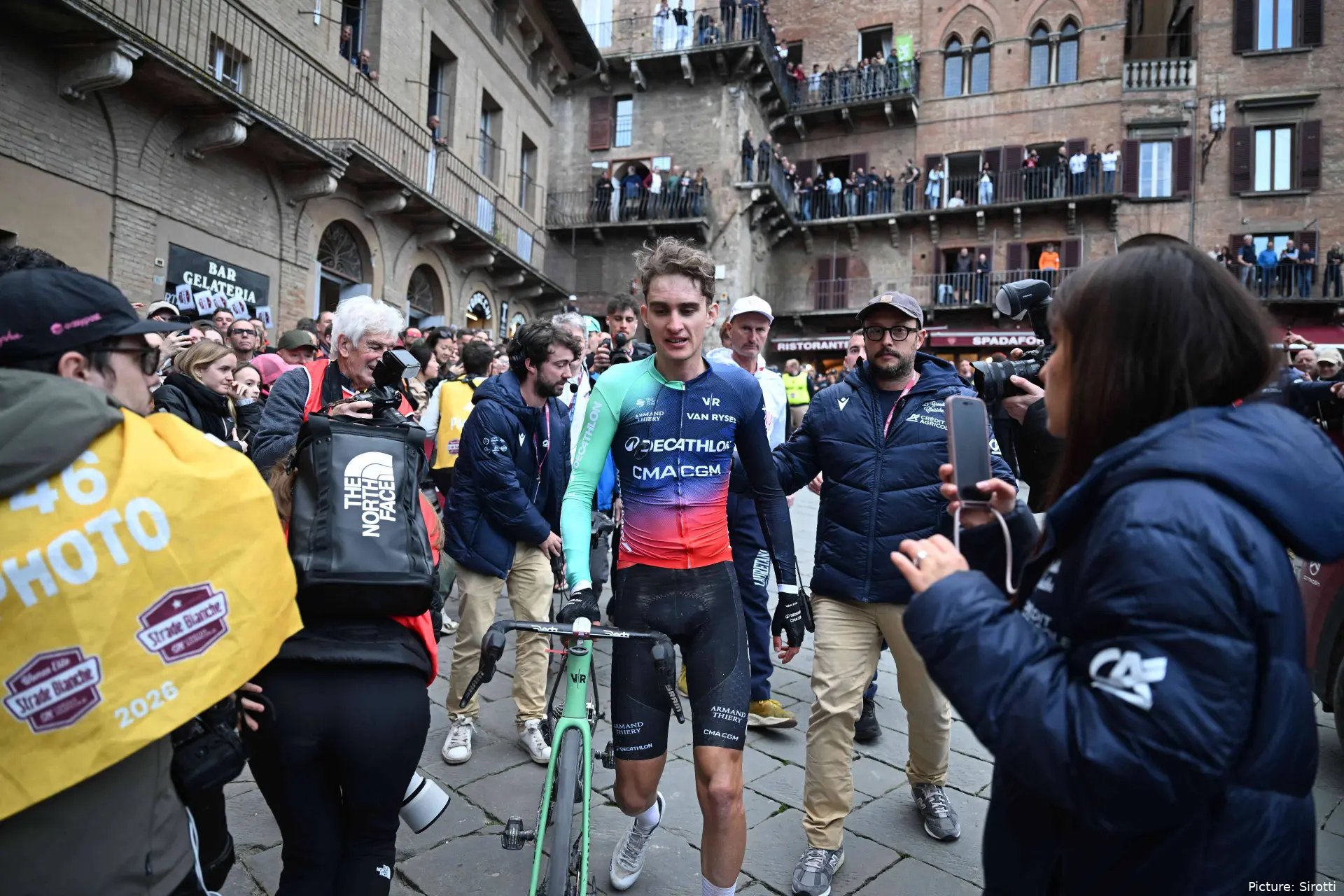
The Tour Auvergne-Rhône-Alpes, formerly known as the Critérium du Dauphiné, is taking place from the 7th to 14th June 2026. The French race is highly praised as the Tour de France's most important preparation race, and one of the big World Tour events of the year. We preview the race and take a look at its stages.
Jacques Anquetil, Raymond Poulidor, Eddy Merckx, Bernard Thévenet, Bernard Hinault, Greg Lemond, and Lance Armstrong are amongst the many names who have raised their arms in the past on the 'Dauphiné'. In recent history, the race has lost no prestige, maintaining its reputation as riders such as Bradley Wiggins, Chris Froome, Jonas Vingegaard, and Tadej Pogacar have all won it ahead of the Tour.
It is a mountainous race, and this year perhaps more than any other recent edition. The opening stage, right away, can be decisive for the overall classification, whilst the final two days will rival most of the Tour's own mountain stages. There will be two opportunities for the sprinters, although they are both hilly days that will be hard to control, and a hilly team time trial that will serve as specific preparation for the opening day of the Tour.
Stages Tour Auvergne-Rhône-Alpes 2026
| Stage | Start | Finish | Distance |
| 1 | Vizille | Saint-Ismier | 146.2 km |
| 2 | Saint-Martin-le-Vinoux | Le Puy-en-Velay | 234.3 km |
| 3 (TTT) | Perreux | Perreux | 28.4 km |
| 4 | Le Puy-en-Velay | Montrond-les-Bains | 167.4 km |
| 5 | Saint-Chamond | Villars-les-Dombes | 195.8 km |
| 6 | Saint-Vulbas | Crest-Voland | 182.3 km |
| 7 | La Bridoire | Grand Colombier | 133.6 km |
| 8 | Beaufort | Plateau de Solaison | 120.1 km |
Read also
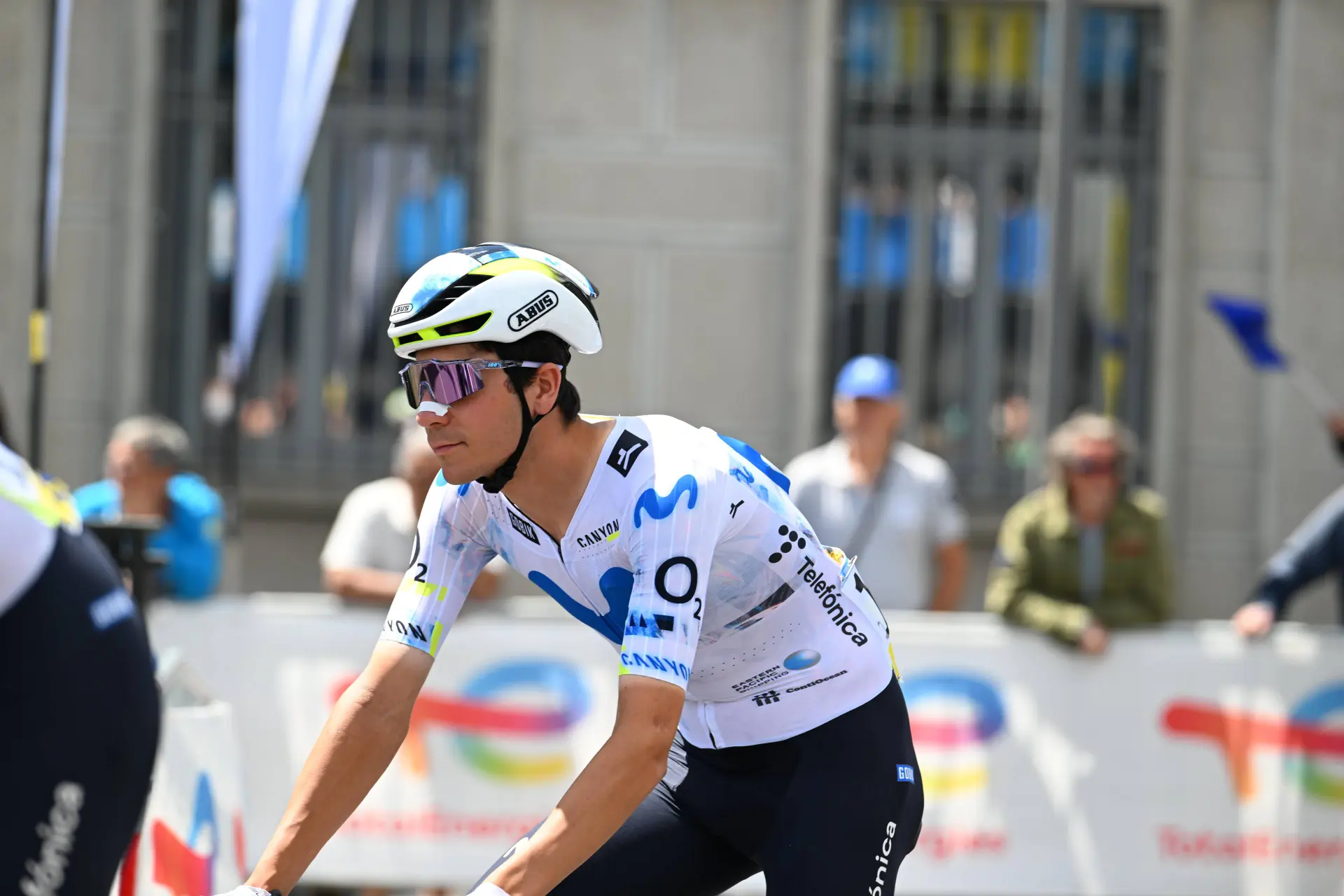
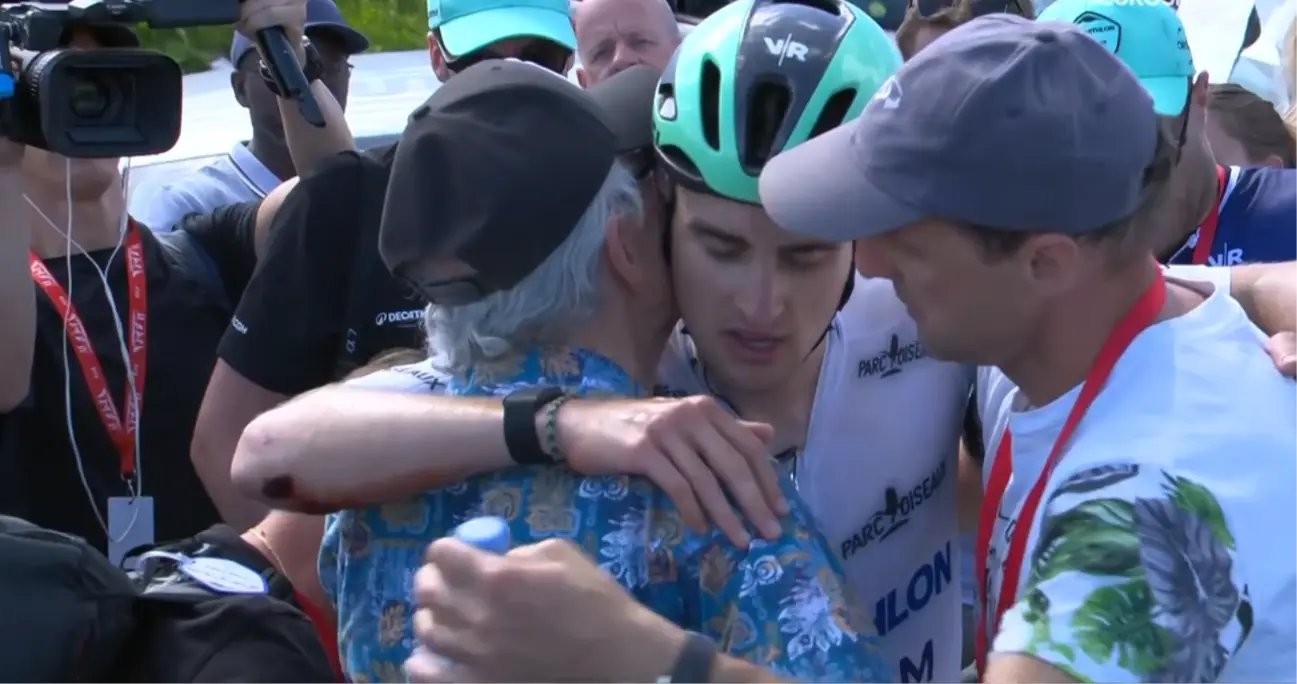
Preview Tour Auvergne-Rhône-Alpes 2026 stage 8
It seems odd to say this in 2026, but we've got a race! Into the final day there are, dare I say, five potential GC winners. The stage is very difficult, so it is perhaps not the tactical puzzle that one might imagine. But on the other hand, the profile features two insane climbs at the start, only 120 kilometers and no flat terrain - meaning that we might indeed see these men go on the attack early in the day.
It is an open race with several contenders. Where to begin... Luke Tuckwell, the man carrying the yellow jersey into Beaufort. He has got a gap that is not as big as this Saturday against his rivals, however he is a great climber, who defended himself well today, and has to be distanced in order for the others to have a chance. Whilst he did lose time today, he holds almost a minute to his most direct rivals and there are no bonifications at the finish. This is a rider who finished sixth at the Tour de Romandie earlier this year where Tadej Pogacar was present, and if they take him into the final climb without attacking, he may just get a shot at saving the GC.
It is unlikely, but not impossible. But if not him, then who? We've got Matteo Jorgenson 42 seconds away, and only 7 seconds behind, Isaac del Toro. The UAE rider proved to be the strongest climber today, he definitely has the legs to take 7 seconds on Jorgenson I would say. Maybe these two will not want to attack, because Jorgenson has only three domestiques (and is not a pure climber) whilst Del Toro can realistically take that time on the two riders ahead of him. However if the attacks come, they have no option but to respond.
And we may see that, because then we have Paul Seixas in sixth place. He lost time today, but his recovery must be praised. Even if aided by cars and a peloton that didn't try to get him out of the race, his recovery was still impressive and his time loss not that big. He has 1:05 minutes to recover on Isaac del Toro, yes that may be too much in the final climb. But today's crash, and the fact that he still is in the position he is, means he does not have much to lose. He would want to win the stage, but the short distance is certainly an encouragement for an early attack and we may just see that from the Frenchman - IF he recovers from the fall well.
Seixas is a wildcard then. Between Del Toro and Johannessen we have two riders who are not as much, but are dangerous. Juan Ayuso and Tobias Johannessen were second and third today on the stage, and they are 17 and 44 seconds behind Isaac del Toro. None can be ruled out of the GC win or podium, although I argue both would need a tactical move before the final climb. This can happen however. And Lidl-Trek have Mattias Skjelmose in 7th place, 1:10 off Del Toro, meaning he does indeed have good leverage and can be very dangerous in an attack. The gaps behind for a few more riders are also small, meaning the Top10 is fully open and we've got a true GC race on our hands...
It is very hard for a breakaway to succeed, as it's a gruesome mountain day and only the best climbers can succeed. But it's not impossible to see someone like Carlos Rodríguez or Kévin Vauquelin being given freedom; Lennart Jasch or perhaps even Caja Rural's Jan Castellon who was one of the two bright surprises this afternoon by the Spanish team. On paper, riders such as Harold Tejada or Valentin Paret-Peintre, at their best, could also pull something off, but it will be hard.
Prediction Tour Auvergne - Rhône Alpes 2026 stage 8:
*** Paul Seixas, Isaac del Toro
** Juan Ayuso, Tobias Johannessen
* Mattias Skjelmose, Cian Uijtdebroeks, Matteo Jorgenson, Carlos Rodríguez, Lennart Jasch, Jan Castellon, Léo Bisiaux
Pick: Paul Seixas
How: Sprint victory against Del Toro.
Original: Rúben Silva
Profile stage 8: Beaufort - Plateau de Solaison

Stage 8: Beaufort - Plateau de Solaison, 120.3 kilometers
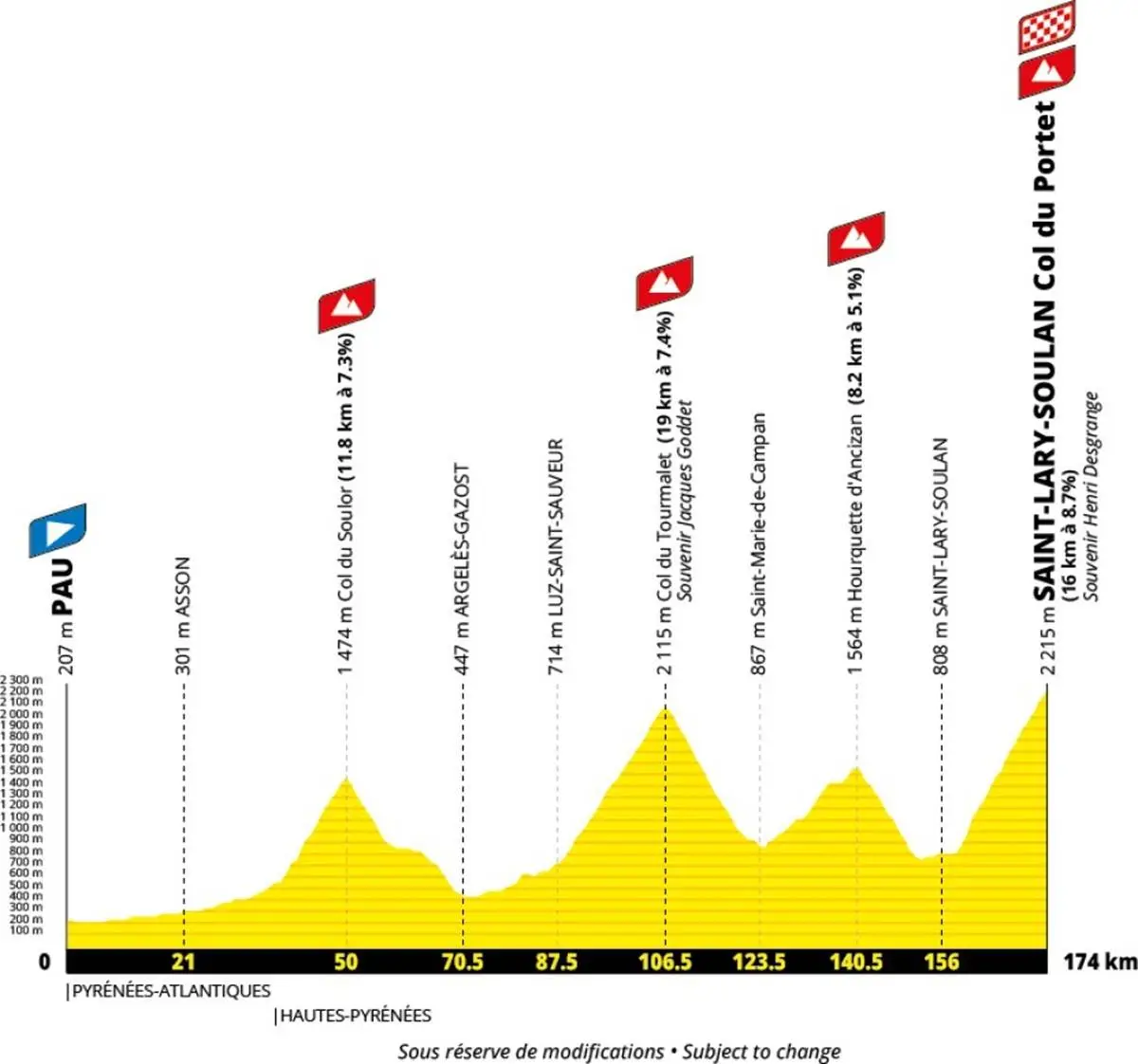
The actual queen stage of the Tour Auvergne - Rhône Alpes has an eye-watering 4000 meters of climbing in a mere 120 kilometers. This is a day where there is just no warming up, there are brutal climbs from kilometer 0, and a summit finish where the GC can also be turned on its head.
The stage starts with the Col du Pré, 10 kilometers long... The final 7, which average almost 10%, can destroy the race completely in only a few minutes, with the climbing also being quite explosive with its many switchbacks.
The second climb is the Montée de Bisanne, which is 11.5 kilometers long at 8.9%, finishing with only 43 kilometers of racing. Two colossal mountain passes are within just a few kilometers, but the action is very far from over.
A third categorized ascent will be the Col des Aravis, not as difficult - 7 kilometers at 6.9% - however, with a very notable landscape around. The riders then finally get to have a long descent into the final climb, getting some rest before the final big effort to the line.
The ascent to Plateau de Solaison is not new to the race and will be used at the Tour de France. The Auvergne organizers decided to use it also in its own race, ending it at the summit just as they did back in 2017.
The climb is 11.5 kilometers long at 8.9%, another huge effort, and a climb that is very steep right from the base. The differences can be massive, and the race can be decided at any point of the stage, really.

Paul Seixas at the 2026 Liège-Bastogne-Liège
Previous previews
Preview General Classification Tour Auvergne-Rhône-Alpes 2026
Paul Seixas – For the Decathlon rider, this will be the biggest test yet in his build-up to the Tour de France. The race is exceptionally demanding, featuring eight tough stages and concluding with a pair of brutal mountain stages packed with climbing. Seixas has the ability to win or gain time on virtually any terrain, though the final two stages are likely to present his greatest challenge. They will provide a crucial indication of both his endurance on long climbs and his ability to recover over consecutive hard days of racing.
It will also be an important week for Decathlon, which brings several riders expected to support Seixas at the Tour de France. The team is set to race as a strong collective, with the likes of Matthew Riccitello, Aurélien Paret-Peintre and Léo Bisiaux all lining up alongside him.
Isaac del Toro – UAE Team Emirates arrives with several riders who are expected to feature at the Tour de France, but without Tadej Pogačar. That gives Del Toro the opportunity to lead the team, chase a major overall victory and take full advantage of his own ambitions.
Were it not for Seixas, the Mexican would undoubtedly be the rider to beat. He may still be the leading favourite for the overall win, especially with the returning João Almeida alongside him. The Portuguese rider will be one of the key names to watch throughout the week, both as a potential contender in his own right and as a valuable ally for Del Toro.
Prediction Tour Auvergne - Rhône Alpes 2026 overall classification:
*** Paul Seixas, Isaac del Toro
** Oscar Onley, Juan Ayuso, Valentin Paret-Peintre, Matteo Jorgenson
* Matthew Riccitello, João Almeida, Santiago Buitrago, Kévin Vauquelin, Carlos Rodríguez, Mattias Skjelmose, Cian Uijtdebroeks, Harold Tejada, Tobias Johannessen
Pick: Paul Seixas
Preview Stage 1 Tour Auvergne-Rhône-Alpes 2026
A warm day on the bike and with pleasant temperatures, ideal for the riders to really put out the best W/Kg they can on the bike. The stage's profile is quite difficult from the start, however we should not see a breakaway win as we've seen in the past here. That is because we've got a full-fledged mountain stage, and the overall classification contenders will be put to the test in an important way.
This stage reminds me a lot of the first road stage at Itzulia Basque Country, where in the climb to San Miguel de Aralar, Paul Seixas immediately kicked off the action and created his own bubble in the fight for the yellow jersey. These 20-25 minute efforts are perfect for the Frenchman, whom I suspect will try to replicate his doings from that day (and the Faun-Ardèche Classic) on a climb with very similar characteristics.
Hence, I truly do expect Decathlon to be one of the teams taking up responsibility, perhaps joined by UAE. Other teams may join, but honestly, they do not have the responsibility, and shouldn't use their man like that. UAE is all-in for Isaac del Toro, who, on paper, will also be good on this kind of terrain, but I do see Seixas take time on him before the queen stages.
Yes, the stage can end in a sprint between the main GC men, but I expect the race to fully blow up beforehand, hence the climb is the key aspect of the day. For many, a day of testing form, and the first race day in well over a month, so it's actually something that is not easy to predict.
INEOS have Oscar Onley, Kévin Vauquelin and Carlos Rodríguez all wanting to prove themselves above one another; Lidl-Trek have Juan Ayuso and Mattias Skjelmose - both I believe can thrive on this stage if they have good legs, maybe even win it - and we've got other men that are simply tremendously talented climbers such as Matteo Jorgenson and Tobias Johannessen who can not only win with a solo attack but also a sprint finish.
Harold Tejada, Luke Plapp, Valentin Paret-Peintre, Pello Bilbao, Ben Tulett, Jorgen Nordhagen, Cian Uijtdebroeks, Santiago Buitrago, Alex Baudin, Georg Steinhauser, Daniel Martínez... The truth is there are plenty top climbers who can fight for a top result or, otherwise, make the top climbers have to go to the absolute limit to make the difference.
Prediction Tour Auvergne - Rhône Alpes 2026 stage 1:
*** Paul Seixas, Isaac del Toro
** Kévin Vauquelin, Mattias Skjelmose, Matteo Jorgenson, Valentin Paret-Peintre
* Oscar Onley, Carlos Rodríguez, Juan Ayuso, Tobias Johannessen, Harold Tejada, Luke Plapp, Cian Uijtdebroeks, Santiago Buitrago, Ben Tulett, Jorgen Nordhagen
Pick: Paul Seixas
How: Solo attack on the climb.
Profile stage 1: Vizille - Saint-Ismier

Stage 1: Vizille - Saint-Izmier, 146.6 kilometers
The race starts with a short but very explosive stage. 146 kilometers on the menu and 3200 meters of climbing - however, it is a high-mountain stage, which could be placed anywhere in the race, and it could detonate the overall classification.
The organizers plan for absolute chaos from the start, with the race starting with a long, uncategorized climb into an intermediate sprint. Throughout the stage, there are several steep ascents, and the action should truly begin with 52 kilometers to go, with a 2.4-kilometer climb that averages over 10%. Right after, another 5 kilometers at 6%...
After a short descent, the riders will go into the Côte de Rousset, which is 8.3 kilometers long at 7.5% and summits with 21 kilometers to go. The climb should see the main GC guys go head to head, as what follows is a descent and later on only 7 flat kilometers.
The final ones still tilt uphill quite a bit, which means that even if we do see some sort of sprint, it could be interesting, and it could lead to gaps at the finish line.
Preview Tour Auvergne-Rhône-Alpes 2026 stage 2:
This is a very complicated stage to control and the weather can turn very unpredictable towards the end. The forecast points towards heavy rain as the afternoon progresses and the riders might very well come across it - making a hilly and long stage even more treacherous.
It is in fact a day that is not easy to analyze, because on paper it suits no-one specifically, and provides many with the opportunity to take success. Alex Baudin of EF has ridden himself into the yellow jersey, something he will want to keep and something EF will work for. Automatically, this reduces the threat from the strongest climbers in the break to join the breakaway and try to do the same he did today, because at least one team will help control it.
A breakaway can succeed, ideally a rider who can climb very well, but not necessarily a climber. With almost six hours of racing and a set of short climbs towards the end, the classics specialists are the main favourites for the day in such instance. Riders such as Quinn Simmons, Ben Healy, Andreas Kron, Finn Fisher-Black, Toms Skuins, Georg Zimmermann and Iván Romeo are specialists on such days. And the fact that there are so many means that the break does actually stand very real chances of winning.
But who can help EF control the race? Can we argue that INEOS will want to? They have three GC men, but also Dorian Godon in the team. The Frenchman does provide guarantees after a first half of the season with plenty quality wins, and I argue the team should try to control the race because it is a day that suits him well.
I don't think this will necessarily happen but there are reasons to believe that Visma (for Wout Van Aert), Jayco (for Michael Matthews); Tudor (for Matteo Trentin) and Cofidis (for Bryan Coquard) could also help at certain points in the race. But they must both climb very well and have top form to survive the stage and go on to sprint for the win, and I doubt this is what we will be seeing.
On the contrary we may see a sprint finish or a late attack succeeding from a classics specialist, of which there are plenty in the race. Aside from the names above, who have the freedom in GC to try and do this from the breakaway, a few of them showed great form today and finished up front such as Kevin Vermaerke, Maxim van Gils and Ramses Debruyne who deserve a mention. Benoît Cosnefroy could also be a strong option for UAE.
I don't necessarily expect a lot of GC action, because the finale of the race is just brutal and today there were clear signs that both Paul Seixas and Isaac del Toro were not eager to work or spend more than the minimum. Hence if dangerous attacks do come, they should cover them - although that didn't happen today, unclear why. The likes of Valentin Paret-Peintre and Mattias Skjelmose can also take a win in a small group sprint too, on paper, as GC contenders.
Prediction Tour Auvergne-Rhône-Alpes 2026 stage 2:
*** Quinn Simmons, Ben Healy, Iván Romeo
** Dorian Godon, Finn Fisher-Black, Georg Zimmermann
* Toms Skujins, Benoît Cosnefroy, Wout Van Aert, Maim van Gils, Paul Seixas, Isaac del Toro, Valentin Paret-Peintre, Mattias Skjelmose
Pick: Iván Romeo
How: Solo win from the breakaway.
Original: Rúben Silva
Profile stage 2: Saint-Martin-le-Vinoux - Le Puy-en-Velay

Stage 2: Saint-Martin-le-Vinoux - Le Puy-en-Velay, 233.5 kilometers
The second stage of the race is hellish to control, as the riders head deep into the Massif Central. The stage is very long and not very well suited to any particular kind of rider. There are 233 kilometers on the menu and a whole 3700 meters of climbing, although the riders don't have a single very difficult ascent.
But the hardest is right at the start, with 7.9 kilometers at 6.2%. Two early categorized climbs mean there should be a strong breakaway, and on the rolling terrain to be faced all day, it will be very difficult to control the race.
Amongst the climbs is a 21-kilometer stretch that averages 4% and features a KOM sprint halfway through. It ends with around 100 kilometers to go, and if the race is controlled at that point, then it's possible that later on, some teams could try to control the race into a sprint.
But the riders still have two more categorized climbs late in the day - one of them 4.2 kilometers long at 6.6% (31Km to go) and the final one 2 kilometers at 6.8% (12Km to go). Both climbs are launchpads for attacks that can split the race; in between, there are several rolling roads in which attacks can also come, and chasing will always be hard.
The riders descend into Le Puy-en-Velay, and there the finale is flat, but it is technical, and there is very little time to actually chase down the attacks that can potentially anticipate the peloton's arrival into town.
Preview Stage 3 Tour Auvergne-Rhône-Alpes 2026
A stage with multiple contenders, and an effort that is very hard to gauge. The hilly nature of the team time trial makes it very difficult to get a strategy right, and even if the tactic is good the riders need to execute it and that will definitely be a very hard task. There are several teams with strong time trialists, but the pace and way the riders rotate is sometimes more important than the riders' individual abilities themselves.
Still we must of course point towards the obvious suspects. In the fight for the yellow jersey I actually reckon both main teams will be at a disadvantage. Decathlon have Paul Seixas who is backed by Stefan Bissegger and Daan Hoole, but they are a man down; whilst UAE Team Emirates - XRG have a João Almeida that is nowhere near his level and several riders that are in no way known for their excellence against the clock.
Hence, both teams should be trying to limit their losses I would assume. But even amongst those who usually thrive such as Lidl-Trek, there isn't a lot of firepower outside of the actual GC men Juan Ayuso and Mattias Skjelmose. Team Visma | Lease a Bike are perhaps the main favourites with Matteo Jorgenson, Wout Van Aert, Bruno Armirail and Edoardo Affini providing a very strong base for their long effort.
Perhaps it will be Netcompany INEOS and their Tour de France to take the win, with Joshua Tarling and Kévin Vauquelin being the main men (although the lineup as a whole is also not luxurious for the discipline. Team Jayco AlUla and Movistar will be teams to note here, whilst I think Alex Baudin will keep the yellow in his shoulders for one more day.
Prediction Tour Auvergne - Rhône Alpes 2026 stage 3:
*** Team Visma | Lease a Bike
** Netcompany INEOS, Decathlon CMA CGM Team
* Lidl-Trek, Team Jayco AlUla, Movistar Team
Pick: Team Visma | Lease a Bike
Profile stage 3 (TTT): Perreux - Perreux

Stage 3: Perreux - Perreux, 28.4 kilometers
The riders do not have an individual time trial this time around in Auvergne; they have a team time trial in anticipation of the Tour's Barcelona opener. But in the race's traditional fashion, there are no flat roads.
It is maybe the hardest team time trial I've ever seen, with 28 kilometers and 400 meters of climbing. There is one climb that is 4.9 kilometers long at 3.5%, and a second one that is 4.3 kilometers long at around 3%. They are not serious climbs, but they do some damage, especially on such a high-intensity effort.
Pacing is absolutely crucial because teams will have to decide on whether to take the climbs hard and gain time but then risk losing on the downhill sections, or to take it easier and then really push in the final half of the TTT.
It's a very hard one to measure. But the riders don't find a simple finale either, as the final 800 meters average 6%, which means that the riders will mostly arrive isolated.
Preview Tour Auvergne - Rhône Alpes 2026 stage 4:
There will be northern wind and this means that throughout most of the day, the riders will take some headwind. This actually does not favour a breakaway, it makes it harder, whilst benefiting the chances of a potential bunch sprint. In the final kilometers (the last 11) there is a turn into a direct tailwind which goes all the way to the finish, so late attacks or any gap that is carried up to that moment is still dangerous.
Looking at how Michael Matthews rode today, I think we should see a Team Jayco AlUla fight to control the breakaway here and that can be the key point of the race. Jayco do have Luke Plapp as a minor GC contender, but the team is here to win a stage above all and they do have to put all their chips on this day. The Australian comes from serious injuries but rode very well in the TTT.
This can be the key because if Jayco do go all-out, it brings in the chance that others will commit too because a chase is likely to succeed. INEOS remain stacked with GC men whom I don't think will do any work, so it limits what they can do for Dorian Godon, but if they have a rider from early on doing work it can already make a big difference.
These are the two main riders to eye. Others can benefit from a sprint surely, even though the field is very modest, it's still a World Tour race. Wout Van Aert is not in good form but why not think of him as a potential winner? There are in fact no faster pure sprinters than him present. The likes of Phil Bauhaus or Hugo Hofstetter may be but may also not survive the climbs; whilst the like of Bryan Coquard and Brady Gilmore are good puncheurs but the day's climbs are rather long... Mathieu Kockelmann, Vito Braet and also BORA's Finn Fisher-Black are also options, depending on the size of the peloton by the time they reach the finish.
But it's not crazy to assume a breakaway can succeed here. We've established already beforehand that this is a race for the breakaways, and in a regular day this is always a breakaway stage. If the right group goes in front, there's not much that can be done in the peloton. Put men like Quinn Simmons, Marco Frigo or the Movistar men such as Iván Romeo and Pablo Castrillo and they will fly up and down this terrain all day long.
The uphill start also makes it hard for the sprinter teams to have a big saying on what will happen. I would say Ben Healy should also be there, although again, it depends on who is in front and if EF will prioritize the maintenance of the yellow jersey.
Andreas Kron, Tobias Johannessen, Simone Velasco, Raul García Pierna, Matej Mohoric, Georg Zimmermann and Kévin Geniets are also men to take into consideration - although on a stage like this, a lot of different riders can win.
Prediction Tour Auvergne - Rhône Alpes 2026 stage 4:
*** Michael Matthews, Dorian Godon
** Pablo Castrillo, Iván Romeo, Marco Frigo, Quinn Simmons
* Brady Gilmore, Bryan Coquard, Finn Fisher-Black, Wout Van Aert, Andreas Kron, Ben Healy, Raul García Pierna, Simone Velasco, Georg Zimmermann, Matej Mohoric
Pick: Michael Matthews
How: Reduced bunch sprint.
Original: Rúben Silva
Profile stage 4: Le Puy-en-Velay - Montrond-les-Bains, 167.2 kilometers

Stage 4: Le Puy-en-Velay - Montrond-les-Bains, 167.2 kilometers
The fourth day of the race is not as long as stage 2, but the type of racing will not be too different. The riders have a flat finale in Montrond-les-Bains, the first two-thirds of the stage will have plenty of climbs and will be quite difficult to control.
The stage opens up right away with a combination of rolling climbs that will be beneficial to the formation of a strong breakaway. After 60 kilometers of racing, a sequence of no less than five categorized climbs.
It is a hard stage; it can end in a sprint, but in any regular scenario, there's no-one that will want to work hard all throughout this terrain. The hardest climb is 7.8 kilometers at 5.5%, whilst the uphill terrain finally ends with 50 kilometers to go.
There is a long descent, and the last 35 kilometers are flat, without any obstacles. Hence, there is terrain to organize a chase and push on. If a bunch sprint is to happen throughout this race, then this might just be the most likely stage for it to happen.
Preview Tour Auvergne-Rhône-Alpes 2026 stage 5
We can argue that the stage may have the exact same dynamics. It just so happens that most of the stage runs north through the hilly terrain once again; and then towards the end the stage turns flatter and the riders find a tailwind for large kilometers. This is an exact replica of today, only with slightly easier climbs (they come earlier on) and perhaps a larger flat finale where in the final kilometers there will also be a headwind.
But the dynamics are the same, it's a day where on paper the breakaway has high chances of succeeding because the start is ideal for the formation of one, but the sprinter teams have space towards the end to close it out. The key part will be to block out a strong breakaway from going up the road initially. Bahrain - Victorious, Team Visma | Lease a Bike and Cofidis worked a lot today and they have reasons to do so again - it is also the final opportunity for the sprinters, and perhaps the only one.
Hence Bahrain and Cofidis are almost forced to do so, as its their only real chance of winning a stage here. Wout Van Aert, Phil Bauhaus and Bryan Coquard will be contenders for the stage win; but because the field is modest, many more can get in the way.
Jayco did not seem to put Michael Matthews in a position to go for a sprint so I doubt they'll work, whilst we could also see that INEOS had no interest, mostly as they have so many GC men that ultimately they do not want to sacrifice all their domestiques just to chase down a breakaway.
The favourites remain the same. None of the sprinters achieved their goal, so they will go into the stage in the same position. Hugo Hofstetter, Mathieu Kockelmann and Vito Braet are other outsiders.
When it comes to the breakaway we can argue the men that attacked today may not do it again tomorrow... Although when you look at someone like Finn Fisher-Black, Marco Frigo, Andreas Kron, Pablo Castrillo... They have to, as the mountain stages will be for the GC men and stage 6 has a flat start and so they don't stand many chances of being in the breakaway win the first place. They certainly have to give it another go, and hope to have better luck this time around (they absolutely have the legs to make it work).
Aside from them we may have contenders in the likes of Toms Skujins, Joshua Tarling, Gianni Vermeersch, Maxim van Gils, Ethan Hayter, Simone Velasco, Iván Romeo, Georg Zimmermann, Mathieu Burgaudeau, Alessandro Covi and Felix Engelhardt.
Prediction Tour Auvergne - Rhône Alpes 2026 stage 5:
*** Wout Van Aert, Phil Bauhaus
** Dorian Godon, Bryan Coquard, Hugo Hofstetter
* Michael Matthews, Mathieu Kockelmann, Vito Braet, Finn Fisher-Black, Andreas Kron, Marco Frigo, Iván Romeo, Ethan Hayter, Mathieu Burgaudeau, Alessandro Covi, Felix Engelhardt, Maxim van Gils
Pick: Phil Bauhaus
How: Bunch sprint.
Original: Rúben Silva
Profile stage 5: Saint-Chamond - Villars-les-Dombes

Stage 5: Saint-Chamond - Villars-les-Dombes, 196.2 kilometers
The second potential sprint stage of the race is stage 5, starting in Saint-Chamond and finishing in Villars-les-Dombes. The riders head back out of the Massif Central, but not without more climbing.
Once again, it is a very difficult stage start, with two categorized climbs within only 7 kilometers. The first 90 kilometers of the stage barely have a single flat meter, with plenty of climbs and descents back-to-back, making it a very difficult affair.
It's possible to control the stage throughout; the second half is flat, where there isn't really room to surprise. The riders head north and then eastwards towards a finale that is rather simple, without a single technical feature to note in the final kilometers.
Preview Tour Auvergne-Rhône-Alpes 2026 stage 6
A GC day, but also a warm-up. Stages 7 and 8 are very difficult, both queen stages in which a lot of time can be made up. That would ordinarily make this a day for a likely stalemate between the favourites, but the scenario on the road is different. Unlike most modern big races, the strongest climbers have actually lost time in the time trial (this time a TTT) and so they have to make up time, and it's rather significant actually.
Alex Baudin goes into the stage in yellow, which he can keep if the final climb isn't attacked overly hard. Then we've got the INEOS duo of Kévin Vauquelin and Oscar Onley 12 seconds behind. Both can reach the lead, and simultaneously both do not seem to be eye to eye - with Vauquelin clearly hoping to reach the yellow jersey as a priority. But even if the race is hard this is not assured, because Matteo Jorgenson is only 3 seconds behind and he can certainly take them back on a climb like this to the two INEOS riders.
But all four of these riders will want a conservative race, and to keep things as they are. Because it would mean not loosing time to Paul Seixas and Isaac del Toro. They are 48 seconds and 1:04 minutes behind the INEOS men respectively, and although that can be recovered in the final two stages, I doubt they will want to not use an opportunity like this to try and cut that gap.
Both showed a lot of conservative behaviour on the opening day, and they don't want to spend more than they need at this Auvergne edition, thinking of fatigue and the Tour de France. But it makes sense to attack this one. Just ahead of Seixas are Juan Ayuso and Mattias Skjelmose who have also looked good so far this race, and are wildcards to take into consideration for a GC that has been tight so far with plenty variables.
Behind, don't expect attacks from others, but expect them to be present. Testing form, seeing where they are amongst the main GC men, and hoping to climb up the GC. Luke Plapp, Luke Tuckwell, Cian Uijtdebroeks, Santiago Buitrago, Valentin Paret-Peintre and Harold Tejada are all aiming for a GC result and this is an important day.
The breakaway can on paper win, but I think the chances are not high. The main reason is the flat start, which will make it very hard for riders to find themselves in front. Even if they want and have the legs, it often comes down to luck or good timing, and it's not easy to get it right.
Maxim van Gils, Lorenzo Fortunato, Tobias Johannessen, Clément Braz Afonso, Andreas Kron, Marco Frigo, Pello Bilbao and Pablo Castrillo are contenders in this case - mostly climbers, however puncheurs can also succeed on a day like this, as the final climbs are not overly hard efforts.
Prediction Tour Auvergne - Rhône Alpes 2026 stage 6:
*** Paul Seixas, Isaac del Toro
** Matteo Jorgenson, Kévin Vauquelin, Juan Ayuso, Santiago Buitrago
* Maxim van Gils, Andreas Kron, Marco Frigo, Oscar Onley, Mattias Skjelmose, Luke Plapp, Cian Uijtdebroeks, Valentin Paret-Peintre, Harold Tejada
Pick: Paul Seixas
How: Small group sprint win.
Original: Rúben Silva
Profile stage 6: Saint-Vulbas - Crest-Voland

Stage 6: Saint-Vulbas - Crest-Voland, 182.6 kilometers
The sixth stage of the race has a flat start and will have a hilly finale. A day for the GC riders, for a breakaway to escape will be difficult, taking into consideration that this time around, there is no climbing to do so.
With 98 kilometers of racing, there is a 'warm-up' climb with 8.1 kilometers at 5.6%, but the riders then take on another long valley deep into the Alps, through Albertville. In Ugine, they then begin the final sequence of climbs.
The first one is 11.6 kilometers long at 4.9%, where big attacks won't happen, but teams have the opportunity to do some damage in the peloton. The climb ends with 9 kilometers to go, but above all, there will be a leadout battle at the top to take on the short, yet quite steep and technical climb.
That is because the entrance into the climb to Crest-Voland is also steep, and attacks can happen right from the very first meters. 5.9 kilometers at 7.4% is a climb that will be ridden quite quickly, and the riders come off a descent and with explosivity in their legs.
If it doesn't blow up right away, then there should be a climb without too many differences, definitely as an opportunity for the GC battle to light up. In general, however, the stage may still be a slight warm-up towards the final weekend of racing.
Preview Tour Auvergne-Rhône-Alpes 2026 stage 7
It is going to be an interesting stage, short and so I would say both Decathlon and UAE can control it and make it hard before the final climb. Can't say both have incredibly strong teams to do it alone, but there's not much point in trying to drop Luke Tuckwell before the Grand Colombier. On this day, the damage is to be done on the final climb, where having teammates doesn't really matter.
Tuckwell, if climbing like today, should be able to keep that yellow jersey, but his advantage will fade. We've got an interesting GC situation where behind, Matteo Jorgenson still holds 32 seconds over Paul Seixas, and so the Visma rider can still ride conservatively, but on a climb like this, again, following wheels doesn't matter.
If Tuckwell does crack, Seixas can move into the race lead from what we saw today. But what we also saw was Isaac del Toro at his best level, and the 16 seconds Seixas has over him are a very tiny safety net.
The rest of the riders are in the fight for the podium, and there aren't many who can. No tactics on this climb, but I would believe the Lidl-Trek men Mattias Skjelmose and Juan Ayuso will be at around the same level, again with Jorgen Nordhagen close, as it's a very good climbing for his abilities.
The results shouldn't be too different from today. INEOS have an important day because Oscar Onley might be injured and Kévin Vauquelin needs to show he is at a level where he can be backed up at the Tour de France. Cian Uijtdebroeks, Luke Plapp, Ramses Debruyne, Daniel Martínez, Carlos Rodríguez, Valentin Paret-Peintre and Harold Tejada are other men to consider. A breakaway is unlikely to succeed, the stage is also very short.
Prediction Tour Auvergne - Rhône Alpes 2026 stage 7:
*** Paul Seixas, Isaac del Toro
** Matteo Jorgenson
* Mattias Skjelmose, Juan Ayuso, Jorgen Nordhagen, Tobias Johannessen, Cian Uijtdebroeks, Luke Plapp, Carlos Rodríguez, Kévin Vauquelin
Pick: Paul Seixas
How: Solo win
Original: Rúben Silva
Profile stage 7: Le Bridoire - Grand Colombier

Stage 7: Le Bridoire - Grand Colombier, 134.2 kilometers
The final weekend of the race features two queen stages, each of them very short but extremely difficult. The first of which happens within the Jura mountain range, with seven climbs to be tackled - not all of them categorized.
Right from kilometer 0, the riders climb, firstly 5.1 kilometers at 5.9%. Descent, then 2.9 kilometers at 4.2%. Descent again, then 7.7 kilometers at around 6%... In these three climbs, a lot can happen, as teams can set up satellite riders up front, but the stage hunters will also be looking to form a strong breakaway.
The riders have the very difficult first ascent to Grand Colombier early on, although it will only be a small section of the climb - 7.1 kilometers at 8.4%, ending with 57.5 kilometers to go.
The riders then head north and go around the mountain to climb the Col de Richemond, 7.7 kilometers at 6.1% - this one ending with 22.5 kilometers to go.
Then, to end the stage, a second ascent to Grand Colombier, through its hardest side. This is a climb that is brutal in every sense of the word, and could be the queen stage in any Grand Tour.
The final climb is 8.5 kilometers long and averages 10%. Even more importantly, the first half is the hardest, averaging 12% and having a few ramps that reach much closer to 20%. The GC would, by most races' standards, be closed off here. But the following day sees an even harder stage.
Rúben SilvaEditor-in-Chief
A founding contributor to CyclingUpToDate since its launch in January 2022, Ruben Silva has played a central role in shaping the site’s editorial direction and long-term growth. Before joining the project, he built his experience through independent blogging at Echelons Hub and by producing race previews for Ciclismo Internacional, developing a strong analytical voice rooted in daily engagement with professional cycling.
Beyond editorial work, he has been closely involved in the expansion and coordination of CyclingUpToDate’s wider network, helping establish and support sister platforms across multiple languages. This includes ongoing collaboration with CiclismoAlDia (Spanish), CiclismoAtual (Portuguese), WielrennenUpToDate (Dutch), and RadsportAktuell (German), contributing to a shared editorial vision and consistent international coverage.
He also helps oversee editorial governance across the network, setting standards for accuracy and consistency and coordinating updates or corrections when needed.
Originally from the Porto metropolitan area in Portugal, he holds a bachelor’s degree in Geography. His path into cycling journalism was shaped not through formal media training, but through independent reporting, community engagement, and sustained on-the-ground involvement in the sport.
Over the course of his career, he has conducted approximately 100 interviews across road cycling and cyclocross, ranging from one-to-one conversations and online formats to press conferences and on-site pre- and post-race coverage. His interviews include leading riders, team managers, and prominent figures within cycling media: Tadej Pogacar, Jonas Vingegaard, Mathieu van der Poel, Primoz Roglic, Wout van Aert, Joao Almeida and Tom Pidcock; managers like Patrick Lefevere and Joxean Matxin; and YouTube personality Bryan Kennedy (BKXC)...
Within 18 months of launch, he helped grow CyclingUpToDate’s English-language platform into one of the most-read cycling news websites, built entirely from the ground up. As both a professional journalist and lifelong cycling enthusiast, his focus remains on delivering accurate, timely, and well-contextualized coverage.
claps 11visitors 7
Just in

Popular news
Latest comments
- No, you said "he cannot win the Tour". That's not a quality statement. It's a statement of possibility. Look at the 2014 Tour for more about crashes showing what's possible.acem8225-10-2026
- Least the racing will be interesting, with respects...
 leedorney25-10-2026
 - All key riders are old and ageing fast and downward trajectory at visma and visma clearly asinking ship..Something clearly is rotten at visma by looking everyone who breaks contract from coaches to staff to riders so this would lowkey benefit jonasmiguel25-10-2026
- yeah they are incredible at this, also retained and secured all key riders and major for long contracs....miguel25-10-2026
- agreed, make the stage with something in GCmij25-10-2026
- Now that G is out of the races he doesn't mind risking GC positions, A GC race makes it very tightly control along with the sprinters teams and you will not get the spectacle.abstractengineer25-10-2026
- yeah looking at the ages of the replacements, and the quality of the riders, I see upgrades all around.mij25-10-2026
- Individual Gautherat is the most exciting given his age too I agree. But Frigo and Balderstone for uae will be super valuable as doms areound those leaders. UAE just quitly uppgrade w/stronger and younger guys. Sivakov was on the down and Frigo replace all that with bigger engine. Balderstone seems like another brilliant under the radar pickup UAE is masters off....so exhausting they never missmiguel25-10-2026
- Surprised it’s that inexpensive!Lozza25-10-2026
- Nah, I like it here. I like a challenge, against the people who hate me here. Jumping John, you ain't getting rid of me :))PogiSloFans25-10-2026
Loading
8 Comments