Results Tour de Romandie 2026 Stage 2 | Is there anything Tadej Pogacar can’t do? World champion wins bunch sprint after controlling chaotic finale
CyclingThursday, 30 April 2026 at 17:33
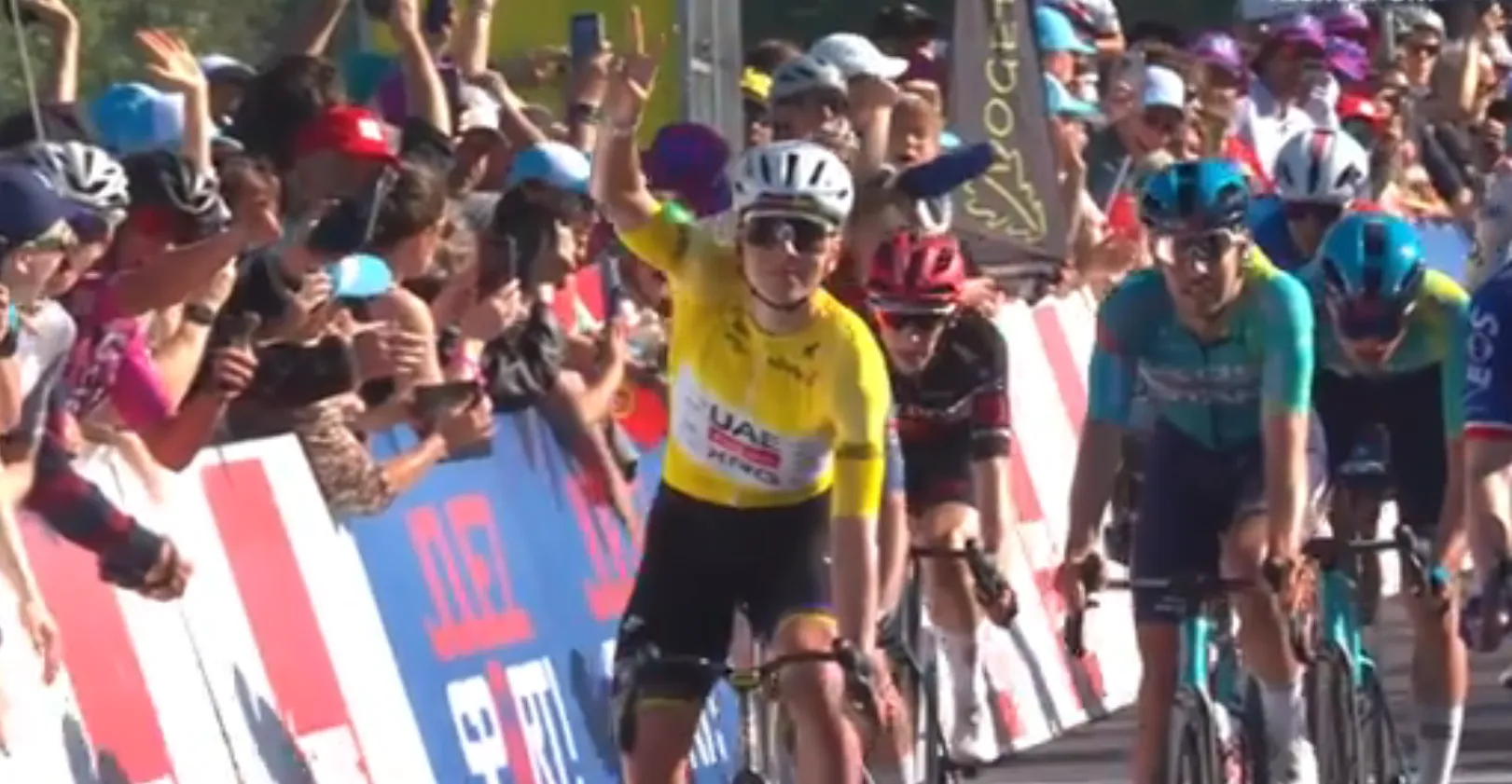
Tadej Pogacar did it again on stage 2 of the 2026 Tour de Romandie, but this time, in a way few would have expected.
After spending the decisive phase shutting down every attack on the final climb, the race leader still had the speed to win a reduced bunch sprint in Vucherens, making it back-to-back stage victories in emphatic fashion.
Early break sets the tone before being reeled in
The stage was shaped early by a four-rider breakaway featuring Jakob Soderqvist, Filippo Conca, Henri-Francois Renard-Haquin and Roland Thalmann, who built an advantage of over two minutes on the rolling terrain.
The quartet worked well together throughout the middle phase of the race, with Soderqvist the most notable presence after his strong prologue, while Thalmann continued his aggressive approach following his efforts on stage 1. Their move forced a response behind, and it was INEOS Grenadiers who took responsibility for the chase.
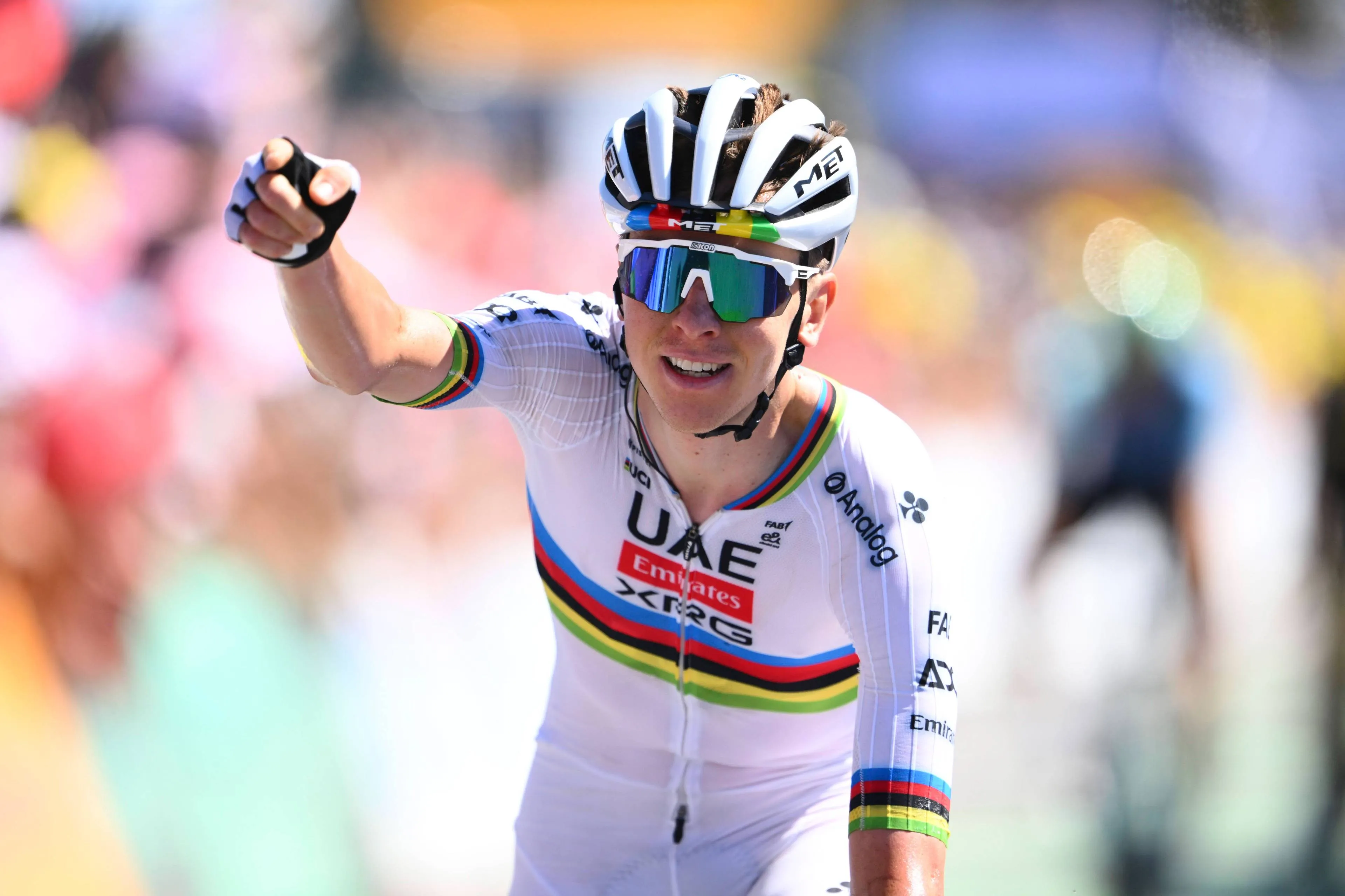
INEOS drive the race, but finale slips away
INEOS controlled the peloton for much of the day, with Ben Swift and Laurens De Plus setting a firm tempo that gradually reduced the break’s advantage. By the final lap, the gap had been cut to under a minute, before dropping rapidly on the approach to the final climb as the pace increased.
Jakob Soderqvist made one last attempt to extend the life of the break, attacking his companions and briefly holding a small advantage, but the move was always under threat as the peloton closed in.
Pogacar shuts down every attack
Once the break was caught, the race immediately exploded on the final ascent. Attacks came from multiple directions, including efforts from Jefferson Cepeda, but each one was quickly brought back.
Rather than waiting for others, Pogacar took matters into his own hands, moving to the front and directly controlling the pace. Every acceleration was met with an immediate response, with the Slovenian refusing to allow any rider to gain even a few seconds of advantage.

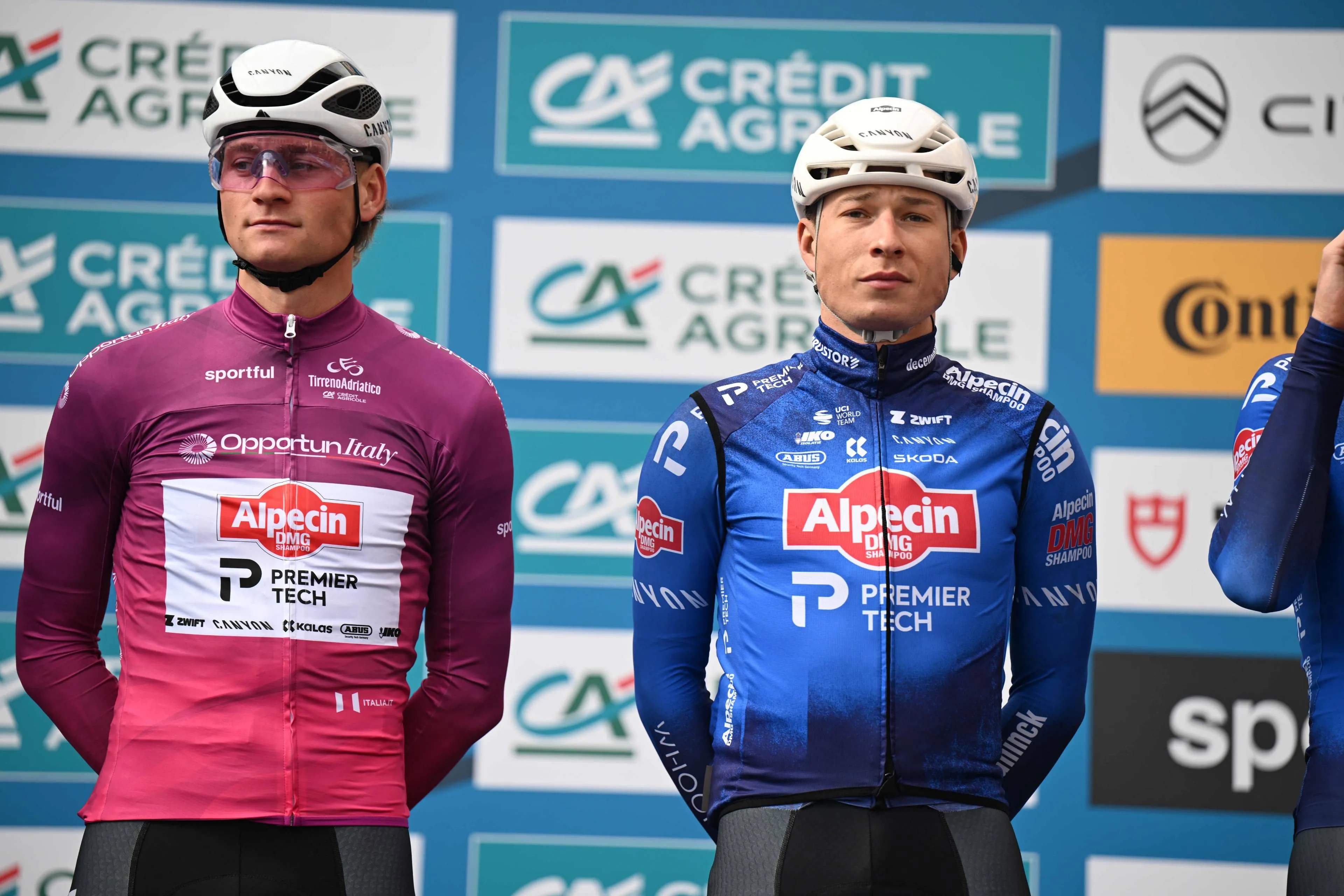
Tadej Pogacar in Maillot Jaune on the podium at the 2026 Tour de Romandie
From control to sprint victory
With the attacks neutralised, the race reset in the final kilometres, bringing a reduced group of around 30 riders to the line. Positioning proved crucial on the fast run-in.
Dorian Godon launched the sprint early, while Albert Withen Philipsen held a strong position at the front. Pogacar, however, was exactly where he needed to be, sitting on Philipsen’s wheel before launching his effort. When he opened his sprint, the difference was immediate.
The world champion surged clear and held his advantage to the line, with Florian Lipowitz unable to come around despite a late acceleration.
A different kind of dominance
The victory offered a striking reminder of Pogacar’s versatility. Having already built his reputation on long-range attacks and climbing dominance, he now adds reduced bunch sprints to his growing list of winning scenarios.
On a day where others tried to force the race open, Pogacar controlled every key moment and still had the speed to finish it himself.
Carlos Silva is a writer for CiclismoAtual.com and CyclingUpToDate.com, where he contributes race reports, interviews, analysis pieces, and live coverage of the international cycling calendar. Holding a degree in Sports from the Jean Piaget Institute, he combines academic knowledge of performance, training, and competition with hands-on journalism experience in professional cycling.
Throughout his career, Carlos has conducted interviews with leading figures in the sport, including Alberto Contador, Joaquim Rodríguez, Óscar Pereiro, João Almeida, Isaac del Toro, Derek Gee, John Degenkolb and Geraint Thomas. These conversations reflect direct engagement with Grand Tour winners, Classics specialists, and emerging talents.
He has provided on-site coverage at major events ranging from the Vuelta a España to the Tour de France, alongside stage races such as Vuelta a Andalucía, Volta ao Algarve, Volta a Portugal and O Gran Camiño. Covering the mythical climbs of the Giro d'Italia remains one of his professional ambitions.
Carlos is responsible for liveblog coverage of all major WorldTour races and beyond, including the Tour de France, Giro d'Italia and Vuelta a España. His reporting integrates verified data from ProCyclingStats to ensure statistical accuracy, contextual depth, and analytical precision.
A lifelong cycling enthusiast, he approaches storytelling across written, photographic, and video formats with a focus on credibility, tactical insight, and informed race interpretation.
claps 6visitors 5
Just in
Popular news
Latest comments
- Funny but not funny. I'm actually pissed. Sorry but not sorry.
 parisbound0009-07-2026
 - I expect they have no jurisdiction over that, sorry. Maybe ask the police? Besides, that’s like stopping people from throwing drinks (even in football stadiums) hard to be in the right place before it takes place to do something about it. Now, if other members of the public had a bit more civic courage to have a word sometimes, maybe everyone would behave a little more in line.Jumpyjohn09-07-2026
- Congrats! Love it when sprinters win without having to rely on a “sprint train lead out”b3tlla09-07-2026
- Commissaires fined 500 CHF for not adjusting the rules to environmental conditions and situations on the road.itsent09-07-2026
- Why do you post nonsensical comments Mou(se) ?frieders309-07-2026
- Lance who?frieders309-07-2026
- Proofreading isn't this sites strongpoint!frieders309-07-2026
- Stop doing drugs, it's not working for you.awp08-07-2026
- What part of "nothing against Pogi or any of the riders" do you not understand? Totally feels like you're just constantly trolling. Some people find Pogi's dominance boring because it makes them wonder why anyone should bother racing. Personally, I like Pogi, and enjoy watching him race. I think we're witnessing history. To my mind, he's the best rider the world has ever seen. I also think MvdP is one of the greatest classics riders we've ever seen, and Jonas is one of the greatest GC riders we've ever seen. The fact that Pogi conistently beats both of them just shows how great he is. But being critical of petro-states spending exorbitant amounts of money on sports teams is not the same as criticizing riders. Suggesting that spending caps might be good for parity between teams is not the same as criticizing riders. So none of this diminishes his achievements. It's obvious to everyone here that you'd be honored the hold the pan while he took a dump in it, and so I guess I sort of understand your constant knee-jerk reactions to anything that is remotely critical of anything within Pogi's field of vision. But grown-ups are capable of nuanced understanding. Guess what? It's okay to love Pogi, and still understand and acknowledge that the UAE is a shitty petro-state theocracy whose leaders abuse and suppress women. It's still okay to love Pogi, and consider that cycling might be more interesting to watch if teams like UAE and Visma didn't have unlimited budgets to surround their stars with so much talent that no one else can even get within sniffing distance of a win. Capish?DAS08-07-2026
- You need to read, process and understand. I do not hate Pogi, show me a post where I said that. I do not support uae but that doesn’t translate into me hating Pogi. What’s with the “capish” though?
 Andrew08-07-2026
Loading
9 Comments