“Paul Seixas and Tadej Pogacar on the same team? It would be more than a dream” - UAE break silence on transfer rumours
Cycling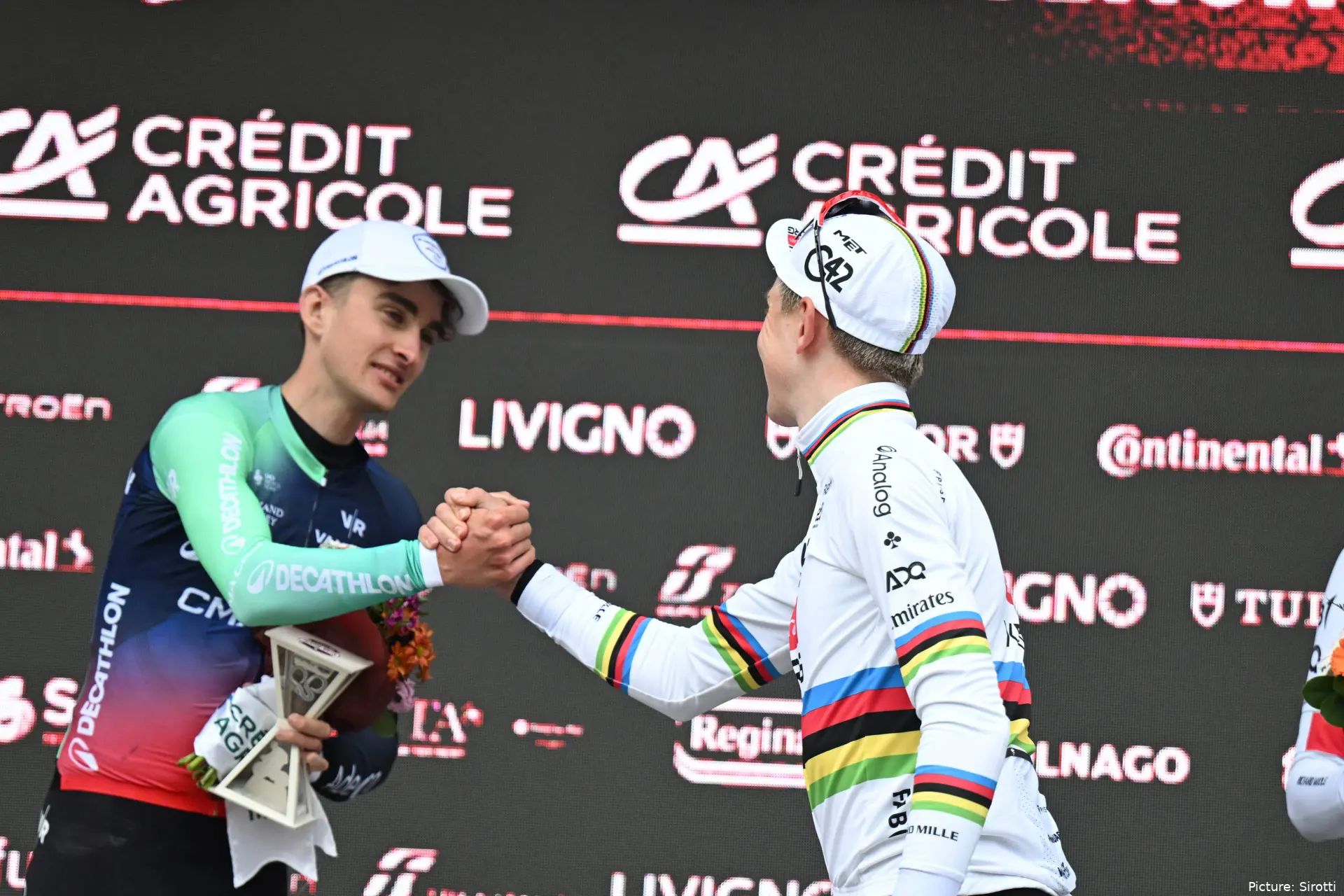
The rapid emergence of Paul Seixas has quickly moved beyond results and into something far bigger. In a matter of weeks, the 19-year-old has gone from one of cycling’s brightest prospects to a rider shaping conversations at the very top of the sport, with questions already being asked about where his long-term future lies.
Those discussions have now reached the doors of UAE Team Emirates - XRG, where the idea of pairing Seixas with Tadej Pogacar is no longer being dismissed out of hand.
Speaking to Cyclism’Actu, team manager Mauro Gianetti acknowledged both the scale of Seixas’ talent and the growing attention surrounding his future.
“It’s extraordinary to see a rider with such clear talent,” Gianetti said. “His start to the season is impressive, physically but also in terms of character. He is a new phenomenon, like Tadej, Van der Poel, Evenepoel or Vingegaard.”
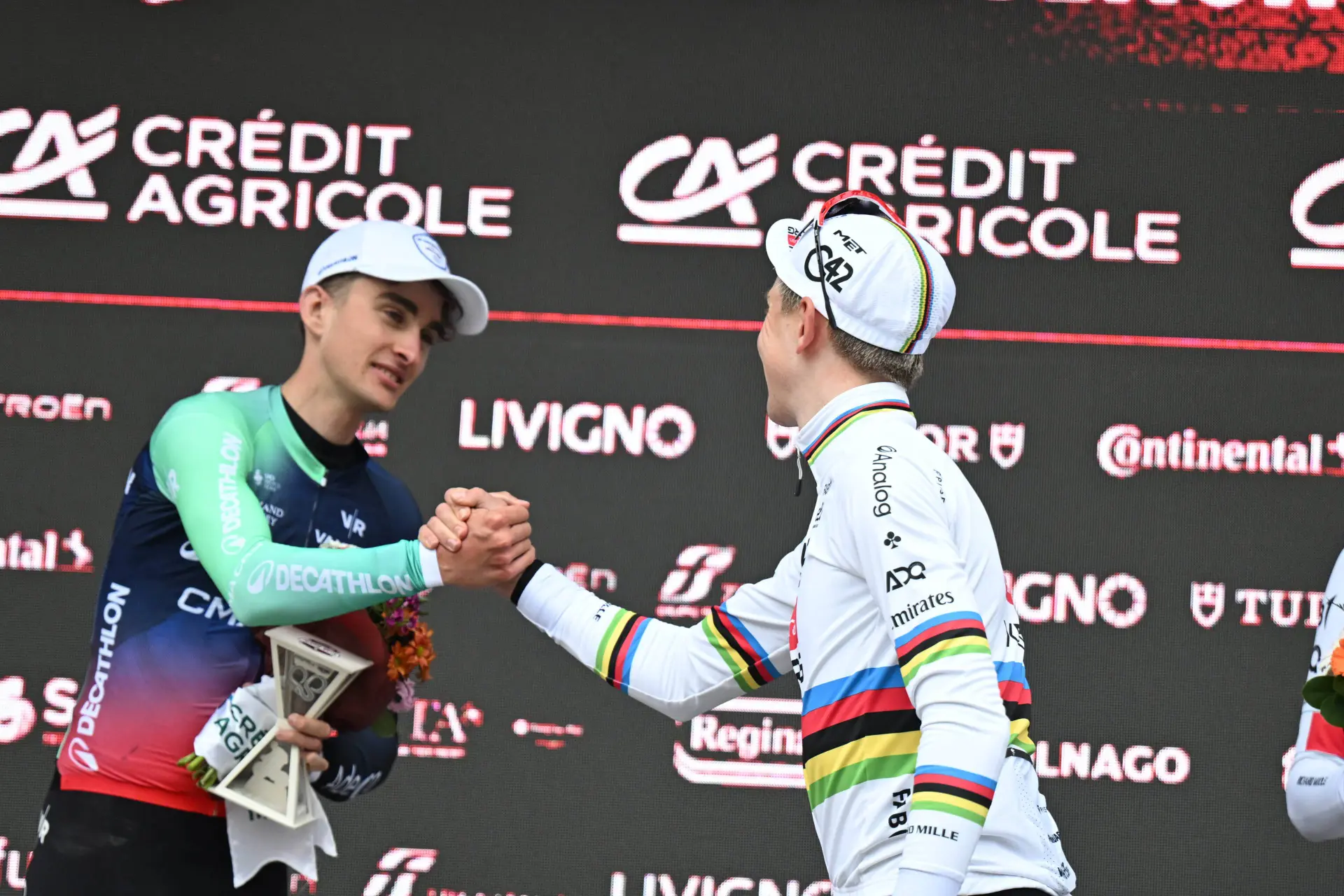
UAE respond as Seixas transfer speculation grows
Gianetti stopped short of suggesting any concrete move, but his comments confirmed what many in the peloton already suspect: Seixas is firmly on the radar of cycling’s biggest teams. “Of course, all teams are watching what he’s doing. But it will be his decision,” he explained. “Right now, he is in a very good team.”
That growing attention has not been universally welcomed. Former rider Joaquim Rodriguez recently admitted he hopes such a move does not materialise, pointing to how transfers like Juan Ayuso’s move away from UAE have helped open up races rather than concentrate control within a single team.

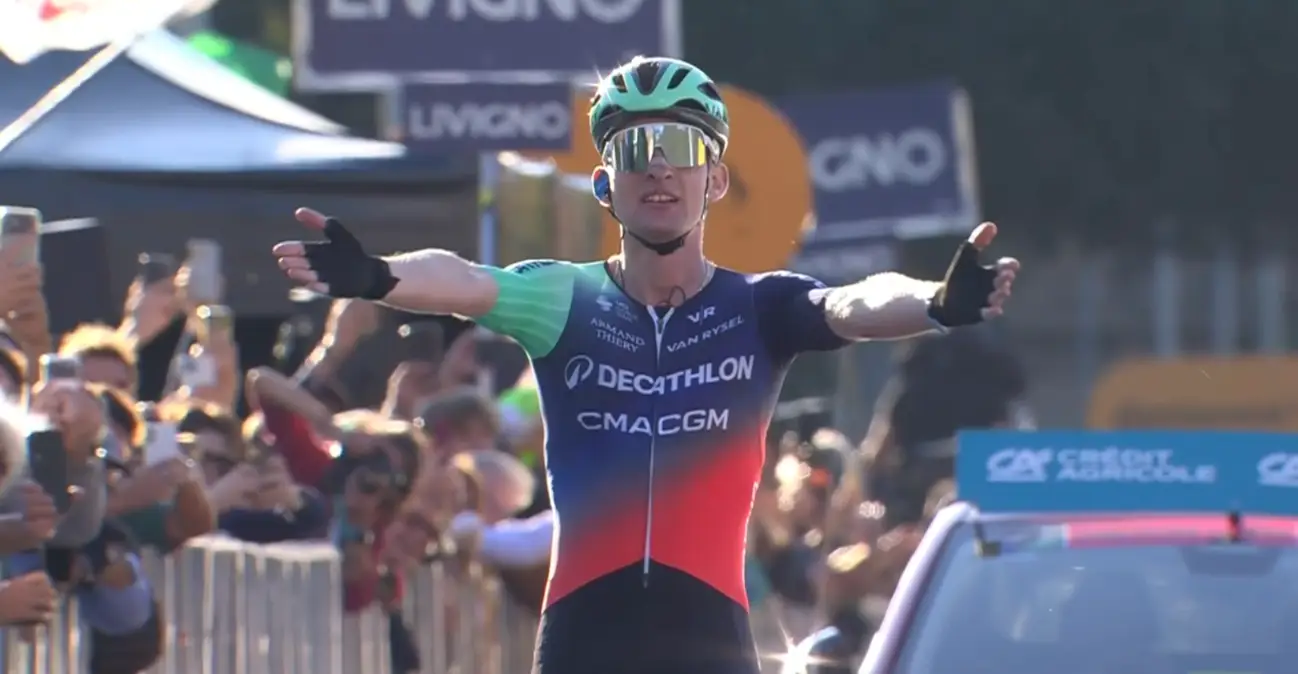
Paul Seixas at the 2026 Strade Bianche
Why Seixas has become cycling’s most sought-after talent
The attention is being driven by performances that have quickly shifted expectations around what a rider of his age can achieve.
Riding for the Decathlon CMA CGM Team, Seixas has already shown he can compete with and beat established Grand Tour contenders. His second place overall at the Volta ao Algarve, where he challenged Juan Ayuso and Joao Almeida, was followed by a dominant display at the Faun-Ardeche Classic.
Gianetti pointed specifically to Seixas’ performance at Strade Bianche as further proof of his level. “What he did at Strade Bianche was extraordinary,” he said.
Even against Pogacar, the benchmark of the current era, Seixas was able to follow the initial move longer than any of his rivals before eventually finishing second after distancing Isaac del Toro on the final climb.
Those results have elevated him from emerging talent to a rider already shaping the future direction of the sport, and one that teams are increasingly aware they may only get one chance to sign.
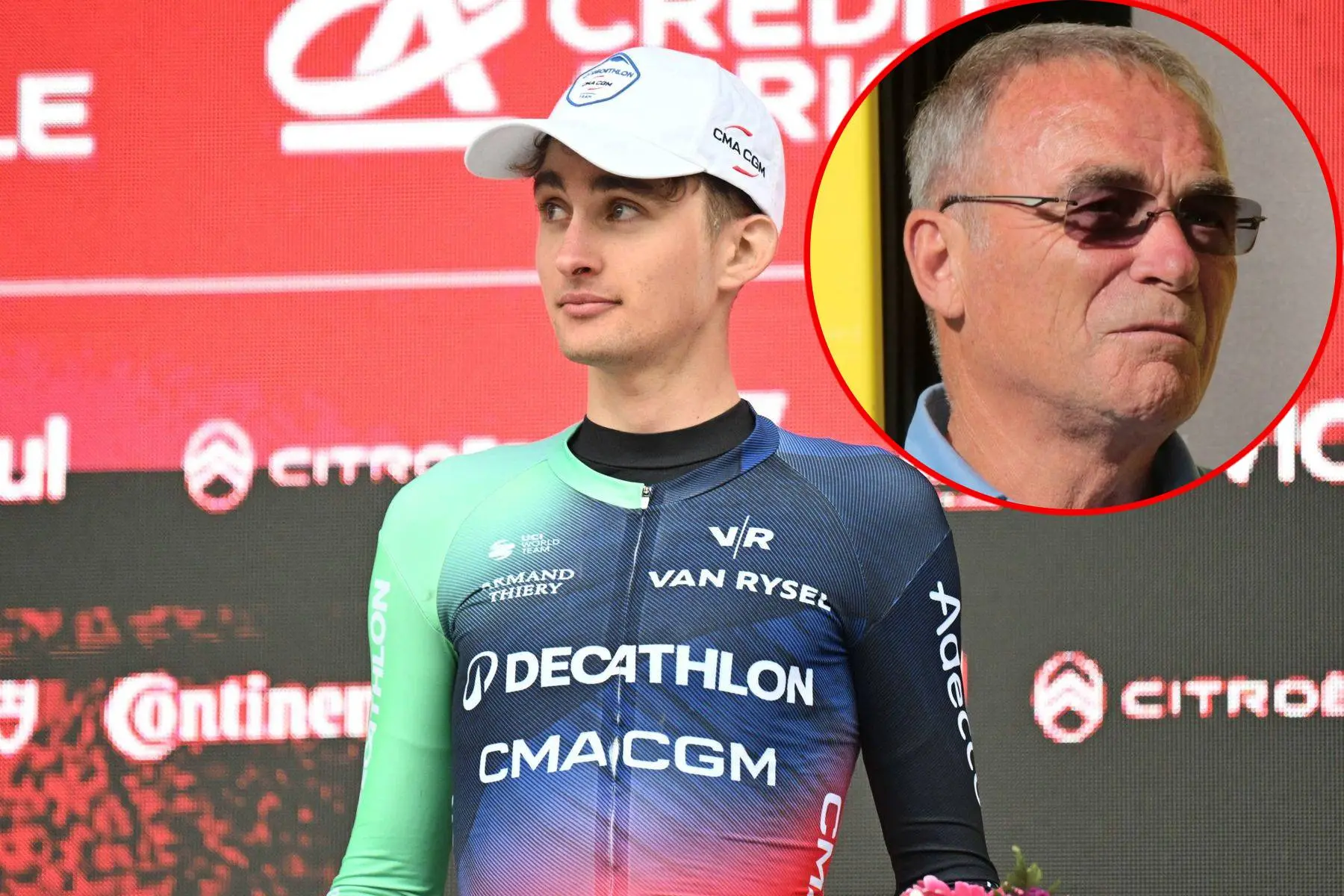
A dream scenario and a dilemma
It is in that context that Gianetti addressed the possibility of bringing Seixas into the same structure as Pogacar. “It would be more than a dream,” he said.
The comment reflects both ambition and reality. Seixas is already being viewed internally at UAE as a rider capable of fitting into a team built around the sport’s dominant figure.
But that possibility also feeds into a wider debate across the peloton, with questions continuing to surface about how far the concentration of talent at the very top should go.
Development over acceleration?
Gianetti’s wider comments suggest a more cautious approach when it comes to developing young talent. “We want them to stay in their environment, close to their families, and to continue their studies. That is the priority,” he said. “At that age, the most important thing is to avoid mistakes: training too much, eating badly, progressing too quickly.”
That perspective introduces a natural tension. On one side is the opportunity to join the most successful structure in the sport. On the other hand is the argument for stability, leadership and controlled progression.
For now, Seixas remains in a position that offers all three. At Decathlon, he is already a leader, already racing for results, and already building his career on his own timeline rather than within an established hierarchy.
The next generation taking shape
Whether Seixas ultimately stays or becomes the centre of a transfer battle remains to be seen. What is clear is that he is part of a broader shift within the peloton.
Alongside him, riders such as Juan Ayuso continue to emerge as potential challengers to Pogacar’s dominance, while the overall level across the sport continues to rise. Gianetti believes that the future will be shaped by riders capable of competing across multiple fronts, just as Pogacar is doing today.
For now, though, the focus remains on a single question that is no longer being asked quietly behind the scenes, but openly across the sport. What does Paul Seixas do next?

Kieran WoodDeputy Editor-in-Chief
Kieran Wood is a sports journalist based in Wales and has been active in journalism since 2022. He regularly contributes to DartsNews.com and CyclingUpToDate.com, where he covers professional cycling and darts. In cycling, his work includes liveblogs from major races, including the Tour de France, the Giro d’Italia, and La Vuelta a España, alongside race reports and analysis. He has also conducted interviews with professional riders.
His reporting spans the full racing calendar, from one-day classics to stage races, with a focus on accurate, real-time coverage and clear contextual analysis. For statistics, results, and historical context, he regularly uses resources such as ProCyclingStats. To support reporting on rider activity and training context where relevant, he also references Strava.
In his work, Kieran places strong emphasis on careful sourcing, editorial accuracy, and updating articles as new, verified information becomes available.
claps 3visitors 1
Just in

Popular news
Latest comments
- I watched Il Lombardia today... :) What a loser Remco is!MajorPayne10-10-2026
- Couldn’t agree more, @RidesHills. CyclingUpToDate endeavours to ban him, but he continues to create new accounts. He was banned from CyclingNews. Whilst I used to argue against his negativity, I’ve simply lost interest. He is so utterly boring. I was initially worried he'd bully other fans, but nobody's having it. Most of us simply pay him no mind, anymore. At this point, everybody just scrolls right past him. He is quite a coward though, I’ll tell you that. His toxic comments on this site are nothing compared to what he is able to post on Twitter.anonymouscyclist10-10-2026
- C’mon, don’t follow in Horner’s footsteps. At least he had the courage to post HIS prediction ahead, I didn’t see many others disagreeing or claiming it was ridiculous.Mistermaumau10-10-2026
- @SLO: Your ridiculously rude language about riders makes it really hard to read your consistently condescending comments. "BS losers," how is it ok to talk about people like that? Also, you truly sound like you do not understand that this is a team sport, where del Toro rides for his leader and therefore doesn't follow his attacks. We can all agree that we are watching a once in a generation (really, a once in a century) rider in Pogačar, and that's great, but come on, you don't have to be a jerk when it comes to other riders. It's clear that I prefer to praise the positive in what I see, mostly because I am in awe of what these humans can do (including the ones who don't win), but your negativity about anyone but your idol is just so very very exhausting.RidesHills10-10-2026
- Huh??? You’ve obviously forgotten all the contrary you’ve been trying to sell us the last weeks. Shall I dig some out for you?Mistermaumau10-10-2026
- Doesn’t sound like it from his post-race interview. That old record you’re still playing is starting to jump a bit too often.Mistermaumau10-10-2026
- Sorry but who is this guy? If HE doesn’t know that « much » about Seixas by now, I’m recalibrating my opinion of his finish line questioning. As for PS, the most amazing thing about him so far is not what he’s won or almost won at this age, although that’s already phenomenal, it’s how consistent, numerous and long this seasons’ results have been. I don’t think there’s ever been a 19/20 year old quite as developed. Of course, you can’t expect development at this level to go backwards in time but it’s amazing to witness a rider you assume won’t be able to keep things up forever prove you wrong.Mistermaumau10-10-2026
- I agree, it was a good feeling to end the season this way... and only hope the knee injury held Del Toro back. Some how I have a feeling it wasn't just that... I wish my feelings are wrong.PogiSloFans10-10-2026
- Seixas is an amazing rider. Remco disappointed. Del Toro should rather have withdrawn if he had an injury linked to over-training. Anyway, a satisfying end to the season.Hills3310-10-2026
- History books won't care who had good legs or bad legs, or who did or didn't get laid last night; what the history books say is that Del Toro and Remco are two losers, while Seixas is a Monument winner at the age of 20. Let's not forget who was the only one that could follow Pogi in Strade Bianche. Paul Seixas, not Del Toro. Ad acta!!!PogiSloFans10-10-2026
Loading
1 Comments