"Do they spend it on a nice dinner?" - Patrick Lefevere questions UCI fines policy and blasts "utterly crazy" recent sanctions
Cycling
Patrick Lefevere has once again shown his most critical side in his latest column published in Nieuwsblad. The storied former Soudal-Quick Step director harshly questioned the UCI’s sanctioning policy, criticised its lack of transparency, and lamented teams’ limited ability to react to decisions by cycling’s world governing body.
Lefevere opened with a question that, he admits, he’s been asking himself for days: what happens to all the money collected through fines. “Who manages that money? Does it go back into cycling, or do they spend it on a nice dinner in Aigle? They could also invest it in Swiss real estate, because the amounts are no longer normal,” he joked.
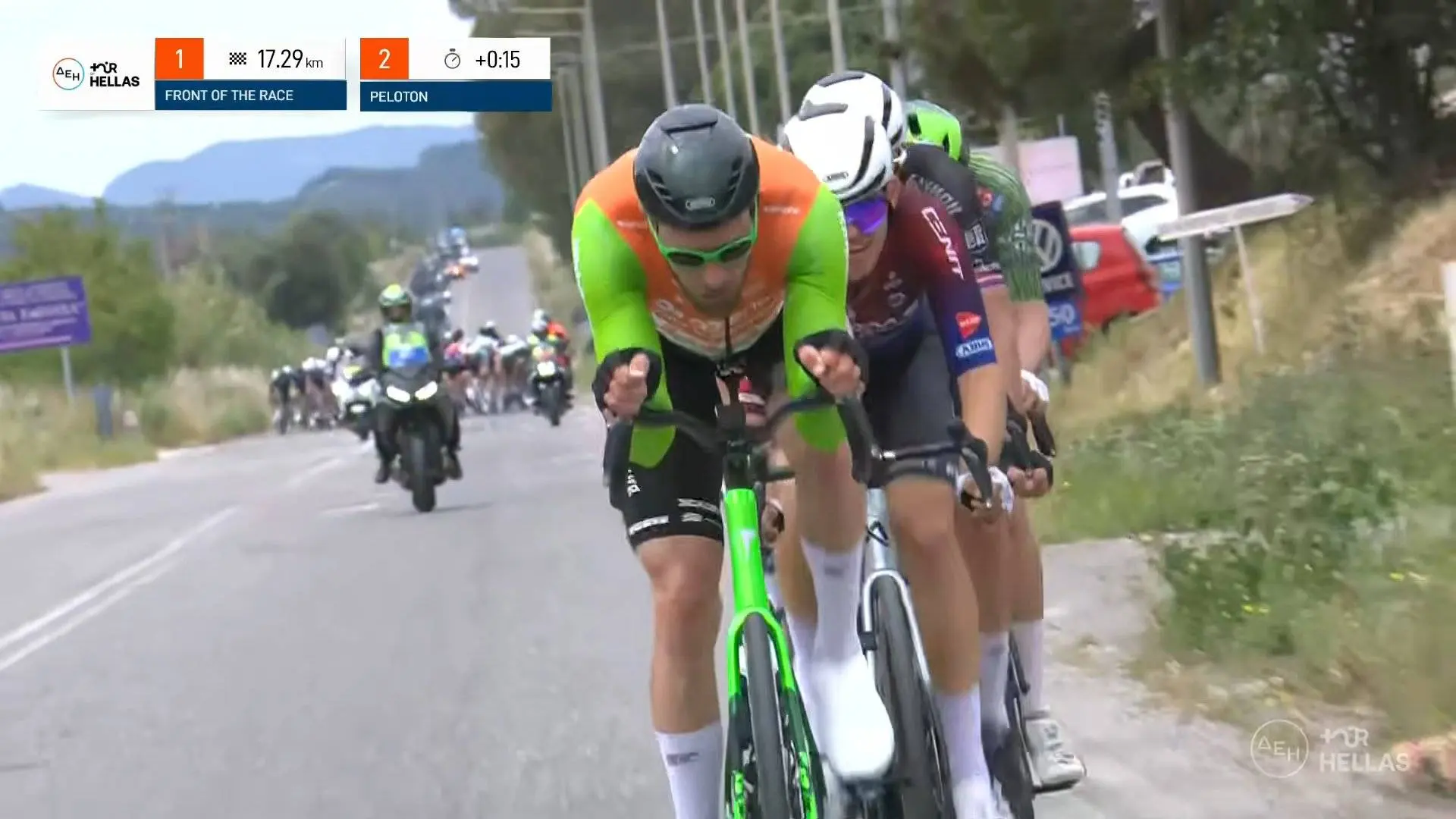
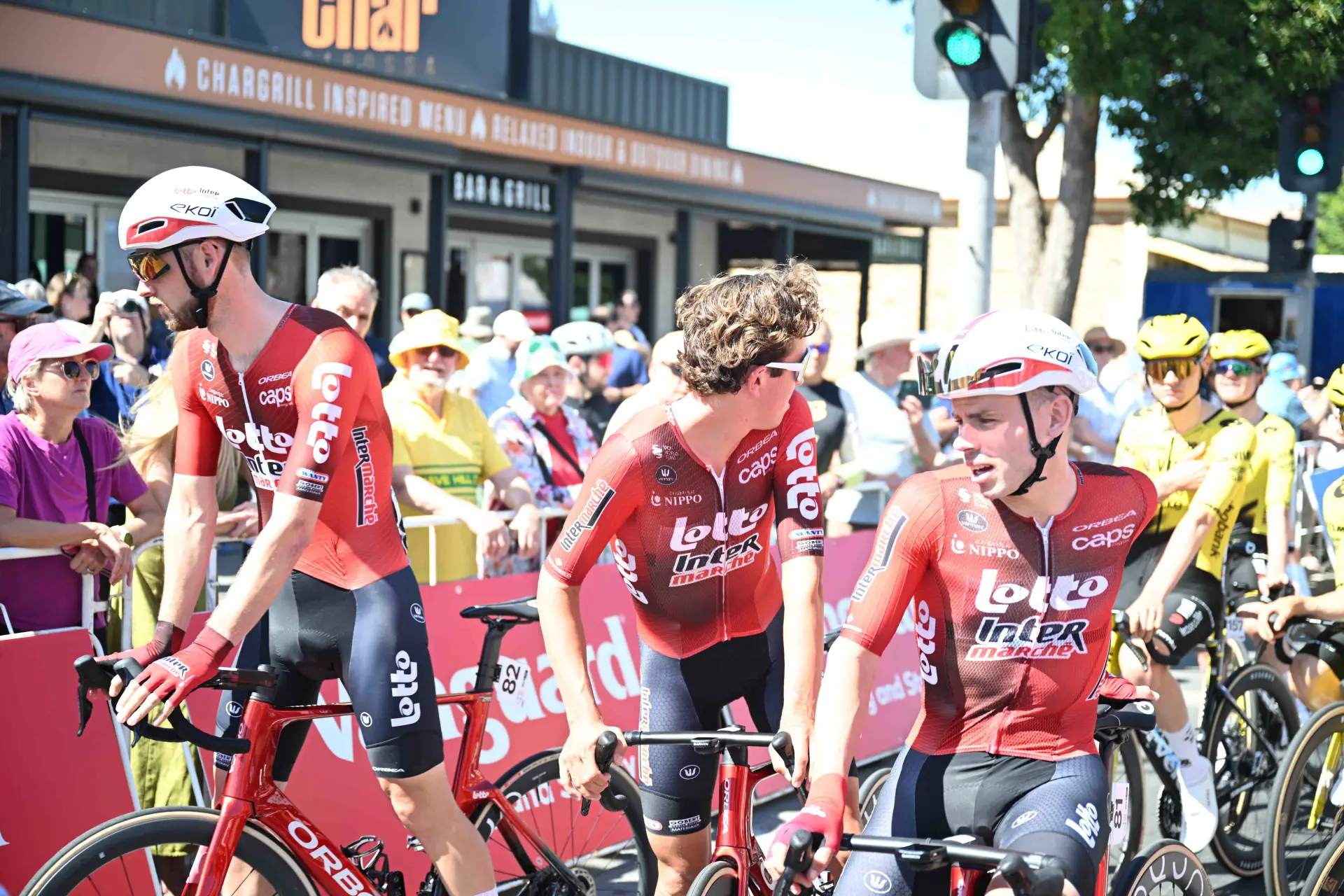
The Belgian cited as an example the recent team time trial at the Tour Auvergne Rhône-Alpes, where, he says, the UCI collected more than €10,000 in penalties. Lotto were fined 3,000 Swiss francs for arriving one minute late to a pre-start inspection.
“The bikes were on time, but the riders weren’t. And still they received a 3,000-franc fine. Jayco-AlUla and TotalEnergies even had to pay 500 euros more. It’s utterly crazy,” he said.
While he acknowledges that for big-budget outfits like UAE Team Emirates these sums may be manageable, Lefevere reminded that for smaller teams the financial hit is significant. “Fines are imposed on riders or sports directors, but it’s the teams who end up paying them. That was the case in my time at Soudal-Quick Step and I assume it’s the same elsewhere. Accumulating UCI fines over a whole year weighs on any budget,” he stated.

Patrick Lefevere, historic Belgian cycling directeur sportif
Read also
"Big Brother is watching you"
For the former Belgian boss, the UCI is sending a very clear message. “The message in recent weeks is unequivocal: Big Brother is watching you.” As examples, he cited Lorena Wiebes’s exclusion over a bike that exceeded the weight limit by barely twenty grams, or the case of Jan Willem Van Schip. “If you have a strange stem, a strange position on the bike, or even a strange look, you’re out of the race. And for everything else, fines, fines, and more fines,” he criticised.
Lefevere also questioned the recent recognition the UCI received in an Olympic governance audit, where the federation scored top marks for transparency. “I’d recommend the auditors ask SD Worx-Protime how transparent the UCI was with Lorena Wiebes’s exclusion. Or listen to Sram about their experience with gear restrictions. The UCI is like any other international federation: transparency doesn’t exist,” he said.
Another target of his criticism was the International Association of Professional Cycling Teams (AIGCP), the body representing the teams. Lefevere, who chaired the association for several years, believes it has lost clout in the sport’s key debates.
“I understand why teams don’t rebel more against this repressive UCI policy. Or rather, I do understand. The AIGCP no longer has influence,” he explained. According to the Belgian, one problem is the difficulty of representing the interests of WorldTour teams and ProTeams at the same time.
Lefevere recalled that during his tenure at the helm of the association he was a very public figure, but says he always defended teams’ interests firmly. It’s an approach he finds lacking today.
Lefevere’s criticism of the UCI
In this regard, he pointed directly at the current AIGCP president, Brent Copeland. “He really wanted to be president and was the first to criticise all his predecessors, but what has improved since he took office? When do you hear him?” he asked.
Safety issues also occupied an important part of his reflection. Lefevere lamented that this season has seen a string of problems such as dangerous barriers or corners placed very close to the finish. He therefore disagreed with recent comments from Copeland claiming that safety is everyone’s responsibility.
Read also
“Even politicians no longer use such empty phrases. The message teams should be sending is that they will not tolerate these situations,” he argued. He also believes that initiatives like SafeR, initially driven by the teams, have ended up being controlled by the UCI and ASO.
Finally, Lefevere left a last reflection laced with irony. Although he insisted he has no intention of returning to the AIGCP, he believes today’s cycling misses more combative profiles. “I don’t want to go back under any circumstances, but the teams could use someone with my tact… or rather my lack of tact,” he concluded.

Gavin QuinnCycling Journalist
Gavin Quinn is a cycling journalist and ultra-distance cyclist with a BA in Journalism from Dublin City University. Formerly the Press & Communications Officer for Cycling Ireland, Gavin has worked inside the national team at the World Championships and has reported for the Irish Mirror, Mirror UK, and The42.
His expertise is backed by elite-level access, having interviewed stars like Sam Bennett and Ben Healy, as well as immense personal endurance. In 2025, he completed a 12,000km solo cycle from Ireland to Vietnam, following a 4,600km tour across Europe. From the cobbles of Paris-Roubaix to the gradients of the Tourmalet, Gavin’s writing focuses on the "romance and brutality" of the sport. Having visited 50+ countries, he brings a global, cultural perspective to his coverage of the pro peloton for CyclingUpToDate.
claps 0visitors 0
Just in
Popular news
Latest comments
- It is easy to celebrate those who won the grand tours and the monuments. and the world championships. What I notice more are the ones who were at the world tour and kept going on the pro tour level for that little bit longer, still wanting to ride after their bodies had aged, after their teams no longer needed them. It is good to see the domestiques. as well. Congratulations to all these folks on an impressive career, no matter the wins. Cycling is a team sport, and it’s the ones we don’t see much of that allow the leaders to stand out and win the accolades.RidesHills14-10-2026
- Biestrebos is a real sprinting talent. Initially it was thought that he'd be a classics domestíque but his sprinting has improved dramatically over the course of the year. He's the only thing going well with Picnic now and for that reason it is likely that he'll leave
 Rafionain-Glas14-10-2026
 - well this one definitely makes my STUPIDEST ARTICLES OF 2026 list. chapeau…OCexile14-10-2026
- Cyclocross is nothing without stars like MVDP, WVA, Pidcock... etc. Out of all cycling disciplines, road racing is the most popular discipline in professional cycling, especially in terms of global prestige, major-event audiences, and the historical status of its greatest riders. People that don't follow cycling as a sport have heard of Merckx, Hinault, Pantani, Armstrong, Remco, Vingegaard, MvDP, Van Aert, Pogačar etc. So if we're talking about professional cycling and the sport's most famous athletes, road racing is the clear number one. Road cycling's greatest champions are judged across such a wide scale. E.g. - Pogačar can win the Tour de France and then go after Paris–Roubaix and other prestigious one day races. These races also have a wide range of versatility: cobbles, gravel, punchy, hilly, TT. This versatility is a huge part of why road racing is No.1 in cycling. Maybe Sven Nys is a dutch cycling "legend"... but that's where it starts and ends. Ad acta.PogiSloFans14-10-2026
- “at some point those guys will turn their backs on OUR sport”? after dedicating so much of their lives to cyclocross and in mathieu’s case winning more world championships than anyone, it would seem to me like they’ve earned the right for it to be always be THEIR sport, too, even after they retire from it.OCexile14-10-2026
- It takes two to tango. Riders also have a say. Maybe they didn't see any opportunities on a stacked team such as Visma's? Who knows, but could be a multitude of reasons why deals fall through.Pogboom14-10-2026
- Eventually Pogi will get older and slower. Father Time will favor the young. The question is whether he can beat Pogi before Pogi decides to retire. You never know... Pogi may retire after winning paris-roubaix :)b3tlla14-10-2026
- i think he can continue to race for maybe another 2 years till he drops out of podium contention. With his TT and his follow the leader in the Mountains,he should not need too many teammates too.abstractengineer14-10-2026
- Aren't they still shopping around for a main sponsor for next year?wrsty14-10-2026
- How broke is visma now? wtf they cant even fight moviestar and decathlon for riders and lose both their mid targets based on their budget and they cant even get those? Crazy...:/miguel13-10-2026
Loading
Write a comment