“Not having your period isn’t normal. Before we’re athletes, we’re women”: Cedrine Kerbaol offers stark warning to Tour de France Femmes peloton amid growing health concerns
Cycling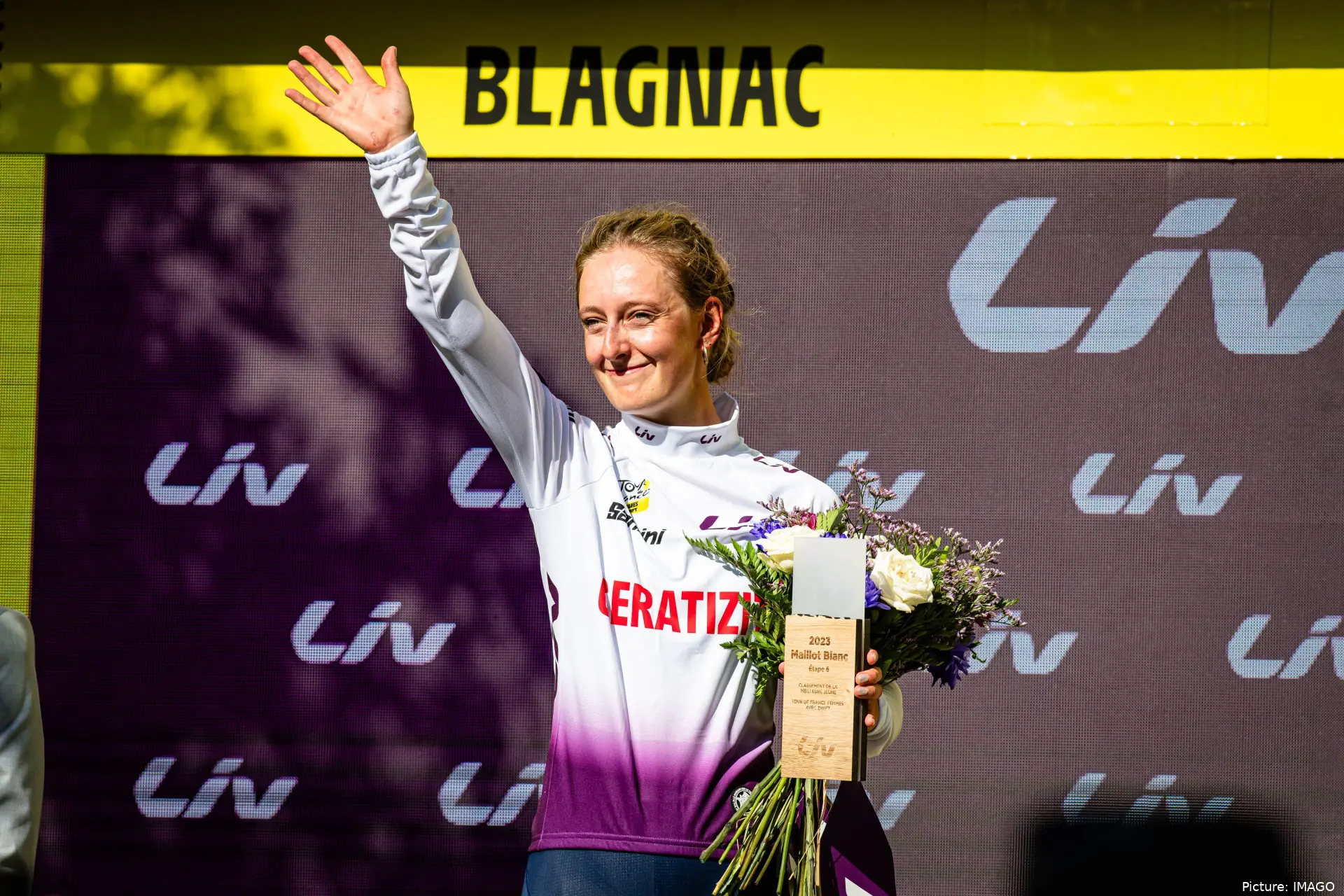
As the 2025 Tour de France Femmes enters its decisive stages, French rider Cedrine Kerbaol has delivered one of the most important messages of the race — one that has nothing to do with results, and everything to do with long-term health.
The 24-year-old EF Education–Oatly rider, who became the first Frenchwoman to win a stage in the race’s modern era, has used her platform this week to speak out against a rising culture of extreme thinness in professional cycling — particularly within the Women’s World Tour. “Not having your period isn’t normal,” she said during a live appearance on France Télévisions following Stage 5. “Beyond fertility, there’s an impact on bone health, and a very real risk of serious injury. Before we’re athletes, we’re also women. Our health matters — not just now, but for the future too.”
Kerbaol is not just an elite climber — she also holds a diploma in dietetics, giving her insights added authority. She recently helped launch @f.e.e.d_powr, an Instagram-based initiative created with teammates and medical professionals to raise awareness and promote better education around Relative Energy Deficiency in Sport (RED-S), disordered eating, and the silent risks associated with menstrual dysfunction in endurance athletes.
“There are a lot of people who’ve won big races at very low weights,” she explained in an interview with L’Humanité. “And indirectly, young women trying to perform take them as role models. We’re in an era of huge visibility — everyone wants to get better, faster, push more watts, weigh less… but what’s the cost?”

A Whistleblower’s Warning
Kerbaol’s comments arrive at a pivotal moment for the sport. Recently, an anonymous World Tour team doctor gave an explosive interview to Knack magazine, revealing widespread disordered eating habits, deception around weight monitoring, and a lack of meaningful oversight outside race and training environments.
“Some riders lie. They send photos of meals they didn’t actually eat, or of a scale showing someone else’s weight,” the whistleblower revealed. “They don’t think about the health risks — only performance matters. ‘I don’t want children anyway,’ or ‘Osteoporosis? That’s for later,’ is what you hear.”
Despite access to a network of dietitians, gynaecologists, psychologists, and physiotherapists, the anonymous doctor explained that teams are often powerless once riders leave supervised settings. “At training camps we can keep a close eye. But at home? It’s much harder.”
Chasing Performance, Losing Perspective
The drive for ever-greater performance gains — measured in watts, weight, and results — has created a high-pressure environment, especially in a peloton that is finally receiving the media coverage and sponsorship long enjoyed by the men’s side of the sport. Yet with that visibility comes a dark undercurrent: riders risking their health to live up to impossible ideals.
What makes Kerbaol’s voice so compelling is its blend of science, lived experience, and leadership. Her concern is not hypothetical — it reflects patterns many in the peloton have observed or experienced firsthand. “Being the lightest doesn’t mean being the fastest. And it certainly doesn’t mean being the healthiest.”
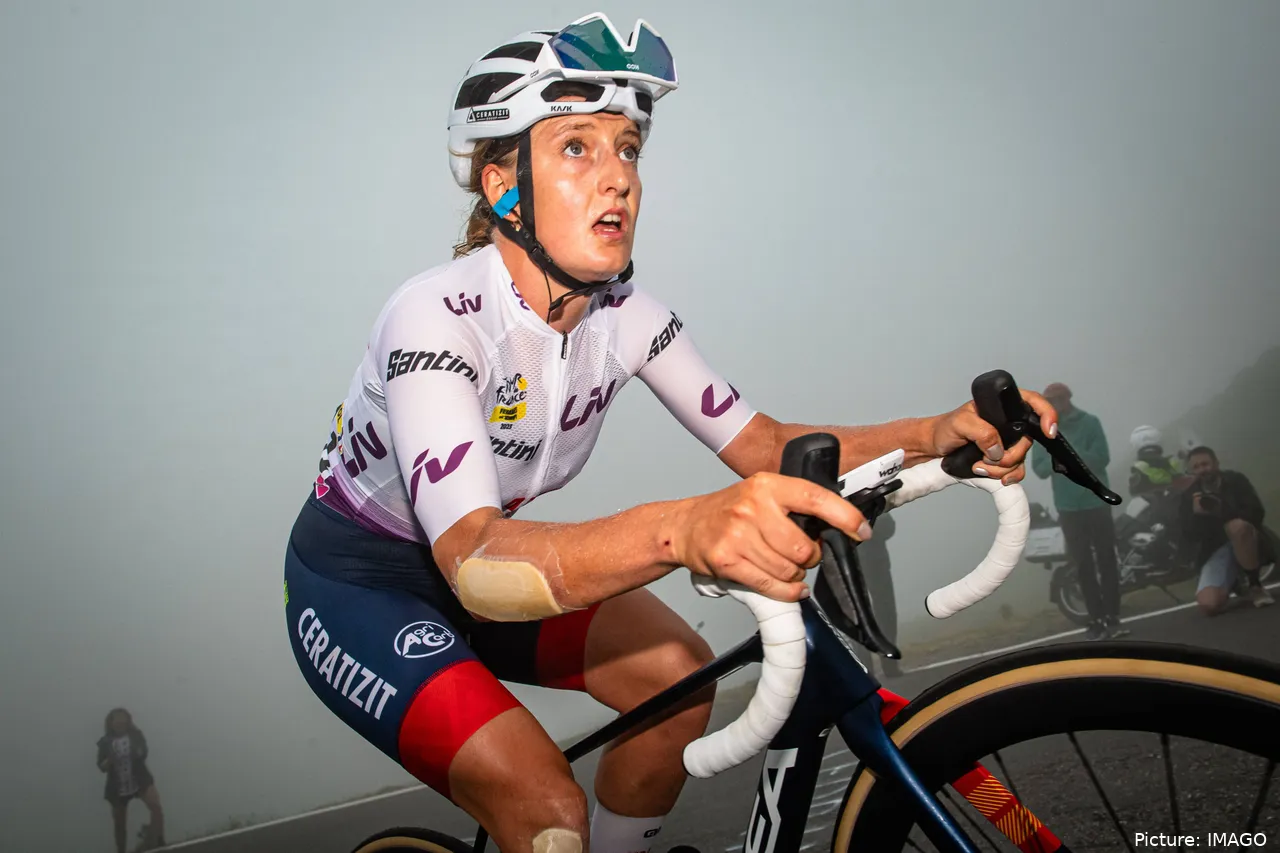
Kerbaol won a stage of the Tour de France Femmes in 2024
Toward a Culture Shift?
A new generation of riders is increasingly vocal about these issues. From Abi Smith and Ella Wyllie speaking out about energy imbalance and menstrual dysfunction, to Kerbaol now launching a dedicated platform for awareness, there’s growing momentum for cultural change. But the question remains: will the sport respond?
As the Tour de France Femmes continues, Kerbaol’s warning serves as a pointed reminder that performance should not come at the cost of well-being — and that the sport must do more than simply applaud its champions. It must also protect them. “It’s not about being perfect,” Kerbaol says. “It’s about being healthy enough to enjoy a full career — and a full life afterwards.”

Kieran WoodDeputy Editor-in-Chief
Kieran Wood is a sports journalist based in Wales and has been active in journalism since 2022. He regularly contributes to DartsNews.com and CyclingUpToDate.com, where he covers professional cycling and darts. In cycling, his work includes liveblogs from major races, including the Tour de France, the Giro d’Italia, and La Vuelta a España, alongside race reports and analysis. He has also conducted interviews with professional riders.
His reporting spans the full racing calendar, from one-day classics to stage races, with a focus on accurate, real-time coverage and clear contextual analysis. For statistics, results, and historical context, he regularly uses resources such as ProCyclingStats. To support reporting on rider activity and training context where relevant, he also references Strava.
In his work, Kieran places strong emphasis on careful sourcing, editorial accuracy, and updating articles as new, verified information becomes available.
claps 5visitors 5
Just in
Popular news
Latest comments
- Absolutely notbruins3015-10-2026
- what would the organizers loose if they pay men and women the same prize money? it is a shame that the unfairness is preserved even on a level where it would be so easy to change with nothing but positive consequences ... heck, they could even claim to promote equal rights ...Ketterechts15-10-2026
- is this crazy?Ketterechts15-10-2026
- WTF? What should I apologize for? Did you understand what I wrote?MajorPayne15-10-2026
- Could we give Seixas time to be Seixas and not make comparisons too soon? Maybe it’s my age speaking, but he’s a mere 20, barely started. Sure, a phenom, but so young. Will he win 8 Monuments like van der Poel so far, will he win 4 grand tours like Vingegaard? Those have been the two seconds to Pogačar’s first, since covid. Yes, there’s an eventual changing of the guard, but Seixas will need time to build the palmares to make his case. Might we please give him that time (while we enjoy the hell out of his riding)?RidesHills15-10-2026
- You've been dropped multiuple times from this site LOL !frieders315-10-2026
- 'Seixas will never each Pogi's level?' WTF...you have a crystal ball or you just blowing more smoke here !frieders315-10-2026
- lol great point, but the riders have to do something. I know these are open roads, lots of cars, but these is not good for the riders of course.mij15-10-2026
- its kind of hard to believe that standing at the starting line in protest, at a race that didn't have a saftey issue, hasn't fixed the problem......jad2914-10-2026
- Comparing young riders to greats leaves them open for failure and disappointment. At one time, Moscon was compared to Boonen by his team and it turned out nothing like that. Currently its a very crowded space especially with Pogi wining everything.abstractengineer14-10-2026
Loading
Write a comment