"My year is at risk and so is my career" - Ruben Guerreiro worried for future prospects due to double hernia
Cycling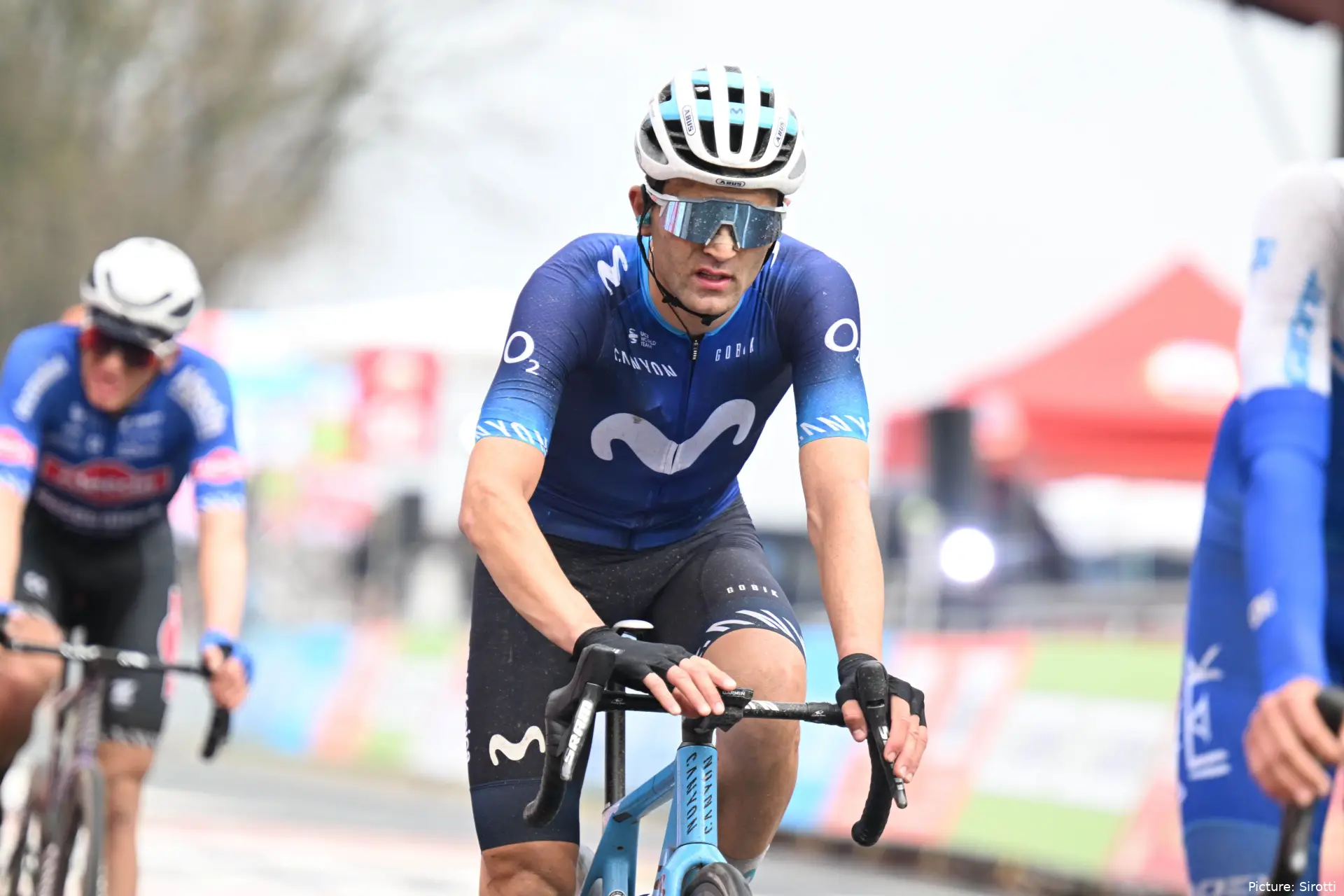
The Giro d'Italia was originally part of Ruben Guerreiro's plans for 2024, so his absence from the Movistar Team line-up for the race was a surprise.
The 28-year-old Portuguese rider hasn't raced since the GP Miguel Indurain, where he crashed and abandoned. However, speaking to the Lusa news agency, Guerreiro reveals that the fall in the Spanish race only caused him a "dislocated elbow" which didn't prevent him from training or affect his daily life. "I went to Sierra Nevada to prepare for the Giro, but in Sierra Nevada I really started to feel a strong pain in my back, in the lumbar and cervical areas. It was a really strong pain. After tests, two hernias were detected. The specialists say it was due to several falls over the last year," he explains.
"I've been doing normal physiotherapy and my body isn't progressing. Things have really been difficult for me, because I've had a few injuries and falls and they've always been easy to treat and recover from, and now with the two hernias I've been unable to train, to go about my day-to-day life, because it requires a lot of downtime," Guerreiro continues worryingly. "At the moment, I can say that my year is at risk and so is my career, because at this age and with cycling today, it's difficult to stop for so long."
Ruben Guerreiro was the first Portuguese cyclist to win a classification in a Grand Tour. He did so in 2020, when he won the mountain jersey in the Giro, in which he also won a stage. Throughout his career he has represented Trek-Segafredo, Katusha, EF Education-EasyPost and has been racing for Movistar Team since 2023.
Read also
Kieran WoodDeputy Editor-in-Chief
Kieran Wood is a sports journalist based in Wales and has been active in journalism since 2022. He regularly contributes to DartsNews.com and CyclingUpToDate.com, where he covers professional cycling and darts. In cycling, his work includes liveblogs from major races, including the Tour de France, the Giro d’Italia, and La Vuelta a España, alongside race reports and analysis. He has also conducted interviews with professional riders.
His reporting spans the full racing calendar, from one-day classics to stage races, with a focus on accurate, real-time coverage and clear contextual analysis. For statistics, results, and historical context, he regularly uses resources such as ProCyclingStats. To support reporting on rider activity and training context where relevant, he also references Strava.
In his work, Kieran places strong emphasis on careful sourcing, editorial accuracy, and updating articles as new, verified information becomes available.
claps 0visitors 0
Just in

Popular news
Latest comments
- he had one good year of his career. gotta think he was doping hard.mij25-11-2026
- bam! two grand tour starts claimed by the younger sprinter just like this. what if merlier also plans for 2 grand tours?Ketterechts25-11-2026
- writing about yourself in third person ... please, at least have someone else from your staff author these self-coverage articles!Ketterechts25-11-2026
- Don’t forget Yates’s podium at 2023 TdF!Lozza25-11-2026
- It was stage 14 to Morzine that Carlos Rodriguez won in 2023, not Puy de Dome. And Kwiato actually won the previous stage himself to Grand Colombier!Lozza25-11-2026
- Go Pogi!! 🐐❤️Lozza25-11-2026
- They didn’t have or need “extraordinary information”. All they needed was for a French judge to sign off on the night-time testing for it to go ahead.Lozza25-11-2026
- If the sponsors voted for Primoz then you get him, otherwise not.flyer25-11-2026
- It sure can feel or seem that way but I wonder if the same amount of prodigious performances (compared to the others) would occur if no one was ever doping at all.flyer25-11-2026
- Given the similarity of two articles (published on I think the same date), I'm reusing (copy-n-pasting) my post from the twin: I've always thought the last day of each of the grand tours was problematic mostly in that the GC is considered completed before the race starts when that is not really true. There is some tension, but not desirable tension. What saves the awkward practice is the race finish is legit for those who participate - so it's not wholly different from the other stages. That neutralizations usually make good sense demonstrates their necessity so if that has to be the way to go I agree that the design plan for the neutralization should be completed before the race starts. This years end stage in the Vuelta had one of the best first half's I've seen in that many of the riders looked to be thoroughly enjoying themselves making it a joy to watch. But I think it was slightly closer to the exception rather than the rule.flyer25-11-2026
Loading
1 Comments