“My only thought was to avoid a far greater tragedy” – Joxean Matxin relives Alpe d’Huez crash that ended Einer Rubio’s Tour
Cycling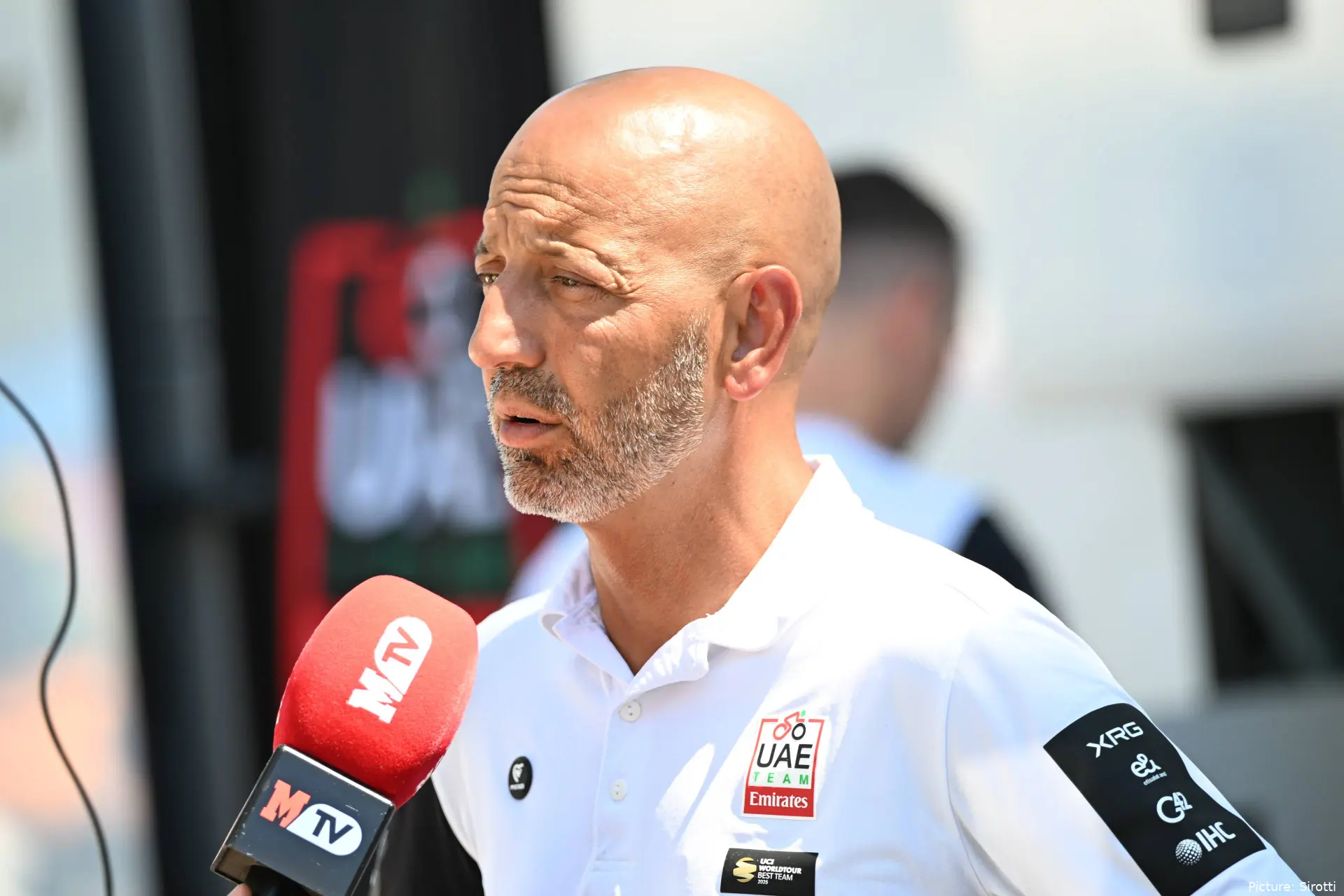
Joxean Matxin has defended the split-second decision that preceded Einer Rubio’s race-ending crash on Alpe d’Huez, insisting he braked only to avoid hitting a spectator who had fallen directly in front of the UAE Team Emirates – XRG car.
Rubio struck the rear of the vehicle during the chaotic closing kilometres of stage 19 and was later forced to abandon the Tour de France with facial injuries. After criticism of the incident and the footage that followed, Matxin used an Instagram post to explain what he had seen from inside the car.
“Today I feel the need to explain what happened from my position inside the team car during yesterday’s stage,” he wrote. “In the final kilometres of Alpe d’Huez, with thousands of fans very close to the road and the enormous pressure of a decisive Tour stage, a spectator suddenly stepped out and fell directly in front of our vehicle. My only reaction was to brake immediately to avoid running them over. It all happened in a fraction of a second, and my only thought was to prevent a far greater tragedy."
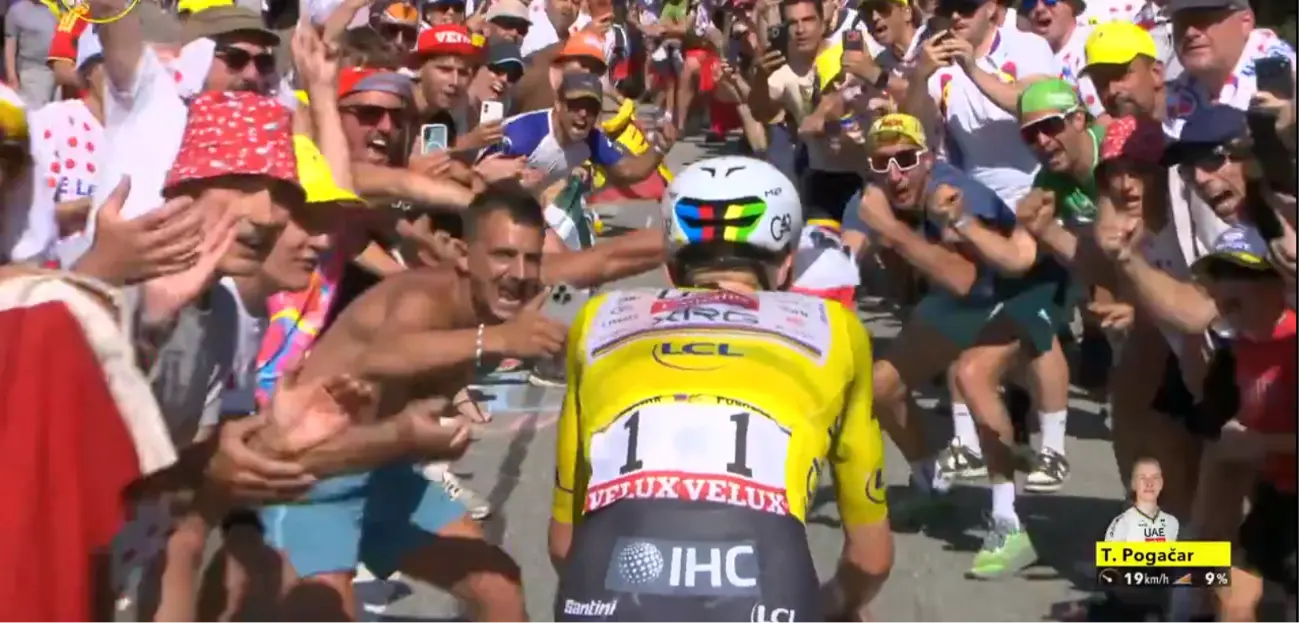
The incident came as the road narrowed between dense walls of spectators, with riders and team vehicles repeatedly forced to wait for space to open in front of them. Remco Evenepoel later said his own attack had been interrupted by the crowds and race motorbikes, while Team Visma | Lease a Bike sports director Marc Reef said team cars had been brought to a complete standstill several times.
Matxin did not realise severity until finish
Matxin said the occupants of the UAE car heard the collision behind them, but did not immediately know who had been involved or how serious the consequences were.
“After braking, we heard a heavy impact behind us,” he wrote. “But amid the noise, the tension, the crowds and the responsibility of continuing to protect the race leader, it was only once we reached the finish that I learned the full extent of the accident and that Einer would have to leave the Tour.”
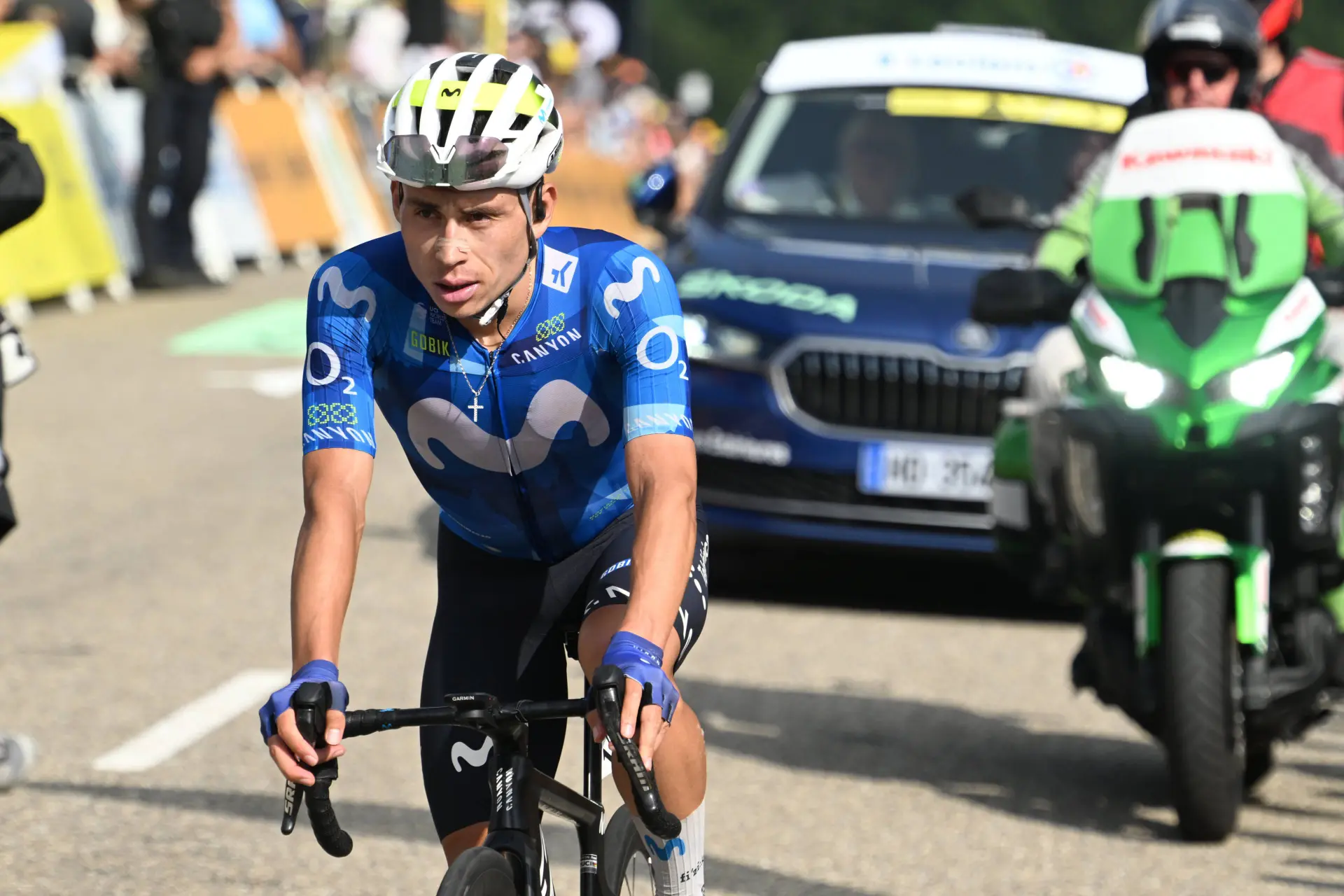
Rubio had struck the rear window of the vehicle after the sudden braking. The Movistar Team rider suffered injuries requiring around 20 stitches and could not continue in the race.
Matxin said he contacted Movistar as soon as he learned what had happened. “I immediately called the Movistar team, their directors and riders, to check on him and ask what had happened.”
The UAE manager accepted that the available footage had raised questions, but argued that it did not show the entire sequence from the team car’s perspective. “I completely understand that, when people have only seen part of the footage, criticism and questions can arise,” he wrote. “But those of us who experience cycling from the inside know that, in such extreme situations, decisions are made in fractions of a second and always with the aim of protecting people’s lives.”
Matxin points to roadside responsibility
Matxin expressed regret over the consequences for Rubio while maintaining that braking had been the only possible reaction once the spectator entered the car’s path.
“I deeply regret the consequences of this accident,” he wrote. “If the decision I made in that moment ended up affecting a rider in the peloton, I can only say that it hurts me enormously.”
The crash added greater weight to the criticism surrounding crowd control on Alpe d’Huez. Barriers and ropes had been installed in selected sections, but long parts of the climb remained open as spectators moved away from the road only when riders and vehicles arrived.
“At the same time, I think it is important to remember that the safety of riders, teams and fans also depends on responsible behaviour from those watching the sport at the roadside,” Matxin added.
Rubio’s withdrawal brought a brutal end to his Tour in an incident that began not with an attack or racing mistake, but with a spectator falling into the convoy’s path.
Matxin closed his statement with a direct message to the Colombian. “All my support and affection go to Einer,” he wrote. “I am deeply sorry for what happened and sincerely hope to see you back racing very soon, where you belong. It has not been an easy day for me either, and I needed to share this.”
The collision has intensified the debate over whether the Tour can continue using Alpe d’Huez without far more extensive crowd control. Matxin’s account does not lessen the severity of Rubio’s injuries, but it places the decisive moment in the space of a few fractions of a second: brake for the spectator ahead, or risk an even more serious impact.
Kieran WoodDeputy Editor-in-Chief
Kieran Wood is a sports journalist based in Wales and has been active in journalism since 2022. He regularly contributes to DartsNews.com and CyclingUpToDate.com, where he covers professional cycling and darts. In cycling, his work includes liveblogs from major races, including the Tour de France, the Giro d’Italia, and La Vuelta a España, alongside race reports and analysis. He has also conducted interviews with professional riders.
His reporting spans the full racing calendar, from one-day classics to stage races, with a focus on accurate, real-time coverage and clear contextual analysis. For statistics, results, and historical context, he regularly uses resources such as ProCyclingStats. To support reporting on rider activity and training context where relevant, he also references Strava.
In his work, Kieran places strong emphasis on careful sourcing, editorial accuracy, and updating articles as new, verified information becomes available.
claps 3visitors 3
Just in
Popular news
Latest comments
- Hope it’s not gone for good!Lozza15-10-2026
- I can no longer take you seriously here. I suppose you don't want to be a part of our community.awp15-10-2026
- Keep it coming Fabio!Cyclingsbestfan15-10-2026
- I was sorry to hear of the death of your Mother. My condolencies Valentina. The article started talking about doping and said "Thanks to their hard work, the community can live in an "illusion" that the current cycling is a clean sport." Has there been a translation error, or is the author of the piece making a comment on the state of doping within the peleton? The former surely?Cyclingsbestfan15-10-2026
- It does not take a genius to understand the situation.abstractengineer15-10-2026
- No, but if they're working for him, they cant work for a rival team/GC guy either. Cycling is more complex than "this one guy by himself cant beat Pogi ergo he's unbeatable" - Pog has a team capable of strangling the peloton before he makes his attacks. If he didn't have that, and another team/multiple other teams had that depth.. then things would get interesting.wrsty15-10-2026
- Great to see him finish strongmij15-10-2026
- I guess not since it is happening all of the timemij15-10-2026
- Like any of them could beat Pogi! As if!Lozza15-10-2026
- Perhaps the ITA need to employ people who have some humanity. So the family didn't complain at the time but surely on being told of the death the official should have passed on their condolences and gone away.Andy12315-10-2026
Loading
Write a comment