Nearly 400 watts for 90 minutes - The extraordinary power demands of riding at the front for Tadej Pogacar's UAE team
Cycling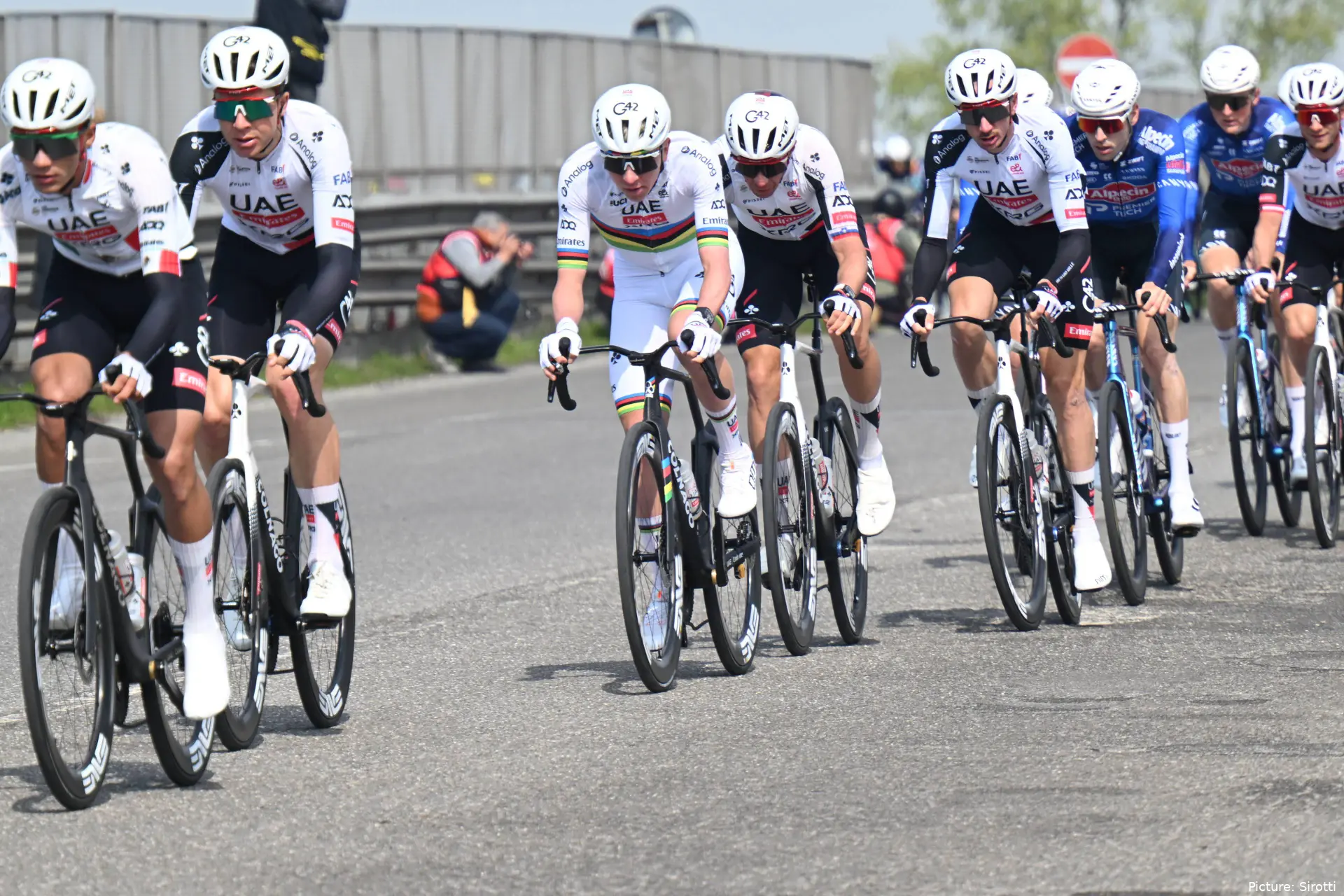
Mikkel Bjerg has revealed the extraordinary power figures required to control races for UAE Team Emirates - XRG, recalling an effort at the Tour of Flanders that saw him average almost 400 watts for an hour and a half. Yet for the Danish rider, who regularly spends hours at the front of the peloton on behalf of Tadej Pogacar and his teammates, there was still a hint of disappointment about falling just short of that particular milestone.
"At the Tour of Flanders, I spent an hour and a half averaging just under 400 watts," Bjerg revealed on Eurosport's Radio Tour. "It's a bit of a shame I didn't quite break that barrier. I think that would have been pretty impressive."
And the 27-year-old is accustomed to producing remarkable numbers over extended periods. "Otherwise, it's usually around 370-380 watts," he continued. "But you can keep that up for a long time, especially when you're as heavy as I am."
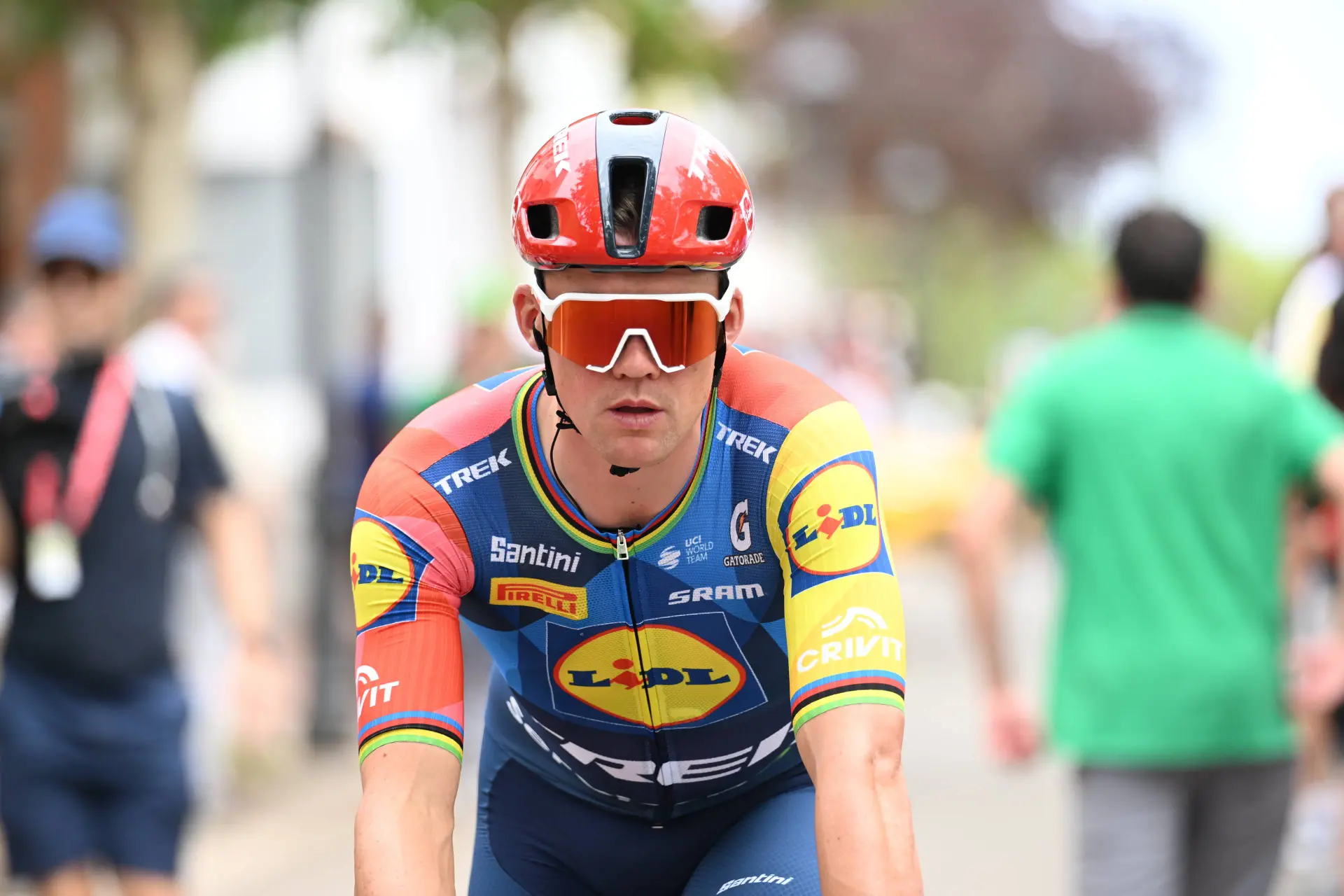
Bjerg's reputation as a powerful rider was established long before his arrival at UAE in 2020. He won three consecutive under-23 world time trial titles between 2017 and 2019, before claiming his first individual WorldTour victory against the clock at the 2023 Criterium du Dauphine. His fourth place at the 2024 Tour of Flanders also demonstrated his ability to translate that strength into results on the cobbles.
His individual opportunities have increasingly taken a back seat to his responsibilities within UAE's formidable squad. While Pogacar regularly makes the headlines with his attacks in the decisive kilometres, Bjerg is among those entrusted with controlling the race long before the Slovenian makes his move.
Why Bjerg prefers to start working before the breakaway gets too far
Bjerg prefers to begin controlling the breakaway early rather than allow it to build a substantial advantage, maintaining an effort he can sustain without exhausting himself before the decisive kilometres.
"If you've got five riders with specific jobs to do, you might use one or two of them to control the breakaway," he explained. "I just know that, for me, it's much easier to say: OK, I'll start riding on the front early. Then you're riding in something like an LT1 power zone, where you can keep going for a really long time without blowing up."
That preference has developed in contrast to the more traditional method of allowing the breakaway several minutes before beginning a much harder pursuit. "In the past, you'd give them five minutes, ride the first half of the race really easily, and then go full gas in the second half," Bjerg recalled. "You'd be riding at something like threshold and really trying to open things up."
With several teammates often assigned specific responsibilities later in the race, UAE can benefit from having one powerful rider shoulder much of the early workload. "It's more economical for the team," Bjerg said. "You can use one rider on the front instead of two."
The Dane's ability to perform that role has remained important despite a disrupted 2026 campaign. Fractures suffered in a crash involving a kangaroo at January's Tour Down Under interrupted his preparation for the spring Classics, but he returned to competition in March and subsequently completed the Giro d'Italia, where he again worked in support of UAE's wider objectives.
Read also
Why shorter races can present a bigger problem than the Tour of Flanders
Despite the enormous effort he recalled from Flanders, Bjerg believes the length of cycling's biggest one-day races can actually make controlling a breakaway more straightforward.
"I've ridden on the front at Flanders. It's a bit easier because the race is so long," he explained. "It's the same at a World Championships. When a race is that long, the breakaway will eventually come back because of the distance and because they're riding so hard behind."
Shorter sprint stages can prove more troublesome, with breakaway riders capable of maintaining their efforts much closer to the finish. "It's more those 180-kilometre sprint stages where everyone is strong for three or four hours, but the final 25 minutes are hard," Bjerg said.
For Bjerg, spending several hours on the front can mean having little left when the favourites begin fighting for victory. "It's quite easy for a rider to say: OK, I'm going to spend three hours of this race doing this. And after that, you've done what you can for the team."
There is also a difference between emptying himself during a Monument and doing the same on a stage of a Grand Tour. In a one-day race, a domestique who has completed his work can abandon. During a three-week race, he must still reach the finish within the time limit and recover sufficiently to race again the following day.
"In some races, you can abandon, whereas in others it's a stage race and you have to keep going," Bjerg explained.
At this year's Giro d'Italia, Bjerg had to manage precisely that balance, completing the three weeks while also finding enough energy to finish eighth in the stage 10 time trial. For a rider accustomed to spending hours controlling the peloton, opportunities to ride for his own result are comparatively rare.
Kieran WoodDeputy Editor-in-Chief
Kieran Wood is a sports journalist based in Wales and has been active in journalism since 2022. He regularly contributes to DartsNews.com and CyclingUpToDate.com, where he covers professional cycling and darts. In cycling, his work includes liveblogs from major races, including the Tour de France, the Giro d’Italia, and La Vuelta a España, alongside race reports and analysis. He has also conducted interviews with professional riders.
His reporting spans the full racing calendar, from one-day classics to stage races, with a focus on accurate, real-time coverage and clear contextual analysis. For statistics, results, and historical context, he regularly uses resources such as ProCyclingStats. To support reporting on rider activity and training context where relevant, he also references Strava.
In his work, Kieran places strong emphasis on careful sourcing, editorial accuracy, and updating articles as new, verified information becomes available.
claps 3visitors 2
Just in


Popular news

Latest comments
- A mindset that reminds me of Tim Declerq. I loved watching that guy just pound away the kilometers, hours at the front, holding an entire breakaway in check on his own. Bjerg seems like a similar guy. Curling, the team sport.RidesHills04-11-2026
- He will be lol, but he can still win on the climbs hahaawp04-11-2026
- I would love to have his inconsistency. How many wins this year? 2 TdF stages, a WC, a Euro championship, San Sebastian, multiple wins early year. Monument podiums. I'd take it. I don't think he has a chance in the TdF, but he is still amazing.mij04-11-2026
- He's not going to win the TdF. Maybe if they make every single stage a TT he could win. But I still believe Tadej would just sharpen his TT skills and win.mij04-11-2026
- You beat me to it. Should he make a full recovery (likely) and go light early in the year. One, two, three. Don't ask me, I don't give a damn. Should he be on a Feel-Like-He's-Fixin'-to-Die High.Yepperoni04-11-2026
- The deciding factor may be the (TBD) number of (any type of) kilometers without Pogacar.Yepperoni04-11-2026
- Unexplained chronic fatigue is an all too common bitch. The hard to find definitive answer may lie buried in gut mechanisms. A mystery of the deep.Yepperoni04-11-2026
- It's weird to say Evenepoel would be making a "serious mistake by adding the 2027 Giro d'Italia to his calendar, warning that such a decision could even be interpreted as a lack of confidence in his ability to win the Tour de France." It may well be a mistake but with so many commentators (of all sorts) continuously claiming almost everything Remco does as being a mistake, almost nobody should care what the pundits and the disparagers should say. His team may not want him to do the Giro, and that matters. But it's possibly or probably up to Remco to decide and it may not have to be decided on until a month or so ahead of the race. Yes , Remco is inconsistent much like the majority of the best riders but he's enjoying a period of not having been recently injured (or sick). Whatever he does he need not be concerned with critics who will second guess any perceived failure no matter what. I suspect he will have enough other races on his schedule so he won't be considering it. But the worst reason to not race it is because of what some will say - humorous that be.Yepperoni04-11-2026
- I'll say clean sweep all grand tourZamorano04-11-2026
- And the place he calls home is in Slovenia with his parents.RidesHills04-11-2026
Loading
1 Comments