"Most criticized third place ever": Patrick Lefevere defends Remco Evenepoel and questions modern racing trends
Cycling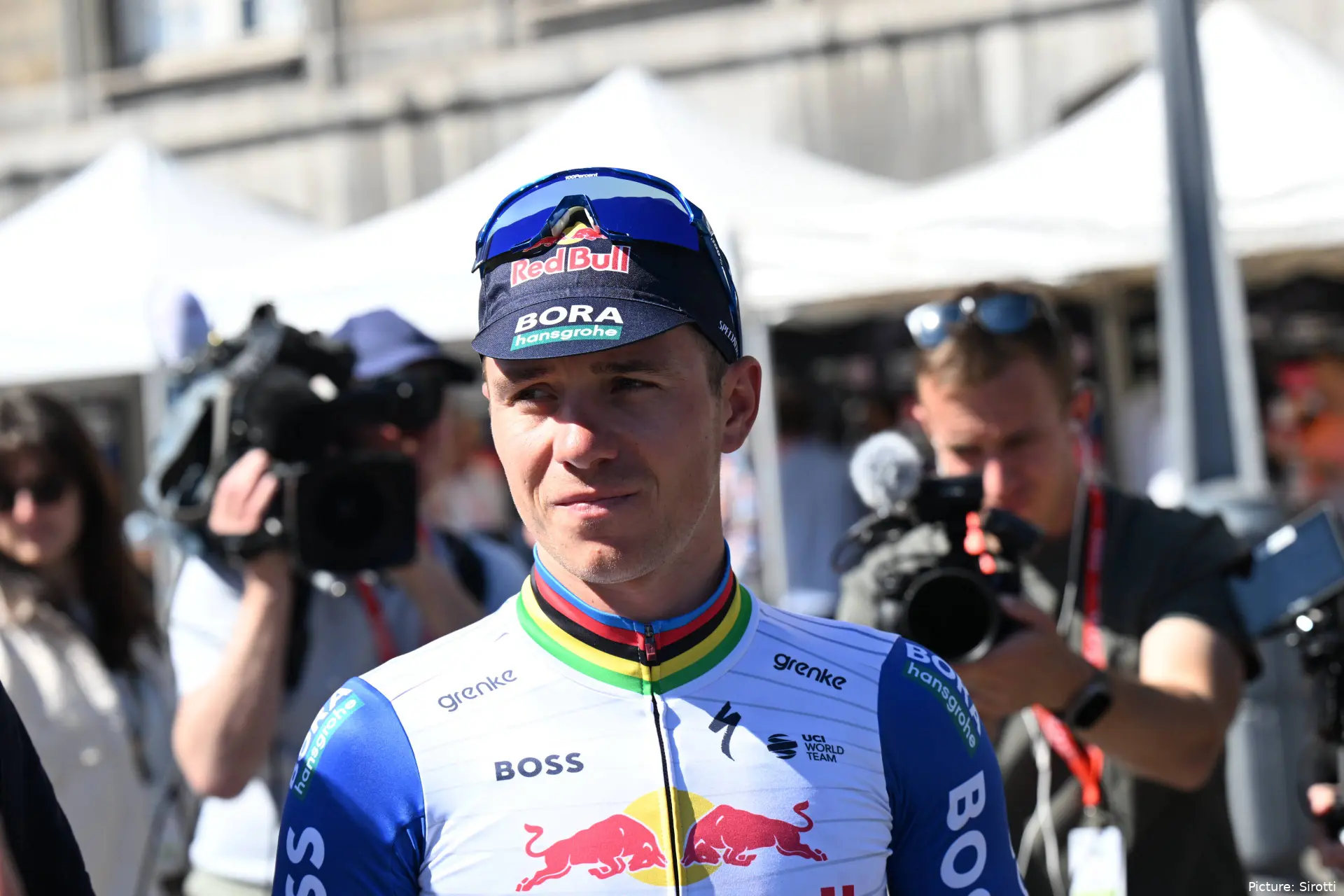
Despite securing a podium spot at Liege-Bastogne-Liege, Remco Evenepoel has faced intense scrutiny for being unable to match the blistering pace of Tadej Pogacar and Paul Seixas. Patrick Lefevere, his former team boss at Soudal Quick-Step, has stepped up to defend his former protégé while taking aim at the modern peloton's obsession with altitude camps over actual racing.
A successful Monument podium
Writing in his column for the Belgian newspaper Het Nieuwsblad, Lefevere was quick to point out the absurdity of the negative reactions surrounding Evenepoel's performance.
"Remco Evenepoel is once again a record richer: the most criticism ever after a third place in Liège-Bastogne-Liège," Lefevere began. "What you read is unbelievable. I am the first to be demanding, but a podium in a Monument, behind phenoms like Pogacar and Seixas, still counts as a successful report card in my book."
While Lefevere acknowledged that Evenepoel was dropped and didn't look his best on La Redoute, he stressed that history will only remember the final result. He pointed out the hypocrisy of critics who usually claim "only the result matters," yet still find a way to complain when Evenepoel secures a Monument podium.
Analyzing why the Belgian star couldn't match the explosive accelerations of his rivals, Lefevere pointed to two potential factors: weight and race days.
First, he speculated that Evenepoel might currently be carrying a bit more weight than he will be during his peak condition for the Tour de France. While he noted that Pogacar also seems to carry a little extra bulk in the spring, Lefevere suggested that "perhaps weight has a greater impact on Remco than on Pogacar."
Secondly, Lefevere highlighted a massive discrepancy in freshness. While Pogacar arrived at Liège-Bastogne-Liège with just 4 race days in his legs, Evenepoel arrived with 24 race days. "I make that observation not to question his season buildup, but freshness is not a detail in racing," Lefevere stated. "Let us, above all, be happy with a rider who still actually wants to race so much."

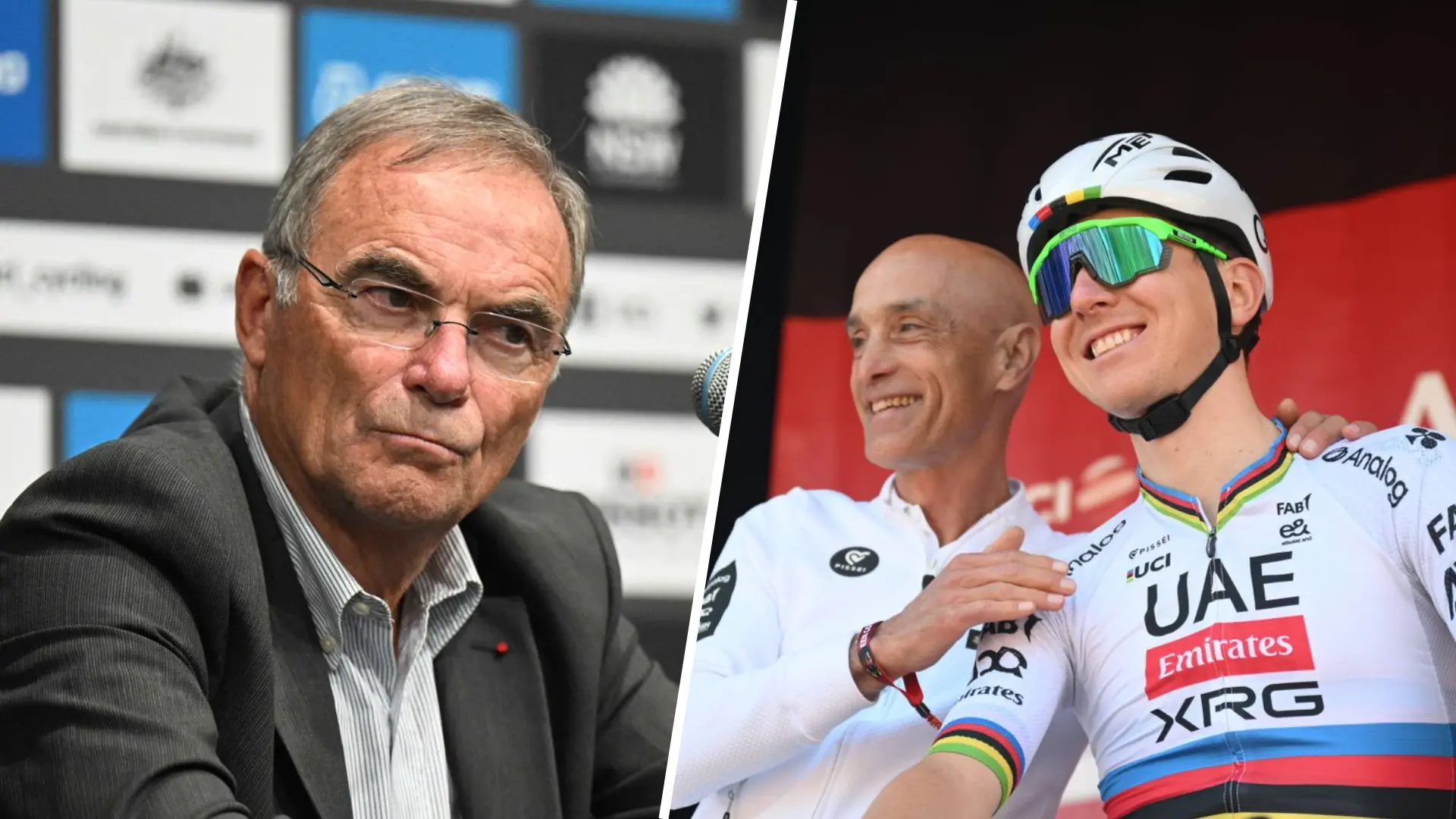
Tadej Pogacar and Remco Evenepoel at the 2026 Liêge-Bastogne-Liège podium
Altitude camps and a disappearing peloton
This contrast in race days led the former team boss to a broader critique of the modern WorldTour calendar. As of early May, the sport's absolute biggest stars barely race outside of their main targets: Pogacar had 11 race days, Van der Poel had 13 and Vingegaard had 15.
While Lefevere understands that sponsors are perfectly happy with this incredible win rate from the "Big Three," he worries about the precedent it sets for the rest of the peloton. Riders are increasingly substituting race days for extended altitude training camps, effectively treating the actual races as brief interludes between training blocks on volcanoes.
"I know that altitude camps work, but sometimes races now seem like intermezzos between two of those camps," Lefevere questioned. "I wonder: does a sprinter really need to go on an altitude camp? Certainly not twice a season."
Reflecting on his own era, Lefevere recalled a time when riders were capped at a maximum of 85 race days per year to prevent burnout. Looking at today's disappearing peloton, he offered a radical counter-proposal. "Maybe it's not a bad idea to introduce a lower limit. That Pogacar and Van der Poel limit themselves to the big appointments, fair enough. But for many other riders I think: 'could you perhaps race a little more?'"
Read also
Félix SernaCycling Journalist
Félix Serna is a writer at CyclingUpToDate and has been part of the team since 2025. He covers professional cycling across both the men’s and women’s calendars, with a focus on UCI rankings, race developments, and rider performance. His work includes interview-based reports, liveblogs, and tournament coverage designed to provide clear, accurate context throughout the season.
In his reporting, Félix regularly uses ProCyclingStats for results, statistics, and historical reference. He places strong emphasis on careful sourcing, editorial accuracy, and updating articles promptly when new, verified information becomes available. He holds a bachelor’s degree in International Studies.
claps 0visitors 0
Just in
Popular news
Latest comments
- Yes. It's like one step forward, three steps back.
 santiagobenites15-10-2026
 - Pure fantasy!Lozza15-10-2026
- yeah and the headline of the next article for me to read on this site is: "Picnic PostNL release statement after explosive investigation - Allegations of fear culture and 'dictatorship' emerge" I wouldn't hold anything against a rider that does not excel and/or quits that team. everything written about them is that of a cancer for years. I hope he gets some results. seems like an easy decision to give him a chance. he is a likable guy. I hope his first win is against Dylan G.mij15-10-2026
- what race was he watching? Tadej looking less brilliant than usual? he was able to win stages for himself, others, and basically control the entire peloton with his strength. this is a crazy comment.mij15-10-2026
- I don't have a beef with Tadej, I think he's great. But had he not crashed and had he continued to race the Vuelta and won it, I don't know if he would have been fresh enough to win Il Lombardia. Maybe and maybe not. I hope you're not as dumb as the other guy who questioned me, we can dive into data if you'd like.awp15-10-2026
- They’re ‘aving a laugh, surely! 😂Lozza15-10-2026
- Especially on a 212 km stage with 1794 m of climbing and 4 climbs in the final 60 km
 Rafionain-Glas15-10-2026
 - considering he went from not finishing stages to top 10, its pretty goodabstractengineer15-10-2026
- Nah , he lost, he could not make that upabstractengineer15-10-2026
- Its more of a teardown rather than a rebuild.abstractengineer15-10-2026
Loading
Write a comment