“It’s destroying cycling. I totally disagree with this” – Michael Matthews delivers brutal verdict on modern racing
CyclingSunday, 08 February 2026 at 09:32
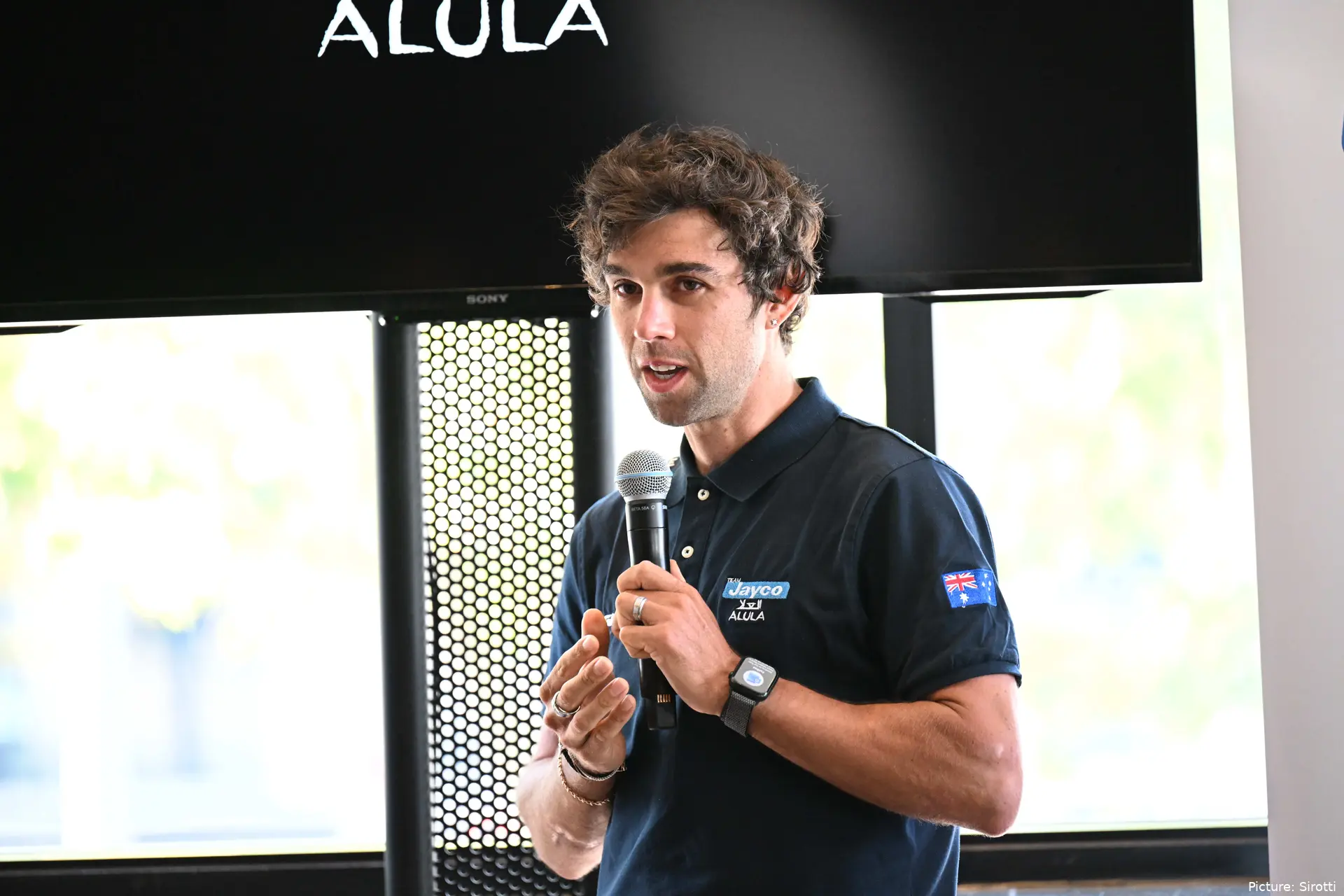
Michael Matthews is not talking about a single race, a bad sprint, or a frustrating season. He is talking about something deeper, something he believes is quietly reshaping how teams race, how riders are rewarded, and how cycling now looks to anyone trying to follow it.
Speaking on the Roadman Podcast, Matthews offered a blunt assessment of the direction the sport has taken, arguing that the incentives built into modern racing are changing behaviour in ways that are increasingly difficult to reconcile with how cycling still presents itself.
At the centre of his frustration sits the points system.
“Honestly, that’s what, for me, is really killing cycling, is these points,” Matthews said. For him, the issue extends far beyond relegation battles or calendar pressure. It is about what success now looks like inside teams, and how that success is pursued.
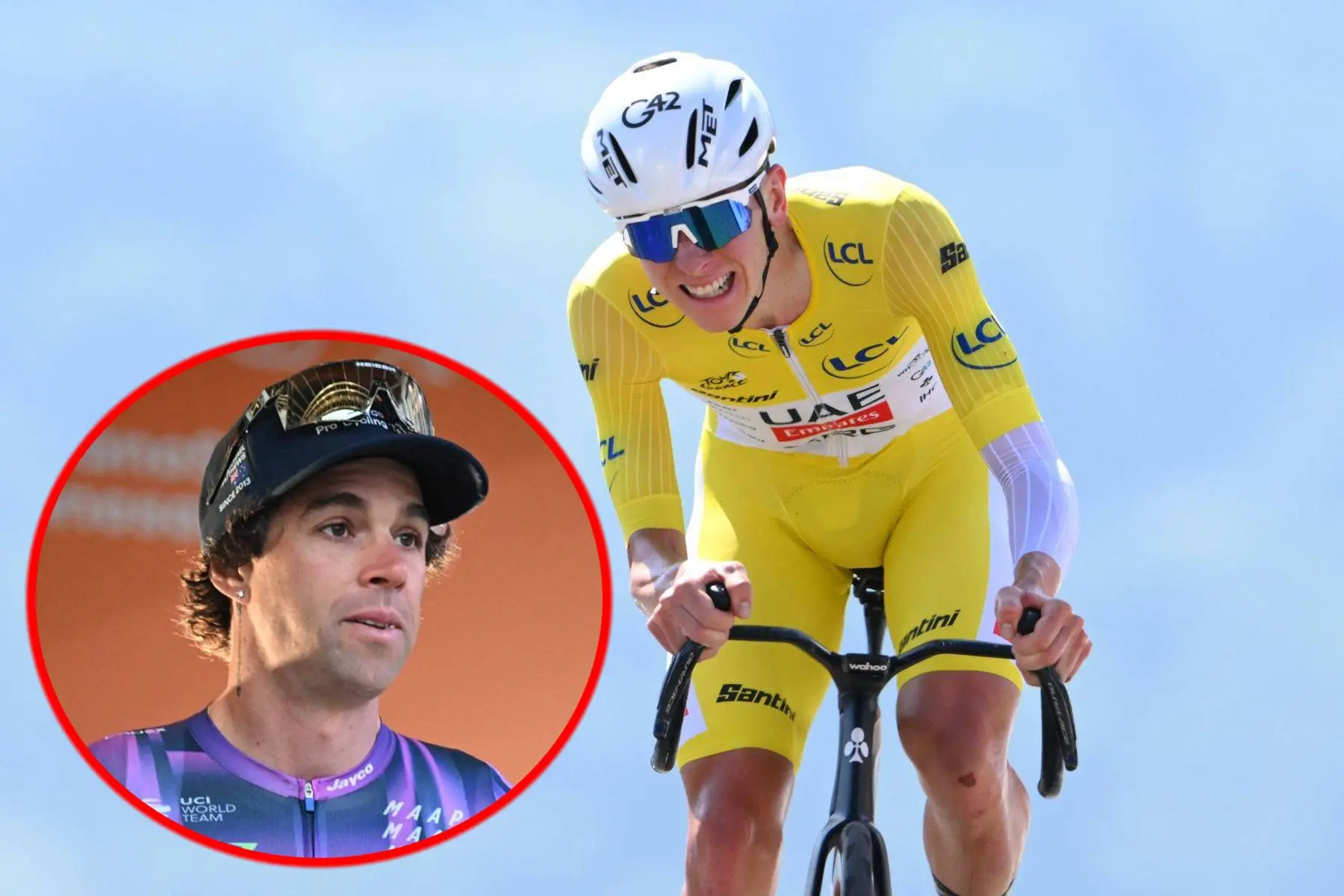
When incentives stop matching the spectacle
Matthews is careful to draw a distinction between effort and outcome. He does not suggest teams are trying less. He suggests they are being pushed to try differently. “You see so many teams now, not just Astana, but a lot of teams setting up their roster now to have as many as they can racing each other, and how does that make a team environment?” he said.
The shift, as Matthews describes it, is subtle but profound. Ambition becomes measurable through accumulation rather than intent. “Their goal now is to have as many in the top ten,” he said, outlining a version of racing where collecting places can matter as much as hunting victories.
For Matthews, the real damage is done in how that plays out for fans trying to understand the sport. “You’re trying to make fans of cycling understand that it’s a team sport, but then you see in a finish three sprinters from the same team sprinting against each other,” he said.
His conclusion is unambiguous. “For me, it’s destroying cycling. I totally disagree with this 100%.”
The criticism lands squarely within the framework overseen by the UCI, but Matthews’ concern is broader than regulation alone. It is about the erosion of shared purpose inside teams, driven by incentives that increasingly reward internal competition.
Why sprinting no longer looks like sprinting
That same shift, Matthews believes, is visible in how races themselves are decided. “These days, sprinting is not really like that anymore,” he said.
Rather than being a test of pure speed, modern sprints are increasingly shaped by survival, positioning, and who remains capable after harder and more aggressively raced days. “For me to win a sprint… I need to be the fittest guy at the finish of a harder group,” Matthews explained.
He is candid about his own limitations. “I’m not gonna win a bunch sprint, let’s say, against the Philipsens and these sorts of guys,” he said, referencing riders like Jasper Philipsen. His pathway to results now runs through attrition rather than outright pace.
Matthews also admits he has little affection left for traditional mass sprints. “I honestly just don’t really like the bunch sprints anymore,” he said. “You have to have a strong lead out… otherwise you’re just in the washing machine… and it’s just chaos.”
In his view, the disappearance of the pure sprinter is not accidental. “Everyone sort of learnt that being a pure sprinter these days is sort of a dying sort of breed,” he said, pointing to the rise of more durable sprint types and fewer straightforward sprint opportunities.
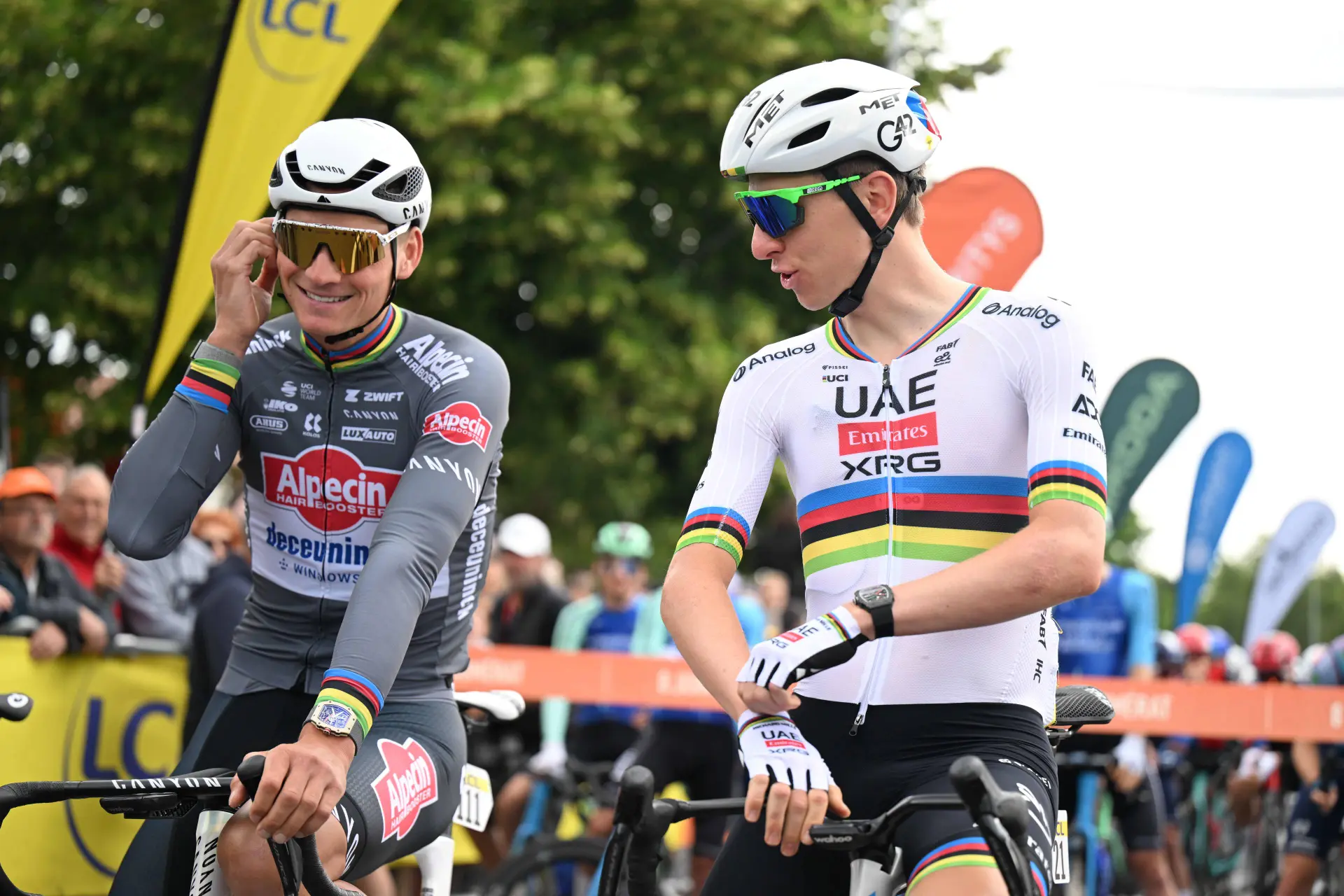
Dominance that does not need to announce itself
Beyond structure and tactics, Matthews also touched on a psychological shift that he believes now defines racing at the highest level.
Riding alongside the sport’s dominant figures brings a different kind of pressure, one that is not always expressed through attacks or accelerations. “He doesn’t even care that I’m here, so he doesn’t even consider me as a factor,” Matthews said, describing what it feels like when favourites rotate through decisive moves without even acknowledging those around them. “I’m not even gonna look at you because I don’t even consider you a threat.”
That sense of hierarchy, he suggested, is reinforced long before the flag drops. Training data shared publicly by riders such as Tadej Pogacar, Mathieu van der Poel, and Wout van Aert becomes part motivation and part message. “They use that as extra boost for themselves, but also to show the other guys, like, ‘I’m flying,’” Matthews said.
Matthews’ comments do not read as nostalgia or resistance to change. They read as an adaptation. A rider explaining how the ground beneath the peloton has shifted, and why thriving now requires a different approach, even when that approach is shaped by incentives he fundamentally disagrees with.
His verdict is stark, but it is also revealing. Modern cycling, as Matthews sees it, is not being distorted by a lack of effort or ambition. It is being reshaped by what the sport now chooses to reward, and by the quiet consequences that follow from that choice.

Kieran WoodDeputy Editor-in-Chief
Kieran Wood is a sports journalist based in Wales and has been active in journalism since 2022. He regularly contributes to DartsNews.com and CyclingUpToDate.com, where he covers professional cycling and darts. In cycling, his work includes liveblogs from major races, including the Tour de France, the Giro d’Italia, and La Vuelta a España, alongside race reports and analysis. He has also conducted interviews with professional riders.
His reporting spans the full racing calendar, from one-day classics to stage races, with a focus on accurate, real-time coverage and clear contextual analysis. For statistics, results, and historical context, he regularly uses resources such as ProCyclingStats. To support reporting on rider activity and training context where relevant, he also references Strava.
In his work, Kieran places strong emphasis on careful sourcing, editorial accuracy, and updating articles as new, verified information becomes available.
claps 20visitors 16
Just in
Popular news
Latest comments
- you are dismissed as a human being in my perspective. you literally said you can look at a video, do no research on a person, and judge them. you background might include an amazing CV, but you look at a video and admittedly say you don't need to do any research on a person to determine she is a loser. You didn't say loser, but by your comments I can't think of a better word as to how you would refer to her. that is prejudicial at a minimum, sexist and racist likely. BTW, working for a photographer vs being in a photoshoot for a 110 page style product catalog is a night and day difference. you have no idea what I value. but let me share - I value people that work hard, people that are smart, and people that open minded. you might work hard, but you certainly don't seem open minded. you seem the opposite. but mostly I value people that love one another as they love themselves. people that are good to others. my critique on Demi, and on you, is that you are not showing love. Demi loves people if they match HER description of what is good, otherwise in this case she gets judgy talking negative about a human being (Sydney) that is without a doubt talented, smart, athletic, and seemingly a good person. instead, you and Demi look at a video and ASSUME because of her looks she is a tart - your word - that I guess has what she has because of looks. But let's really get to what matters . . . why do I care so much about this? I have 3 women in my life - my wife and 2 daughters - they are more Sydney than Demi. Smart and absolutely gorgeous. You will never know, so go ahead and doubt me, but my strong defense of Sydney should tell you how I feel. I've seen all 3 dismissed as being where they are at because of looks. close minded shallow individuals like you don't recognize the amount of actual work they put into their lives. people like you just see a blonde lady (or girl) that is gorgeous and with a great body, and you make a sexist assumption.mij21-09-2026
- Happy Birthday Marlen Reusser.
 santiagobenites21-09-2026
 - Until crashing, Jacob was mine and he still did well. Another youngster with a big future. As for Remco, it’s time he took on the hour challenge. If anyone is going to break it, it’s him.Mistermaumau20-09-2026
- And we (dome more than others) all complain all the time about him doing it. Good thing there’s no website for people to complain about CUTD posters, right? Although I guess all those from CN complaining about it who came for a look early on and left must have gone back there and are now complaining about us instead.Mistermaumau20-09-2026
- About how I thought it would go but Seixas third place is astonishing.awp20-09-2026
- Bringing this thread back to your suggestion I am not in a position to criticise SS due to not having achieved enough (of the kind of things YOU would value), I will just point out it’s a pretty risky bet to make as you know even less about me than her. I’ve not let on to that much here over the years but believe me, you’d quieten down quite quickly if you knew half of it and if you actually want to, it’s not hard to organise without revealing sensitive personal information so just let me know and we can continue this in private. I had to laugh even more when I read the latest because somehow you always manage end up in situations or with questions or suggestions where you make it easier for me to reply. Amongst the many other things I’ve done in life, I had the pleasure (and misfortune) of working with or for numerous photographers (and also in an advertising agency) and what I can tell you from all those experiences is that your experience is not a given, because depending mostly on the kind of people you surround yourself with for a project like things can go from extremely badly to extremely well.Mistermaumau20-09-2026
- Love him or hate him, Remco Evenepoel is the preeminent time trialist of our generation, and that was an impressive performance. Congratulations to him on his fourth consecutive title.santiagobenites20-09-2026
- No idea who will win but seeing this and Remco and Paul and a few others should make next week extremely competitive and strategic. Teams will be working overtime on plans now.Mistermaumau20-09-2026
- Bäckstedt is a phenom, but Reusser was simply far better. On PCS they had a chart of the first 5 in comparison to each other. Of them, Reusser started tied for slowest and then sped up over the last 3/4 of the race. Fabulous!RidesHills20-09-2026
- One performance after the next sets up next weekend as a fabulous road raceRidesHills20-09-2026
Loading
12 Comments