“It will be very demanding”: Javier Guillen explains the key points of the 2026 Vuelta a Espana
Cycling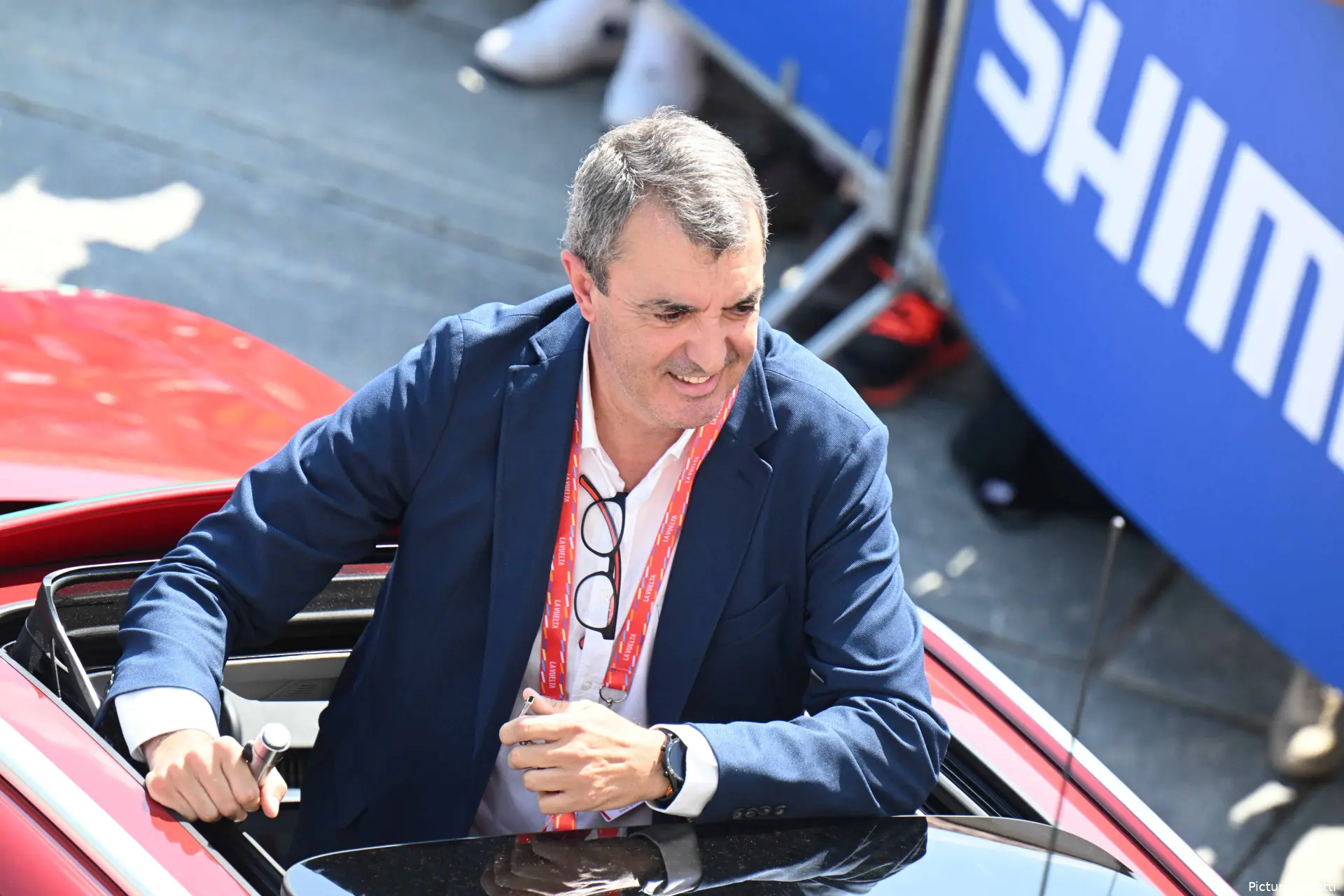
The organisers of the Vuelta a Espana unveiled the route for the 2026 edition at an event held in Monaco, presenting a race defined by physical demand, accumulated elevation gain and a structure clearly oriented towards the Mediterranean arc and the south of the Iberian Peninsula. The start outside Spain and the inclusion of less common elements reinforce the distinctive character of a route designed to wear riders down and open up sporting opportunities from different angles.
In this context, Javier Guillen, the managing director of the Spanish Grand Tour, explained to AS the criteria behind the race design, the strategic decisions taken and the balance sought between innovation, tradition and spectacle. Below are his comments, organised by theme.
Overall route and general assessment
“It is a very powerful route. From a sporting point of view it will be very demanding and, in addition, I would highlight the internationalisation of the race, as starting in Monaco gives us a lot of quality and thanks to that we will be present in four countries. The opening time trial will be good, then the second and third stages in France already have some spice and from there we head to Andorra. More mountains. The surprise this year will be the sterrato on the Castellon stage, which is an innovative element as far as La Vuelta is concerned. The Mediterranean will act as a connecting axis for much of the route and the penultimate stage will feature an unprecedented finish that many had been calling for, the Collado del Alguacil. The final flourish will be finishing in Granada, with the Alhambra as the centrepiece.”
Difficulty and accumulated elevation
“In recent years we have seen an increase in the quality of the riders and we have to compensate for that with a tougher route, to try to make things a little more difficult for riders who are prepared for everything. That said, it is always in the interests of the spectacle and, of course, while respecting the essence of our sport.”
Designing the route
“We had it very much in mind for a long time. We knew it was time to return to the Comunitat Valenciana, Murcia, Andalusia and we also wanted to be present in the eight provinces of the latter. In addition, we will have the time trial in the final week, which will add interest, and we will also fulfil a dream in Granada. Alhambra means La Roja, the race leader’s jersey, and we have to sell arguments beyond the purely sporting ones.”
Absence of the north
“The Iberian Peninsula is very large and every year we have a presence in the north. This time we wanted to finish in Andalusia, but it is also hard for us not to be in Cantabria, Galicia, the Basque Country. We always follow a rotating element and, of course, the intention is to return to those areas in 2027.”
The Vuelta finish and the role of Madrid
“First of all, I want to thank Madrid for the enthusiasm it always shows for La Vuelta and reaffirm that it is our natural finish and will continue to be so from 2027 onwards. That will not change. What happens is that from time to time we ask Madrid for the possibility of not finishing there in order to discover other race finales, always of at least the same quality. It is about refreshing the route a little and that is thanks to Madrid’s generosity.”
Heat and weather conditions
“It is a climatic element that you may encounter and in Andalusia it will obviously always be there. We go in September, whereas last time it was in the middle of August, and once we get closer to those stages we will see what measures need to be taken regarding temperatures if necessary. It will not be an obstacle.”

Guillen is the man behind the Vuelta a Espana
Classic climbs and new features
“We have tried to find a combination of innovation and tradition. In addition, there is a lot of accumulated elevation gain and they will be stages that give us a lot of options. At La Pandera, for example, we link the climb of the Valdepenas de Jaen ramp, the new Collado del Alguacil in Granada, the ascent of El Bartolo through the sterrato sector and the descent on the asphalted side.”
Debut of the sterrato
“We were looking for something attractive, straightforward and feasible, something that goes hand in hand with the competition and is not an element that could distort things excessively, but rather accompany the route. We have some bullets saved in the chamber and this was one of them to use this year.”
Kieran WoodDeputy Editor-in-Chief
Kieran Wood is a sports journalist based in Wales and has been active in journalism since 2022. He regularly contributes to DartsNews.com and CyclingUpToDate.com, where he covers professional cycling and darts. In cycling, his work includes liveblogs from major races, including the Tour de France, the Giro d’Italia, and La Vuelta a España, alongside race reports and analysis. He has also conducted interviews with professional riders.
His reporting spans the full racing calendar, from one-day classics to stage races, with a focus on accurate, real-time coverage and clear contextual analysis. For statistics, results, and historical context, he regularly uses resources such as ProCyclingStats. To support reporting on rider activity and training context where relevant, he also references Strava.
In his work, Kieran places strong emphasis on careful sourcing, editorial accuracy, and updating articles as new, verified information becomes available.
claps 0visitors 0
Just in
Popular news
Latest comments
- how it is "We’ve taken another big step forward for next year" he just lost in lombardia to a 20 year old, and two 30+ year olds. and not even top 10 for WCRR.abstractengineer19-10-2026
- This is similar to Lebron. first he said i need to consult my family , my daughter, need respectable money blah blah blah and then dont care about family , dont care about money, only onion rings, am off to Philly, very very far from family. Off season should be with family more, no?abstractengineer19-10-2026
- I hope he comes back strong for a proper battle with Tadejmij19-10-2026
- congrats to a great career and good retirement.mij19-10-2026
- Any artificial product should be reported.Any team that doesn't should be stripped of wins and fined.I know that this level of transparency does not and will never exist.All anyone can do is continue to test riders on a regular and surprise basis.If the test comes back clean then all any of us can assume is the rider is clean.
 Brucegel19-10-2026
 - Also, it's supposed to be hard to gain an advantage from drafting off Remco because he is so aero.Hills3319-10-2026
- How would stats back it up? You realise tactics involved could mean Vine saved his legs for a faster finish? Some riders can choose to go all out and fade later in the ride, others can hold steady state the whole way, and others can have a reserved start and power up later in the ride. You can't judge just by the stats unless you have power data to be able to prove Vine is riding faster even though he is putting out the same or less power (suggesting drafting). I'm sure the stats prove that Vine didn't cheat because UCI would monitor the stats to make sure this exact scenario doesn't happen (and disqualify them for drafting if the stats proved it).Pogboom19-10-2026
- Only one person would say such a thing here. Sorry to burst your bubble but I’m afraid that window of opportunity has now closed. You can beat some of the people all of the time and all of the people some of the time but you can’t beat all of the people all of the time.Jumpyjohn19-10-2026
- Both prizes are actually pathetic, almost amateur like, not even covering the cost of participatingJumpyjohn19-10-2026
- It depends on how you define doping and you would do well to give your definition so we can see how against it you are. If you consider the use (as a hypothetical example) of a new beneficial artificial product unknown to anti-doping agencies ok without considering asking them if it would constitute doping if you told them about it then we’re never going to agree on who could be or couldn’t be doping and according to what threshold, moral, statistical, legal, comparative. In football even financial doping is now consideredJumpyjohn19-10-2026
Loading
Write a comment