“It might sound like I’m bashing him a bit here, but he’s a 19-year-old kid" - Rowe details Decathlon's Paul Seixas plan as he navigates first Tour de France
Cycling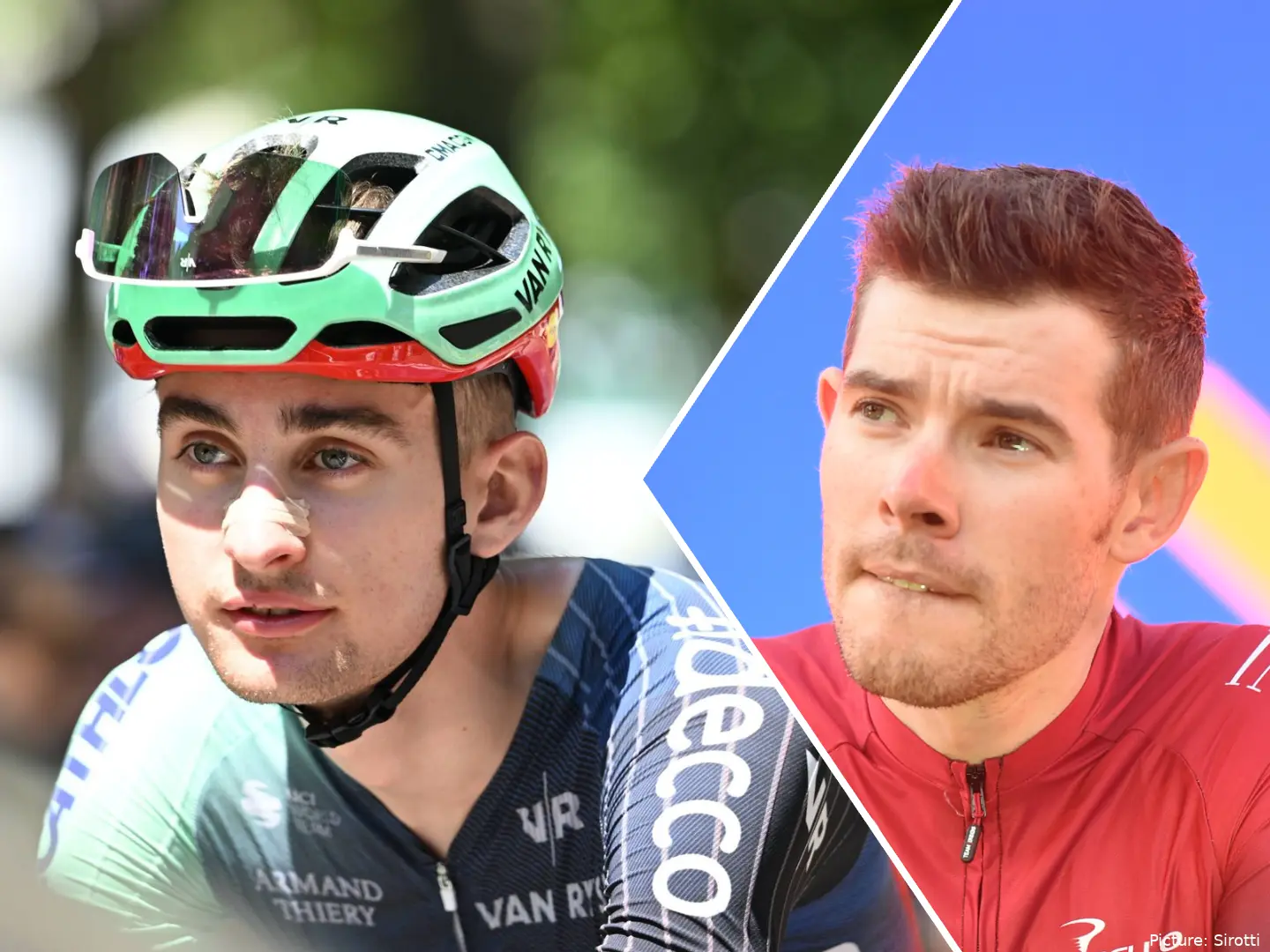
Paul Seixas' Tour de France sports director Luke Rowe has explained why fans have seen perhaps a more conservative side to the French teenager after 13 stages of the race, noting that Decathlon CMA CGM are looking at the long term rather than falling into the pitfalls of a grand tour.
The 19-year-old has enjoyed a strong Tour de France as he remains in the top ten in general classification heading into a mountain weekend, and Rowe has admitted that management have had to hold Seixas back from his usual 'panache' inspired racing as they eye a consistent GC placing.
In reality, that means sitting in the bunch on flat and hilly days as well as not taking the bait of a Tadej Pogacar attack and trying to follow. Even though the long term vision is being able to match the Slovenian's blazing attacks, Rowe is proud of their focus so far.
“You know, this guy has so much panache, charisma, passion, flamboyancy… all these words that he has so much of," Rowe told CyclingNews.
"So it's not that you want to squash that, but also if you're racing GC, a lot of days it's just about getting from A to B, being patient and conservative, which some may view as boring, but that's what it takes to ride the GC and that's what it takes to be on the podium in the Tour de France."
Seixas reaches Alps in general classification fight
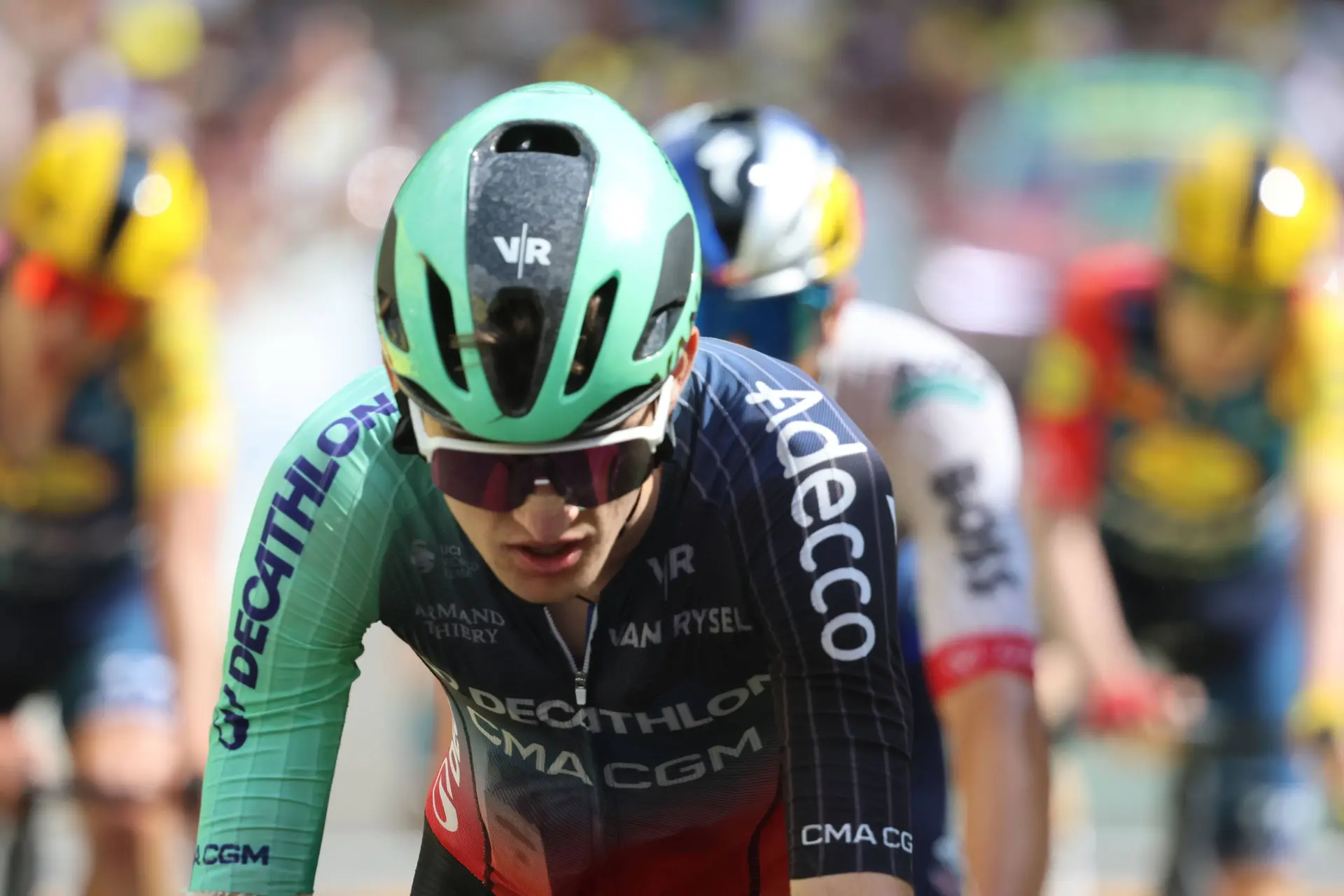
Seixas and Decathlon are on the cusp of reaching the Alps, the Tour's usual decisive period, as they sit in sixth place in general classification. He notes that real differences can be made and the race can be turned on its head in just one stage.
He added: “A lot of it is the make-up of the route of the Tour. You can lose the Tour in the Pyrenees, and in the Massif Central things can also go wrong. There are a lot of banana skin stages there, but you win or lose the Tour in the Alps.
"If you look at how brutal the last few days are, and you look at stage 20 where everything can get turned on its head, you do have to be quite conservative.”
And so, Seixas will have his time to shine. Responding to the idea that the French teenager hasn't been active in the race, Rowe noted that he was third over the legendary Col du Tourmalet in the first real open fight between the GC leaders.
“It’s not like he's done nothing. He was third over the top of the Tourmalet, there was only Vingegaard and Pogačar in front of him and he pushed all the way to the top to limit the gap and he also gapped Remco and the others," Rowe said.

Paul Seixas on stage 12
Decathlon and Seixas taking realistic approach
"So it’s not that we're doing nothing, but you just have to be realistic in the way you race.”
Realism is rooted in Decathlon's approach, and Rowe uses descending as an example of that. During early season long range attacks and classics performances, Seixas notably attacked descents aggressively and it's something Rowe took him aside to warn not to do across a 21-stage Tour de France.
“It might sound like I’m bashing him a bit here, but he’s a 19-year-old kid and he’s descending very fast the first half of the year, and I spoke to him pre-Dauphiné and I said ‘we’ve just got to kind of tone that down a bit," Rowe said.
"With 3,500 kilometres in the Tour, if you take every corner full gas, one of them is going to catch you out."
He did crash during a bunch descent at the Tour Auvergne-Rhone-Alpes in June, and Rowe sees the caution in Seixas. Noting his bike handling skills, he maintains there is a time where that skill can be useful too.
Seixas' descending can be useful tool at the right time
“Unfortunately, you know, one did catch him out in the Dauphiné [Tour Auvergne-Rhone-Alpes] and it was a learning curve. You see at this Tour de France he is a little bit more cautious. He can descend with the best.
"He's a fantastic bike handler, he's got this tool, this weapon in his arsenal, but there's a time to use it and there's a time not to use it. With maturity, with age, I think you realise when to really send it and when to relax.”
Summarising his assessment of Seixas' showing thus far, Rowe notes the approach is rooted in patience. If Pogacar attacks, he doesn't want to see the teenager get burnt in his wake - even if they plan on matching the Slovenian in the near future.
Read also
“You have to race smart. If you say to Paul, ‘when Pogačar goes, you follow’, I don’t think right here, right now he can follow Pogačar. Then he explodes and you lose more time.
"It’s ABC, it’s not rocket science but I don’t want to set him up to fail. I don't want to put too much pressure on his shoulders."
He added: “At the end of the day, he makes the decisions on the road. We try and guide him before the race and guide him on the radio. He also has to feel this and maybe there will be a day in this Tour, or in the years to come, where he can follow Pogačar. But right now, you fly too close to the sun, you get burned.”
Gavin QuinnCycling Journalist
Gavin Quinn is a cycling journalist and ultra-distance cyclist with a BA in Journalism from Dublin City University. Formerly the Press & Communications Officer for Cycling Ireland, Gavin has worked inside the national team at the World Championships and has reported for the Irish Mirror, Mirror UK, and The42.
His expertise is backed by elite-level access, having interviewed stars like Sam Bennett and Ben Healy, as well as immense personal endurance. In 2025, he completed a 12,000km solo cycle from Ireland to Vietnam, following a 4,600km tour across Europe. From the cobbles of Paris-Roubaix to the gradients of the Tourmalet, Gavin’s writing focuses on the "romance and brutality" of the sport. Having visited 50+ countries, he brings a global, cultural perspective to his coverage of the pro peloton for CyclingUpToDate.
claps 2visitors 2
Just in
Popular news
Latest comments
- UAE was really badly positioned at the last climb, and Ineos did a great job of making that happen at the bottom. That must have affected del Toro and the rest. His attack wasn't spectacular, and they hadn't ripped apart the bunch enough, letting a large group remain in back to reel him in. UAW lost the race on the road to the climb and the bottom third of it, I think.RidesHills08-10-2026
- He won in exactly the same way as others. By being the fastest to complete the stages.mobk08-10-2026
- Very surprised del toro couldn't beat everyone here against lesser competition. He's well on his way to being top 5 in the worldbruins3008-10-2026
- Being the best rider left in the race is pretty much the only way to win in any edition, surely? Seems reductive to say "they only won because the entire peloton wasn't as absolutely stacked as it could've been" - you can only beat who is in front of you.wrsty08-10-2026
- I’m sorry but generally the coverage on your site is first class but this incident highlights something I just don’t get with cycling journalism. This accident should never have been allowed to happen, it comes uncomfortably close to the Finlay Tarling tragedy and two other incidents took place within days of this. I checked all of the cycling websites and you all put out basically the same story. Pidcock gave journalists the perfect opening to blow this sky high, what has the UCI got to say? What is Adam Hansen doing? What do the organisers say? Nothing, you all trot out the same easy quotes taken from Pidcocks interview after the race but do nothing to follow it up. I see it time and time again, journalists taking the easy way out but being outraged when it happens again as it surely will. Riders can’t do this but journalists should be independent and should be able to raise these uncomfortable questions but cyclinguptodate and every other on line publication prefer to take the easy way out. That’s the real tragedy here.Paul53108-10-2026
- Happy to help :-)Mistermaumau08-10-2026
- Well, ok but, it’s also a structural, team, budgeting, direction and all sorts of other issueMistermaumau08-10-2026
- I wouldn’t call it an analogy but maybe his criticism is a little unfair. On the other hand, the fact Cicco made a public affair out of it despite having received all the explanations and proof makes me feel he now deserves being criticised for not accepting there is nothing to discuss.Mistermaumau08-10-2026
- Much as I like him (one of my favourites), I do want to attract a little attention to the coincidence of his recent performances in the current context. Not the first time a rider improves noticeably when there’s a job interview to prepare. In the same lighthearted humour of his, i hope the UCI will let him wear it at home as the rules quite strictly state you can only wear it during participation in the discipline you won in, and we all know how capable they are of interpreting rule interpretation ;-) Also, if it’s going to be retirement (please not), I wouldn’t call that an agreement as somebody will probably feel they didn’t get what they wanted.Mistermaumau08-10-2026
- Agreed. There used to be a team willing to pay though. I take all these figures (that vary enormously according to who is publishing) with handfuls of salt. We don’t know how salaries are treated (especially between a UK employer and Andorran resident), we don’t know how numbers are derived and from where, if deductions have been taken into consideration, etc. but if he returns to Colombia, he’s going to need quite a bit in protection money.Mistermaumau08-10-2026
Loading
Write a comment