"Improving their FTP doesn't necessarily mean they ride faster": UAE Gen Z coach emphasizes the extra layers of work with young talents
Cycling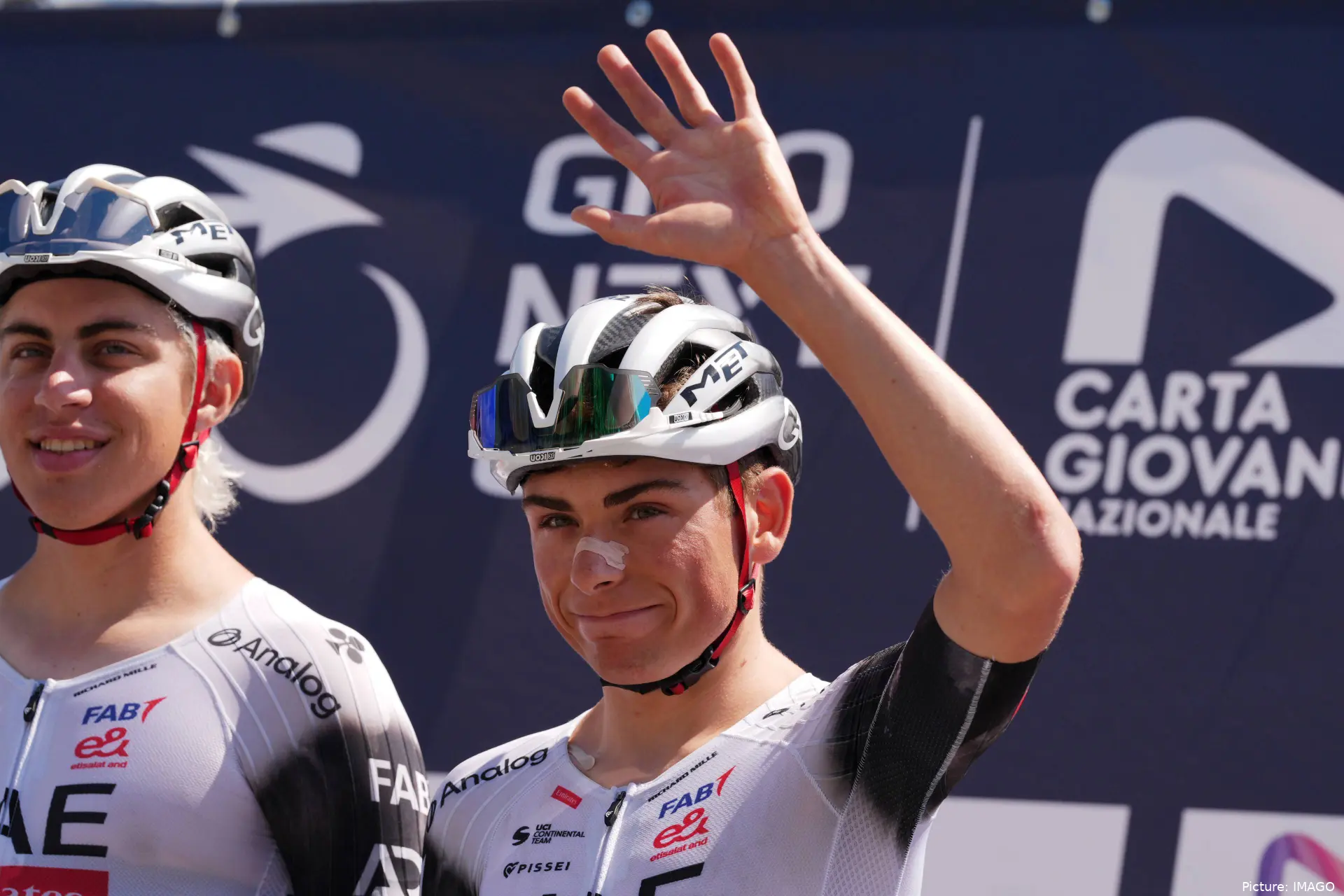
The UAE Team Emirates - XRG have been in the spotlight more often than any other team in 2025, winning 97 professional races, enough to comfortably break the previous records. But a bit away from the main ruckus, the team is also working on development of its next generation of stars within the "Gen Z" structure. Already last year, we have seen the climbing supertalent Pablo Torres promoted to the main team and for 2026, he'll be followed by compatriot Adria Pericas.
And when we look at the accomplishments of some of the riders of 2026 lineup of Gen Z, it's clear that the likes of Mateo Ramírez, Luca Giaimi or Davide Stella have a bright future ahead of them. But it's not only about polishing rough diamonds for the Gen Z staff as there are multiple layers to each rider that need to be uncovered gradually, step by step.
"Generally speaking, although I'm a trainer and therefore used to working a lot with numbers, acronyms, and data, when I do these debriefings I talk a lot," Giacomo Notari, the head coach of UAE Gen Z tells bici.pro about his work at the pre-season training camp where new batch of riders mixes with the staying members of the team.
His approach is different with the new arrivees and "old" riders. For the latter, the focus is on further improving of their abilities. "I try to understand what they expect from themselves, what they think they did well, and where they feel they need to improve. Not what they did wrong, but where they believe they can improve."
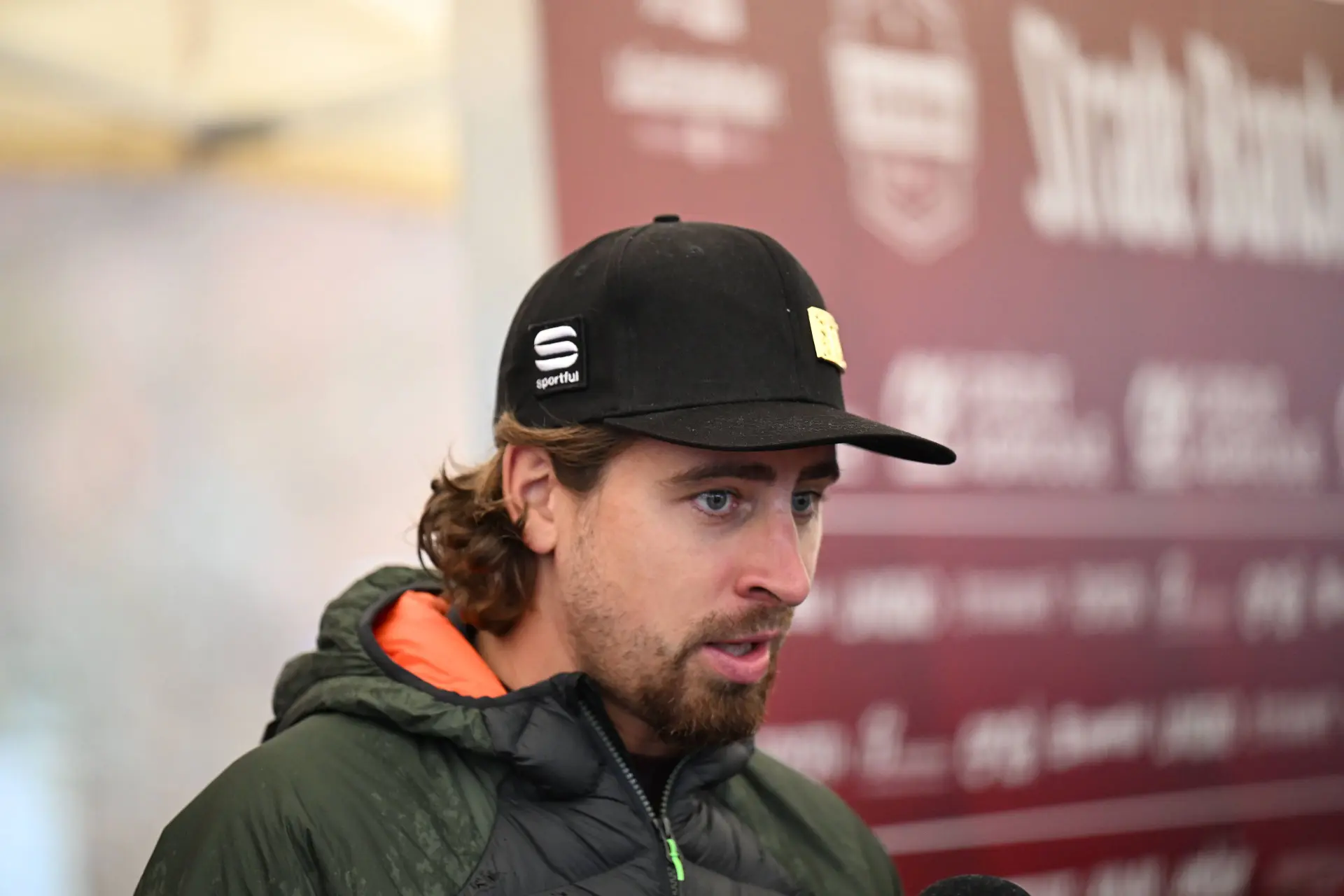
"With new riders, I try to understand what kind of riders they think they are, to get an idea. Afterward, having the data, you can understand something, but it's also important to know their self-image, because they're still in a phase where things can change."
There's more than plain numbers to winning bike races
What Notari emphesizes is that cycling is not just a simple contest of whoever can put out the best power values in a race. Yes, sometimes it can be so, but racing instinct, tactics and other qualities also come into the play more than often.
"I model it more like a dialogue, even a psychological one: we focus on the numbers, but in a race, the one with the highest wattage doesn't (always) win. Since it's a situational sport, knowing how to stay on the wheel, taking position, reading the race, and understanding when the right moment is important."
But you can afford to put aside a bit of thinking and add more ciclismo to your repertoir when you can push values such as the likes of Tadej Pogacar. "Then, of course, you also look at the numbers a little. Of course, but improving their FTP doesn't necessarily mean they rode faster than the previous year."
"The best performances tend to occur when they're fresh, while in a race, winning moves come from fatigue," he points out. "That is why we sometimes do tests under fatigue. My goal is to improve durability: to arrive less tired at the end."
Read also

Ondrej ZhasilCycling Journalist
Ondřej Zhasil is a cycling journalist at CyclingUpToDate and has been part of the team since 2023. He is based in Ostrava, the third-largest city in the Czech Republic, and covers professional cycling across the main UCI competitions, including the Tour de France, the Giro d’Italia, and La Vuelta a España. A key focus of his work is startlist analysis and pre-race coverage, where he examines team selections, rider line-ups, and tactical scenarios ahead of major events.
Alongside WorldTour coverage, Ondřej has developed specific expertise in junior cycling and in racing across East Asia, including competitions in China and Japan. He also maintains a broad working knowledge of other disciplines and levels, including cyclocross, while continuing to expand his understanding of mountain bike racing.
Ondřej holds a bachelor’s degree in Mathematics and Physics, which supports his analytical, data-driven approach to performance and race analysis. In his reporting, he regularly uses ProCyclingStats for results, statistics, and historical context. He places strong emphasis on careful sourcing, editorial accuracy, and updating articles promptly when new, verified information becomes available.
claps 3visitors 3
Just in
Popular news
Latest comments
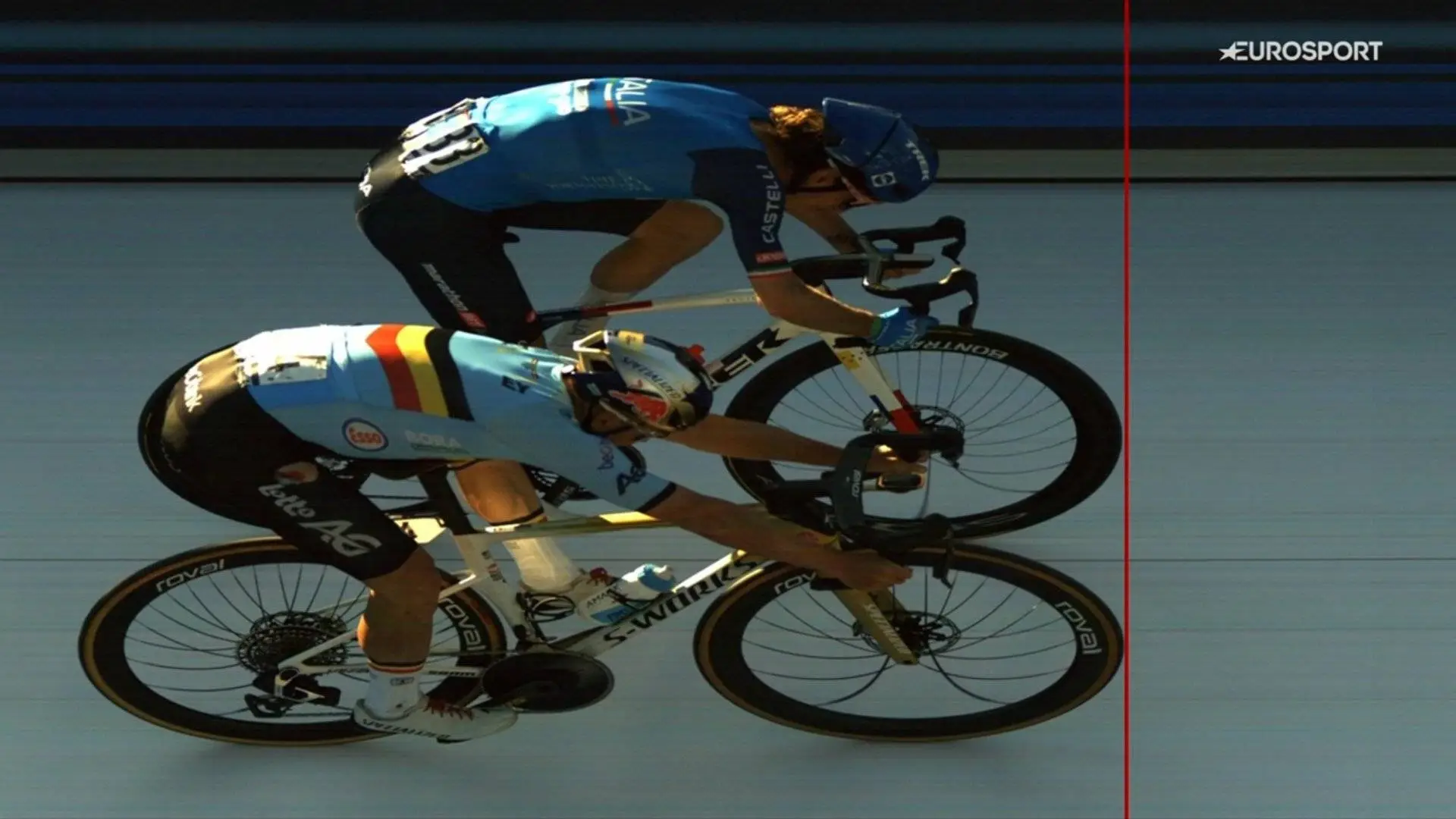
- I’d like to see the actual photo finish with the black (not white) line which they use to determine the winner. Ciccone’s photo sure does make it look questionable, but it doesn’t show the following… Which, from what I understand, it is the ‘9 o’clock’ of the wheel, crossing the black line first, which is used to determine the winner.anonymouscyclist05-10-2026
- I think Pogačar is going to have a really hard time becoming Belgian road champion. I mean, nothing seems impossible with the guy, but still. Kidding aside, this is honestly an incredible set of achievements. It's not the usual set of cycling achievements in terms of specific races, but seriously, all the championships he can, in road and TT?! And he's how young? That's really remarkable. Congratulations, Remco Evenepoel!RidesHills05-10-2026
- if you consult the second picture in ciccone's instagram post, which seems to show the actual finish line in top view, it rather looks like a ciccone win! if they do not retract their decision pro remco only, they loose the least bit of credibility they still have. you can argue about how to make racing safer, but you can't argue about a decision that completely lacks proof. they don't even share how far away from the real finish the image was taken. if they would, every 2nd semester physics bsc student would be able to simulate how many cm the delayed bike throw of ciccone would have resulted in. and we are not even talking cm or mm here! shame on the uci (is it uci or a europe specific association?) for their lack of transparancy!Ketterechts05-10-2026
- Interesting you claim Visma isn't a top 3 team anyomore yet their UCI rank is ...#3. Lidl Trek is only #5. Visma has 2 riders in the top 10, Lidl Treks top rider, Pederson is 16th. Their big Grand Tour signing, Ayuso is ranked 38th and has been a bust so far.GB05-10-2026
- Yes, it's fairer that way. A bit like Adam Bradać and Dušan Rajović in Poreć the other day, when they both were declared winners. As I said on the other thread, the uncertainty of the finish line - and the red line may not be on the right part finish line - is much more than that non-existent winning margin. But if they show the finish line here, they have to fo it everywhere and we know the problem there
 Rafionain-Glas05-10-2026
 - I truly appreciate the way that Ciccone in no way takes away from Evenepoel, praises him throughout, and casts no doubt on his fellow rider. That’s character. Also, he has every right to make these demands. I thought yesterday that the photo finish was clearer than it turned out to be, and now I’m amazed that they called it when there is enough doubt. Back in the day they had ties at moments like this. I wouldn’t mind seeing two European champions in the coming year, after a race that good.RidesHills05-10-2026
- From the photo it's literally a millimetre difference. The uncertainty of the finish line is considerably moreRafionain-Glas05-10-2026
- I wasn't trying to be too critical of Remco and said he just wins and is amazing - so compliments thrown in for sure too. just speaking out loud with my other comment on his demonstrations and vocalizations. yeah, don't change for sure Remco! because he is a winner. anyone that says otherwise is sorely mistaken. the first rider to win on all continents. the double olympic gold. monuments. grand tours. the first rider to have a championship at national, euro, world and olympics in TT and road. plus how many one day races, one week races, and more. he just makes me laugh - you KNOW there is always going to be something from Remco either before or after a race. many times both. and as I'm laughing and loving the drama, I have to shake my head and think put all of that into the pedals. his Jonas critique of no balls was not only funny, but IMO true of at least that stage. if Jonas had ridden, they basically would have solidified a top 3 for each of them. then it is just who is on one step. and this years tour was beyond impressive. so many times that guy was dropped, and there he is finishing top 3 for the stage. he does not give up, he is a fighter. cycling would suck without some Remcos thrown into the mix.mij05-10-2026
- All jokes aside, I agree. But being completely honest, I love Remco and the sheer chaos he brings. He totally lights up a race. His complaints over the Vuelta Stage 1 TT lighting? Electric. His anger towards Jonas’ lack of b*lls? Hilarious. Whining about a rider’s lack of support? Pure entertainment. Some of his complaints are totally fair, others are straight-up tantrums, but either way, cycling is so much more fun with him in it. You can't deny the spark he brings. It’s personalities like his that draw us to our sport. Never change, Remco.anonymouscyclist05-10-2026
- I’m waiting for when Pidcock joins this conversation regarding Amstel Gold… his jibe in the podcast with Matt Stephens was quite telling!anonymouscyclist05-10-2026
Loading
1 Comments