"If the Giro and Vuelta were swapped it would be much better" – Tadej Pogacar proposes overhaul to cycling’s Grand Tour calendar due to weather conditions
Cycling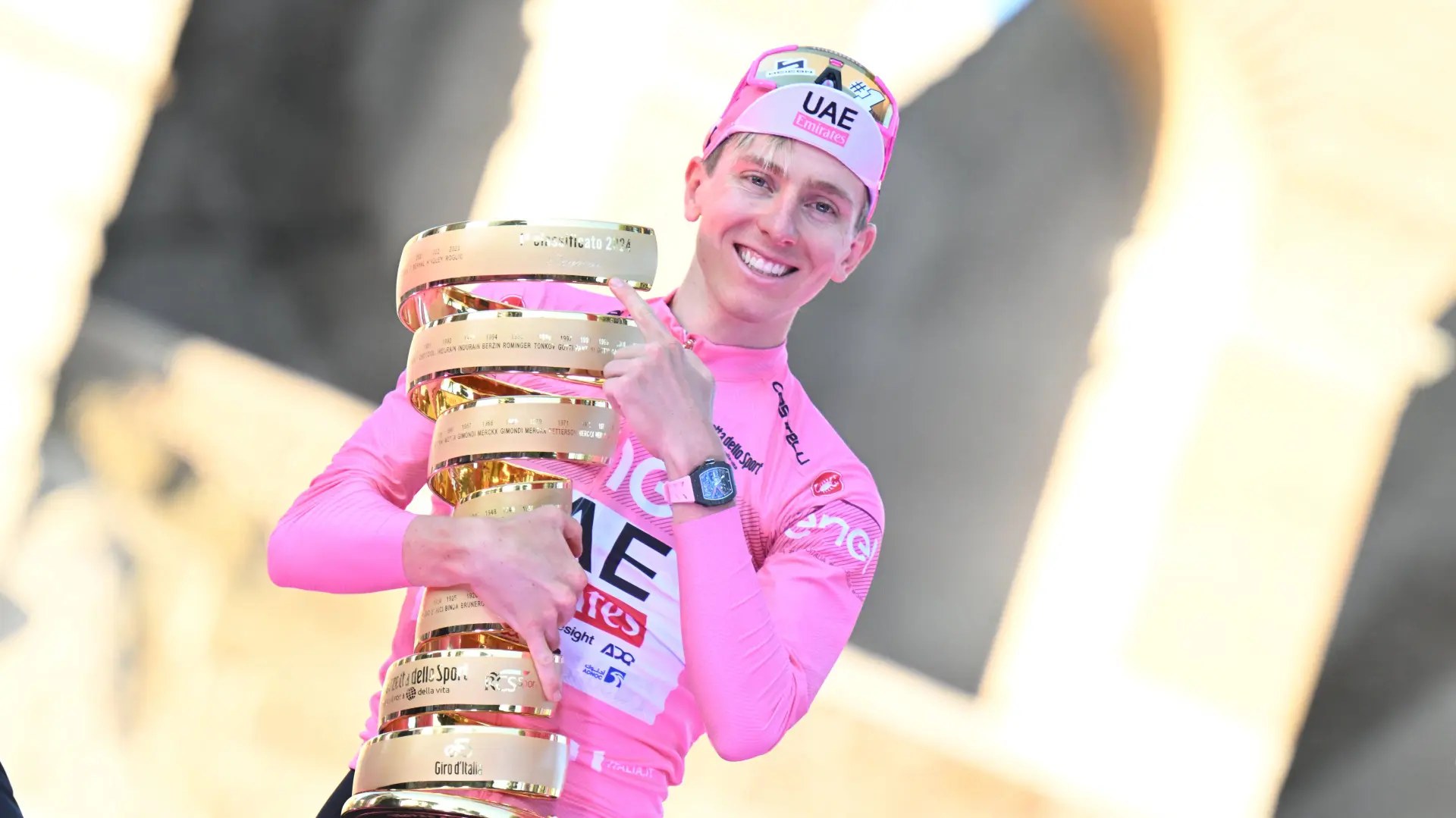
Tadej Pogacar has floated a radical idea for cycling’s Grand Tour calendar, suggesting the Giro d’Italia and Vuelta a Espana should swap places in the season to make it easier for riders to target multiple three-week races.
Speaking during UAE Team Emirates - XRG’s training camp in Gran Canaria, the Slovenian claimed, in quotes collected by AS, that long-standing calendar realities are becoming harder to ignore.
“I always say that if the Giro d’Italia and La Vuelta were swapped it would be much better, because of the weather conditions and because it would allow more riders to take part,” he admitted.
Pogacar reportedly remains keen to close “the circle” of Grand Tours by adding the Vuelta title in 2026, but the difficulty of combining two three-week races at the very top level remains a central issue.
Gran Canaria absence ‘a shame’ as Pogacar hails ‘paradise’ training base
One element of the 2026 Vuelta a Espana is already clear: Gran Canaria will not be part of the route after declining to host stages due to the presence of the former Israel Tech team in the peloton.
Pogacar described that outcome as “a shame”, given it removes the option of finishing the race on the island, but he stressed that local priorities are understandable.
He recalled that “cycling races are not the number one priority” and accepted that all sides of the debate have their reasons.
At the same time, he was emphatic about the island’s potential as both a Vuelta venue and a high-end training environment. “Gran Canaria has the potential to host three or four top-level stages for the Vuelta a Espana,” he said. “The island has everything to make riders better. It has good roads, there isn’t much traffic, and there’s good weather to enjoy. Anyone is capable of improving thanks to the conditions on this island. It’s my first time here, but it’s a good way for me to properly reset my training.”
After a short off-season break, Pogacar is back at work in Gran Canaria and will ride the TotalEnergies Gran Fondo Pico de las Nieves as part of his build-up, with one clear objective in mind: “exploring” the island. He told AS he intends to return, calling Gran Canaria “a paradise for a training base”.
Tour de France 2026, missing Monuments and Montreal Worlds
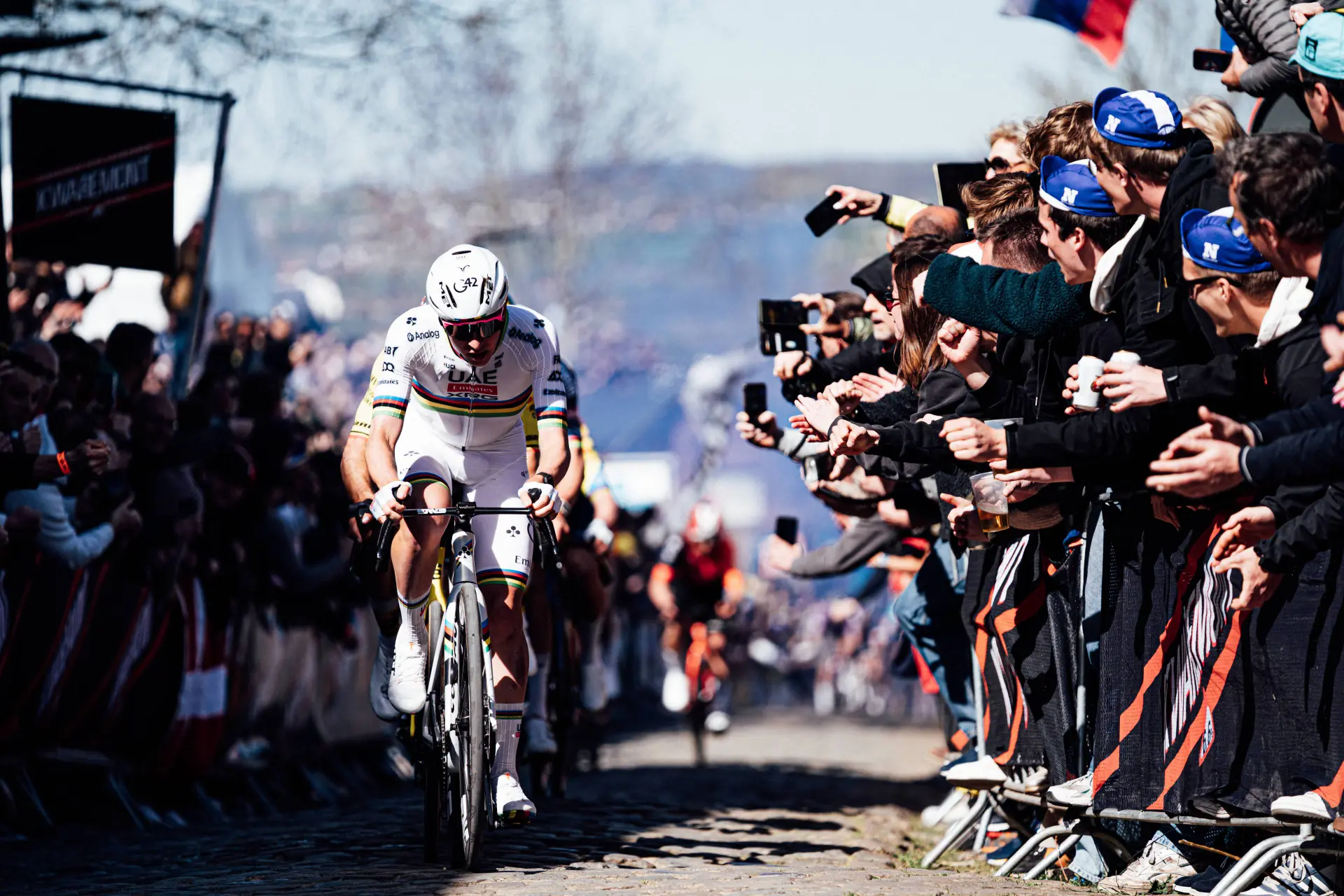
Pogacar has already taken a close look at the parcours for the Tour de France 2026, where he will again attempt to add to his haul of yellow jerseys.
He downplayed any major surprises in the route, saying it is “nothing special” in terms of changes, and underlined that it will still be three weeks of “climbs and tough stages”. What did catch his eye was the Grand Depart in Barcelona, which he described as “interesting”. “I have the Tour on the horizon, but there’s still a long way to go,” he explained.
Away from stage racing, Pogacar still has two major gaps in his palmares: Milano–Sanremo and Paris-Roubaix. He made no attempt to hide his desire to revisit both races and make up for previous disappointments.
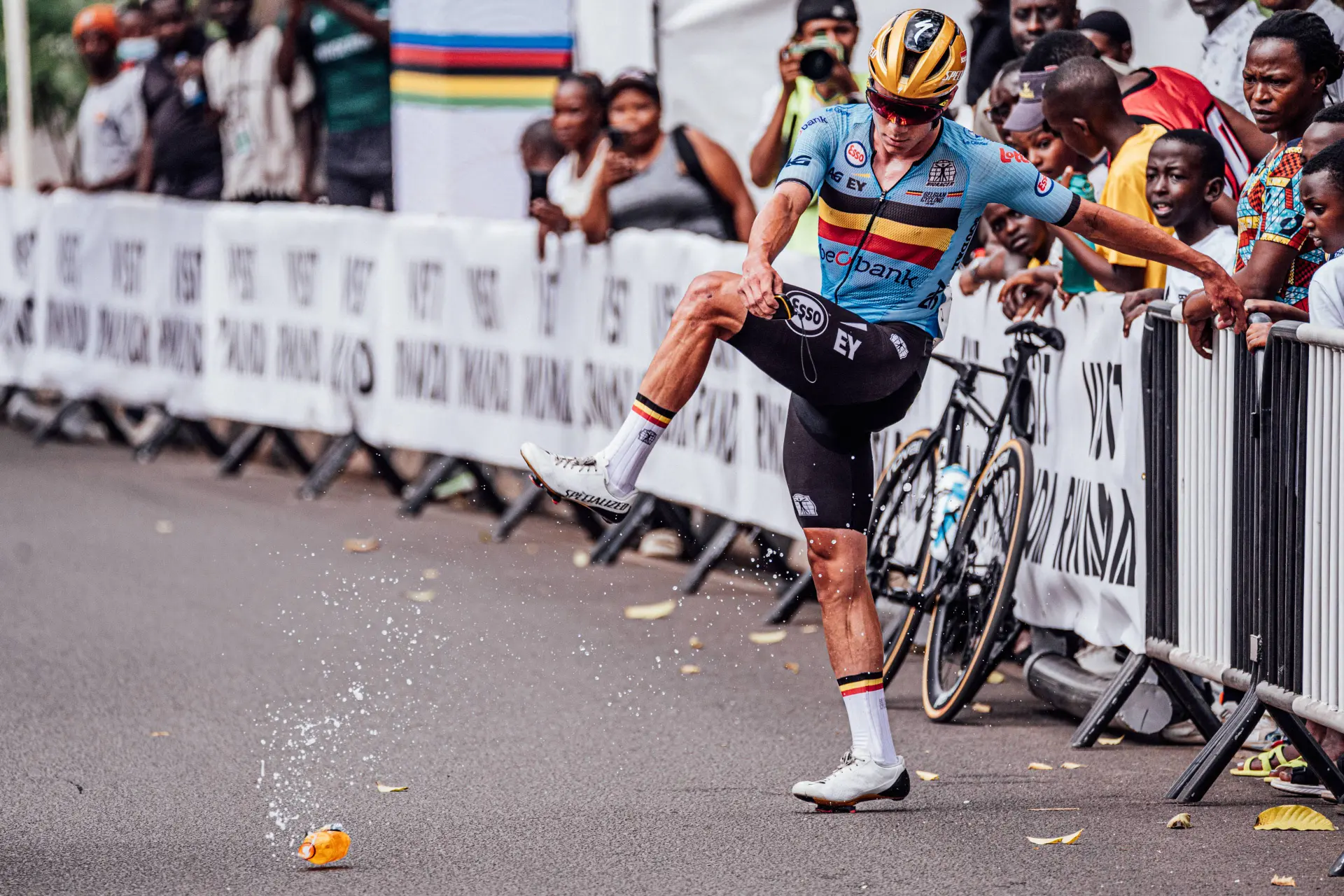
Both could see him up against Remco Evenepoel, a rider he singled out when discussing those Classics. He called the Belgian “a rival to watch and someone with a chance of winning” thanks to Evenepoel’s strong adaptation to the demands of both races.
Looking further ahead, Pogacar also has his eye on a third consecutive world title in 2026, when the UCI Road World Championships take place in Montreal. He expects the course to be “very beautiful and hard to win”, but said he will “give my best” in pursuit of another rainbow jersey.
Pressure, motivation and sidestepping Merckx comparisons
By 2026, Pogacar will already have eight seasons at the highest level behind him. Linking up successful years at that intensity, he admitted, changes how a rider approaches motivation and pressure.
“I wouldn’t say it’s harder to motivate yourself, but the pressure is different and the stress around you changes,” he said. “When you have seasons like the last one, it’s difficult to come back the next year and do better.”
That feeds directly into how he views his own standards. For Pogacar, simply doing less is not an option. “From my point of view, if I do less next season it’s a problem. You try to reach the same level and get the same results and show that you can do it again,” he said.
He also brushed aside comparisons with Eddy Merckx and debates about the historical hierarchy of the sport. On that topic, he kept it as simple as possible: “Everyone is themselves.”

Kieran WoodDeputy Editor-in-Chief
Kieran Wood is a sports journalist based in Wales and has been active in journalism since 2022. He regularly contributes to DartsNews.com and CyclingUpToDate.com, where he covers professional cycling and darts. In cycling, his work includes liveblogs from major races, including the Tour de France, the Giro d’Italia, and La Vuelta a España, alongside race reports and analysis. He has also conducted interviews with professional riders.
His reporting spans the full racing calendar, from one-day classics to stage races, with a focus on accurate, real-time coverage and clear contextual analysis. For statistics, results, and historical context, he regularly uses resources such as ProCyclingStats. To support reporting on rider activity and training context where relevant, he also references Strava.
In his work, Kieran places strong emphasis on careful sourcing, editorial accuracy, and updating articles as new, verified information becomes available.
claps 1visitors 1
Just in

Popular news
Latest comments
- Slowly, very slowly... 5-7 yrs. ;)MajorPayne13-10-2026
- Up to this point: "It is just not yet at the level of Vingegaard and Pogacar." First Jonas, and then level of Tadej. Period!MajorPayne13-10-2026
- The sport has long had a divide between the more diesel-like riders and the more explosive riders. Where does Pogačar fit? His explosive attacks are followed by a high speed diesel climb and he's rarely been caught in the past 5 years (people can name the moments, it's so rare). Seixas is young and we have no idea where his body will end up on this spectrum (just like we didn't with Pogačar when he was 20 and being a diesel up the Vuelta mountains of 2019). Speculation is fun, being a fan while it unfolds is going to be more fun.RidesHills13-10-2026
- yeah it'll be an epoch shift when Pog can't drop people, and/or when they start dropping him.wrsty13-10-2026
- Yes, he won't ride away yet, but he will and that day will be notable
 leedorney13-10-2026
 - Expect the young French rider to slowly asphyxiate the Slovenian into retirement.
 Front24213-10-2026
 - My thinking is that Pog's experience and strength would have outweighed any fatigue in Il Lombardia. But the sad thing is, we'll never see peak Pog (call it Pog 2) go head to head with Seixas. However well he recovers from his crash, he'll return as Pog 3, with the shadow of severe concussion always there.Hills3313-10-2026
- Some speculation and opinion. Had Tadej not crashed out of the Vuelta he would have been less fresh and I'm not sure he would have beaten Seixas in this race. Maybe he would have been able to contest the race in a sprint and maybe not. Believe me when I say I keep up with many of Tadej's climbing feats and records and I understand how great he is but the Paul we just saw at Il Lombardia was not that far behind Tadej.awp13-10-2026
- Firstly, someone who says parenting is babysitting is delusional and shouldn't be taken seriously. Secondly, with pro athletes it is not the same as a normal worker. They are being rewarded for doing something for which they have a talent which doesn't actually help people (besides inspiration). It's quite a different dynamic
 Rafionain-Glas12-10-2026
 - only way for him to effectively learn to microdose is to go to uae. other than that there is no reason for him to go to uae.whkman12-10-2026
Loading
Write a comment