“I thought that road looked like the one where I crashed” - Jonas Vingegaard puts old ghosts to bed with dominant Paris-Nice solo
Cycling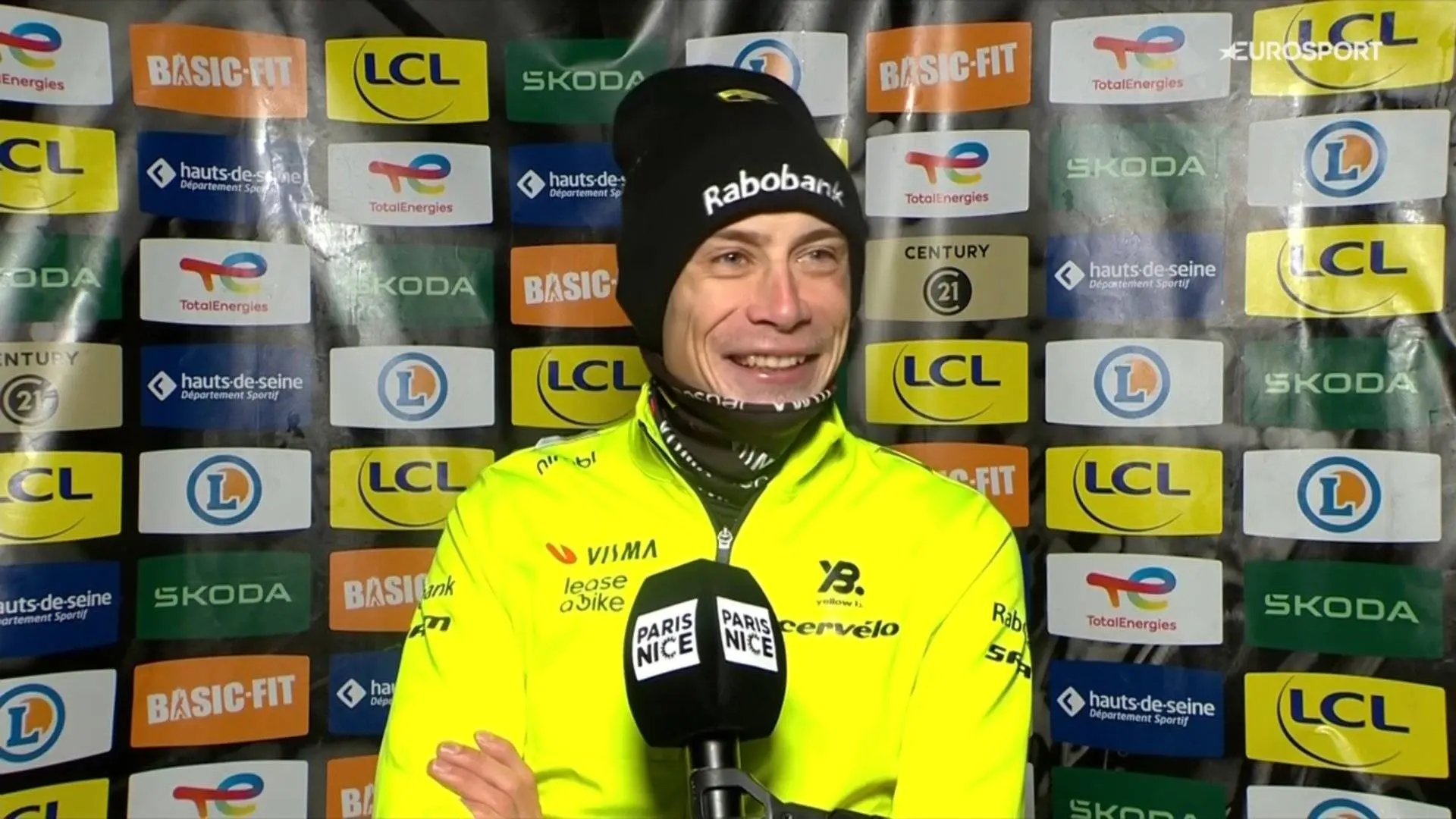
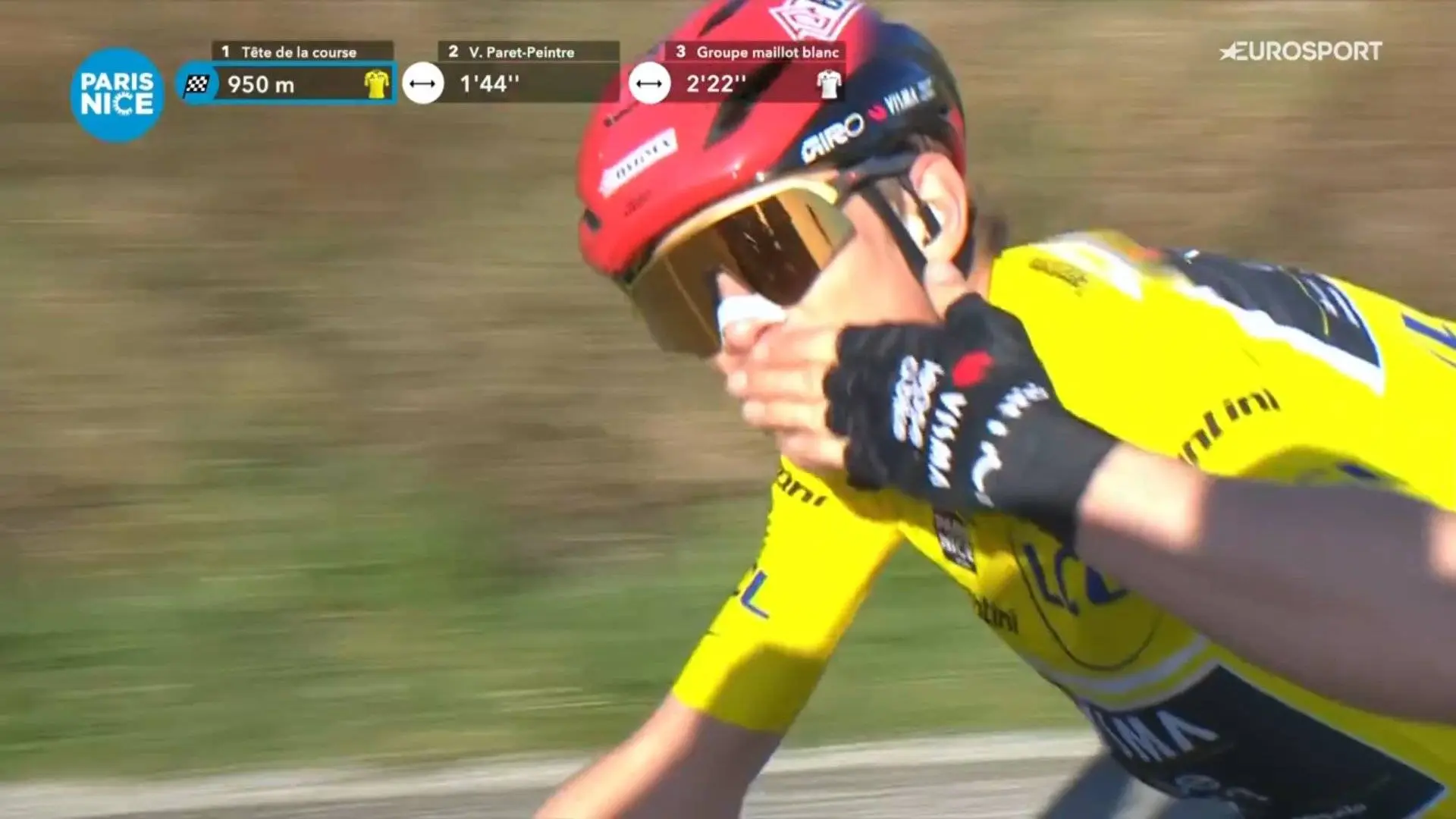
Jonas Vingegaard delivered one of the most commanding performances of the 2026 Paris-Nice so far, launching a long-range attack on Stage 5 that left the rest of the general classification contenders scattered across the Ardèche hills.
The Team Visma | Lease a Bike leader attacked with around twenty kilometres remaining on the steep slopes of the Côte de Saint-Jean-de-Muzols. Within moments, the race was torn apart, with only Lenny Martinez briefly able to follow before the Dane rode clear alone.
From there, the yellow jersey never looked back. Vingegaard crested the final climbs with a growing advantage before powering through the rolling final kilometres to seal a dominant solo victory.
After the finish, the two-time Tour de France winner admitted that one moment during the stage unexpectedly brought back memories of a crash on the same roads.
“It’s funny. During the stage, I thought that road looked like the one where I crashed last year, but I didn’t know we were going to ride there,” Vingegaard said in quotes collected by TV2. “It was nice to get some revenge and to win on such a beautiful day. The weather is beautiful, and it’s a beautiful area. It has been an incredible day for me and for the team.”
Visma plan comes together perfectly
The victory was not simply the result of Vingegaard’s attack, but of a carefully executed team strategy that had been mapped out from the morning briefing.
“We had a plan from the morning to win the stage,” he explained. “We wanted to attack from far out to try to take as much time as possible. It worked, and I owe a huge thank you to my teammates. They were fantastic today, and they made it possible.”
Visma controlled the race for much of the day, keeping a dangerous breakaway group within reach before the decisive climbs in the final forty kilometres.
“I really wanted to win, but the team wanted that as well,” Vingegaard said. “The team did an incredible job. They made sure that a good breakaway group was established, and they kept them on a short leash. We wanted to win and take as much time as possible. Now I took a good amount of time. I have to thank the team. They deserve the champagne tonight.”
Adjusting the plan during the race
Even with a clear strategy, the race situation forced Visma to adapt more than once during the stage. The early breakaway briefly gained more time than expected, leading to discussions about whether Vingegaard should move earlier than planned.
“We had to adjust the plan a couple of times,” he said, “Originally, the plan was to attack where I did. But the breakaway got a bit too much of an advantage. We thought that I should try to ride up to them already on the first climb. But then suddenly they were close again, and we thought it was better to go back to the original plan.”
When the decisive moment came, it was teammate Victor Campenaerts who delivered the final setup. “I got a gap before my attack because of Victor,” Vingegaard said. “He did an incredible lead-out, so I didn’t have to go over the limit to drop the others. That meant I could stay within my limits.”
Race far from decided
Despite strengthening his grip on the general classification with the victory, Vingegaard was quick to warn that Paris-Nice is far from finished.
The race still faces several decisive stages before the traditional finale on the Côte d’Azur. “It’s not over yet,” he said. “There are still three stages where a lot can happen. We have to stay focused all the way to Nice.”
For now, though, Stage 5 delivered both a statement victory and a personal moment of redemption for the Danish leader, who turned a road that once held painful memories into the scene of one of the most dominant performances of this year’s Race to the Sun.
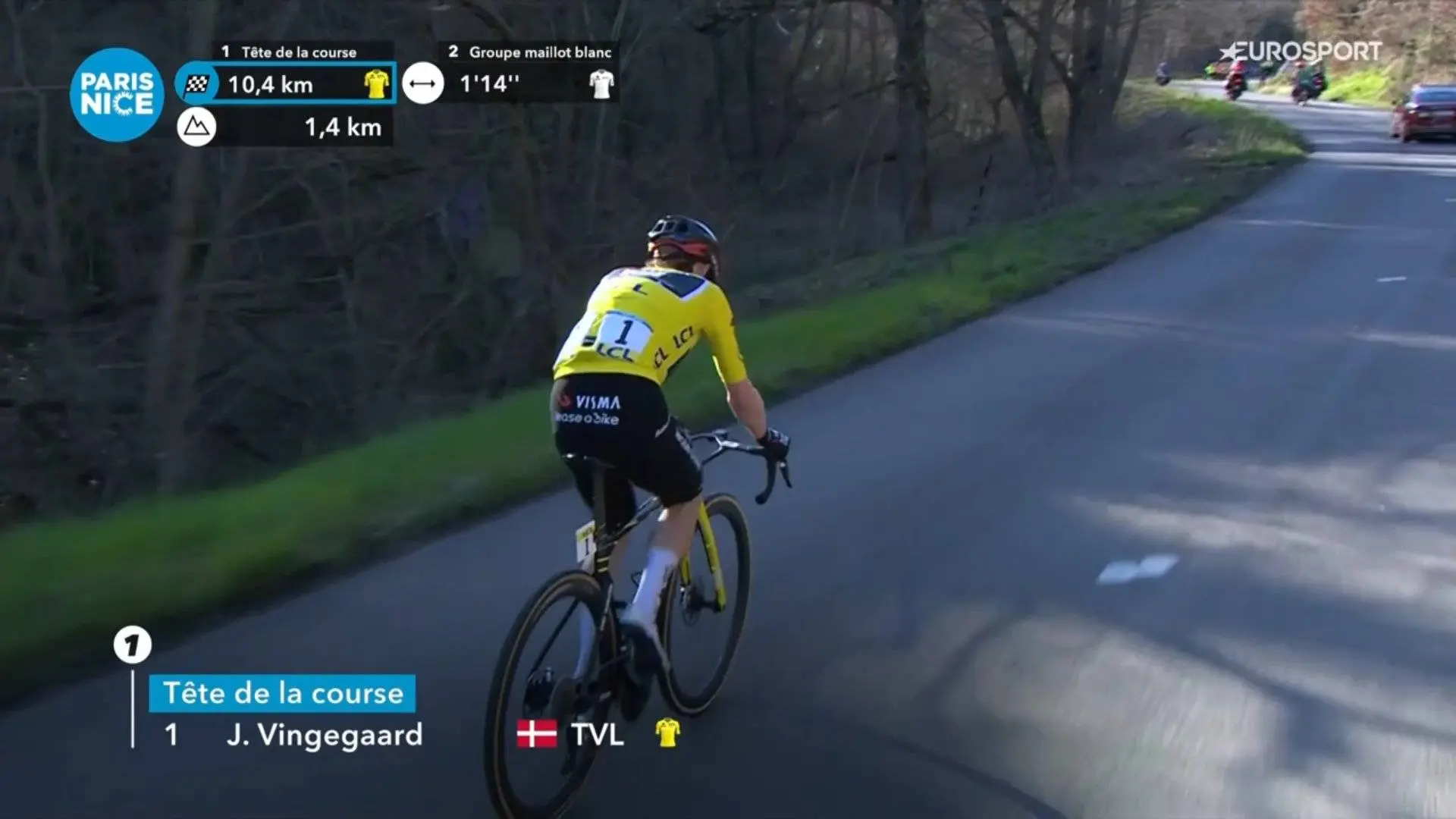
The partnership between Vingegaard and Victor Campenaerts is quickly becoming the defining tactical story of the 2026 spring. While Vingegaard provides the raw climbing power, Campenaerts—a specialist in aero-efficiency and pacing—is acting as a 'tactical shield.' By positioning the Yellow Jersey perfectly at the base of the Saint-Jean-de-Muzols, Campenaerts effectively removed the 'chaos factor' of the climb, allowing Vingegaard to start his solo effort with fresh legs while his rivals were already panting to stay on the wheel.
Kieran WoodDeputy Editor-in-Chief
Kieran Wood is a sports journalist based in Wales and has been active in journalism since 2022. He regularly contributes to DartsNews.com and CyclingUpToDate.com, where he covers professional cycling and darts. In cycling, his work includes liveblogs from major races, including the Tour de France, the Giro d’Italia, and La Vuelta a España, alongside race reports and analysis. He has also conducted interviews with professional riders.
His reporting spans the full racing calendar, from one-day classics to stage races, with a focus on accurate, real-time coverage and clear contextual analysis. For statistics, results, and historical context, he regularly uses resources such as ProCyclingStats. To support reporting on rider activity and training context where relevant, he also references Strava.
In his work, Kieran places strong emphasis on careful sourcing, editorial accuracy, and updating articles as new, verified information becomes available.
claps 2visitors 2
Just in

Popular news
Latest comments
- yeah your point about accidents happening in a chain of events, not a single event, is key. no police or barriers at a crossing. a car gets on the road. a trailing cyclist doesn't have an escort. no radio and GPS is being used to track stragglers. and tragedy. break one thing in the chain and it could be accident avertedmij26-10-2026
- The doctors called the concussion severe, even at the scene of the accident, because that is the term for it. The concussion protocol is the best they can do right now, with further research being done. It makes sense for Tadej's concussion to be severe because the freak circumstances lead to twisting of his head (and body) as he fell at high speed. Look at reports on the Toronto research published in early 2025 for starters, with images of the brain showing the effects that persist after symptoms clear up. Btw if Tadej had ridden the EC and fallen, he could have suffered more serious injury to the spine as the vertebra would not have been fully healed. Also serious consequences if he had hit his head. Don't know why you are so keen to downplay the impacts.Hills3326-10-2026
- Complete bullshit headline. The best thing this website can do is commit suicide.Renz26-10-2026
- If he wants to retire, he can spend a couple of non intensive low key seasons at UNO-X for lower salary as well.abstractengineer26-10-2026
- we need facts about these accidents and see the stats about these facts to find what can be done and what cannot be done. That is the job of the UCI. This has been done in many industries, Airlines, and Spacecrafts. Once teh UCI sets the rules, then the organizers can decide upfront whether or not they want to hold the race or not. UCI also needs to make the rules applicable to all stakeholders including riders and staff about what to do and not do, for safety. Parachutes are the safest to exit a jet fighter/bomber but none are provided on a passenger aircraft. most safety mechanisms are not viable on a spacecraft. in industries most accidents are the result of a chain of events, a single link not happening will not cause that accident. all these things are thoroughly investigated. inspite of all the safeguards, accidents happen and will happen, because humans remain inherently flawed but following rules/procedures minimize the risk and stats, not an individual accidentabstractengineer26-10-2026
- yeah total joke. It isn't at all attributed to MVDP, but you would never know it looking at the headlinemij26-10-2026
- there are no races, we gotta talk about something! The clickbait works, look at how many comments are here. I see these inane comments and can't hold my tongue. To compare Tadej's injuries to the others is an insult to all.mij26-10-2026
- exactly, it isn't even close. Tadej had a broken collarbone, standard issue cyclist break. he had a stable fracture at C7. since it was a stable fracture, it is no more serious than a broken wrist, in particular after it heels. And he had a concussion. the concussion itself will not hold him back at all. C7 is at the neck/shoulders, it won't affect his flexibility for a TT bike at all. the list of injuries for Froome, Bernal and Jonas are so much more extensive.mij26-10-2026
- he didn't break his back. he had a stable fracture at C7mij26-10-2026
- he broke a bone in his neck, a stable fracture. are you referring to the broken back comment?mij26-10-2026
Loading
Write a comment