“I think the organisers are actually staging some of this” – George Bennett voices wild camera-motorbike conspiracy behind cycling’s dramatic finales
CyclingSaturday, 01 August 2026 at 15:00
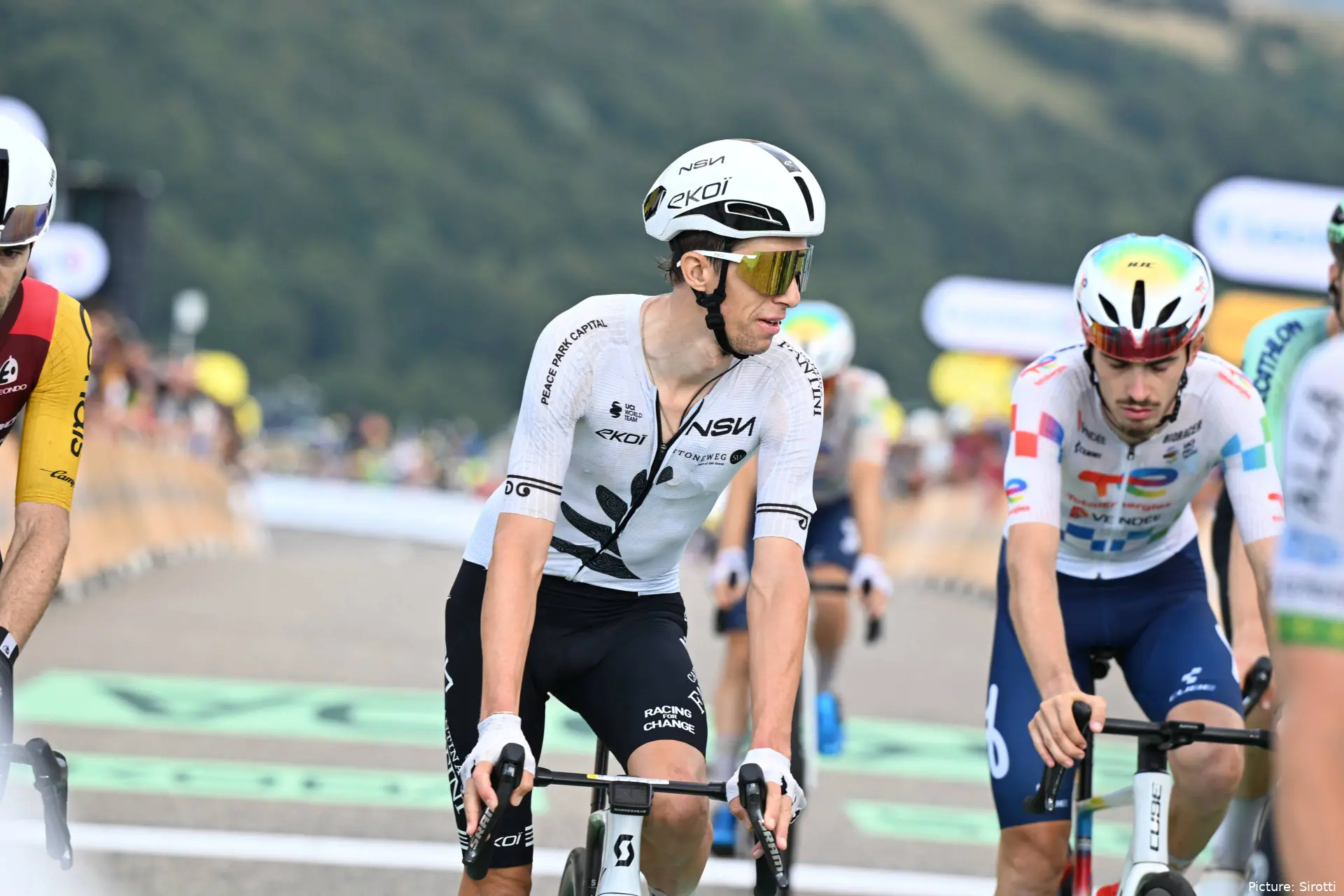
George Bennett believes race organisers may be deliberately using camera motorbikes to manufacture dramatic finales, leaving sprint teams fighting an “arm wrestle” against vehicles helping breakaways stay clear.
The New Zealand national champion returned from his sixth Tour de France convinced that some apparently impossible chases had been shaped by more than the strength of the riders up the road.
“What I think is happening a lot of the time is that the organisers are actually staging some of this,” Bennett told The ACC in New Zealand. “They’re saying, ‘Right, let’s keep that camera motorbike quite close to him until we think it’s getting into dangerous territory.’”
Riders have complained for years about the aerodynamic assistance created by television motorbikes, with studies showing a measurable drafting effect even when the vehicle is tens of metres ahead. Bennett’s theory goes much further. He suspects the distance may sometimes be managed deliberately, allowing a breakaway to survive until the final kilometres before the motorbike moves away and the peloton rapidly closes in.
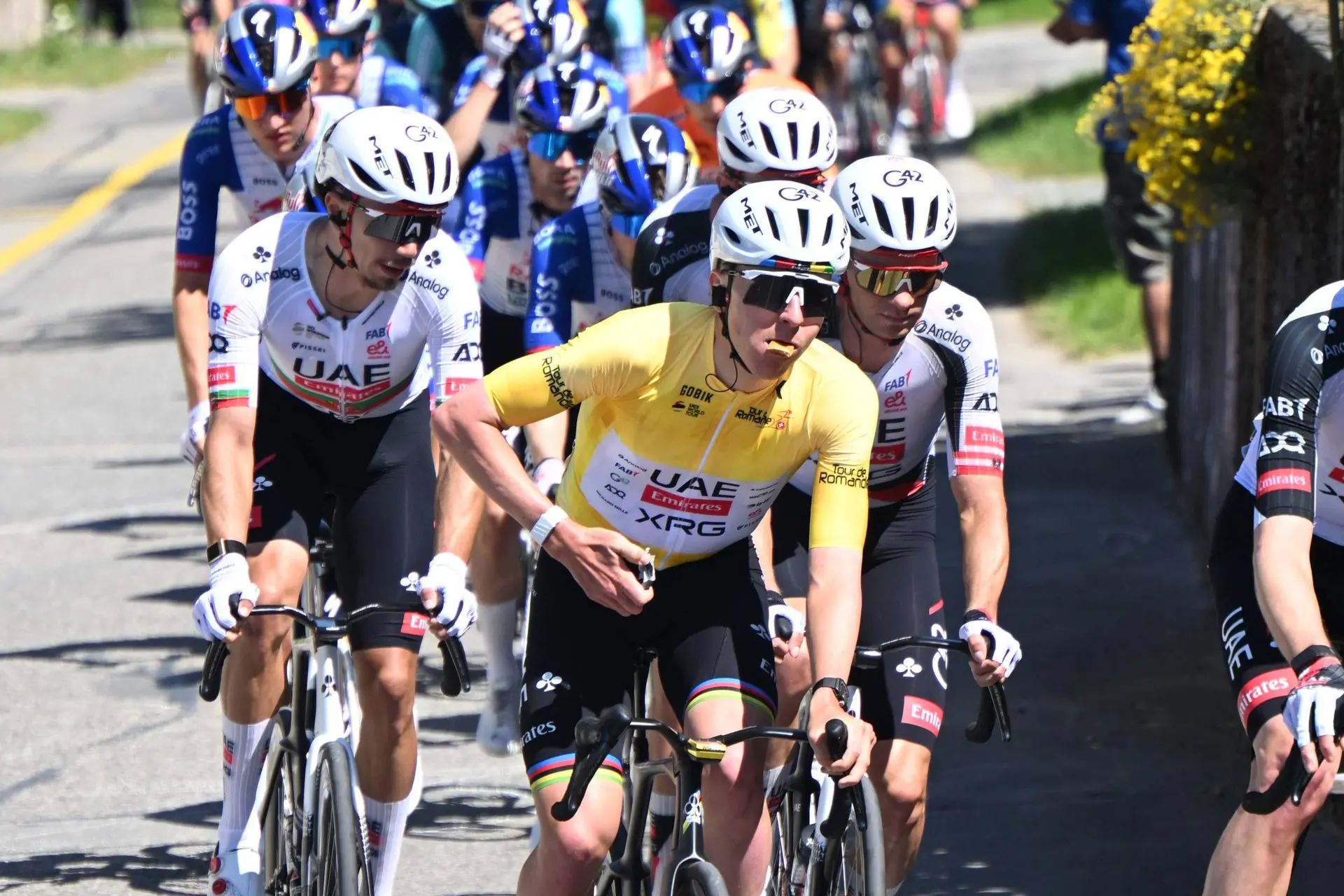
Bennett points to Giro escape that defied the chase
His strongest example came at the Giro d’Italia, where a small breakaway survived despite a sustained pursuit from several major sprint teams. “We saw it really badly at the Giro,” Bennett said. “There was a breakaway of three riders who weren’t particularly big names, being chased by 15 riders from the major sprint teams. The best guys in the peloton were swapping turns behind, but they weren’t catching them.”
The stage had been expected to finish with the escapees being swept up late. Instead, the breakaway held on and denied the sprinters. “I think they just got it slightly wrong,” Bennett continued. “The motorbikes were meant to pull out, it would become really dramatic and the peloton would catch them in the final couple of kilometres. Instead, the breakaway held on and won the stage.”
The result triggered immediate discussion over the position of the camera motos, with team staff questioning how a heavily committed peloton had failed to close a relatively modest gap on flat roads.
Bennett believes the explanation was sitting directly in front of the escapees.

Bennett is the New Zealand national champion
Tour chase changed when motorbike moved
He noticed a similar pattern during one of the early sprint stages at the Tour de France. An Intermarche rider remained ahead while Bennett and other riders rotated at full speed behind. Despite the strength of the chase, the gap barely moved for kilometre after kilometre. “We couldn’t take 10 seconds out of them for 30 or 40 kilometres,” Bennett said.
Then the advantage suddenly collapsed. “With around 10 kilometres to go, we took back 50 seconds in four kilometres,” he said. “We thought, ‘Okay, the motorbike has moved out of the way.’”
The experience changed how Bennett’s team approached later breakaways. Rather than allowing the escape to build a conventional advantage before beginning the chase, they tried to keep the gap under a minute throughout the day.
“After that, we decided we weren’t going to play that game,” he said. “We were going to keep the breakaway under a minute for the entire day.”
The tactic turned a routine sprint chase into a prolonged contest between the peloton and the vehicle travelling ahead of the break. “It ends up becoming this crazy arm wrestle where the sprint teams are basically racing against a guy on a motorbike.”
Motorbike influence has become a recurring source of anger in major races, prompting experiments with warning systems designed to stop television crews moving close enough to offer a meaningful drafting benefit.
Bennett’s accusation that organisers are exploiting that effect for entertainment remains unproven. His suspicion grew from gaps that refused to fall despite full-speed chases, only to collapse once the finish began to approach. By the end of the Tour, he no longer believed the breakaway was always the only thing the sprint teams had been asked to catch.
Kieran WoodDeputy Editor-in-Chief
Kieran Wood is a sports journalist based in Wales and has been active in journalism since 2022. He regularly contributes to DartsNews.com and CyclingUpToDate.com, where he covers professional cycling and darts. In cycling, his work includes liveblogs from major races, including the Tour de France, the Giro d’Italia, and La Vuelta a España, alongside race reports and analysis. He has also conducted interviews with professional riders.
His reporting spans the full racing calendar, from one-day classics to stage races, with a focus on accurate, real-time coverage and clear contextual analysis. For statistics, results, and historical context, he regularly uses resources such as ProCyclingStats. To support reporting on rider activity and training context where relevant, he also references Strava.
In his work, Kieran places strong emphasis on careful sourcing, editorial accuracy, and updating articles as new, verified information becomes available.
claps 0visitors 0
Just in

Popular news
Latest comments
- He's a domestíque pulling for Biniam Girmay - what good would attacking do?
 Rafionain-Glas01-08-2026
 - Nah, 4th at the Tour is better than any result at the Giro or Vuelta apart from winningRafionain-Glas01-08-2026
- Pogi... The GOAT !!!PogiSloFans01-08-2026
- If the posts were more in depth and if the race highlights had the full results then maybe but definitely not with the current content.onegear2901-08-2026
- Now winning a Pogi-less Vuelta or Giro is very possible.Cyclingnut01-08-2026
- Shut up and just attack , you will also get the benefitabstractengineer01-08-2026
- He was spent, he should not do the Vuelta.abstractengineer01-08-2026
- Agree, Decathlon want him to sign an extension so they will agree to anything he wants. But it was stupid to do the TDF , the Giro/Vuelta was better. his year anyway the top 2 could not be avoided but finishing on the podium is a bigger morale boost than top5/10.abstractengineer01-08-2026
- Carapaz needs to go to the Vuelta, he could win it with his current form as long as Tadej doesn't show up on the start line.awp01-08-2026
- What Seixas learned is that if he keeps developing he will win the Tour at some point. He has never ridden a GT before, this is valuable information, he now knows he can do it.awp01-08-2026
Loading
2 Comments