“With oxygen and a drip, I was in meetings” – Lidl-Trek boss Luca Guercilena on near-death ordeal and chasing Giro and Tour glory
Cycling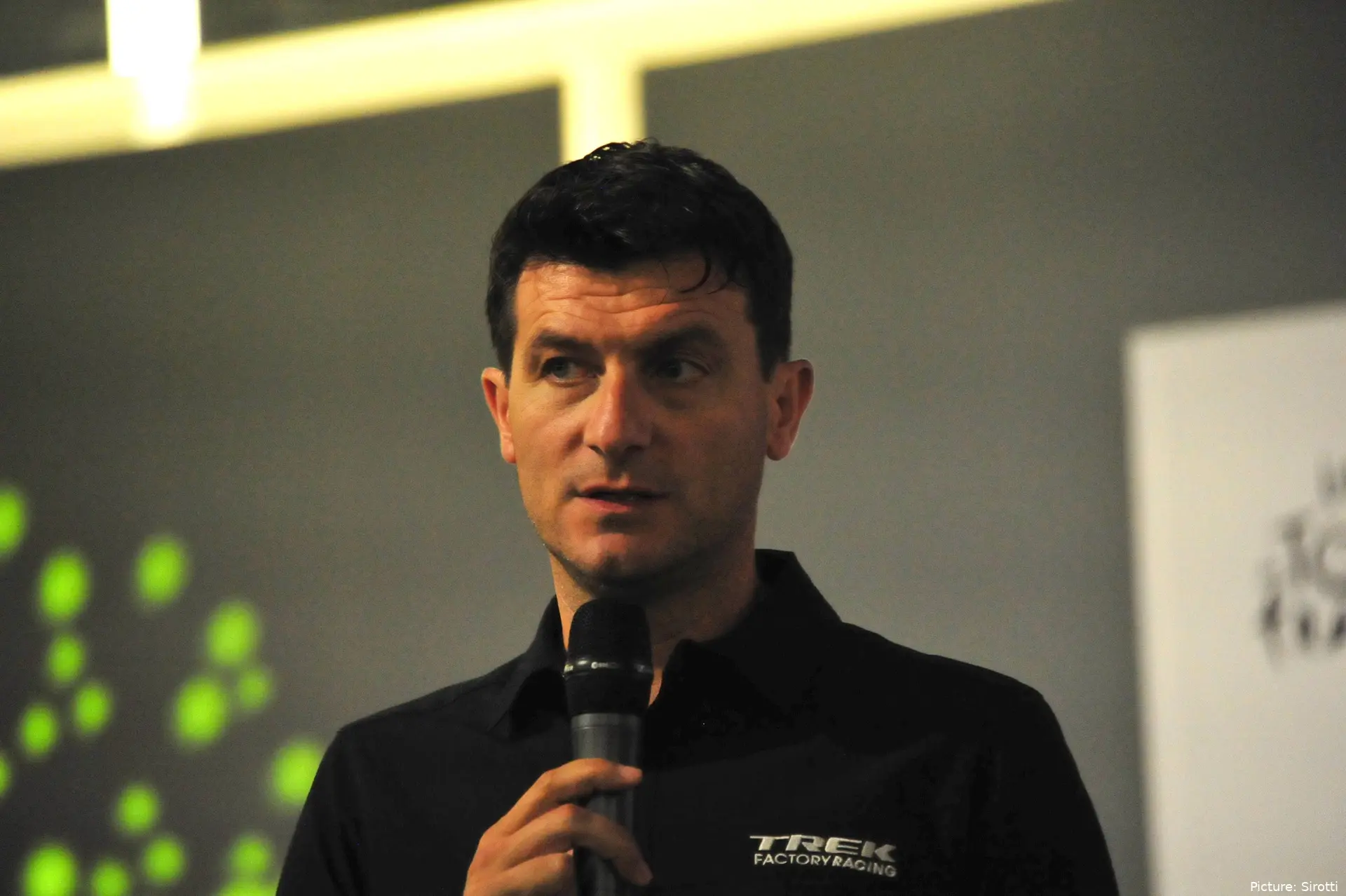
For more than a decade, Luca Guercilena has been one of the most influential figures in modern cycling. The only Italian general manager in the men’s WorldTour, he has overseen the transformation of Leopard-Trek into Trek-Segafredo and now Lidl-Trek, guiding the organisation into the sport’s elite.
But at the end of 2023, none of that mattered. “At the end of 2023, yes. I had the feeling I wouldn’t make it – I thought it,” Guercilena admitted in conversation with La Gazzetta dello Sport, reflecting on a stage three lymphoma diagnosis that spiralled into a prolonged medical nightmare. “Even just meeting the doctors’ eyes.”
Stage three lymphoma and 160 days in isolation
The first warning came in 2021 as he prepared to leave for the Tour de France. “I was about to leave for the Tour when I felt a swelling sensation in my stomach. Pain. A feeling I had never experienced. I was immediately worried.”
The verdict was blunt. “Stage three lymphoma. The world fell on me like a boulder.”
Surgery in Milan followed. Chemotherapy and immunotherapy initially appeared successful. By March 2022, he was back at races and believed the worst had passed. “I thought the worst was behind me.”
Instead, the real ordeal was only beginning. “In October 2022, everything collapsed. My immune system was very weakened by the treatments, and infections suddenly piled up. It became an ordeal.”
He remained Covid positive for an extended period and suffered pneumonia seven times. Across a 12 month stretch he spent around 160 days between the San Paolo and San Raffaele hospitals in Milan, much of it in forced isolation. His weight dropped to 58 kilos, and several organs were compromised. “My liver was not functioning properly because of the amount of medication.”
Yet even from isolation, he refused to detach himself from the team he had helped build. “I was there, in my hospital bed, with oxygen, sometimes with a drip in my veins. But I took part in meetings. Even just to distract my mind and not always think about my troubles.”
At the time, Lidl-Trek were not a minor operation treading water. The organisation had entered a new phase, strengthened by Lidl’s deepened involvement beyond simple title sponsorship. The budget sat at around €50 million annually. Staff numbers hovered around 200 across men’s, women’s and development structures, with plans to expand further.
Strategic decisions were shaping what is now one of the sport’s most complete teams. And their general manager was dialling in on oxygen.
From survival to ambition
Guercilena has long been central to Lidl-Trek’s rise. Since stepping into senior leadership in 2013 and remaining at the helm through Trek’s structural takeover in 2014, he has overseen steady progression from respected contender to genuine heavyweight.
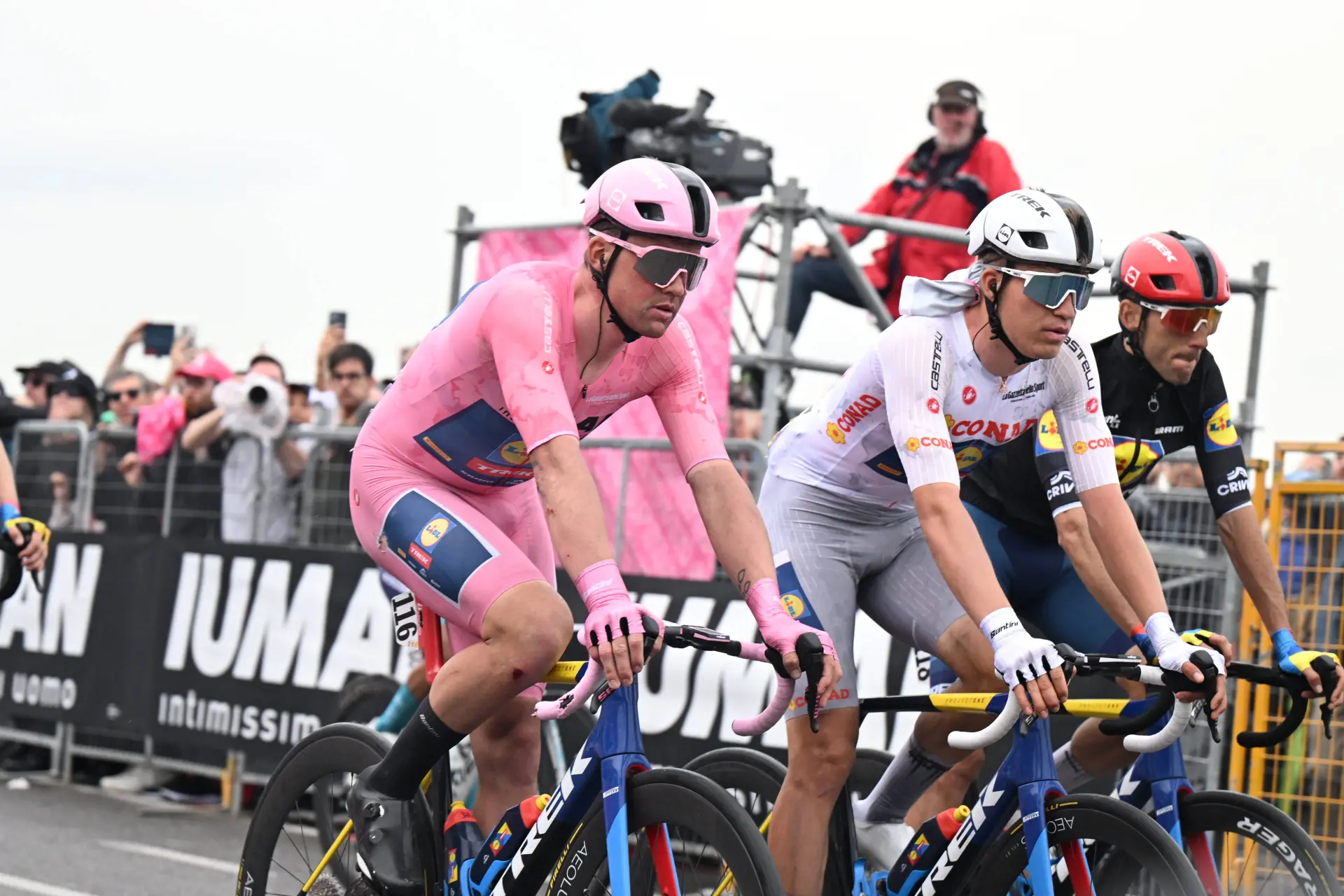
By early 2026, Lidl-Trek are firmly among cycling’s top tier. The team collected more than 40 victories in 2025, secured stage wins across all three Grand Tours and field one of the most versatile rosters in the peloton. Juan Ayuso adds Grand Tour leadership depth. Giulio Ciccone remains a proven climber. Jonathan Milan continues to deliver elite sprint results. Mads Pedersen and Mattias Skjelmose offer range across Classics and stage racing.
That upward trajectory makes his sporting ambition logical rather than fanciful. “From a sporting point of view, after World Championships, Olympics, Classics… to win a Giro or a Tour, and to become the number one team in the world.”
But the illness has shifted something deeper. Before the diagnosis, he admits he felt insulated by the sport. “Like many people who work in sport, I felt… invincible, in a way. I saw illness as something distant.”
The experience has recalibrated him. “It taught me to give the right weight to things.”
And perhaps that perspective explains why his ultimate goal is framed in human terms as much as sporting ones. “Perhaps it is even more important that the team becomes a place where everyone who works there comes willingly. With pleasure, with a smile. And knowing they can grow: professionally and as people.”
For Lidl-Trek, 2026 is about chasing Giro and Tour glory and cementing their place among cycling’s superpowers.
For their general manager, it is also about something far more personal. After 160 days in isolation, after moments when he believed he might not survive, building the number one team in the world now carries a different meaning.
The ambition remains. The perspective has changed.

Kieran WoodDeputy Editor-in-Chief
Kieran Wood is a sports journalist based in Wales and has been active in journalism since 2022. He regularly contributes to DartsNews.com and CyclingUpToDate.com, where he covers professional cycling and darts. In cycling, his work includes liveblogs from major races, including the Tour de France, the Giro d’Italia, and La Vuelta a España, alongside race reports and analysis. He has also conducted interviews with professional riders.
His reporting spans the full racing calendar, from one-day classics to stage races, with a focus on accurate, real-time coverage and clear contextual analysis. For statistics, results, and historical context, he regularly uses resources such as ProCyclingStats. To support reporting on rider activity and training context where relevant, he also references Strava.
In his work, Kieran places strong emphasis on careful sourcing, editorial accuracy, and updating articles as new, verified information becomes available.
claps 0visitors 0
Just in
Popular news
Latest comments
- yeah they are incredible at this, also retained and secured all key riders and major for long contracs....miguel25-10-2026
- agreed, make the stage with something in GCmij25-10-2026
- Now that G is out of the races he doesn't mind risking GC positions, A GC race makes it very tightly control along with the sprinters teams and you will not get the spectacle.abstractengineer25-10-2026
- yeah looking at the ages of the replacements, and the quality of the riders, I see upgrades all around.mij25-10-2026
- Individual Gautherat is the most exciting given his age too I agree. But Frigo and Balderstone for uae will be super valuable as doms areound those leaders. UAE just quitly uppgrade w/stronger and younger guys. Sivakov was on the down and Frigo replace all that with bigger engine. Balderstone seems like another brilliant under the radar pickup UAE is masters off....so exhausting they never missmiguel25-10-2026
- Surprised it’s that inexpensive!Lozza25-10-2026
- Nah, I like it here. I like a challenge, against the people who hate me here. Jumping John, you ain't getting rid of me :))PogiSloFans25-10-2026
- Pogi deserves every penny he gets paid... and he's the only cyclist that should be paid more. If he's two classes above everyone else, his salary should also be. Ad acta.PogiSloFans25-10-2026
- It’s not only that, it’s this obsession with running after money, whether it be teams, riders, sponsors, broadcasters. As soon as one player gets ahead, others feel obliged to match their moves with increases for fear of losing out and for fear of someone else following in your place instead without looking at the long-term consequences of blindly following. Other sports ahead (or behind depending on how you look at it) in such matters should serve as a warning but humanity has a habit of heading straight into walls even when the writing is on it. When financial objectives and limits aren’t clear, it’s impossible to manage any organisation, you can’t even recruit the right riders or tell them what is needed to make sure they’re a good fit because you can’t clearly explain what they can expect. Not all riders are motivated by money alone and some of the teams are proof of that.Jumpyjohn25-10-2026
- To be honest, their signings weren't actually too bad. Oscar and Kevin had great 2025 seasons. Most of the top leaders were signed. But Red Bull, Lidl-Trek and Pinarello showed that that's not actually the coast. So team culture is probably the foremost reason. Whether there's a bad sporting culture now is debatable, but certainly there's the past. 2024 was the end of the old Ineos (it was not actually transition, it was slow decline)
 Rafionain-Glas25-10-2026
Loading
Write a comment