“He’s the Roman God of cycling” - Robbie McEwen puts Jonathan Milan in line with Italy’s Giro d’Italia sprint legends Cipollini and Petacchi
Cycling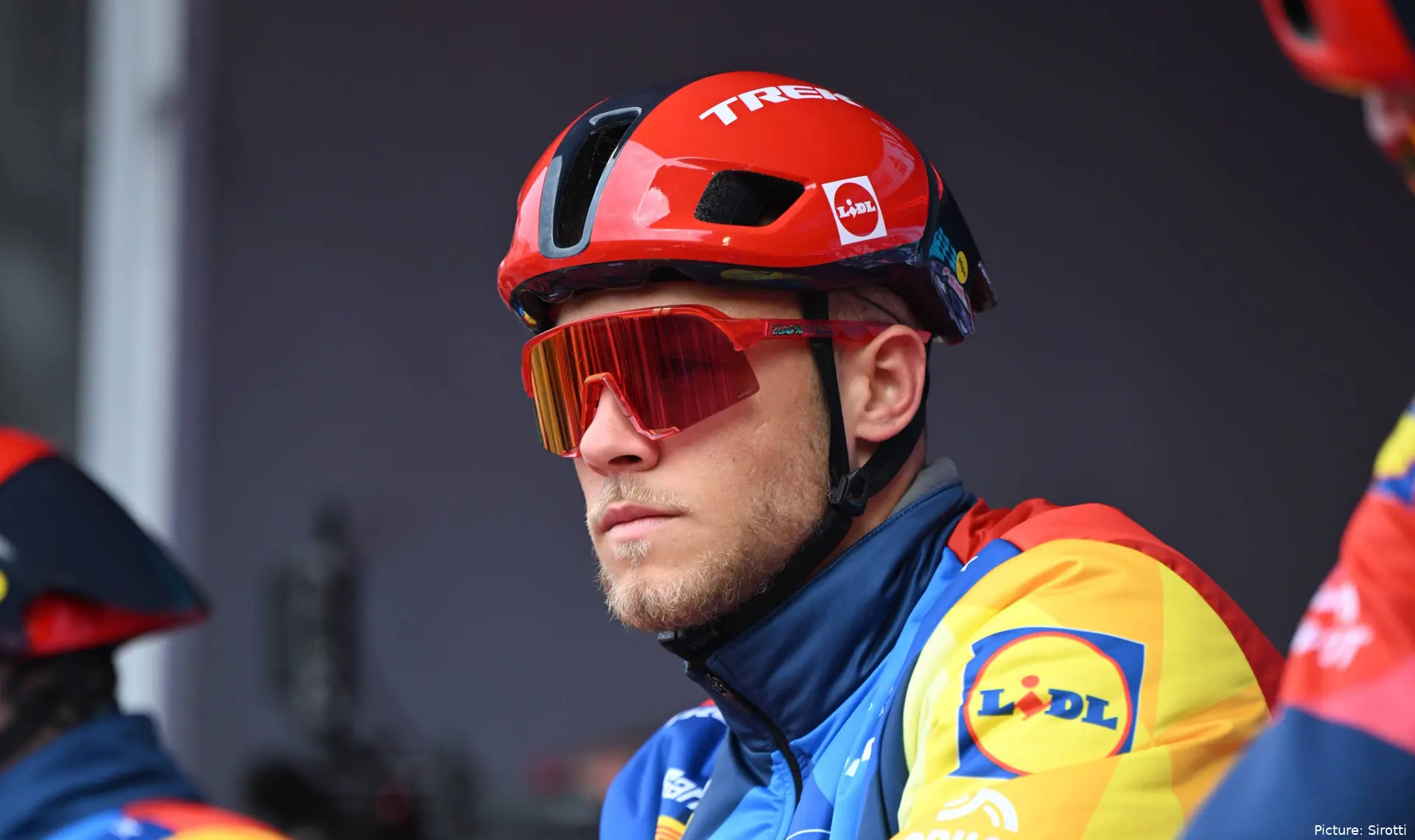
Long before the 2026 Giro d’Italia has even reached the mountains, Jonathan Milan is already emerging as one of the defining stories of the race.
Not simply because of his speed. Not only because he starts as favourite for the ciclamino jersey. But because, in the eyes of TNT Sports analyst Robbie McEwen, the Lidl-Trek sprinter has become something Italian cycling has been searching for again for years: a larger-than-life home sprint superstar capable of carrying the atmosphere of the Giro itself.
“He’s the Roman God of cycling,” McEwen said ahead of the Grande Partenza in Bulgaria.
The comparison was not made lightly either. McEwen directly linked Milan to the lineage of iconic Italian sprinters who helped define previous generations of the Giro d’Italia. “He makes people think of the great Italian sprinters of the last couple of decades, Mario Cipollini and Alessandro Petacchi,” the Australian explained.
Why Milan has become Italy’s great sprint hope
Milan arrives at the Giro after another strong early season campaign which reinforced his status as arguably the fastest pure sprinter currently in the sport. The 25-year-old already owns multiple Giro stage victories and two ciclamino jerseys, but this year’s opening stages in Bulgaria have created the possibility of something even bigger: finally pulling on the Maglia Rosa.
That prospect has only intensified the excitement surrounding the Italian inside his home Grand Tour. “I think the Italian fans, they love that,” McEwen explained. “They love the big personality, big ego, big presence.”
The former green jersey winner believes Milan’s physical presence and explosive sprinting style naturally fit the image Italian fans traditionally embrace at the Giro. “He’s a really big guy, and he has people in every way look up to him,” McEwen said. “I think the Italian fans just love that.”

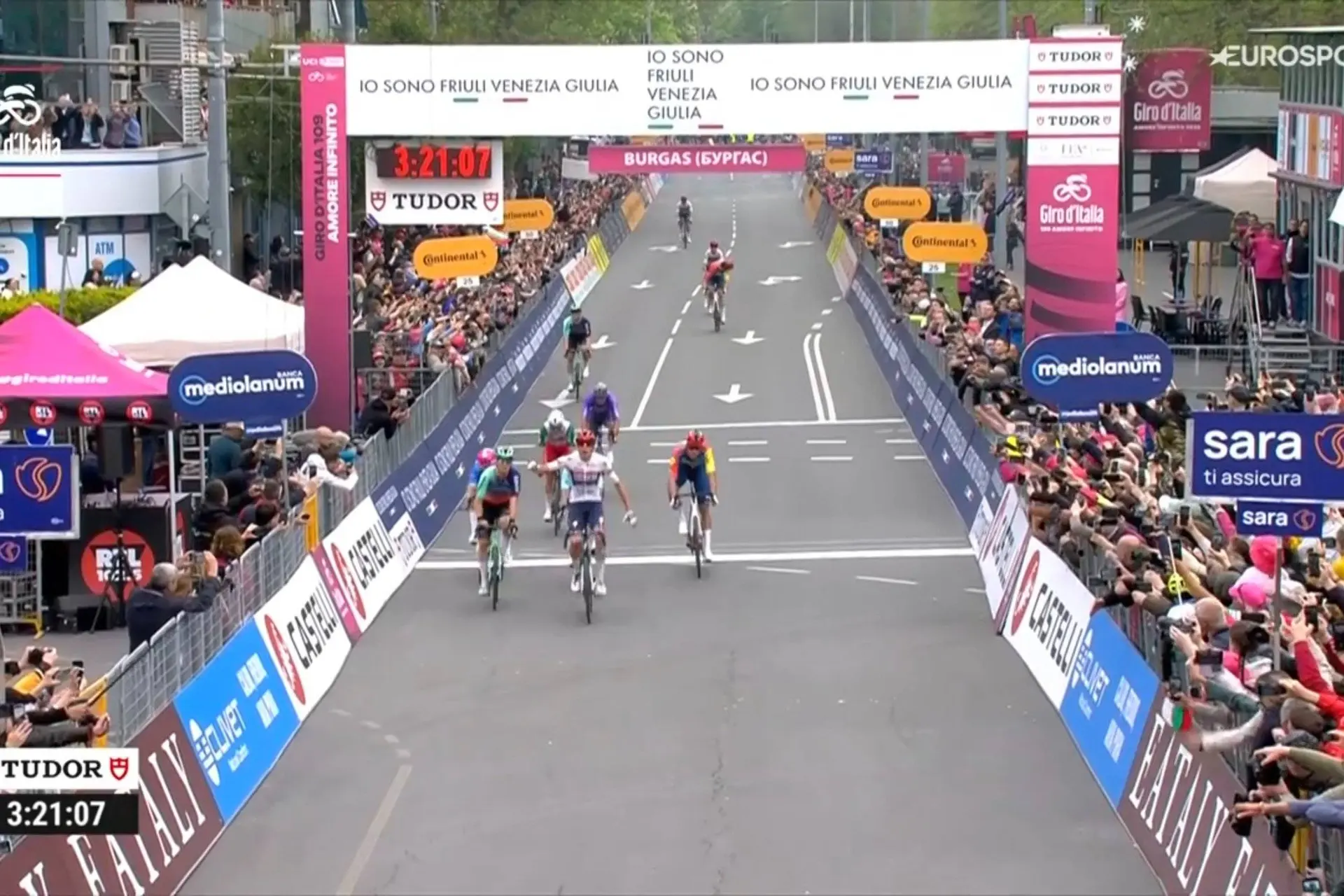
Jonathan Milan sprints to the win on stage 7 of Tirreno-Adriatico earlier this year
More than just raw power
According to McEwen, Milan’s dominance starts with a physical engine few riders in modern cycling can rival. “He’s just got enormous power, a massive engine,” the Australian explained. “When he goes and stomps on it, he’s just got a power output that almost nobody in road cycling can match.”
That combination of raw speed and physicality has helped Milan become the clear benchmark for many of the Giro’s likely sprint stages, particularly with Lidl-Trek arriving in Bulgaria built heavily around controlling flat finishes and targeting the points classification.
The Italian also benefits from one of the strongest sprint structures in the race, with riders such as Simone Consonni expected to play major roles in his lead-out train throughout the opening week.
The sprint rivals trying to stop him
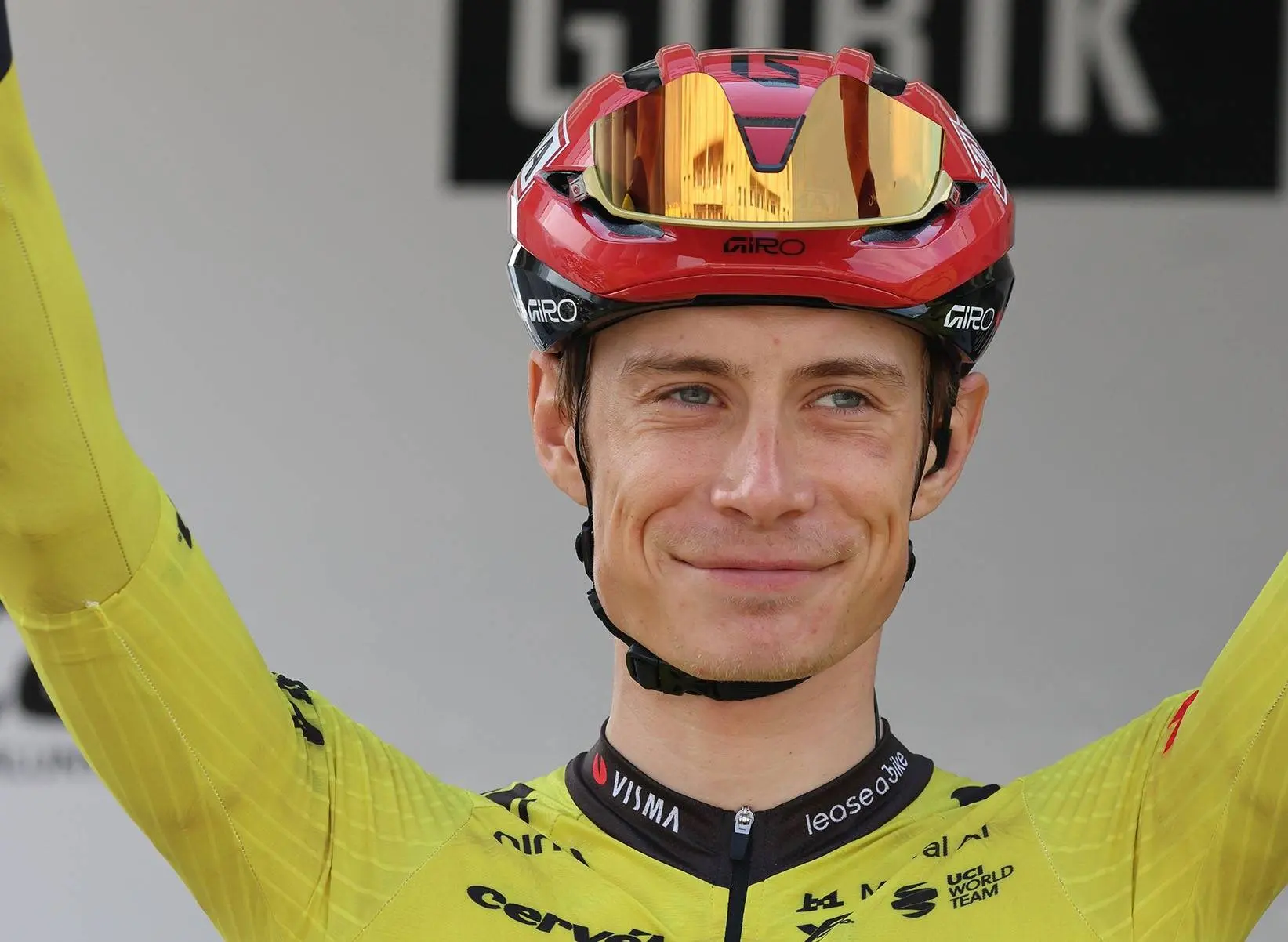
Despite Milan’s favourite status, the sprint field at this Giro remains one of the deepest seen in recent years. Kaden Groves arrives after another strong Grand Tour build-up and remains particularly dangerous on harder sprint stages and reduced finishes, while Dylan Groenewegen enters the race in excellent form as the centrepiece of Unibet Rose Rockets’ first ever Grand Tour campaign.
McEwen himself highlighted Groenewegen as one of the riders capable of becoming a major story during the Giro. “This is their time to shine in the big time,” he said of Unibet Rose Rockets. “They’ve done really well to get an invitation, now they want to go there and get a result they can pin their whole season on.”
Alongside Groenewegen and Groves, riders such as Paul Magnier, Arnaud De Lie and Tobias Lund Andresen also add further depth to the sprint competition.
Why the Giro feels different
For McEwen, though, the appeal of the Giro extends beyond individual riders or sprint battles. The Australian believes the race itself carries a completely different personality compared to the Tour de France. “There’s more Italian chaos, there’s more Italian cinema,” he said. “It’s less controlled. It’s less formulaic.”
That unpredictability, combined with Italy’s emotional connection to the race, is exactly why Milan’s presence has become such a major talking point before the Giro has even begun.
The country has always embraced charismatic sprinters capable of dominating flat stages while carrying the atmosphere of the race itself. McEwen clearly believes Milan now sits firmly within that tradition.
And if the Lidl-Trek rider does manage to take the Maglia Rosa during the opening week in Bulgaria, the noise surrounding Italy’s newest sprint phenomenon may only become even louder.
Kieran WoodDeputy Editor-in-Chief
Kieran Wood is a sports journalist based in Wales and has been active in journalism since 2022. He regularly contributes to DartsNews.com and CyclingUpToDate.com, where he covers professional cycling and darts. In cycling, his work includes liveblogs from major races, including the Tour de France, the Giro d’Italia, and La Vuelta a España, alongside race reports and analysis. He has also conducted interviews with professional riders.
His reporting spans the full racing calendar, from one-day classics to stage races, with a focus on accurate, real-time coverage and clear contextual analysis. For statistics, results, and historical context, he regularly uses resources such as ProCyclingStats. To support reporting on rider activity and training context where relevant, he also references Strava.
In his work, Kieran places strong emphasis on careful sourcing, editorial accuracy, and updating articles as new, verified information becomes available.
claps 0visitors 0
Just in

Popular news
Latest comments
- He didn't even try to sprint all outvappaxbipmv18-10-2026
- Campenaerts looked like a rolling pumpkin with that all orange leaders skinsuit !frieders318-10-2026
- He can take his dumb a$$ politics somehwere else !frieders318-10-2026
- good to have her back. fingers crossed she‘ll be able to stay!Ketterechts17-10-2026
- A tenner and he wins the Tour next year, too 😂anonymouscyclist17-10-2026
- the answer is either stick to classics or GTs but not bothabstractengineer17-10-2026
- the exodus already stared with Ciccone. Already they were struggling with two sprinters, now there are three. Also Ganna will demand leadership. Gall is the most proven GC, Ayuso has the most potential. GC leadership for everybody will be impossible. Literally a UAE style mess without pogi.abstractengineer17-10-2026
- I raced as an amateur for 12 years, including six years on my country’s national road cycling team. I secured two national titles and competed in three World Championships plus more than 15 international stage races. At 23, we travelled to Italy for a training camp—or so I assumed. On a rest day, we watched a presentation about adopting a more “professional” training approach. It was crystal clear what “professional” meant. That moment first exposed me to this dilemma. After returning from Italy, I left cycling—at least at the competitive level I had known. Over the following two years, the whole team was caught doping. I hold that everyone is innocent until proven guilty. In my view, current stakeholders operate on a different scale, and the sums involved are vast. I am unsure whether any doping would ever be revealed. I try to stay positive and enjoy the show. My 2c.
 vannpelt17-10-2026
 - Fiver he wins 🤣
 leedorney17-10-2026
 - “…measures to reduce speeds.” Might as well shorten the race course to just 50km as well? ASO generates at minimum €300m a year and 30- 40% profit. Maybe stop being greedy and spend more of the profit to protect the riders instead.b3tlla17-10-2026
Loading
Write a comment