“He’s so deep in their heads they didn’t know what to do” – Jerome Pineau slams peloton response to Tadej Pogacar crash at Milano-Sanremo
CyclingWednesday, 25 March 2026 at 13:30
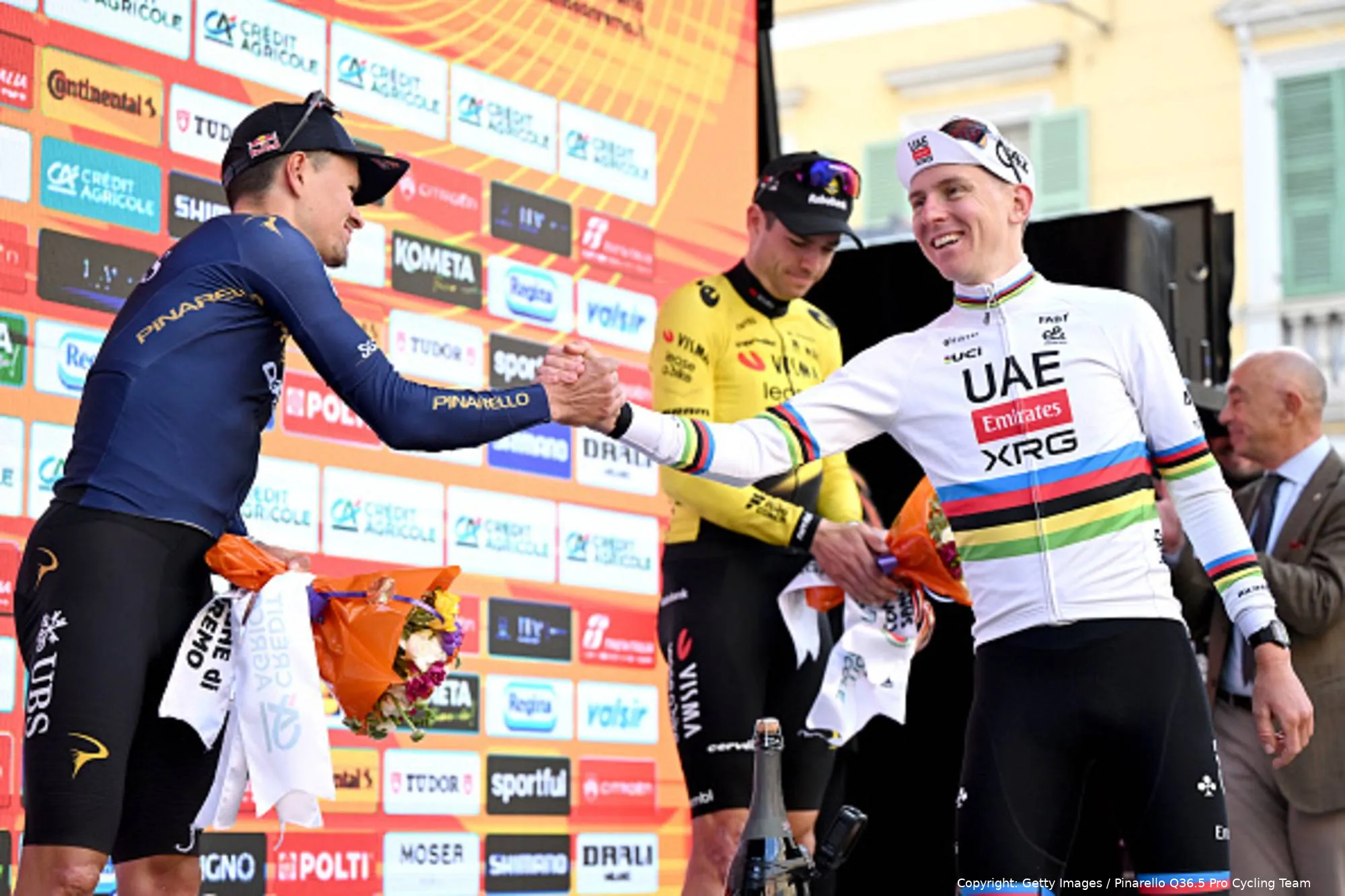
Tadej Pogacar’s Milano-Sanremo victory is still being picked apart days later, not just for how he won, but for what the peloton failed to do when the race briefly tilted in their favour.
The decisive moment came before the Cipressa had even begun. Pogacar crashed on the approach to the climb, tearing his rainbow jersey and leaving himself several hundred metres behind the front of the race at a point where positioning is everything. For a brief window, the world champion was vulnerable.
It was a moment many expected rivals to seize. Instead, hesitation followed.
“The hesitation and the neutralisation at the start of the climb after Pogacar’s crash cost all those outsiders who could have taken advantage,” Jerome Pineau said in the Grand Plateau podcast, in comments reported by RMC. “Nobody would have blamed them if some had attacked and blown the race apart on the Cipressa without waiting for the Slovenian.”
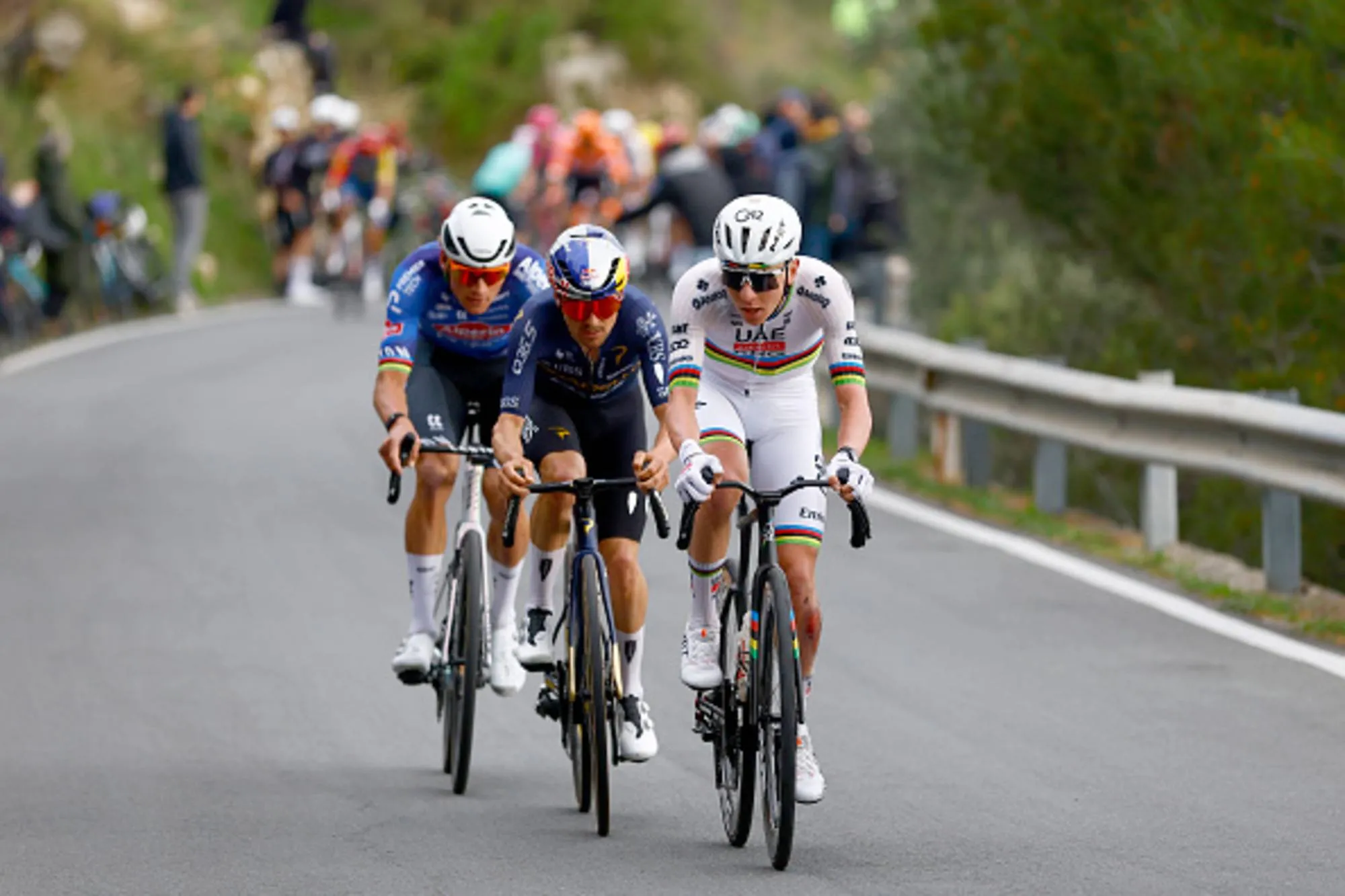
A race that slowed when it should have exploded
With Pogacar out of position, the front of the race had a rare opportunity to reshape the outcome. Riders such as Filippo Ganna, Mads Pedersen and Tom Pidcock were already near the front, exactly where they needed to be.
But rather than accelerating, the race stalled. “It almost felt like they waited for him to come back before starting the race, and when he came back, he punished everyone,” Pineau added.
Pineau notes how the pace on the early slopes of the Cipressa dropped significantly in the moments after the crash, allowing UAE Team Emirates to reorganise and bring Pogacar back into contention. Once he returned to the front, the speed immediately lifted again, and with it, control of the race shifted back in his favour.

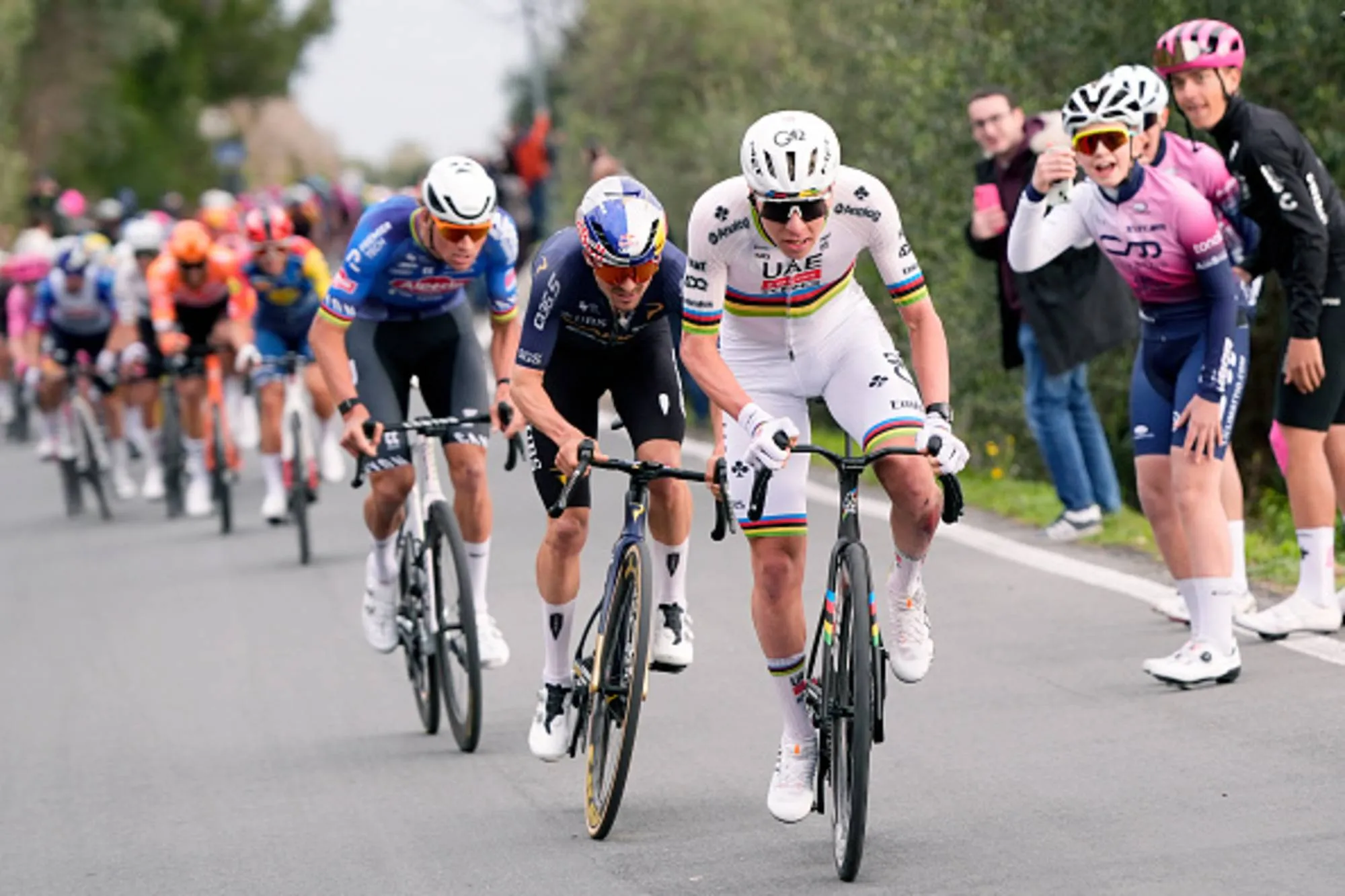
Pogacar was visibly battered and bloody after the crash
“He came back and he hurt them”
For Pineau, the issue was not just tactical, but psychological. “If that had been a proper Milano-Sanremo Cipressa, he would never have been able to come back like that. The first two kilometres of the Cipressa were the slowest in the past five or six years. They were watching each other. That never happens on the Cipressa.”
“He’s so deep in their heads that they didn’t know what to do," added the Frenchman. "They were thinking: I can’t attack, because if he comes back, he’ll hurt me. The result: he came back, and he hurt them.”
That hesitation proved decisive. Once Pogacar was back in position, the race returned to a more familiar pattern. He forced the selection on the Cipressa, dropped Mathieu van der Poel on the Poggio, and went on to decide the race ahead with Tom Pidcock on the Via Roma.
A missed opportunity
Milano-Sanremo rarely offers clear openings. When it does, they are often fleeting. Pogacar’s crash was one of those moments. A gap opened, positioning was disrupted, and for once, the favourite was on the back foot. But instead of capitalising, the peloton hesitated.
In the end, that hesitation defined the race just as much as Pogacar’s attack. Because, as Pineau’s assessment makes clear, in his opinion, the opportunity was there. The peloton simply did not take it.
claps 1visitors 1
Just in
Popular news
Latest comments
- What's happening with Groenewegen?! He's won his last 3 races, and 4 for the year. He looks better than he has in years. He'll never return to his best year of 2019, but he's doing really well for URR. It's really interesting to see past World Tour riders riding for URR, Pinarello Q36, and Tudor. I'm enjoying this!RidesHills25-03-2026
- Pipe down Alpha Dog, or whatever it is you call yourself when you’re dancing in front of the mirror.Jezla25-03-2026
- I remember the 2024 world championships where he kept getting mad at others for not taking turns - all while doing the same thing as here, namely really pushing it when he was in the front. Plenty of people have pointed out that he is so aerodynamic that there's less benefit in being on his wheel. But, he's like van der Poel and Pogacar in that he can simply ride people off his wheel, with power others can't sustain for as long. No wonder this leads to weird strategy and behavior, especially when Vingegaard is the person on his wheel.RidesHills25-03-2026
- Its hard to understand Evenpoel’s tactics. First he attacks then Vingegaard shows an amazing turn of speed and gets on his wheel. They are now both doing 60k plus and Evenpoel is screaming for Vingegaard to take a turn. Who can come round Evenpoel the world TT champion at 60k plus an hour?? The bizzarly at around 2k out Evenpoel sits up and freewheels and Vingegaard does the same thinking it is all over. Then Evinpoel goes eyballs out again. Vin follows. 60k an hour mind! Evinpoel is asking again for Vingegaard to take a turn. Evinpoel is now blindly going all out and for some reason loses control and crashes. What do you make of this guy? He is great to watch but is his own worst enemy.Cyclingsbestfan25-03-2026
- Chill dude. It’s called road cycling. You can probably ask Chat GPT to explain it to you.mobk25-03-2026
- First day of cycling? Once again Remco shows that he has the tactical sense of a five-year-old. They have both lots of teams mates in the first group. João Almeida caught in second group. Even his own sportsdirector said it was stupidJCooler25-03-2026
- Dylan Groenewegen is firing on all cylinders these days. The move to the Unibet Rockets seems to have been an excellent one, and has provided him with a new motivation for winning.
 santiagobenites25-03-2026
 - People are turning off the TV because of this shit that we just saw. Remco Mustafa, thank you for the show. Anyone who starts writing excuses for this shitty fish should be ashamed. if I were Remco, I would knock out this piece of shit from Denmark. I have never seen such shame from a top cyclist in my life. This is anti-propaganda and anti-advertisement for cycling that the two strongest cyclists are ahead and one does not want to change. Fish fvck you!!!Mou-Cro-HR25-03-2026
- An unprecedented shame that the Danish Fish refuses to change with Remco Mustafa up front. You see why no one likes the Danish Anchovy.... fvcking wheel sucker, unbelievable. You'll never see Pogi and Remco in a situation like this, not changing each other on the run. Disgusting for the Danish fisherman.Mou-Cro-HR25-03-2026
- The fvcking Danish Shark says he's not sure Pogacar has improved this year. So how can he be sure when he's avoiding him all year until July. Is Pogacar to blame for only competing in the biggest races in the world? Maybe he'll need to start to compete in the Europa League.Mou-Cro-HR25-03-2026
Loading
3 Comments