“He was supposed to be Jonas Vingegaard’s last man” - Sepp Kuss’ Giro queen stage triumph leaves Thijs Zonneveld pointing to new Visma reality
Cycling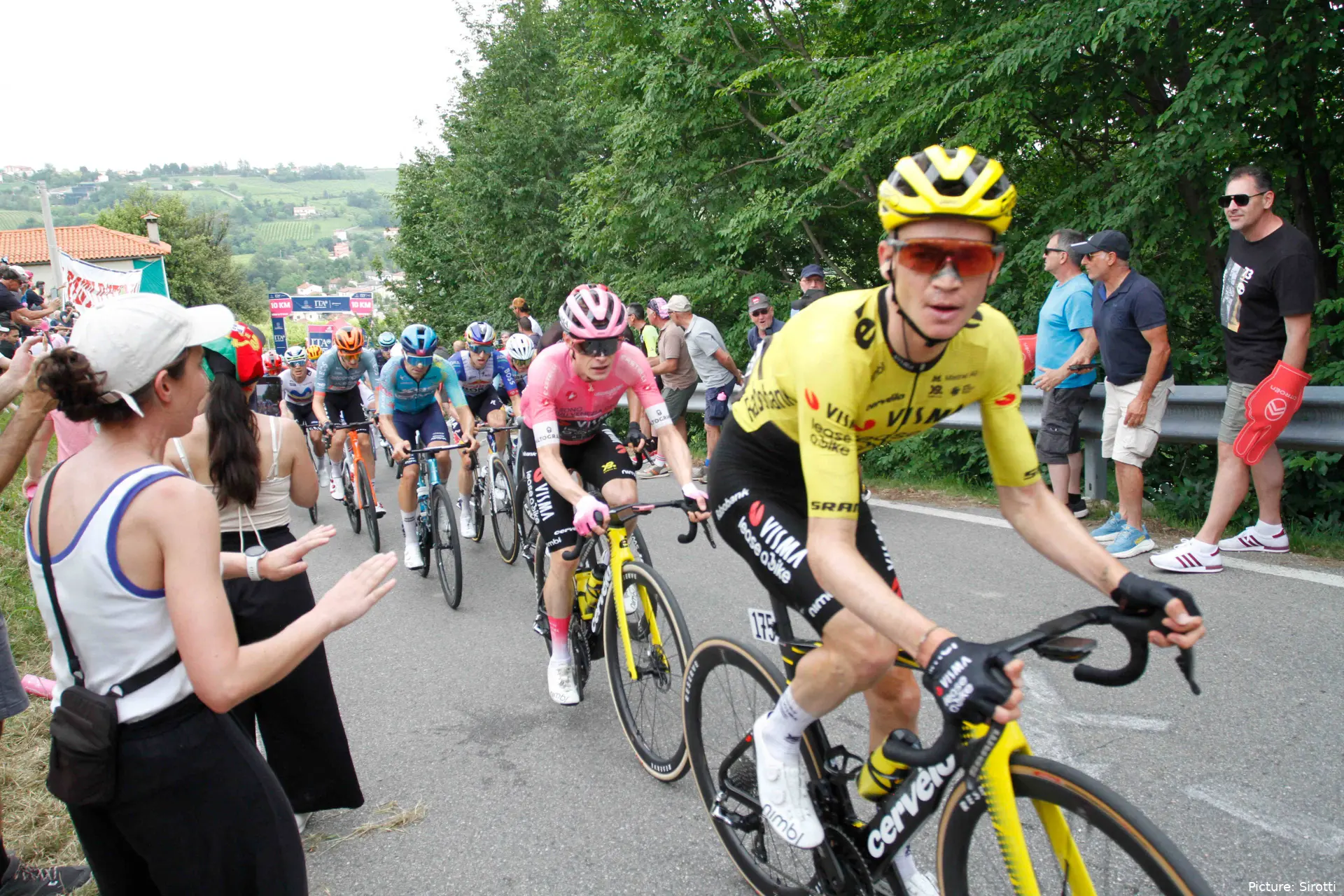
Sepp Kuss completed his Grand Tour stage win set on the queen stage of the 2026 Giro d’Italia, but his victory in Alleghe came with a wider Visma subplot attached.
Kuss won stage 19 after catching and passing Giulio Ciccone on the final climb, then riding clear to complete a rare Giro, Tour de France and Vuelta a Espana stage-winning trilogy. It was a huge personal moment for a rider who has spent so much of his career turning himself inside out for others.
At this Giro, though, Kuss has not always been the final mountain rider beside Jonas Vingegaard. Davide Piganzoli has grown into that role as the race has developed, giving Team Visma | Lease a Bike a different hierarchy in the high mountains from the one many expected before the start.
“He was supposed to be the last man for leader Jonas Vingegaard during the Giro d’Italia, but during the race that changed because team-mate Davide Piganzoli was even better,” Thijs Zonneveld said on the podcast In de Waaier.
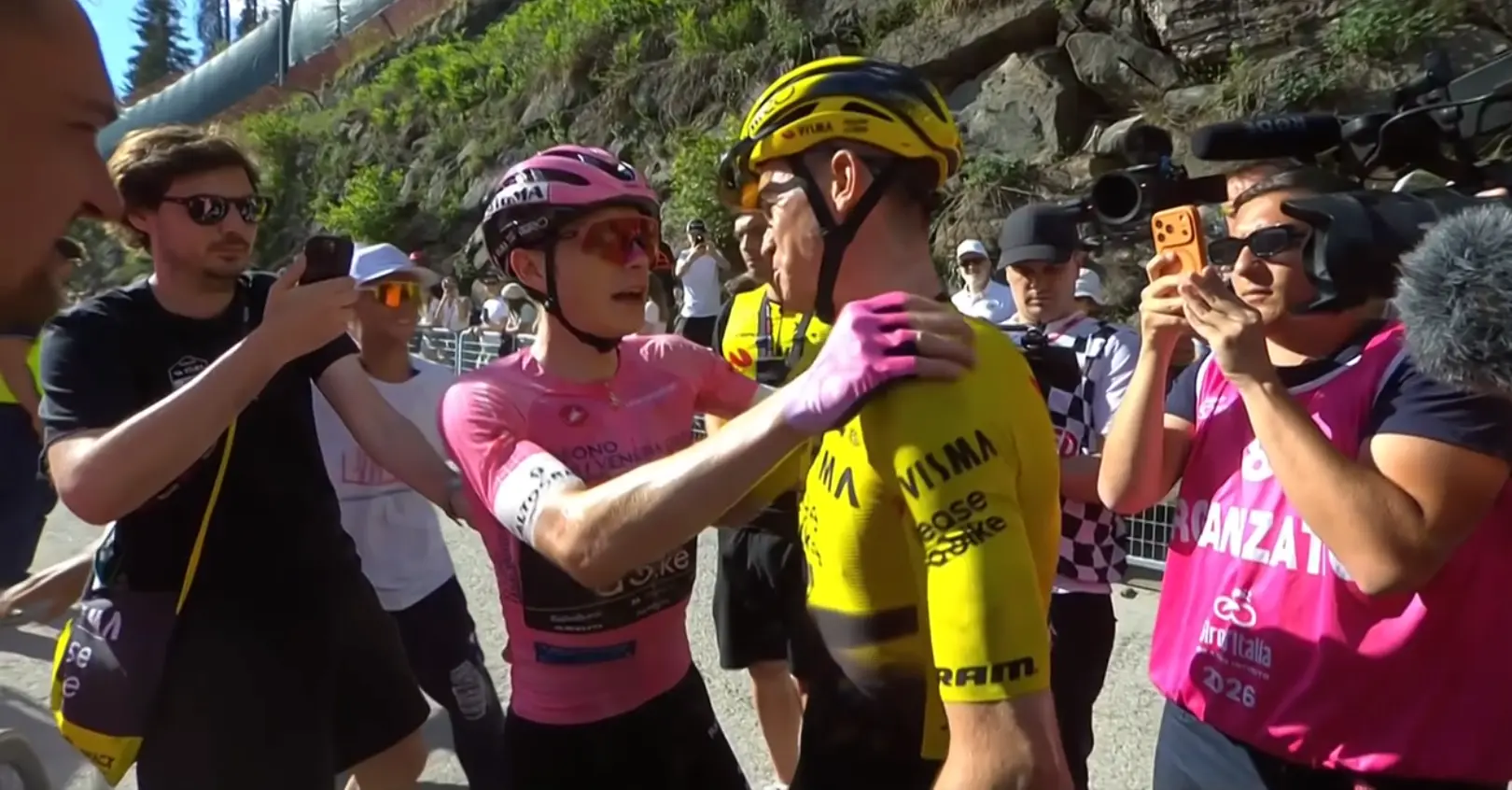
Kuss gets his own chance after years of service
Kuss remains one of Visma’s most valued riders, even if his role has shifted during this Giro. Zonneveld pointed to the number of times the American has rescued situations or acted as the launchpad for Vingegaard and Primoz Roglic.
“He may well be the most popular rider within Team Visma | Lease a Bike,” Zonneveld said. “Precisely because he has so often saved the day, or because he has been the launchpad for Primoz Roglic and Jonas Vingegaard.”
Those years of service made the Alleghe victory land differently. Kuss has rarely lacked the climbing level to chase his own success, but his place in Visma’s structure has often meant staying with a leader rather than racing for himself.
“He belongs among the best climbers in the world, but in countless races he simply has to stay with his leader,” Zonneveld continued. “Then, when he gets the chance, everyone is happy for him.”
Stage 19 gave him that chance. Vingegaard was secure in pink, the GC group remained under control, and Kuss was able to ride from the breakaway on a brutal day of repeated climbs and mounting fatigue.
“He is more that pure, pure climber”
Zonneveld had already argued earlier in the Giro that Kuss was not at his very best. His view is that the American’s strengths do not always match the way the hardest mountain stages are now being raced.
“The thing he struggles with is that the first part of climbs is ridden extremely hard,” Zonneveld said. “You certainly see that when UAE are involved, because they really like that. Pogacar wants to put everyone on the limit immediately in the first five minutes. And then it is straight away at 7.5 watts per kilogram.”
Kuss remains a world-class climber, but modern Grand Tour racing increasingly rewards riders who can survive repeated explosive surges before settling into rhythm.
“Six or seven years ago, it was more even, at 6.5 watts per kilogram, or something,” Zonneveld said. “Also very high, but it was more even. Then Kuss could make the difference somewhere very high up the mountain. But he lacks that explosive quality that has come in during recent years and that he finds very difficult.”
Stage 19 became a better fit. Ciccone animated much of the day, collecting mountain points and attacking before the final ascent, while Derek Gee-West again put himself deep into the fight. Kuss did not need to survive a violent early selection in the GC group. He could ride the climb on his own terms, close the gap to Ciccone, and finish the job through sustained power.
“He can keep riding his watts under heavy fatigue,” Zonneveld said. “But he cannot handle that extremely high wattage. And nowadays you need that to survive the first part of a climb.”

Kuss has long been a key man for Visma in the mountains
A queen stage win in a changing Visma order
Completing the set of Giro, Tour and Vuelta stage wins gives Kuss one of the landmark results of his career. Doing it on the queen stage only adds to the weight of the moment.
It also came at a Giro where Visma’s mountain order has not been quite what many expected. Piganzoli has taken on more of the final support work around Vingegaard, while Kuss has shown that his best value can still come when the race gives him space to use his pure climbing engine.
“Cycling has been changing in recent years,” Zonneveld said. “Of course, he is still a very good rider, but he is more of a pure, pure climber. In recent years you see that explosive riders are more often at an advantage, especially on climbs that are not very long.”
Kuss’ role may no longer be quite as fixed as it once looked, but Alleghe showed why Visma still have a mountain weapon few teams can match. After years spent making others’ victories possible, stage 19 belonged to him.

Kieran WoodDeputy Editor-in-Chief
Kieran Wood is a sports journalist based in Wales and has been active in journalism since 2022. He regularly contributes to DartsNews.com and CyclingUpToDate.com, where he covers professional cycling and darts. In cycling, his work includes liveblogs from major races, including the Tour de France, the Giro d’Italia, and La Vuelta a España, alongside race reports and analysis. He has also conducted interviews with professional riders.
His reporting spans the full racing calendar, from one-day classics to stage races, with a focus on accurate, real-time coverage and clear contextual analysis. For statistics, results, and historical context, he regularly uses resources such as ProCyclingStats. To support reporting on rider activity and training context where relevant, he also references Strava.
In his work, Kieran places strong emphasis on careful sourcing, editorial accuracy, and updating articles as new, verified information becomes available.
claps 4visitors 4
Just in
Popular news
Latest comments
- how it is "We’ve taken another big step forward for next year" he just lost in lombardia to a 20 year old, and two 30+ year olds. and not even top 10 for WCRR.abstractengineer19-10-2026
- This is similar to Lebron. first he said i need to consult my family , my daughter, need respectable money blah blah blah and then dont care about family , dont care about money, only onion rings, am off to Philly, very very far from family. Off season should be with family more, no?abstractengineer19-10-2026
- I hope he comes back strong for a proper battle with Tadejmij19-10-2026
- congrats to a great career and good retirement.mij19-10-2026
- Any artificial product should be reported.Any team that doesn't should be stripped of wins and fined.I know that this level of transparency does not and will never exist.All anyone can do is continue to test riders on a regular and surprise basis.If the test comes back clean then all any of us can assume is the rider is clean.
 Brucegel19-10-2026
 - Also, it's supposed to be hard to gain an advantage from drafting off Remco because he is so aero.Hills3319-10-2026
- How would stats back it up? You realise tactics involved could mean Vine saved his legs for a faster finish? Some riders can choose to go all out and fade later in the ride, others can hold steady state the whole way, and others can have a reserved start and power up later in the ride. You can't judge just by the stats unless you have power data to be able to prove Vine is riding faster even though he is putting out the same or less power (suggesting drafting). I'm sure the stats prove that Vine didn't cheat because UCI would monitor the stats to make sure this exact scenario doesn't happen (and disqualify them for drafting if the stats proved it).Pogboom19-10-2026
- Only one person would say such a thing here. Sorry to burst your bubble but I’m afraid that window of opportunity has now closed. You can beat some of the people all of the time and all of the people some of the time but you can’t beat all of the people all of the time.Jumpyjohn19-10-2026
- Both prizes are actually pathetic, almost amateur like, not even covering the cost of participatingJumpyjohn19-10-2026
- It depends on how you define doping and you would do well to give your definition so we can see how against it you are. If you consider the use (as a hypothetical example) of a new beneficial artificial product unknown to anti-doping agencies ok without considering asking them if it would constitute doping if you told them about it then we’re never going to agree on who could be or couldn’t be doping and according to what threshold, moral, statistical, legal, comparative. In football even financial doping is now consideredJumpyjohn19-10-2026
Loading
Write a comment