"He can beat anyone on a good day" - Marcel Kittel key to Dylan Groenewegen’s resurgence
CyclingFriday, 27 March 2026 at 09:00
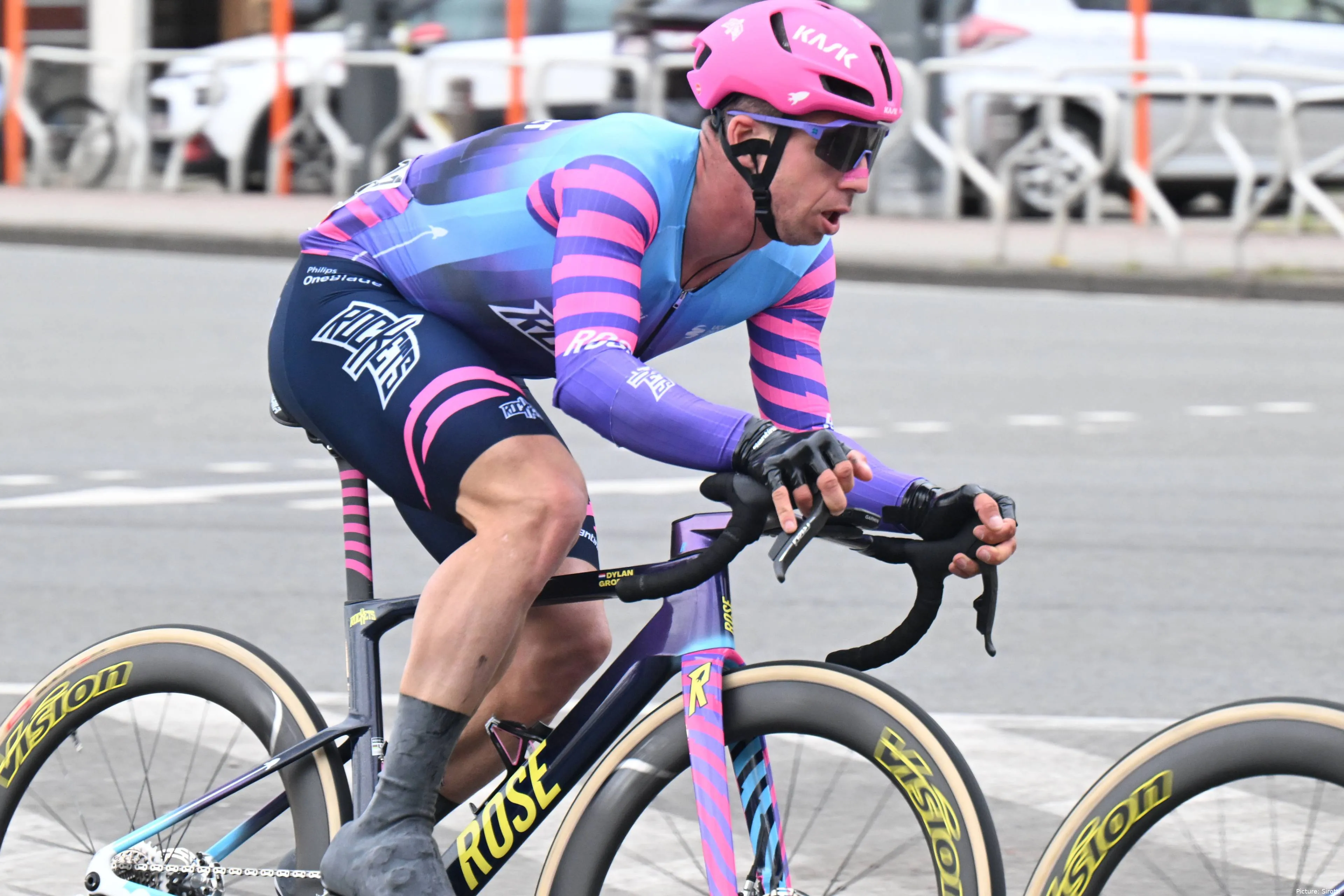
Marcel Kittel’s return to professional cycling hasn’t been on the bike, but from the team car. The German, one of the foremost sprinters of his generation, has started a new chapter as a coach with the Unibet Rose Rockets project, working closely with Dylan Groenewegen. A collaboration that, for now, is delivering visible results after a strong start to the season by the Dutchman.
Kittel, who retired at the end of 2019 after a career packed with success, had chosen to step away from cycling entirely. Now 37, he amassed a standout palmarès with 14 Tour de France stage wins, four at the Giro d’Italia and five victories at Scheldeprijs, figures that place him among sprinting’s greats.
After retiring, he focused on his personal life and stayed clear of the competitive environment. As he explains, he needed distance before considering any return. During that time he received offers to join teams, but he didn’t feel it was the right moment.
“It was a conscious decision,” Kittel explains. “I wanted to disappear from the sport for a while. I always said I didn’t see myself working as a coach or sports director. My priority was family and enjoying time after my career. I needed distance before thinking about coming back. I received several offers to rejoin teams, but I was in a different phase of my life.”
A new project and a changed cycling landscape
The contact with Unibet Rose Rockets isn’t new. There was an initial approach three years ago, when the structure didn’t yet have a top-tier sprinter. However, the current context has paved the way for his arrival.
Kittel points out that cycling has evolved markedly in recent years, with more specialists and a more scientific approach to preparation. Even so, he notes that the sport’s essence remains the same: physical output and mental strength are still decisive.
“This is a better moment,” he says. “A lot has changed in cycling. There are more experts, more applied science, and that allows us to understand riders better and prepare them better. But in the end they still ride two-wheeled bikes. You need to be strong physically, but also mentally.”
A role focused on the mental and strategic
Far from taking on traditional coaching duties, the German has found his niche in the specific preparation of sprint finishes. His work centers on leading meetings, staying in close contact with riders and helping them manage situations both inside and outside competition.
Kittel believes his experience as a former pro lets him understand a rider’s needs from a different angle, especially on the mental side, where he feels he can add real value.
“What I enjoy most is preparing each sprint race, leading the meetings, being in touch with the riders and listening to what problems they have and how I can help,” he says. “That’s what I felt I was missing as a former pro who has lived a lot within cycling.”
The connection with Groenewegen
A key element of this collaboration is Kittel’s prior relationship with Groenewegen. The pair crossed paths at the 2017 Tour de France, where the German took five stage wins while the Dutchman opened his account on the Champs-Élysées.
For Kittel, Groenewegen’s talent and speed have never been in doubt. In his view, the difference from last season lies in combining those qualities with greater mental strength and the right environment within the team.
“His talent and his speed have always been there,” he says. “If you combine that with his mental strength and his new team, you have the formula for success.”
Kittel also underlines the Dutch sprinter’s ambition, a motivation that energises him in his new role. He highlights the team’s particular atmosphere, which maintains a different identity from its origins as a project linked to digital content.
“Dylan’s motivation is very high. He’s still a born winner and he wants to win. His ambition gives me energy too,” he adds. “The team has a different atmosphere, a different vibe from a traditional team. They do things differently and it’s working.”
A team on the rise
The Unibet Rose Rockets structure continues to develop. Although it already races significant events, this season marks a step up with milestones such as a first major win at Ronde van Brugge and the upcoming participation in the Giro d’Italia.
The transition to the top tier requires, Kittel says, progressive adaptation and constant attention to detail. In that process, the buy-in of riders like Groenewegen is essential.
The Dutchman, who arrived from Jayco AlUla, has backed this project with conviction, engaging in its development and dedicating time to his preparation.
“You have to be open to it. It has to come from within, and with Dylan it does,” Kittel explains. “He wants to do it, he puts time and energy into the team every day and he prepares well. Results come, but it’s the riders who deliver them. All the credit is theirs.”
Goals and outlook
Looking ahead, Kittel remains cautious. He believes Groenewegen is still capable of beating anyone on his day, though he acknowledges that performance can fluctuate over the season.
The team’s major target is the Giro d’Italia, where they hope to reap the rewards of their work. Until then, the priority is to keep learning in every race, regardless of results, with the goal of arriving in peak condition for their main objectives.
“I’m sure Dylan can beat anyone on a good day,” he concludes. “But performance has ups and downs. That’s our starting point. The Giro is the big goal and, until then, we must learn from every opportunity, whether it went well or not, to improve towards our main targets.”
Read also
claps 0visitors 0
Just in

Popular news
Latest comments
- Col du Granon was affected by bad tactics but not caused by them. It gave him a big warning and that's why he started trying harder. In 2023 he was on another level. He dominated Paris-Nice [although that had little significance as he'd done that in Tirreno in the years before], but the real change was seen in the classics. While in 2022 he was 5th at MSR, 10th at DDV, 4th at RVV and 12th at FW, in 2023 he was 4th at MSR and 3rd at E3 before being unbeaten through RVV, Amstel and FW. The crash at LBL derailed him. It would be unfair to Jonas to say that Pogacar would've won the Tour otherwise but it would also be unfair to Pogacar to say that he didn't try much harder. But the 2023 Tour de France lit the fire for what came next. Let's hope that in 2026, after two years of dominance [just as he'd done in 2020-21], he doesn't get complacent. An interessting note is that after the 2023 Tour de France Pogacar abandoned cyclocross
 Rafionain-Glas27-03-2026
 - If he is not riding to win, he is certainly showing that he is in good condition.Cyclingsbestfan27-03-2026
- Not you. It was another M. Balkans he said he came from. Kept dissing and fiing Vin.Cyclingsbestfan27-03-2026
- Of course he can he puts other riders into the barriers wreck their careers and is probably the most dirty sprinter in the peleton. Come on should he be really riding what he did was after he found out he was losing the sprint. I can see why he so hated within the peleton and they have been refused ride in the TDF.paultryan200227-03-2026
- Granon? I though it was a crack due to incorrect tactics. i thought it was Col de la Loze where he completely capitulated that lit the fire for 2024.abstractengineer27-03-2026
- how is this news lol. it was a sleeper of a day. no reason to be on the front.mij27-03-2026
- or maybe Remco just isn’t strong at UAE tour kinda climbs. he doesn’t seem to be.mij27-03-2026
- or maybe he won’t. he crashes and keeps racing.mij27-03-2026
- everything is open for interpretation. I said I can’t imagine Tadej or others saying that. but they’re one day racers, or have the attitude of one day racers, it is all or nothing.mij27-03-2026
- You never want to lose a back wheel, especially in a Cat. 5 race.Oldguyonavelo27-03-2026
Loading
1 Comments