DOPING | French pharmaceutical company develops project that worries cycling authorities over potential use in riders
Cycling
According to information published by colleagues at Il Corriere, an investigation in France has put the spotlight on a substance with potential medical use that has also attracted interest in the doping world. It is an alternative haemoglobin derived from the lugworm, known as the sandworm, which could act as a powerful oxygen carrier in the human body.
This has prompted the World Anti-Doping Agency (WADA) to take a close interest due to possible doping implications. There is no connection so far with cycling or any other sport, but authorities are concerned and, logically, the substance is under surveillance.
The project is being developed at Hemarina, a biopharmaceutical company based in Morlaix on the coast of Bretagne, France. The company was founded by university researchers and has spent fifteen years working almost exclusively on analyzing and adapting the haemoglobin of this marine organism, reared in large tanks. The stated goal is to offer a natural alternative to certain standard treatments, especially in severe diseases that require high tissue oxygenation.
According to available studies, once adapted to the human circulatory system, this haemoglobin would have an oxygen transport capacity up to forty times higher than the natural version, without significant side effects. That makes it a possible blood substitute for transfusions, with the added benefit of being more effective and more readily available than donor blood. Hemarina has patented six different products based on this technology, all supported by extensive scientific literature.
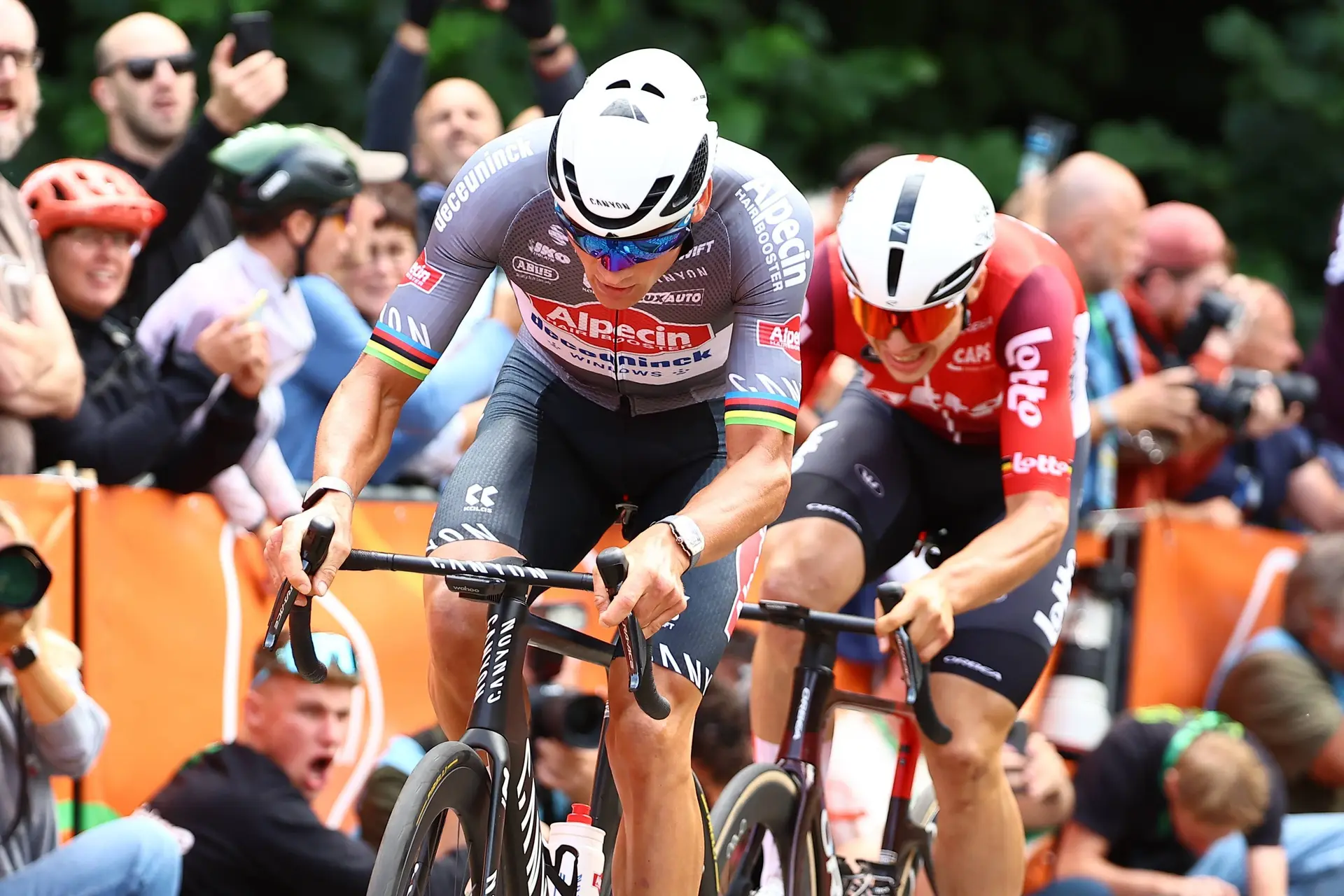
Sporting interest in the substance surfaced after an interview given by Dr Franck Zal, Hemarina’s founder and CEO, to the French daily L’Équipe. He revealed that, three years ago, a very well-known rider from a WorldTour team requested a supply of the product. The main reason would be its very short half-life, which allows the substance to be cleared quickly from the body.
According to the company itself, this was not an isolated case. Hemarina says it immediately informed Oclaesp, the French police unit specialised in combating doping and health-related offences. Oclaesp confirmed an open investigation, although it has not disclosed the outcome of proceedings initiated three years ago.

Doping blights cycling and other sports
Substance under surveillance
The World Anti-Doping Agency has stated that the substance is under surveillance and can be detected directly in tests, provided analysis takes place between four and eight hours after administration. This is a very narrow window that makes detection difficult in competitive contexts.
Its use could also be reflected in athletes’ biological passports. However, there are no recent cases of elite athletes sanctioned for longitudinal anomalies linked to this substance. Some researchers note that scientific studies indicate this haemoglobin would not alter haematocrit, one of the key parameters used in biological passport models. That fuels concern that new doping practices may be advancing faster than the systems designed to detect them.

Rúben SilvaEditor-in-Chief
A founding contributor to CyclingUpToDate since its launch in January 2022, Ruben Silva has played a central role in shaping the site’s editorial direction and long-term growth. Before joining the project, he built his experience through independent blogging at Echelons Hub and by producing race previews for Ciclismo Internacional, developing a strong analytical voice rooted in daily engagement with professional cycling.
Beyond editorial work, he has been closely involved in the expansion and coordination of CyclingUpToDate’s wider network, helping establish and support sister platforms across multiple languages. This includes ongoing collaboration with CiclismoAlDia (Spanish), CiclismoAtual (Portuguese), WielrennenUpToDate (Dutch), and RadsportAktuell (German), contributing to a shared editorial vision and consistent international coverage.
He also helps oversee editorial governance across the network, setting standards for accuracy and consistency and coordinating updates or corrections when needed.
Originally from the Porto metropolitan area in Portugal, he holds a bachelor’s degree in Geography. His path into cycling journalism was shaped not through formal media training, but through independent reporting, community engagement, and sustained on-the-ground involvement in the sport.
Over the course of his career, he has conducted approximately 100 interviews across road cycling and cyclocross, ranging from one-to-one conversations and online formats to press conferences and on-site pre- and post-race coverage. His interviews include leading riders, team managers, and prominent figures within cycling media: Tadej Pogacar, Jonas Vingegaard, Mathieu van der Poel, Primoz Roglic, Wout van Aert, Joao Almeida and Tom Pidcock; managers like Patrick Lefevere and Joxean Matxin; and YouTube personality Bryan Kennedy (BKXC)...
Within 18 months of launch, he helped grow CyclingUpToDate’s English-language platform into one of the most-read cycling news websites, built entirely from the ground up. As both a professional journalist and lifelong cycling enthusiast, his focus remains on delivering accurate, timely, and well-contextualized coverage.
claps 0visitors 0
Just in

Popular news
Latest comments
- With the exception of Axel Laurence, the rest are in their 30's. My opinion is I think, perhaps, we're beginning to see the effects of younger riders coming into the pro ranks. I believe we're going to see those effects in the coming years. All teams are looking for the next Pogi, Jonas & Seixas. Of course, Seixas hasn't proved himself yet. He's just a kid. I believe he will though. Remco is a strange case. I believe if he can overcome being erratic, he should wn a few Tours, What do you guys think?Paggss27-10-2026
- And, at 2% he'll still destroy the competition...Paggss27-10-2026
- I agree.Paggss27-10-2026
- I hear you, I'm 73 with C5 & C6 fused. Also, I'm two aortic valve replacements and three pacemakers down. Yea, Father time is catching up. I'm just glad I can ride at a good level. Uphills are not my favorite however, I love those downhills! I guess I give us 'old guys' some inspiration. :~ )Paggss27-10-2026
- Prove otherwise... I'm sure there's thousands of Glaswegians will be happy to tell you their version of it!slappers6627-10-2026
- they should allow teams to add to the roster limit if they are adding riders in other disciplines. for example, you can have 30 road riders, 3 gravel, 3 mountain bike, 3 cyclocross. that way a team isn't penalized by losing road riders by expanding into other disciplines. of course it needs to be policed as does a team classify Pidcock, MVDP or WVA as cross, mountain, or what? But that is workable.mij27-10-2026
- great guy and a winner if he can stay healthy.mij27-10-2026
- Utter rubbish
 Rafionain-Glas27-10-2026
 - Ha! For “spring” read “sprint”.Lozza27-10-2026
- Well, for all the whinging about UAE’s massive budget allowing them to buy up all the talent at the expense of the other teams, just take a look at the last couple of seasons of transfers and I think you’ll find UAE aren’t the ones snapping up all the talent!Lozza27-10-2026
Loading
Write a comment