DISCUSSION | Milano-Torino & Nokere Koerse 2026 - Pidcock and Philipsen triumph in contrasting Italian and Belgian finales
Cycling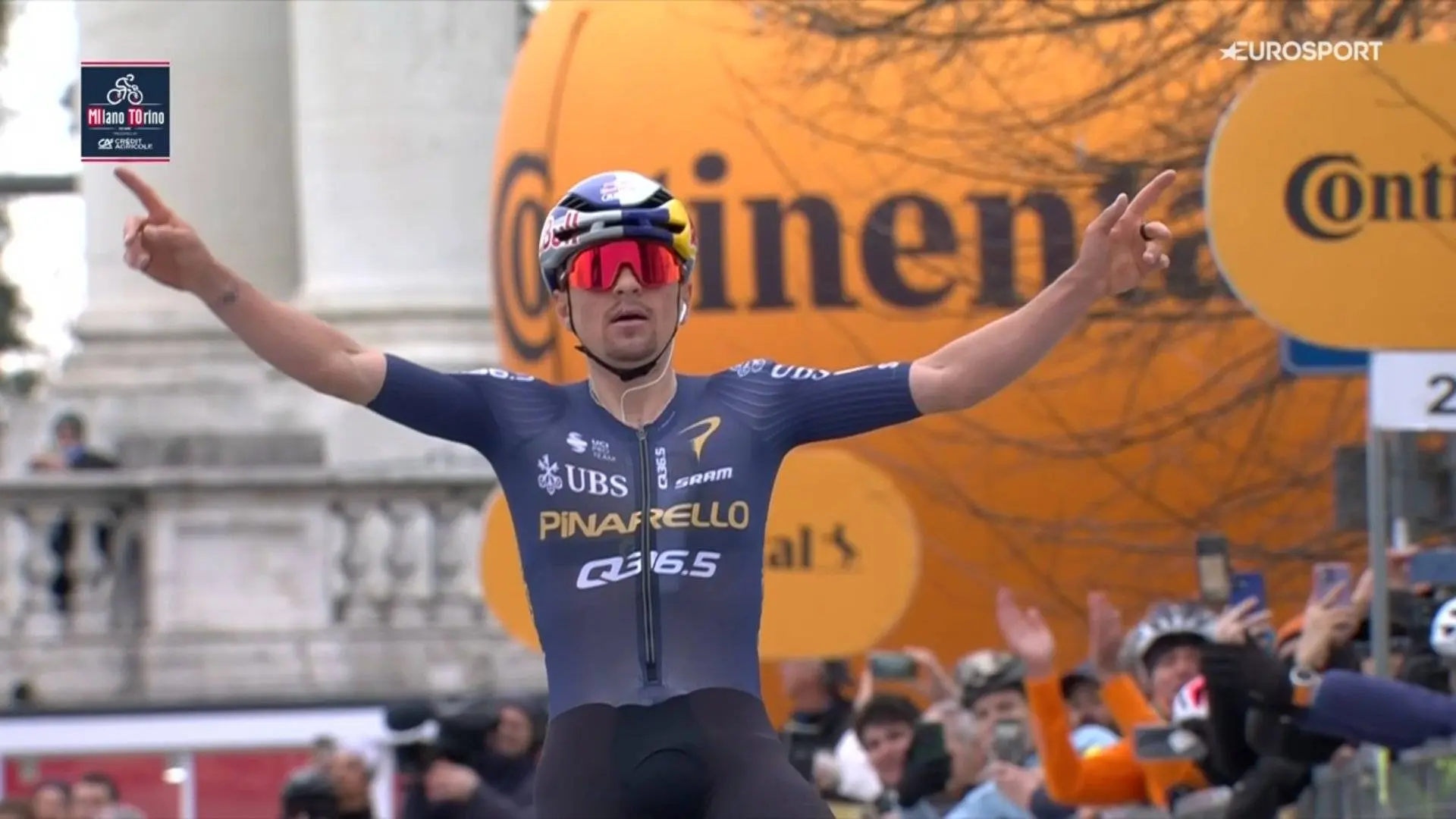
Tom Pidcock and Jasper Philipsen delivered two very different, yet equally compelling victories on Wednesday, as Milano-Torino and Nokere Koerse produced contrasting showcases of climbing precision and sprint power in the 2026 season.
In Italy, it was a race defined by relentless aggression and timing on the iconic slopes of Superga. In Belgium, chaos, hesitation and late drama shaped a finale that ultimately swung back in favour of the sprinters.
Aggression shapes Milano-Torino before Pidcock strikes
Milano-Torino built towards its decisive moment long before the final climb, with a six-rider breakaway controlling the early phase before being steadily brought back by the combined efforts of Pinarello Q36.5 Pro Cycling Team, Red Bull - BORA - hansgrohe and UAE Team Emirates - XRG.
As the race hit the first ascent of Superga, the tempo surged. Primoz Roglic lit up the steep gradients with a sharp acceleration, immediately forcing a selection and reducing the peloton to a small group of contenders. The race continued to fragment even before the final climb, as Pidcock and Cian Uijtdebroeks launched aggressive moves in the transition phase to avoid a controlled uphill finish.
Adrien Boichis briefly gained ground with a solo move, giving Red Bull - BORA - hansgrohe a tactical advantage, but behind him the attacks never stopped. Pidcock and Uijtdebroeks remained among the most active, repeatedly trying to bridge across as the race stretched under constant pressure.
By the time Boichis was reeled in ahead of the final ascent, only a select group of favourites remained. On the last climb, repeated accelerations continued to thin the field, with Roglic again testing his rivals while Movistar attempted to steady the pace for Uijtdebroeks.
Inside the final two kilometres, the race split once more into an elite group including Pidcock, Roglic, Tobias Halland Johannessen and Uijtdebroeks. Others, such as Giulio Pellizzari, were distanced under the sustained intensity.
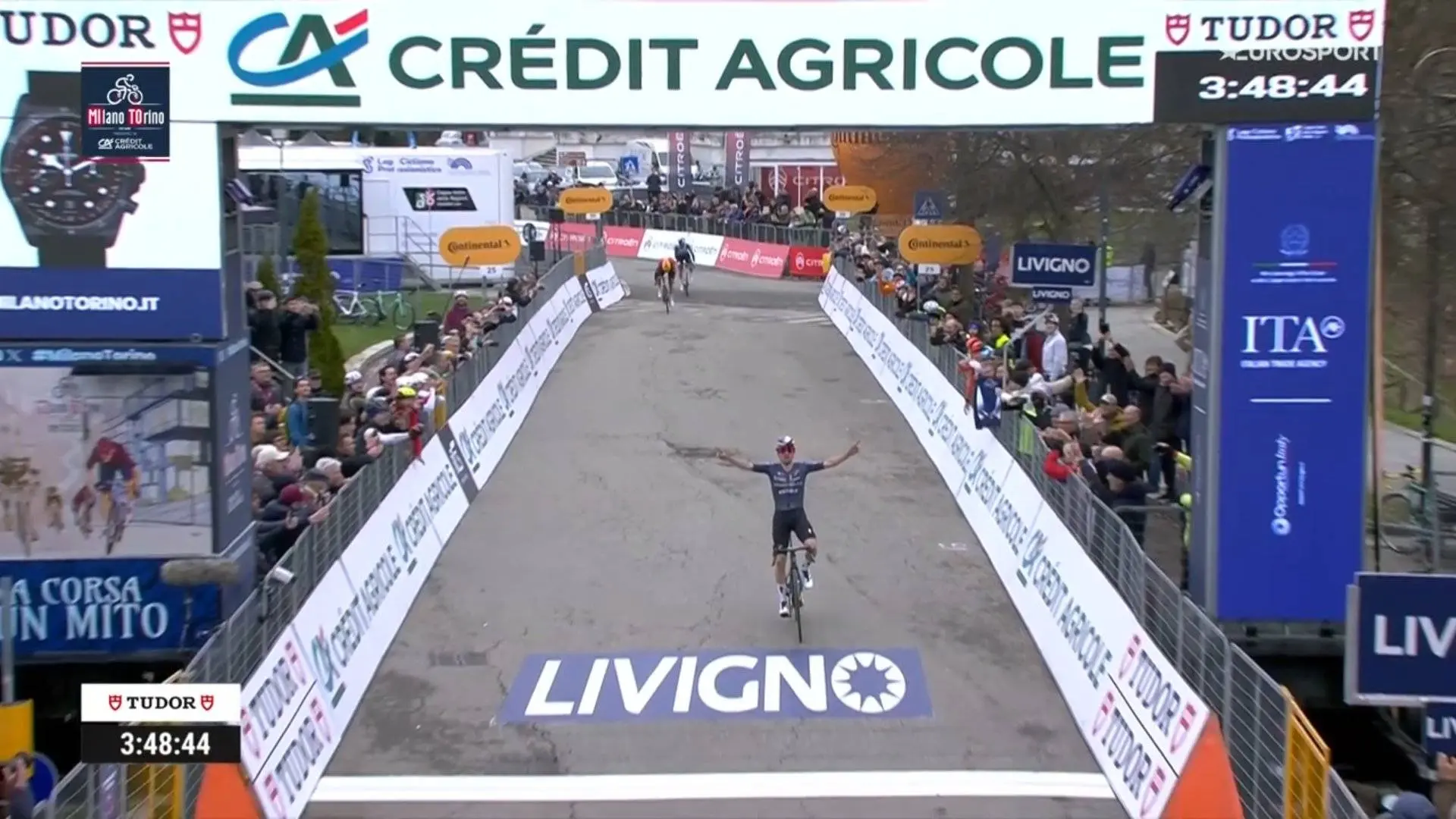
The decisive moment came late. Roglic raised the tempo inside the final kilometre, and Uijtdebroeks responded, but neither could make the difference. Instead, Pidcock chose his moment perfectly, launching with around 600 metres to go and immediately opening a gap on the steep gradients.
Chaos and hesitation define Nokere Koerse before Philipsen prevails
While Milano-Torino was shaped by climbing aggression, Nokere Koerse followed a more familiar Belgian pattern before unravelling into a chaotic finale.
An early four-man breakaway featuring Lionel Taminiaux, Jelle Harteel, Sean Christian and Jonah Killy set the tone, holding a steady advantage as sprint-focused teams such as Alpecin-Premier Tech and Red Bull - BORA - hansgrohe controlled the race from behind.
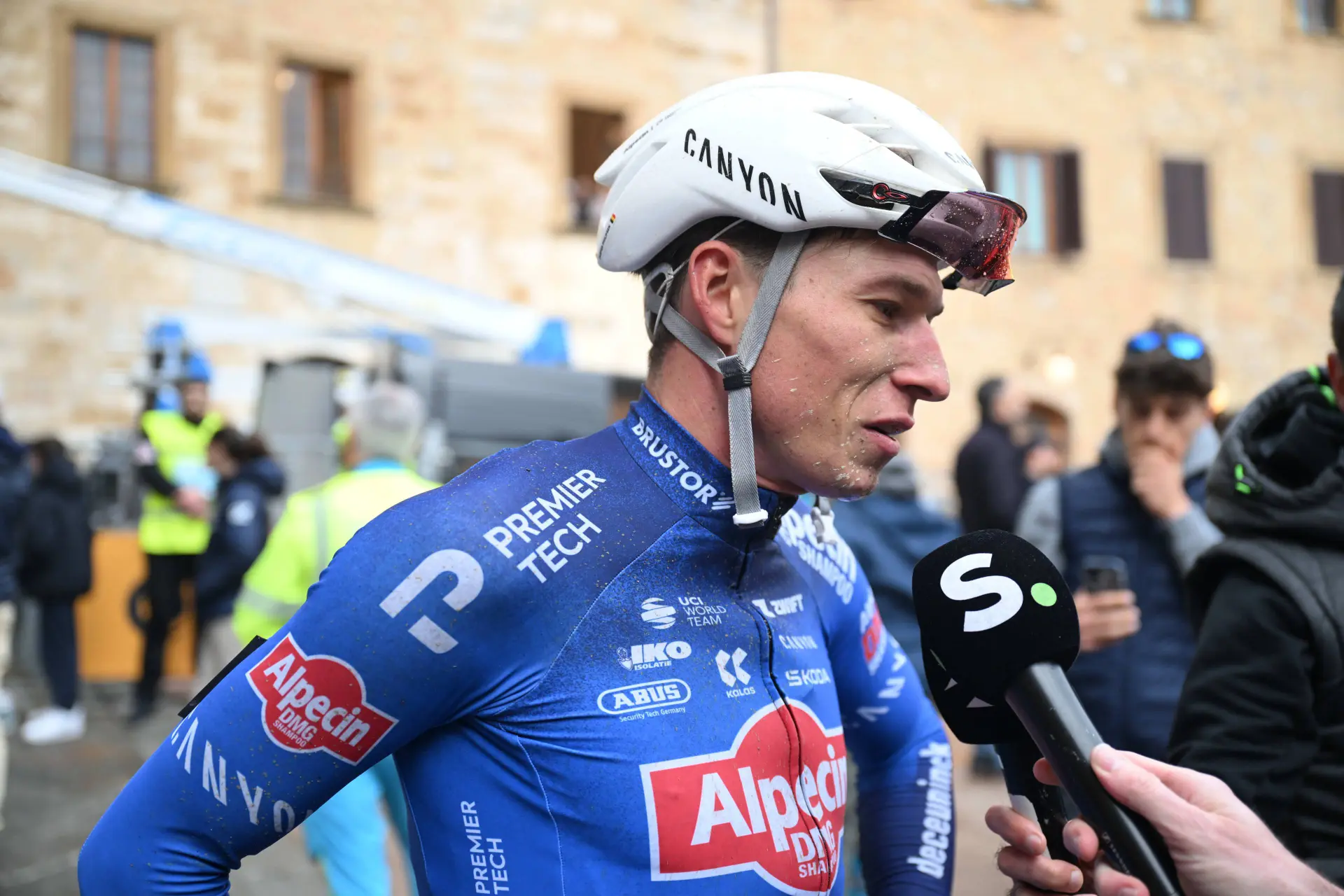
Despite wind and multiple cobbled sectors, the peloton remained largely intact through the middle phase, with positioning battles intensifying but no move proving decisive. Incidents along the way disrupted several riders, including Hugo Hofstetter, who crashed multiple times, and Pascal Ackermann, who was dropped before the decisive phase.
Inside the final 50 kilometres, the intensity increased as teams without a clear sprint option attempted to force the race open. Attacks on sections like the Lange Ast and Nokereberg repeatedly tested the peloton, but riders such as Gianni Vermeersch helped neutralise the moves, keeping the race under control.
The race finally exploded with 15 kilometres to go when Alec Segaert launched a powerful solo attack. Adopting an aerodynamic position, the Belgian quickly built a significant gap as hesitation in the peloton disrupted the chase. Bahrain’s presence further complicated the pursuit, with teammates interfering with the rhythm and preventing a coordinated response.
Behind, the race fragmented into small, disorganised groups. A lack of cooperation allowed Segaert to extend his advantage, and for a moment, a solo victory looked within reach.
However, the dynamic shifted again in the closing kilometres. As more teams committed to the chase, the gap began to fall, but valuable time had already been lost due to earlier hesitation.
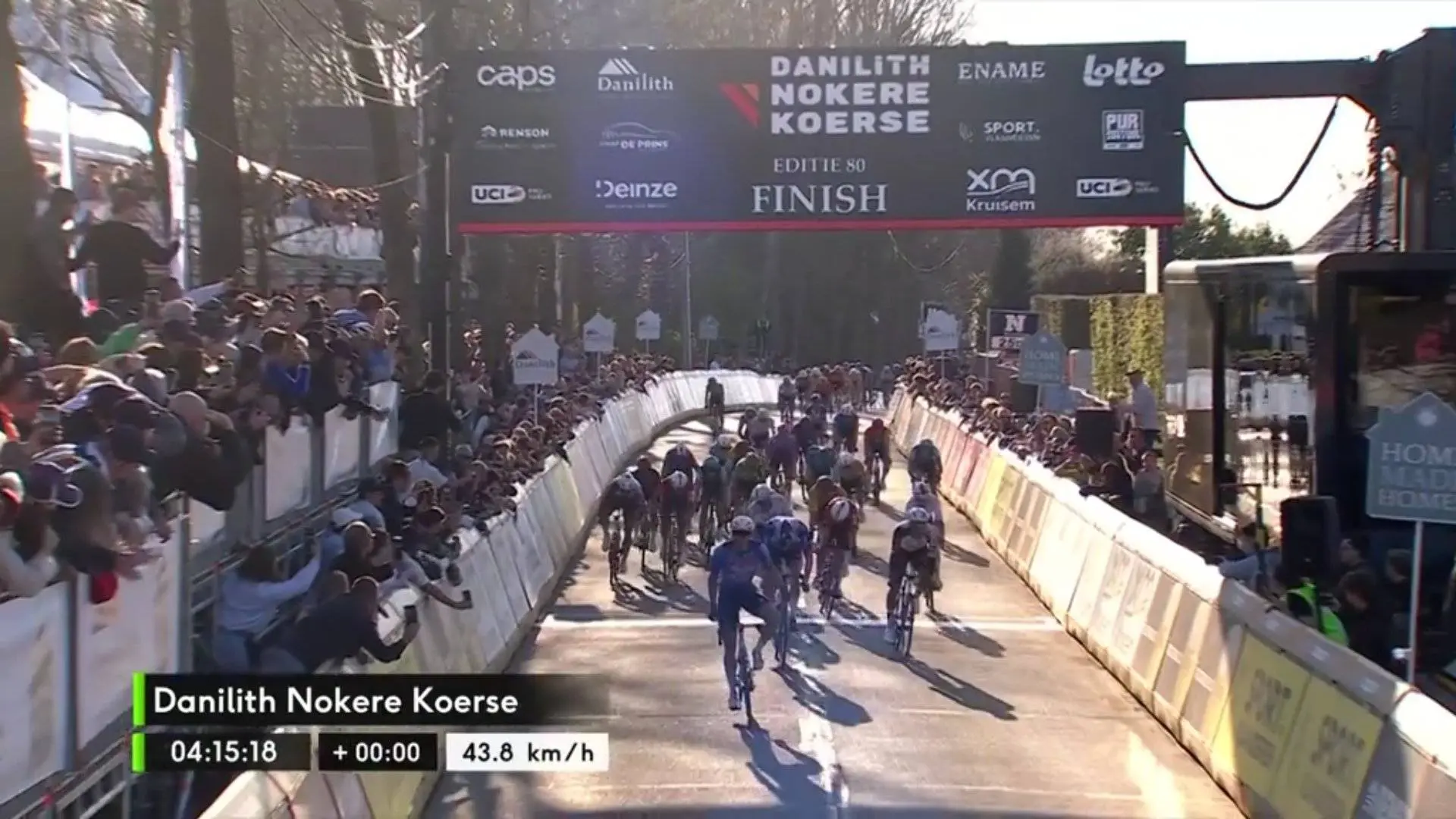
Entering the uphill finish in Nokere, Segaert was visibly fatigued but still clinging to his advantage. The chasers, led by the sprinters, closed rapidly in the final metres.
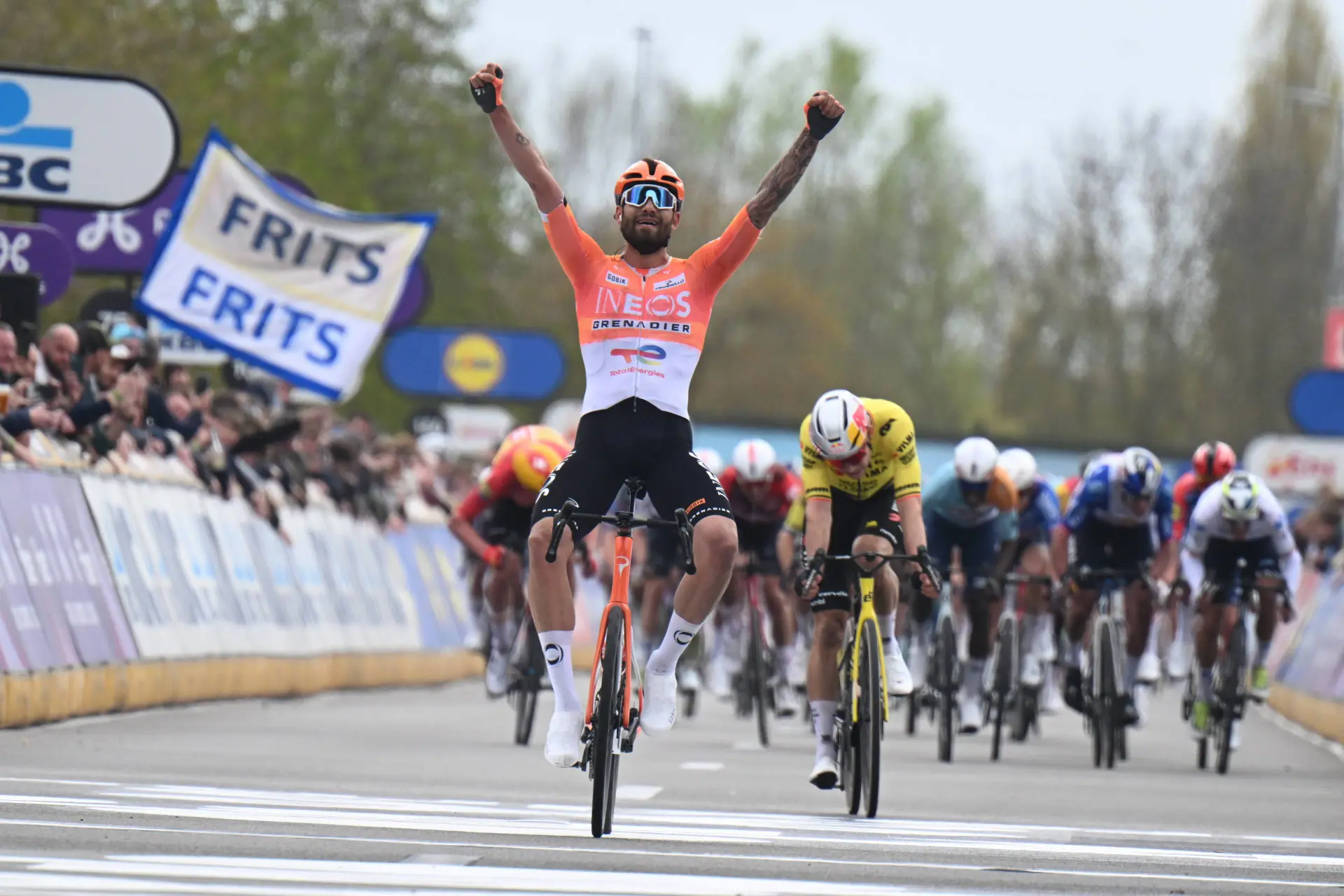
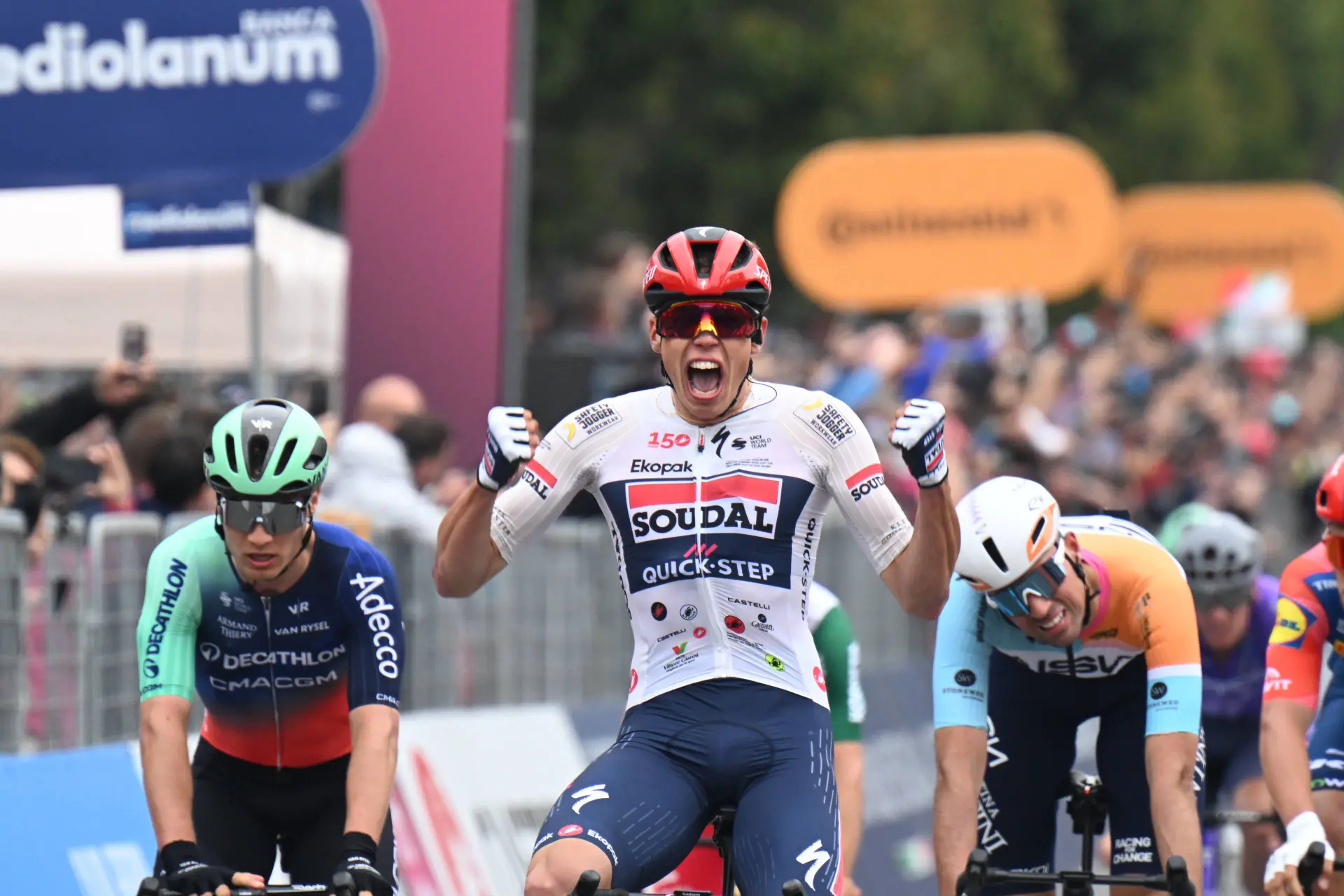
In a dramatic conclusion, Segaert was caught just before the line, as Philipsen launched a powerful and perfectly timed sprint to snatch victory and claim his first win of the 2026 season.
Nokere Koerse WE
Lotte Kopecky sprinted to a dominant victory at the 2026 Danilith Nokere Koerse WE, launching a perfectly timed effort on the uphill run to the finish after a chaotic and highly tactical finale.
The race seemed to be heading towards a reduced bunch sprint after several late attacks failed to create a decisive gap. Kopecky herself was heavily involved in that phase, accelerating on the cobbles of the Lange Ast to form a select group together with Charlotte Kool, Fleur Moors and Shari Bossuyt.
However, hesitation inside the break proved costly. With Kool, the fastest sprinter in the move, unwilling to fully commit, the advantage quickly disappeared and a larger chasing group managed to come back, bringing the race together again in the final kilometres.
The regrouping created a nervous run-in to the finish where positioning became crucial. On narrow roads and cobbled sectors, several teams fought to control the front of the peloton, but no one could dominate for long, turning the finale into a test of timing and raw power rather than pure sprint organisation.
A late solo attack from Ilse Pluimers briefly threatened to upset the expected sprint finish, opening a small gap inside the final kilometres. Fenix-Premier Tech reacted quickly in support of Kool, closing the move and setting up a bunch sprint.
Crashes in the peloton and a puncture for Bossuyt added tension in the closing phase, but the outcome still came down to a sprint.
Inside the final kilometre, multiple teams tried to organise their lead-outs, with SD Worx, Fenix-Premier Tech and UAE all present at the front as the road started to rise towards the line.
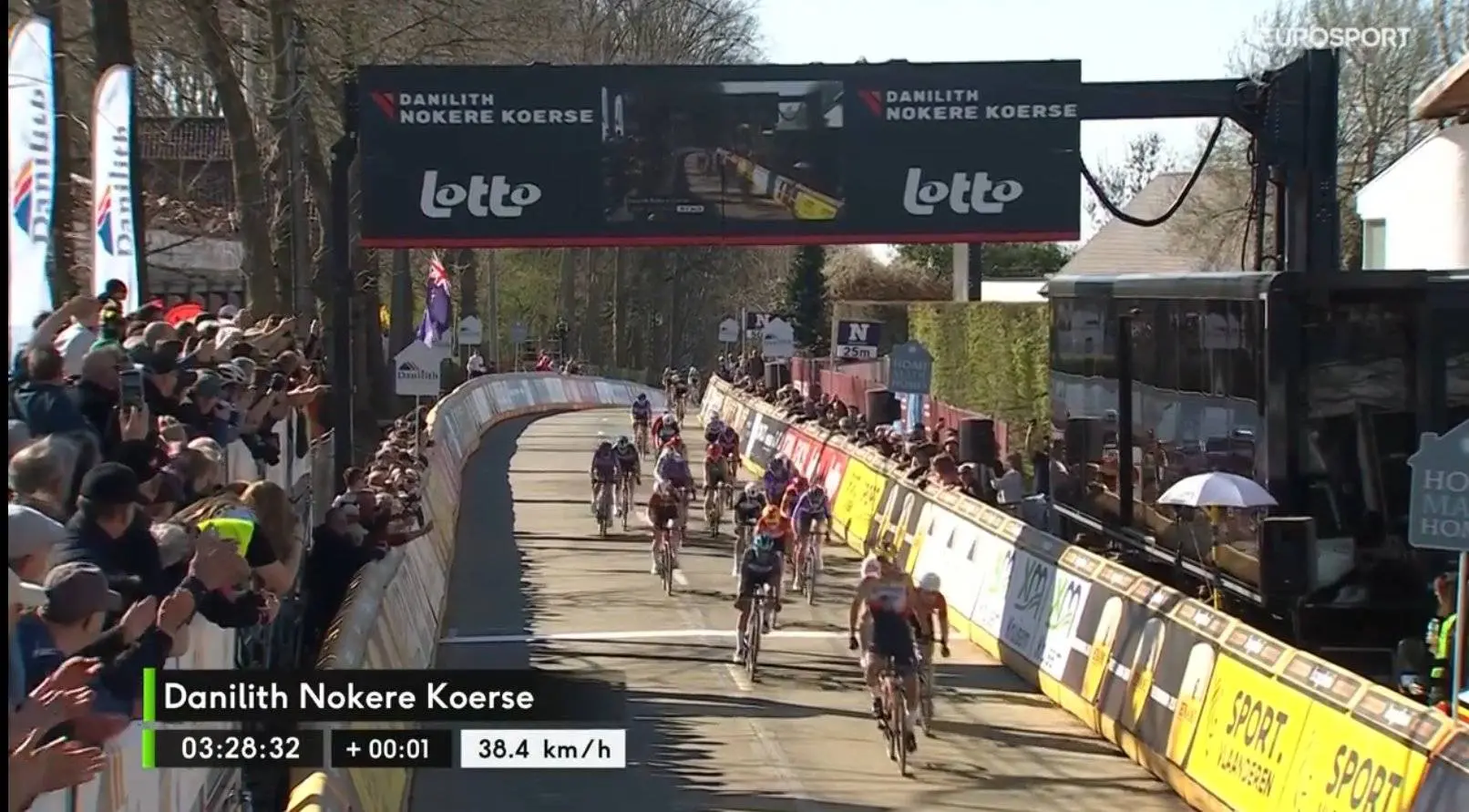
Kopecky, briefly isolated compared to the numbers around her, held her position before launching her sprint with around 100 metres to go. Her acceleration was decisive, opening a clear gap that none of her rivals could match.
Charlotte Kool finished second, while Lara Gillespie completed the podium after a tight sprint behind the winner.
Carlos Silva (CiclismoAtual)
Both races were highly tactical, and in the end, the riders I had predicted came out on top. I picked Tom Pidcock and Jasper Philipsen for the wins, and I wasn’t wrong.
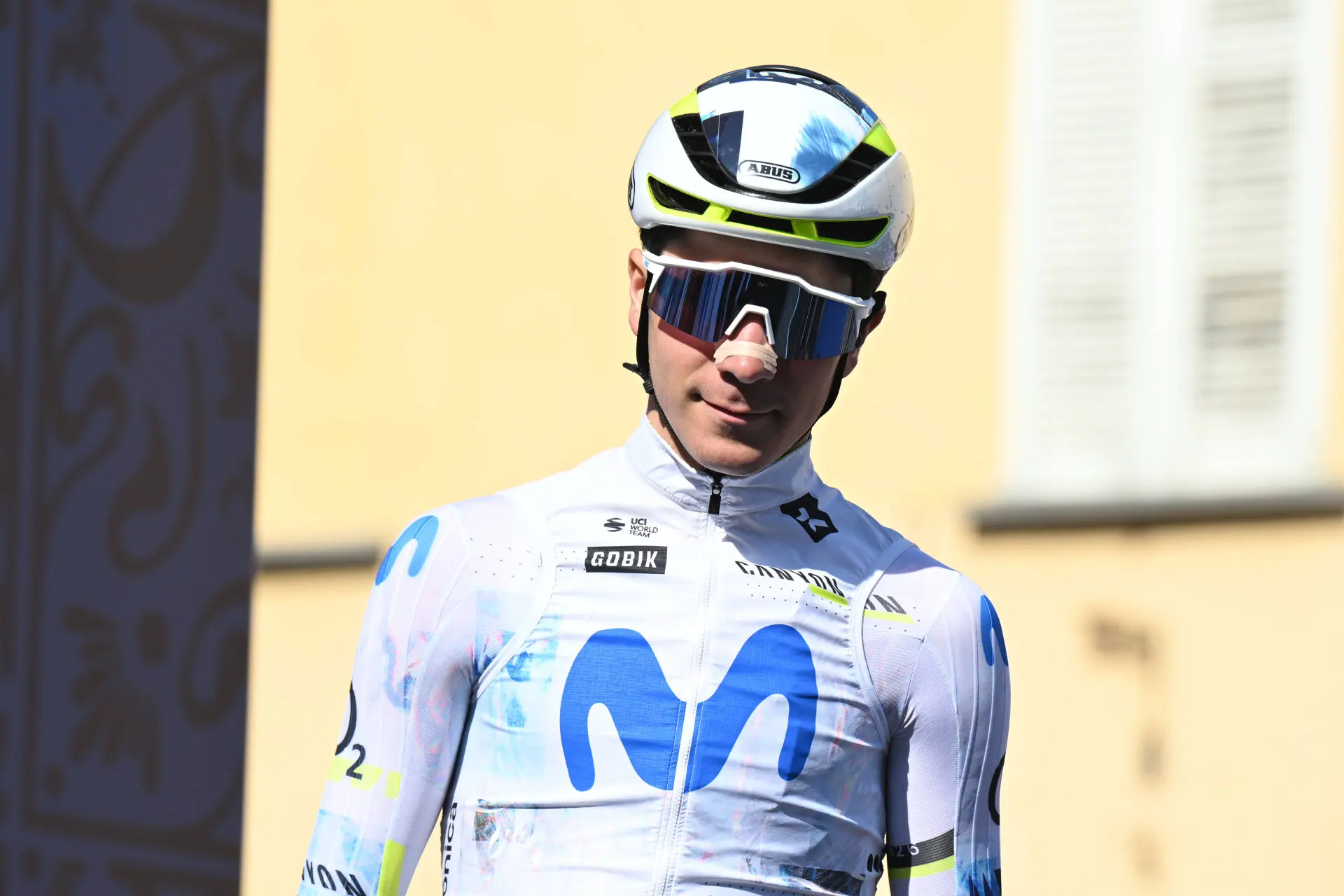
I liked seeing Primoz Roglic trying to show something in Italy, which ultimately earned him a place on the final podium in Turin. What I didn’t quite understand was the huge amount of work done by Movistar on the final ascent of Superga for Cian Uijtdebroeks.
Sure, he wanted to prove himself and maybe even had a podium in mind, but with riders like Pidcock, Roglic, Giulio Pellizzari and Tobias Halland Johannessen in the race, just to name a few, the strategy should probably have been different. Still, I give the Spanish team a positive rating, no doubt about it.
In Belgium, it was a race full of tension but ultimately lacking a real storyline. I was a bit disappointed, although I already expected a sprint finish. Alec Segaert almost surprised everyone and took the win, but he was caught by the sprinters just within sight of the finish line. Philipsen delivered a great sprint, moving from the left to the centre and showing a champion’s instinct by launching at exactly the right moment.
A final note for Fabio Jakobsen… He’s clearly in decline. Seeing him abandon the race in Nokere today is a sign of what has been evident for a long time. It is painful to watch a sprinter who once had great moments of glory fade away.
Victor Gonzalez (CiclismoAlDia)
The race day of March 18, 2026 once again confirmed something quite common in the cycling calendar: the overlap of several mid-to-high level classics within the UCI ProSeries creates an interesting competitive context, but also a certain dispersion of attention.
Both Milano–Turino and Nokere Koerse share the same date and category (1.Pro), which means that, without being “Monument” races, they still bring together a notable level of competition and serve as preparation for bigger objectives.
In the case of Milano–Turino 2026, the route once again featured a demanding finish in Superga after 174 kilometers, maintaining its identity as a classic for explosive climbers rather than pure sprinters. At a sporting level, the victory went to Alessandro Milesi, with riders such as Valentin Ferron and Patrick Konrad in the following positions according to the live results available. This fits the profile of the race: it does not necessarily reward the biggest media names, but rather cyc
lists capable of managing short, intense efforts on climbs. In that sense, the race remains historically consistent, while also reflecting a certain unpredictability compared to other more controlled classics.
On the other hand, Nokere Koerse 2026 followed a rather different script, closer to a Flemish-style classic with cobbled sections and a finale suited to resilient sprinters. The victory of Jasper Philipsen, ahead of Jordi Meeus and Juan Sebastián Molano, reinforces the idea of a fast finish within a selective race context.
Covering 186.4 km between Deinze and Nokere, the race combined accumulated difficulty with tension in final positioning, something typical of this kind of Belgian event.
And you? What’s your opinion on Milano-Torino and Nokere Koerse 2026? Tell us what you think and join the discussion.
Carlos Silva is a writer for CyclingUpToDate.com, where he contributes race reports, interviews, analysis pieces, and live coverage of the international cycling calendar. Holding a degree in Sports from the Jean Piaget Institute, he combines academic knowledge of performance, training, and competition with hands-on journalism experience in professional cycling.
Throughout his career, Carlos has conducted interviews with leading figures in the sport, including Alberto Contador, Joaquim Rodríguez, Óscar Pereiro, João Almeida, Isaac del Toro, Derek Gee, John Degenkolb and Geraint Thomas. These conversations reflect direct engagement with Grand Tour winners, Classics specialists, and emerging talents.
He has provided on-site coverage at major events ranging from the Vuelta a España to the Tour de France, alongside stage races such as Vuelta a Andalucía, Volta ao Algarve, Volta a Portugal and O Gran Camiño. Covering the mythical climbs of the Giro d'Italia remains one of his professional ambitions.
Carlos is responsible for liveblog coverage of all major WorldTour races and beyond, including the Tour de France, Giro d'Italia and Vuelta a España. His reporting integrates verified data from ProCyclingStats to ensure statistical accuracy, contextual depth, and analytical precision.
A lifelong cycling enthusiast, he approaches storytelling across written, photographic, and video formats with a focus on credibility, tactical insight, and informed race interpretation.
claps 3visitors 3
Just in
Popular news
Latest comments
- Well said @RideHills 👏🏼anonymouscyclist14-10-2026
- OMG!!! As I wrote in the post below the other article, Paul is incredibly good, but he isn't quite at Tadej's level yet.MajorPayne14-10-2026
- The season is over, so there has to be something to write about. No one disputes that Paul is a top-tier young cyclist. But in the absence of other news, comparing him to Tadej is utter nonsense. He still has a lot of developing to do before he can win Grand Tours or Monuments that Tadej also competes in.MajorPayne14-10-2026
- It is easy to celebrate those who won the grand tours and the monuments. and the world championships. What I notice more are the ones who were at the world tour and kept going on the pro tour level for that little bit longer, still wanting to ride after their bodies had aged, after their teams no longer needed them. It is good to see the domestiques. as well. Congratulations to all these folks on an impressive career, no matter the wins. Cycling is a team sport, and it’s the ones we don’t see much of that allow the leaders to stand out and win the accolades.RidesHills14-10-2026
- Biestrebos is a real sprinting talent. Initially it was thought that he'd be a classics domestíque but his sprinting has improved dramatically over the course of the year. He's the only thing going well with Picnic now and for that reason it is likely that he'll leave
 Rafionain-Glas14-10-2026
 - well this one definitely makes my STUPIDEST ARTICLES OF 2026 list. chapeau…OCexile14-10-2026
- Cyclocross is nothing without stars like MVDP, WVA, Pidcock... etc. Out of all cycling disciplines, road racing is the most popular discipline in professional cycling, especially in terms of global prestige, major-event audiences, and the historical status of its greatest riders. People that don't follow cycling as a sport have heard of Merckx, Hinault, Pantani, Armstrong, Remco, Vingegaard, MvDP, Van Aert, Pogačar etc. So if we're talking about professional cycling and the sport's most famous athletes, road racing is the clear number one. Road cycling's greatest champions are judged across such a wide scale. E.g. - Pogačar can win the Tour de France and then go after Paris–Roubaix and other prestigious one day races. These races also have a wide range of versatility: cobbles, gravel, punchy, hilly, TT. This versatility is a huge part of why road racing is No.1 in cycling. Maybe Sven Nys is a dutch cycling "legend"... but that's where it starts and ends. Ad acta.PogiSloFans14-10-2026
- “at some point those guys will turn their backs on OUR sport”? after dedicating so much of their lives to cyclocross and in mathieu’s case winning more world championships than anyone, it would seem to me like they’ve earned the right for it to be always be THEIR sport, too, even after they retire from it.OCexile14-10-2026
- It takes two to tango. Riders also have a say. Maybe they didn't see any opportunities on a stacked team such as Visma's? Who knows, but could be a multitude of reasons why deals fall through.Pogboom14-10-2026
- Eventually Pogi will get older and slower. Father Time will favor the young. The question is whether he can beat Pogi before Pogi decides to retire. You never know... Pogi may retire after winning paris-roubaix :)b3tlla14-10-2026
Loading
Write a comment