DISCUSSION | Liège-Bastogne-Liège 2026 - Pogacar faces a real challenge at La Redoute. Will Seixas come through? Did Evenepoel deserve a place on the podium?
Cycling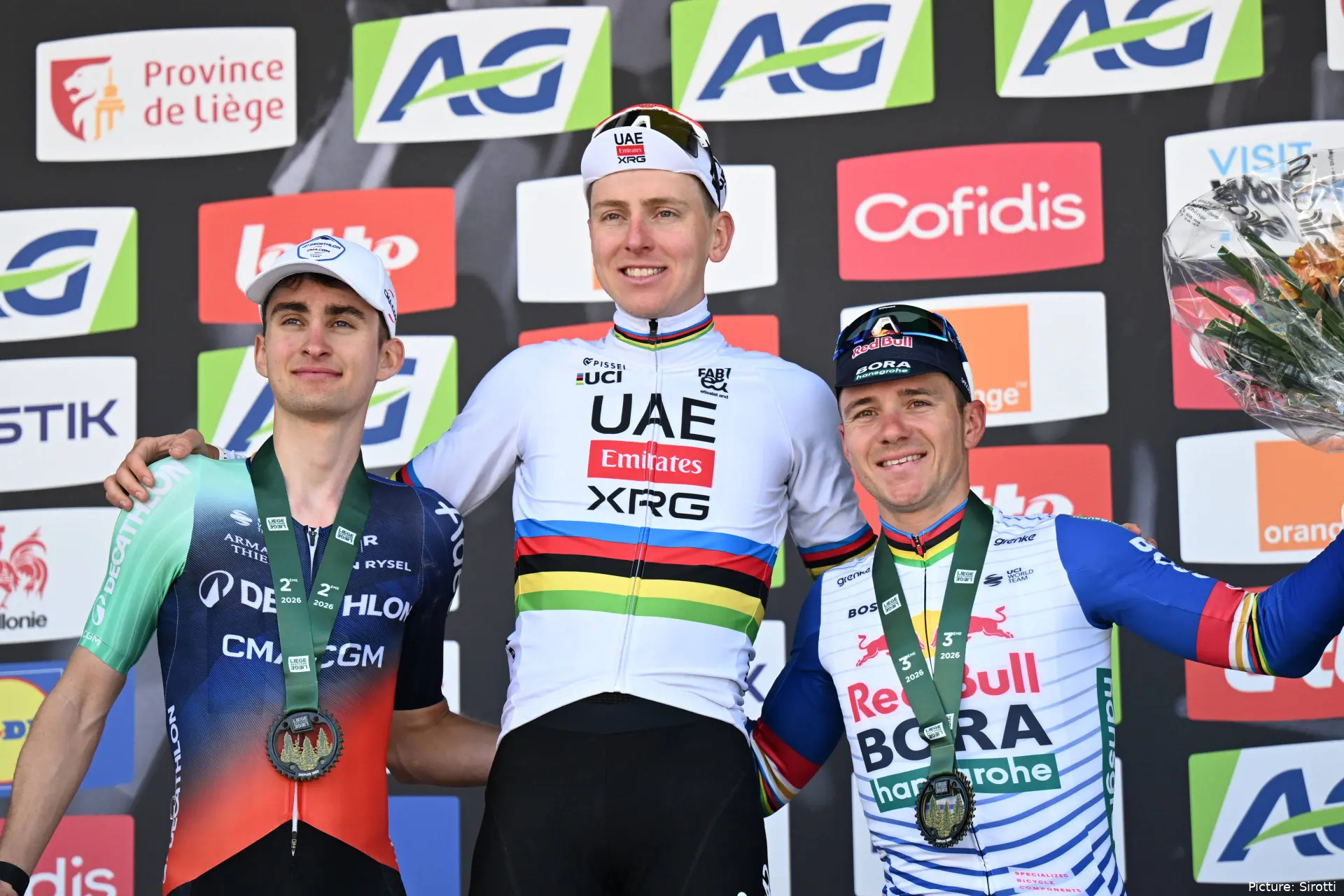
The 2026 Spring Classics reached their grand finale with another unforgettable edition of Liège-Bastogne-Liège, where two of cycling’s biggest stars, Tadej Pogacar and Demi Vollering, stamped their authority on the oldest Monument of them all.
On the rolling roads and punishing climbs of the Ardennes, both riders produced performances full of control, power and tactical intelligence to claim dominant victories and end the Classics campaign on the highest possible note.
Tadej Pogacar masters chaos in the men’s race
The men’s race was expected to revolve around the usual trio of favourites: defending champion Tadej Pogacar, double Olympic champion Remco Evenepoel, and teenage French sensation Paul Seixas, who had already become one of the revelations of the season. Few expected, however, that the race would explode so early.
After a crash in the opening phase, a massive front group of around fifty riders formed and quickly built a dangerous advantage. Among the riders in that move was Evenepoel, immediately putting pressure on Pogacar’s UAE Team Emirates - XRG squad. Also represented in the break were several strong names from Red Bull - BORA - hansgrohe, INEOS Grenadiers and other major teams, creating genuine panic in the peloton.
UAE suddenly found itself in an uncomfortable position. The race favourites had missed the key move, and Pogacar’s team was forced into a long chase. Even riders who had made the front group were asked to drop back and assist the world champion. For much of the middle section of the race, the balance of power seemed uncertain, with the break gaining more than three minutes at one point.
Eventually, help arrived from the team of Paul Seixas, whose squad also had no rider in the leading move. Together, they began to reduce the gap, and as the pace increased, the race started to fragment. The early attackers began to tire, cooperation disappeared, and one by one the breakaway dream faded.
By the time the peloton reached the final climbs, only a handful of attackers remained ahead, but they too were soon swallowed up. The race was now exactly where many had predicted it would be, with the strongest riders preparing for battle on the decisive Ardennes slopes.
Paul Seixas resists, then Pogacar strikes
As always, La Redoute marked the first true selection point of the finale. Pogacar’s team delivered him perfectly at the foot of the climb, and the Slovenian launched one of his trademark accelerations. In previous years, such a move had been enough to end the contest immediately. This time, however, one rider responded.
Paul Seixas, only 19 years old, matched Pogacar’s repeated surges and stayed on his wheel over the top. It was a remarkable display of composure and climbing ability from the young Frenchman. Behind them, Evenepoel could not follow the acceleration and was left trying to limit the damage.
The sight of Pogacar and Seixas together sparked excitement. Was the next generation ready to challenge the established king of the Ardennes? For several kilometres, the pair worked smoothly together, building their lead over the chasers and heading toward the final obstacle: Roche-aux-Faucons. There, Pogacar made sure the debate would not last long.
He increased the tempo early on the climb, forcing Seixas deeper into the red. The French rider fought bravely and initially looked capable of surviving once again, but another acceleration from the world champion finally broke his resistance. Within moments, the gap opened, and the race was over.
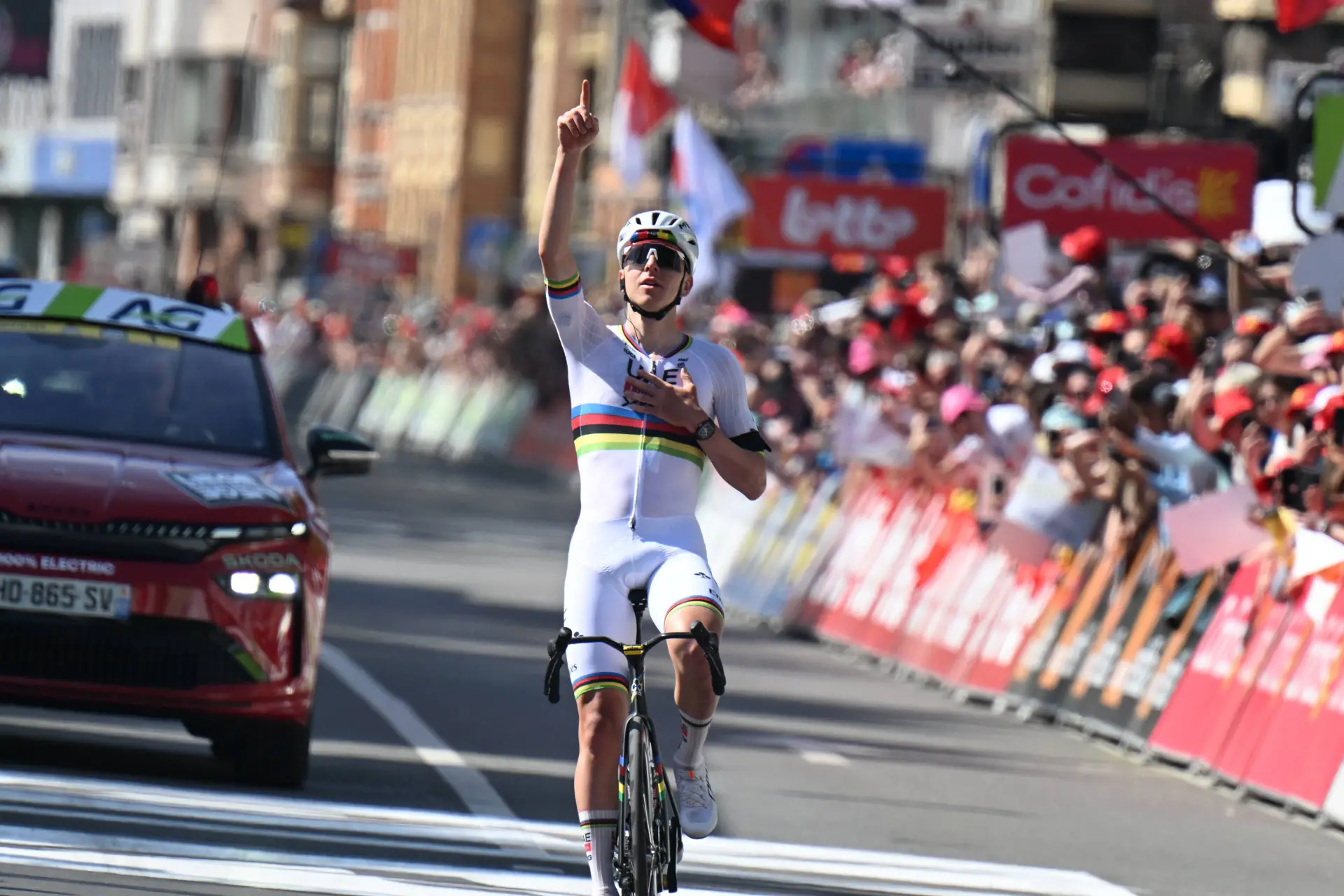
Pogacar rode the final kilometres alone, increasing his advantage all the way to Liège. With time to celebrate before the finish line, he secured his fourth career victory in the race adding another chapter to his already extraordinary Monument legacy.
Behind him, Seixas held firm for a sensational second place, confirming himself as one of cycling’s brightest young stars. Evenepoel recovered enough to win the sprint for third, salvaging a podium after a difficult final hour.
Demi Vollering dominates the women’s race
If Pogacar’s victory came after tactical twists and a late showdown, Demi Vollering was far more straightforward in the women’s edition. The Dutch rider arrived in Liège in formidable form after already winning La Flèche Wallonne, and she started as the clear favourite. By the finish, she had more than justified that status.
The opening kilometres were aggressive, with several riders attempting to form the day’s breakaway. After numerous attacks, a dangerous group of eight eventually gained some ground, including strong climbers and opportunists from multiple teams. But the gap was never allowed to grow significantly, with Vollering’s team keeping everything under control.
As the race approached the final thirty kilometres, the breakaway was brought back, and all eyes turned toward La Redoute. It was here that Vollering decided to make her move.
Without even needing to rise from the saddle, she accelerated smoothly and immediately opened a gap. No one could respond. Behind her, riders such as Puck Pieterse, Kasia Niewiadoma, Anna van der Breggen, and the impressive young Canadian Isabella Holmgren tried to organise a chase, but Vollering was already gone.
A solo of complete authority
With more than 30 kilometres still to race, Vollering faced a long solo effort, but she never looked under pressure. Her advantage hovered around twenty seconds at first, then steadily increased as the chasers struggled to cooperate.
By the summit of Roche-aux-Faucons, Vollering’s lead had grown to over a minute. The race was finished, and the only question remaining was how large the winning margin would become.
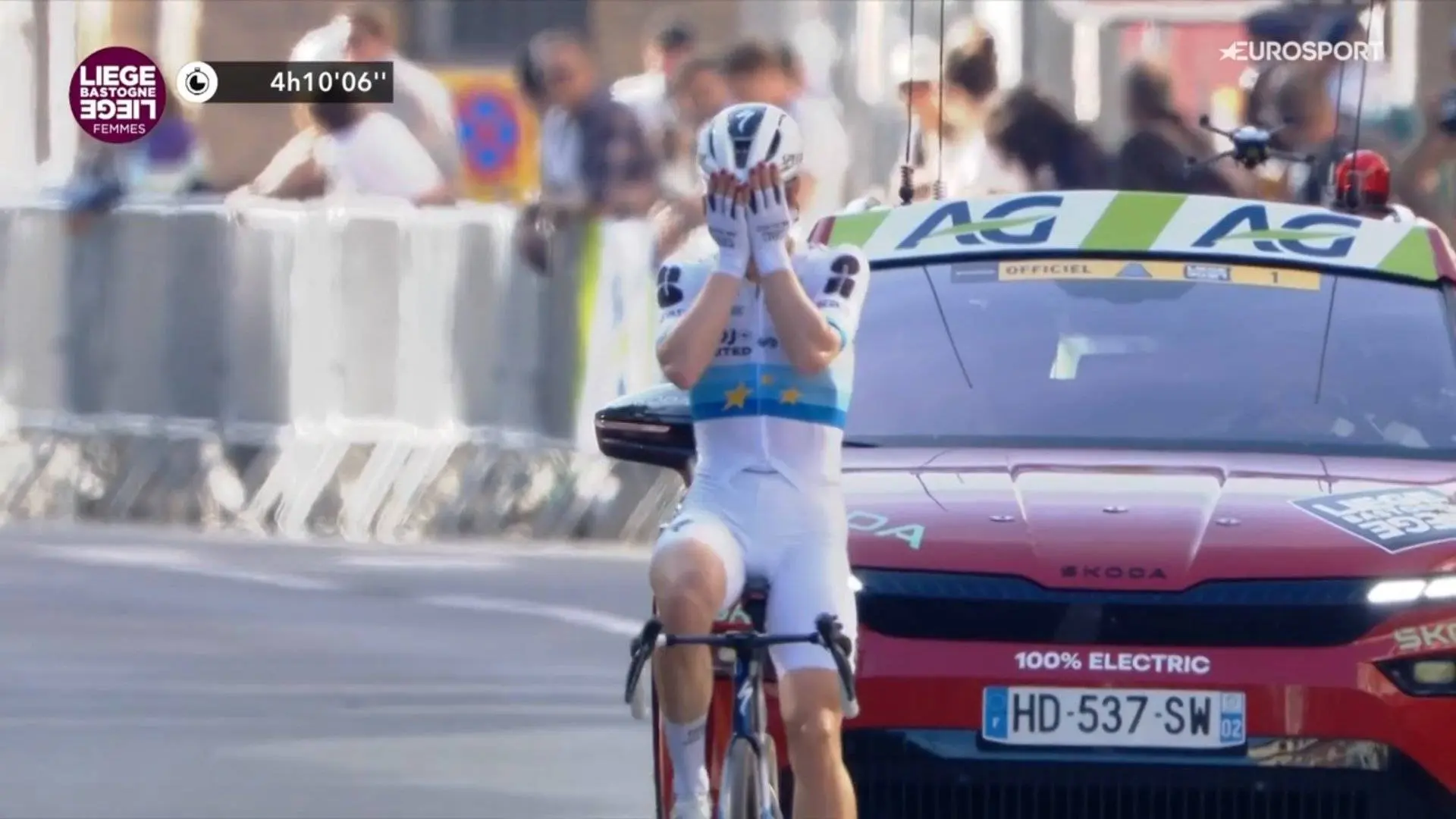
She rode into Liège alone, calm and composed, celebrating her third victory in the race and completing one of the finest spring campaigns in recent memory. Earlier victories in Strade Bianche, Tour of Flanders, and La Flèche Wallonne had already underlined her class. Winning Liège confirmed her as the dominant force of the women’s peloton.
Behind her, the battle for the podium remained intense. Pieterse, Niewiadoma and Van der Breggen reached the finish together, where Pieterse proved fastest in the sprint for second. Niewiadoma secured the final spot on the podium, finishing 3rd, Anna van der Breggen was 4th, and Paula Blasi rounded out the top five.
Carlos Silva (CiclismoAtual)
Days like this are exactly why I love cycling. Nobody could have predicted that an early crash involving Ion Izagirre would turn the opening hours of the race into chaos. Organised chaos.
A few riders were already trying to break clear when the crash happened, but the incident itself split the peloton and suddenly we had around 50 riders at the head of the race. They worked surprisingly well together and built an advantage that came close to four minutes.
When I watched Tadej Pogacar speak afterwards, I realised I was far more worried from my sofa than he ever was. There were some serious names in that front group, but only one rider would truly have put the world champion on alert, Remco Evenepoel. To give Evenepoel four minutes and still stay calm, trusting the original race plan, takes confidence. That is exactly what we saw.
Before La Redoute, UAE Team Emirates - XRG and Decathlon CMA CGM Team closed the gap and the race was ready to ignite.
Even before Pogacar launched his move, Evenepoel was already suffering under the pace set by Benoît Cosnefroy. Then the Slovenian attacked, and that 19-year-old kid, Paul Seixas, jumped straight onto his wheel. The two of them rode clear together.
The road never lies. Seixas may not yet have the maturity or endurance, but those things can be built. He will only grow stronger. It was extraordinary to see someone answer Pogacar so directly, and while the champion never looked shaken, I am sure he was surprised.
Seixas eventually cracked at Roche-aux-Faucons, Pogacar took the win, and the young Frenchman still finished La Doyenne in second place.
Behind them, Evenepoel was best of the rest and claimed a deserved third place, not only because of the boldness he showed by joining the early move and doing his share of the work, but also because after being dropped by Pogacar and Seixas, he refused to give in.
The women’s race followed a very different script. Demi Vollering dispatched her rivals on La Redoute and rode solo all the way to the finish. FDJ - Suez did an excellent job as a team, and their leader simply had to complete the job.
Pauline Ferrand-Prévot was dropped where I did not expect it and, honestly, she disappointed me a little because I expected more.
Puck Pieterse was once again at her best this week and, just like at La Flèche Wallonne Femmes, she finished second. Katarzyna Niewiadoma completed the podium after taking fourth in Flèche.
And once again, chapeau to Paula Blasi. Even in fifth place, she delivered an outstanding race.
Liege-Bastogne-Liege once again delivered a fitting finale to the Ardennes Classics season. Both winners closed the spring exactly as champions should, with authority, style and no doubt over who was strongest.
Ruben Silva (CyclingUpToDate)
Having heard what the main men had to say, it clears out a lot of questions that existed from the start of the race, from which there was no live broadcast.
How was it possible for 50 men to go up the road, a group consisting of about 45 riders who wanted to be part of the breakaway and Remco Evenepoel snuck in there... A very odd race situation, but an interesting one, one that made the race harder, and also it gave the breakaway meaning in a race where it usually doesn't have one.
Evenepoel didn't attack or purposefully play dirty. It would be ridiculous to accuse him of that. He was well positioned and happened to benefit from a race situation that developed around him, and if he had won with the gap that had opened, it would be fair game.
But the group lacked other leaders, and he lacked teammates to keep it rolling. If he had attacked early and tried to move on alone or with a few riders he would've stayed in front, but the race is not that hard before La Redoute and he wouldn't grow a gap over the peloton, whilst burning himself a lot.
If he didn't have good form, the risk would make sense. But in the real scenario, as we saw, he could take a good result. UAE made the catch and they just did the race they wanted, Pogacar even said the race situation was fine for him. Current cycling is based a lot on fatigue and the total amount of effort during the day, which can now be measured accurately.
UAE just did the math on how to use the team the best possible to make life hard for his rivals until La Redoute, Benoît Cosnefroy was fresh and ready to launch him, and he just did his own thing. Paul Seixas responded, not a full surprise, but very pleasant news, and a breath of fresh air in a classic that has otherwise become very stale over the last few years.
Objectively, he made the mistake of fully sharing the work with Pogacar - Endurance always favoured the Slovenian and just as we saw in Flanders, he can endure multiple all-out attacks better than his rivals. But Seixas is 19, in his first Liège, and riding with Pogacar for the first time in this way, so it is more justified.
After all we can't forget he's 19 and finishing second in his first Liège is still very meaningful, and can't be taken for granted. He promises so much for the future, and I am thrilled to see what he can do against Pogacar and Vingegaard at the Tour de France - more positive than ever after today.
Behind Remco Evenepoel also rode well, he didn't have the climbing legs, but otherwise looked as strong as ever. It does show that he's worked mostly on his raw power this spring whilst not putting climbing as much of a priority.
Come the summer he will change his training and drop weight which will help as we've seen in the past. A third place is fine, I think even if he had great climbing legs the third place would be the likely outcome, if not second.
Pascal Michiels (RadsportAktuell)
Pogacar didn’t just win Liège–Bastogne–Liège, he forced Remco Evenepoel and the Red Bull camp into a race they never wanted to ride. And as frustrating as that must feel from their side, it was impossible not to watch with a certain admiration.
This was another fascinating race to close the spring classics, shaped by a rider who seems to bend races to his will. The irony is that Evenepoel opened it up himself. His early move was sharp and defiant, as if he wanted to take control of the script.
For a moment, it felt right. This was the Evenepoel who dictates, who forces others to react. But when the chasing group came back, the balance shifted instantly. Initiative turned into exposure.Into that space stepped not only Pogacar, but also the fearless teenager Paul Seixas, a sign of how quickly the race was slipping away.
Seixas rode with refreshing boldness, yet even that youthful freedom could not escape what was coming. Because when Pogacar decides, the race follows. His attack on La Redoute was not just decisive, it was almost beautiful in its clarity. No hesitation, no doubt, just pure conviction.
Evenepoel could not respond, and in that moment, you sensed the inevitability. Seixas fought on bravely, but like everyone else, he became part of Pogacar’s story on Roche-aux-faucons.For Red Bull, it must feel like a strategic short circuit.
The plan was perhaps sound (if it was a plan), the legs were there, yet it still was not enough. That is the harsh reality of facing a rider at this level.From Evenepoel’s perspective, the truth stings. He lit the fuse but never controlled the explosion. And while that hurts, for the neutral observer, there is also awe. Pogacar is not just winning races, the Slovenian is redefining them.
Javier Rampe (CiclismoAlDia)
Tadej Pogacar drew level with Alejandro Valverde on four victories and is now just one win behind Eddy Merckx, who remains at the top of ‘La Doyene’ with five.
To anyone who hasn’t seen the race, it may seem obvious that the Slovenian has claimed his fourth Liège title. But along the way, a series of events unfolded which, for dozens of kilometres, made it far from clear that this outcome was even possible.
The usual routine, with a lively pace at the front of the race set by the UAE team of the contemporary legend, leading up to the now-classic attack by the two-time world champion on La Redoute. And so it was.
Benoit Cosnefroy, his partner, set a blistering pace that preceded his team leader’s ferocious surge; the Slovenian pressed on relentlessly, and Paul Seixas was unable to withstand such relentless pressure, with the summit already in sight.
And you? What’s your opinion on Liège - Bastogne - Liège 2026? Tell us what you think and join the discussion.
Carlos Silva is a writer for CyclingUpToDate.com, where he contributes race reports, interviews, analysis pieces, and live coverage of the international cycling calendar. Holding a degree in Sports from the Jean Piaget Institute, he combines academic knowledge of performance, training, and competition with hands-on journalism experience in professional cycling.
Throughout his career, Carlos has conducted interviews with leading figures in the sport, including Alberto Contador, Joaquim Rodríguez, Óscar Pereiro, João Almeida, Isaac del Toro, Derek Gee, John Degenkolb and Geraint Thomas. These conversations reflect direct engagement with Grand Tour winners, Classics specialists, and emerging talents.
He has provided on-site coverage at major events ranging from the Vuelta a España to the Tour de France, alongside stage races such as Vuelta a Andalucía, Volta ao Algarve, Volta a Portugal and O Gran Camiño. Covering the mythical climbs of the Giro d'Italia remains one of his professional ambitions.
Carlos is responsible for liveblog coverage of all major WorldTour races and beyond, including the Tour de France, Giro d'Italia and Vuelta a España. His reporting integrates verified data from ProCyclingStats to ensure statistical accuracy, contextual depth, and analytical precision.
A lifelong cycling enthusiast, he approaches storytelling across written, photographic, and video formats with a focus on credibility, tactical insight, and informed race interpretation.
claps 5visitors 5
Just in

Popular news
Latest comments
- Such a soft spot for Vine. To watch him come from the Zwift Academy to the levels he is at, now, is incredible. Always rooting for a Vine win.anonymouscyclist27-10-2026
- glad you're still making it happen!mij27-10-2026
- With the exception of Axel Laurence, the rest are in their 30's. My opinion is I think, perhaps, we're beginning to see the effects of younger riders coming into the pro ranks. I believe we're going to see those effects in the coming years. All teams are looking for the next Pogi, Jonas & Seixas. Of course, Seixas hasn't proved himself yet. He's just a kid. I believe he will though. Remco is a strange case. I believe if he can overcome being erratic, he should wn a few Tours, What do you guys think?Paggss27-10-2026
- And, at 2% he'll still destroy the competition...Paggss27-10-2026
- I agree.Paggss27-10-2026
- I hear you, I'm 73 with C5 & C6 fused. Also, I'm two aortic valve replacements and three pacemakers down. Yea, Father time is catching up. I'm just glad I can ride at a good level. Uphills are not my favorite however, I love those downhills! I guess I give us 'old guys' some inspiration. :~ )Paggss27-10-2026
- Prove otherwise... I'm sure there's thousands of Glaswegians will be happy to tell you their version of it!slappers6627-10-2026
- they should allow teams to add to the roster limit if they are adding riders in other disciplines. for example, you can have 30 road riders, 3 gravel, 3 mountain bike, 3 cyclocross. that way a team isn't penalized by losing road riders by expanding into other disciplines. of course it needs to be policed as does a team classify Pidcock, MVDP or WVA as cross, mountain, or what? But that is workable.mij27-10-2026
- great guy and a winner if he can stay healthy.mij27-10-2026
- Utter rubbish
 Rafionain-Glas27-10-2026
Loading
Write a comment