“Decathlon got lucky” - Chris Horner warns Paul Seixas escaped bigger damage after chaotic Tour Auvergne-Rhône-Alpes opener
Cycling
Paul Seixas left stage 1 of the Tour Auvergne-Rhône-Alpes with only a small time loss to Oscar Onley, but former Vuelta a Espana winner Chris Horner believes Decathlon CMA CGM Team were fortunate the damage was not far worse.
Alex Baudin took the opening victory and the first yellow jersey after attacking from the breakaway on the Cote de Rousset, but Horner’s main focus on his Butterfly Effect YouTube channel was the tactical picture behind. With Seixas isolated late in the stage, Horner argued that several teams had the chance to put the 19-year-old French favourite under far greater pressure.
“At the end of the day, Decathlon got lucky,” Horner said after the stage. “They only lost a few seconds to a GC favourite named Oscar Onley.”
Onley finished in the front chase group, 32 seconds behind Baudin, while Seixas came home 44 seconds down alongside Isaac del Toro, Juan Ayuso, Santiago Buitrago, Matteo Jorgenson and Mattias Skjelmose. For Horner, the gap itself was less important than the way it emerged.
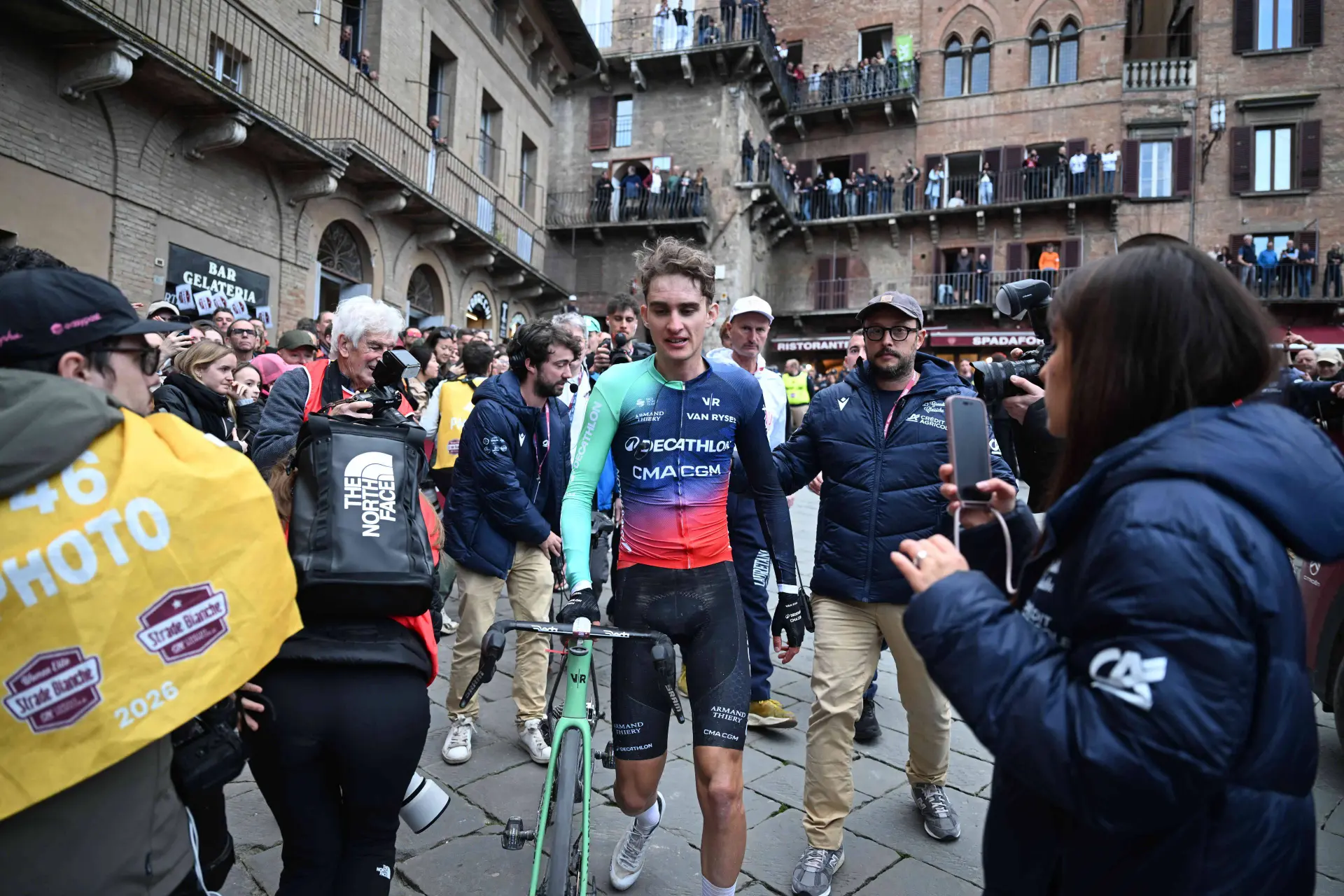
Riccitello abandon leaves Seixas exposed
The first problem for Decathlon came before the final attacks even began. Matthew Riccitello abandoned through illness on stage 1, immediately weakening the support structure around Seixas in a race where the Frenchman arrived under major expectation.
Horner felt the loss mattered because Decathlon were already short of a dominant final climbing lieutenant. With Riccitello out, the team had to rely even more heavily on Leo Bisiaux, Nicolas Prodhomme and the rest of a support group that Horner believes still lacks one clear top-level mountain domestique. “You were already cutting it thin,” Horner said of the Decathlon setup around Seixas.
He expanded on that point by arguing that Decathlon’s support depth is good, but not yet at the level where they can afford to waste riders on a stage where they did not need to chase the yellow jersey at all costs. “If you have to rotate, that means you’re not a super-domestique,” Horner said. “You are a good domestique, but not a super-domestique.”
Decathlon had worked early in the stage, but Horner felt their priority should have been clear. With the opening yellow jersey not essential to Seixas’ GC hopes, the team needed to avoid burning riders unnecessarily before the final run-in.
That became more important once the race split behind Baudin. Aurelien Paret-Peintre cramped after coming back into position, leaving Seixas with fewer options, while Bisiaux later followed the move that gained time on the main group.
For Horner, that was the central Decathlon mistake. “You never break the number one rule,” he said. “Leave your team leader isolated and alone.”
Bisiaux eventually finished third on the stage, but Horner was not impressed by the trade-off when Seixas had been left behind in the group of favourites. “Leo Bisiaux, you’re a big knucklehead,” Horner said. “You got yourself third, but means nothing because you lost 15 seconds thereabouts.”

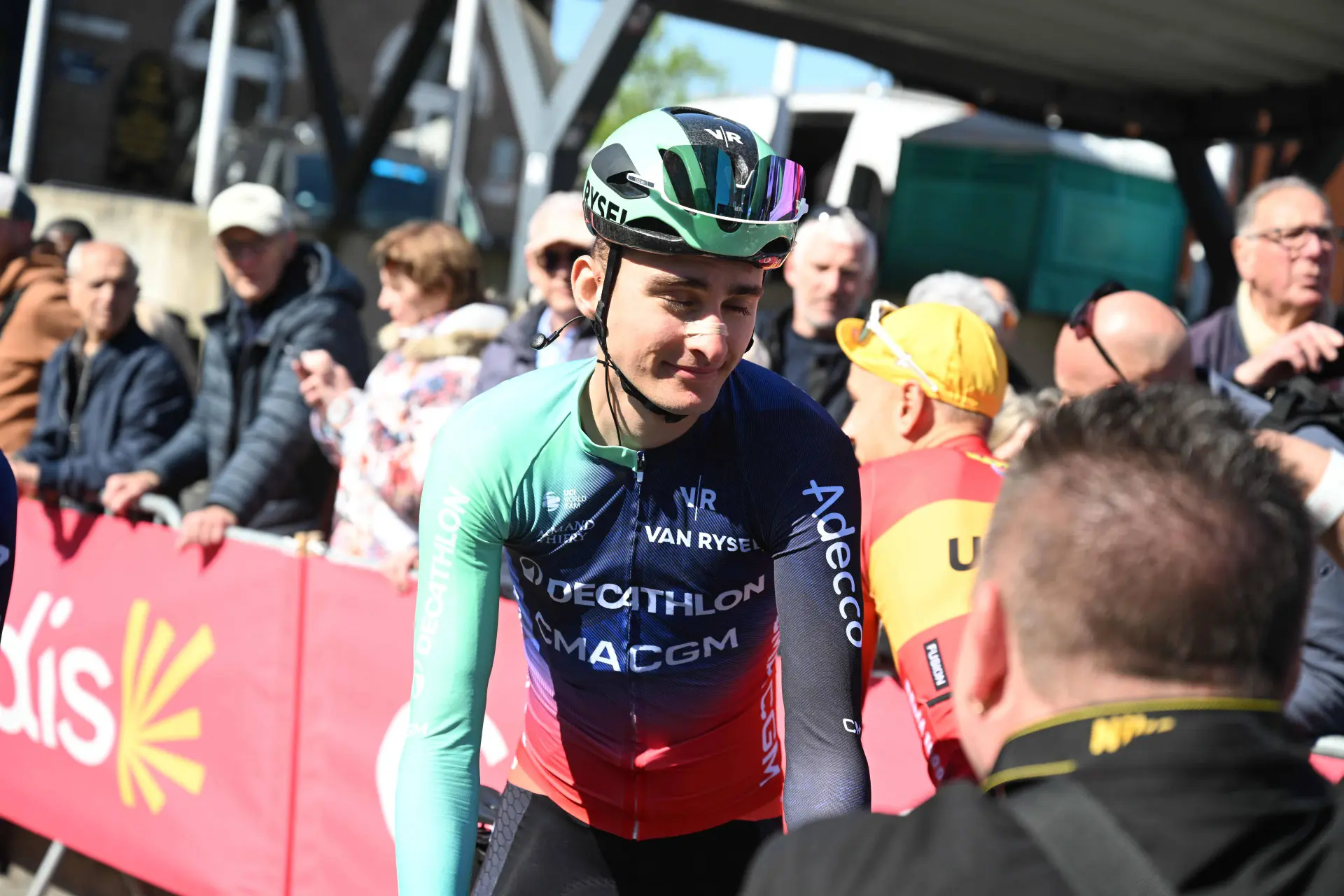
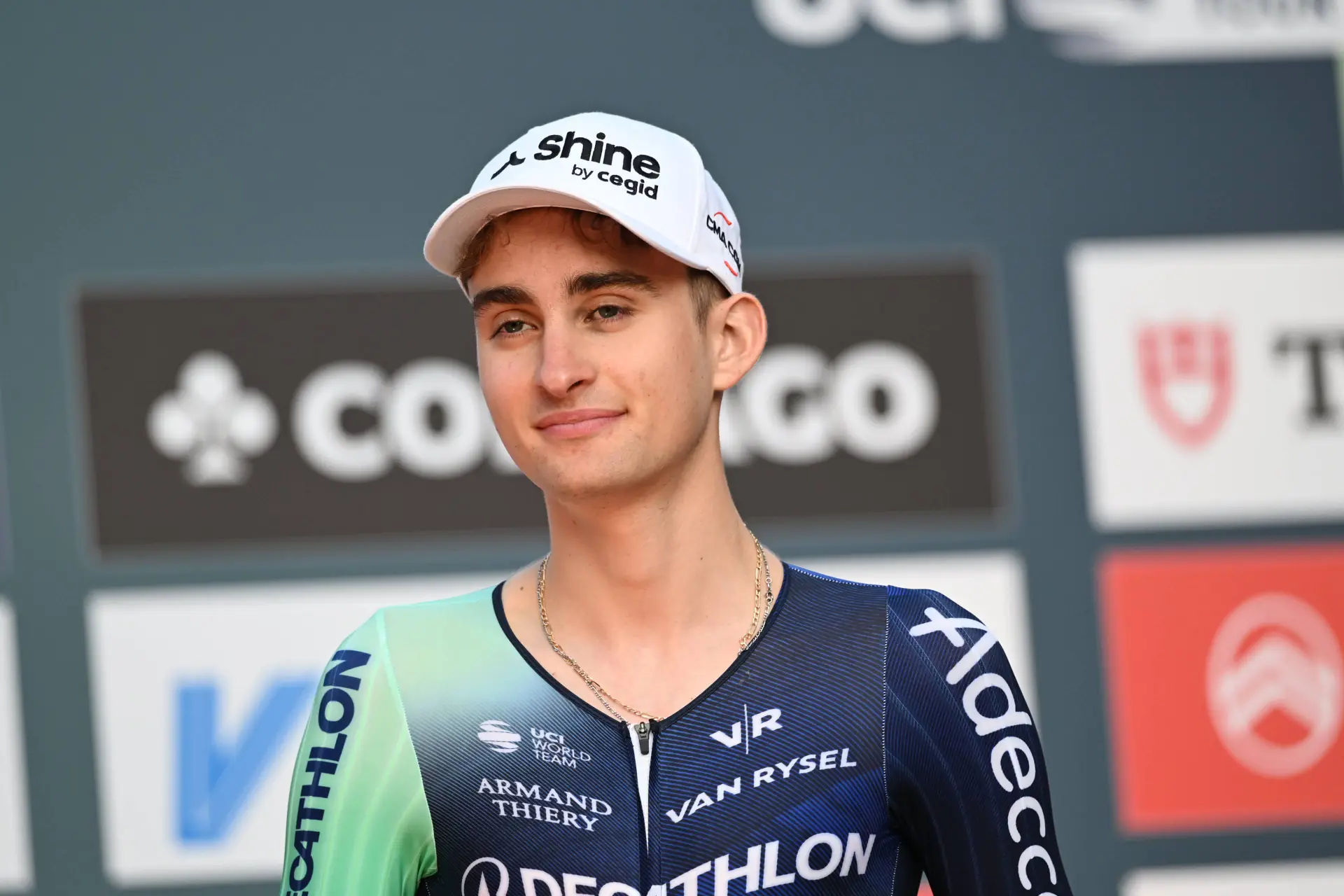
Paul Seixas ahead of stage 1 at the 2026 Tour Auvergne-Rhône-Alpes
Horner questions UAE and Visma tactics
Horner was also critical of the teams around Decathlon. He questioned Pavel Sivakov riding tempo for UAE Team Emirates - XRG on the final climb, arguing that UAE should have attacked Seixas rather than helped control the gap. “At this moment, there is nothing that you care about except for trying to win the stage and gaining time on the race favourite Paul Seixas,” Horner said.
In Horner’s view, Sivakov’s work on the front simply pulled Decathlon along rather than forcing Seixas’ team to respond. He contrasted that with Kevin Vermaerke’s later attack, which he saw as exactly the sort of move UAE should have been looking for. “Kevin Vermaerke is doing the right tactic,” Horner said. “You want to attack the race favourite back there.”
Team Visma | Lease a Bike also came in for criticism after putting riders on the front with Jorgenson still in the group. Horner felt Visma had enough numbers to attack, not ride steadily for a rival who did not need to chase yellow. “You guys are knuckleheads,” Horner said of the approach. “You’ve got to start attacking.”
Horner’s argument was that Jorgenson and Visma did not need to help control the climb for Seixas. If they could force the Decathlon leader to chase later in the race, even through another rider gaining time, that would be more valuable than riding tempo on stage 1.
INEOS chance not fully taken
The final chase group gave Netcompany INEOS a chance to land a bigger early blow through Onley and Kevin Vauquelin. The split itself was valuable, especially once Seixas, Del Toro, Ayuso and others had missed it.
Horner still felt that opportunity was underused. Once Baudin was clearly heading towards the stage win, he argued INEOS should have driven the group instead of allowing attacks and hesitation to reduce the advantage over Seixas. “This is when Oscar Onley starts making some critical mistakes,” Horner said. “The stage is already over. You just want to drive this group and gain as much time as possible.”
Seixas still conceded time, but not enough to change the race dramatically. Baudin took yellow, Bisiaux finished third from the chase group, and Onley gained a small buffer on several GC rivals.
Horner’s verdict was blunt. Decathlon lost a little time, but they avoided the kind of opening-day damage that could have forced Seixas into a far more complicated race with seven stages still to go. In his view, the biggest story behind Baudin’s win was not just who gained seconds, but how many teams missed the chance to make those gaps much larger.

Kieran WoodDeputy Editor-in-Chief
Kieran Wood is a sports journalist based in Wales and has been active in journalism since 2022. He regularly contributes to DartsNews.com and CyclingUpToDate.com, where he covers professional cycling and darts. In cycling, his work includes liveblogs from major races, including the Tour de France, the Giro d’Italia, and La Vuelta a España, alongside race reports and analysis. He has also conducted interviews with professional riders.
His reporting spans the full racing calendar, from one-day classics to stage races, with a focus on accurate, real-time coverage and clear contextual analysis. For statistics, results, and historical context, he regularly uses resources such as ProCyclingStats. To support reporting on rider activity and training context where relevant, he also references Strava.
In his work, Kieran places strong emphasis on careful sourcing, editorial accuracy, and updating articles as new, verified information becomes available.
claps 1visitors 1
Just in
Popular news
Latest comments
- that was a great win, and quite a surprise at the time. That was a loaded field, and he held of Valverde for the win. Still shocking that Valverde never won Lombardia. He seemed perfect for it. Mollema just went to work every day.mij12-10-2026
- I hope he races Volta a Majorca. We'll really be able to see if he can do one-day-races (but do they count?)
 Rafionain-Glas12-10-2026
 - See, you can write a sensible comment without just slagging off everyone else! Well done!👏😆 🫣Lozza12-10-2026
- Seixas best chance is obviously UAE. They are the best team in history of the sport and they developed pogacar into the goat. They also developed Del Toro to be nr 2 in world. Seixas would become unstoppable at UAE. Lets see if Seixas stays at decathlon but if UAE comes knocking its impossible to say no. Barcelone and real madrid combined into one team, thats UAE in cycling it feels like..miguel12-10-2026
- I think he does or goes to whichever team gives him the scope to become the rider everyone thinks he'll be when Tadej stops.. that simpleslappers6612-10-2026
- I remember at one time he was mentioned in the same breath as Seixas. no more. Onley has a lot of work to do to be deserving of that.mij12-10-2026
- I hope he goes to Bahrain-Victorious to mentor JakobRafionain-Glas12-10-2026
- I hope he stays! Cycling is more fun with Primoz, even if he is not winning.mij12-10-2026
- yes for sure, there will be more chances for him at Euro than Lombardia. I wonder if that emotion wasn't also because he knows he has now been eclipsed by a younger rider w/o his goals being checked off. At least when Seixas over takes Tadej someday, Tadej will have accomplished his major goals. He still has Roubaix left, but Seixas isn't a threat there. And he should find a year to get Vuelta. Remco now is behind at least 2 riders w/o ever having won a Tour, one monument to his name, and the next few World Championships are not Remco friendly. I would still take Remco's wins though!!!mij12-10-2026
- Remco was at 100%. He raced as expected: 15th best on the climbs and then best in the sprint of the chasing group. Exactly what he did at Liège-Bastogne-Liège, where he was on similar form. His win in Amstel was comparable to Quebec or the EurosRafionain-Glas12-10-2026
Loading
1 Comments