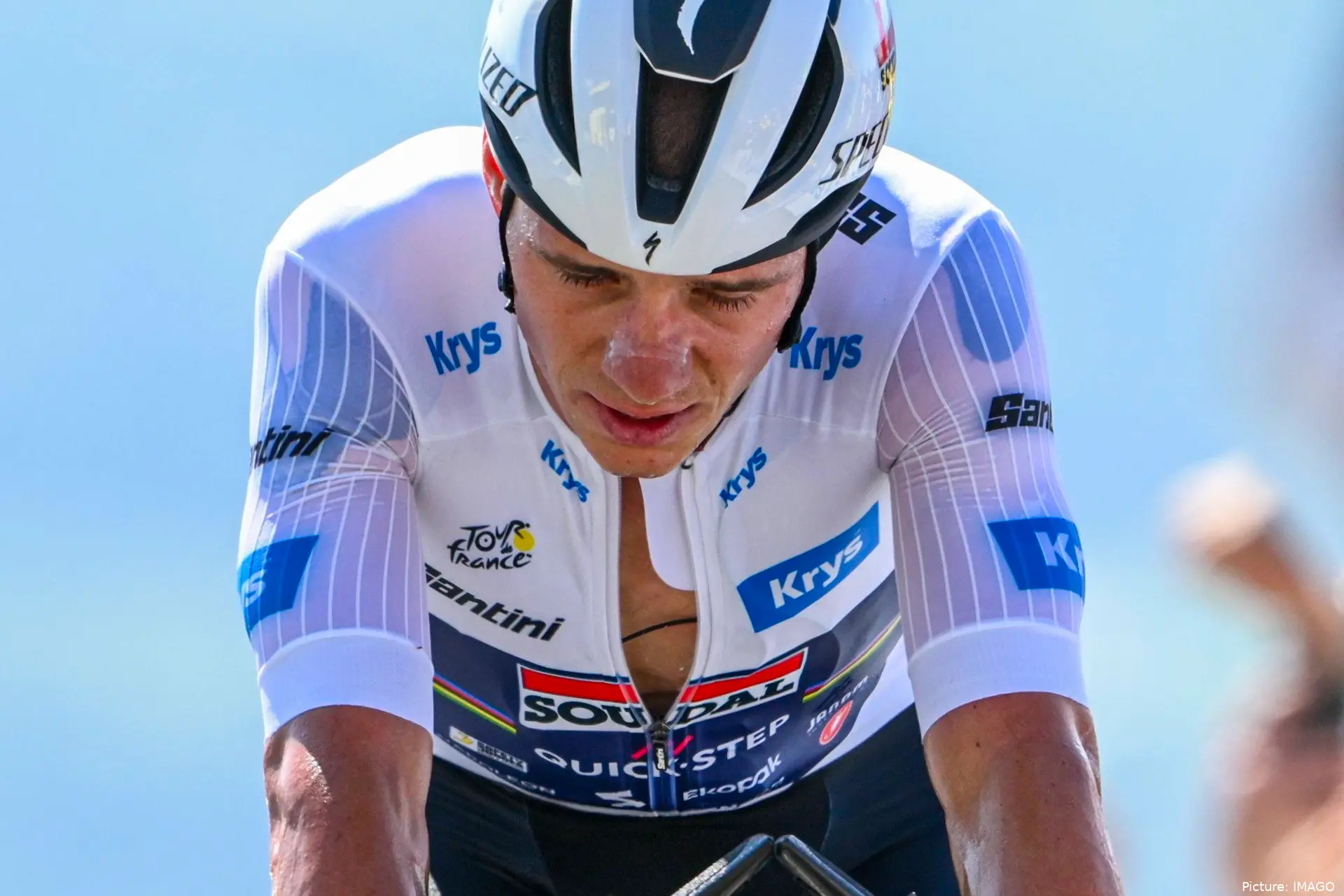
The fallout from Remco Evenepoel’s withdrawal at the 2025
Tour de France has led to a wave of scrutiny from cycling legends, media
voices, and fans too. But as the dust settles from a disappointing July, the
question arises: is the criticism of the Belgian too harsh, especially
considering the circumstances surrounding his season? The short answer is yes,
and the longer answer is more complicated.
Evenepoel, still only 25 years old, has already won the
Vuelta a España, the World Championships road race, two time trial world
titles, two Olympic golds, and two Monuments. He’s finished on the Tour de
France podium and worn the white jersey. These are not hypotheticals or
potential achievements, they are facts. And yet, following his exit on stage 14
of the Tour last month, the narrative in some corners of the cycling world has
flipped.
“Remco Evenepoel? No, definitely not,” said Eddy Merckx to Wielerflits
when asked if the Belgian could challenge Tadej Pogačar for Tour wins. “Remco
is more of a time trialist. He's not strong enough uphill to compete with
Pogacar for the Tour de France victory."
This was a withering assessment from the most iconic name in
Belgian cycling history, one that seemed to question Evenepoel’s fundamental
makeup as a rider. It’s not surprising given Merckx’s long-standing,
occasionally gruff views on modern cycling, but his words carried weight. They
also ignored context.
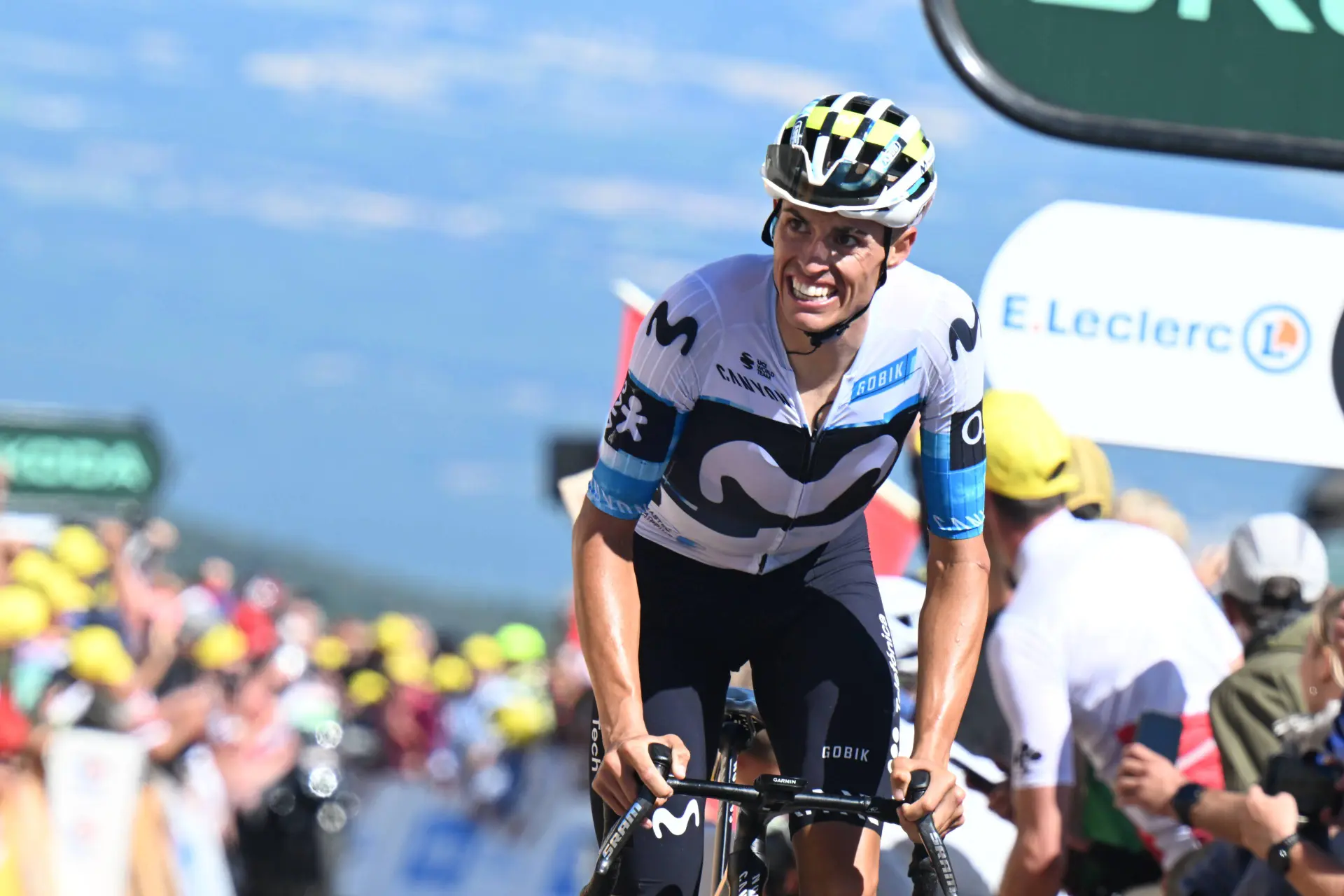
Yes, it seems unlikely right now that anyone can beat Tadej
Pogacar, especially in a grand tour. But to rule Evenepoel out, considering the
context of his 2025, seems harsh to me.
Evenepoel’s 2025 season began in April, and his last race of
2024 was on October 12. After that, he was sidelined for four months following
a high-speed training crash with a van in December. It wasn’t until April 18th
at Brabantse Pijl that he returned, and when he did, he promptly beat Wout van
Aert in a sprint. This was not the sign of a finished rider. It was the sign of
one who could still deliver brilliance, even without the months of foundational
training others had banked.
Chris Horner, speaking on his Beyond the Coverage podcast,
offered the most nuanced, if critical, analysis of all. He identified
Evenepoel’s collapse at Liège–Bastogne–Liège as the point where the warning
lights began flashing. "Whatever brought in that problem at
Liège–Bastogne–Liège… that was the moment he needed to take two weeks off the
bike,” Horner said.

Evenepoel endured a brutal three days in the Pyrenees
Instead, Evenepoel continued racing. He started Tour de
Romandie, then the Dauphiné, and ultimately the Tour. In hindsight, it was a
chain of miscalculations, either from the rider himself, his team, or both.
“He was never able to put together a training session
between Dauphiné and the Tour,” Horner pointed out, referencing Evenepoel’s own
Instagram posts. "If you're a rider like Remco Evenepoel and you can't put
in a six-hour ride and feel fresh after, you're not ready for the Tour de
France.”
Horner's takeaway was clear: Evenepoel was over-raced and
under-recovered. The “dead battery” metaphor he used was telling. “A battery
should never drop from full to zero,” he said. “If something happens like that,
you’ve got a dead battery. Remco, you have a dead battery.”
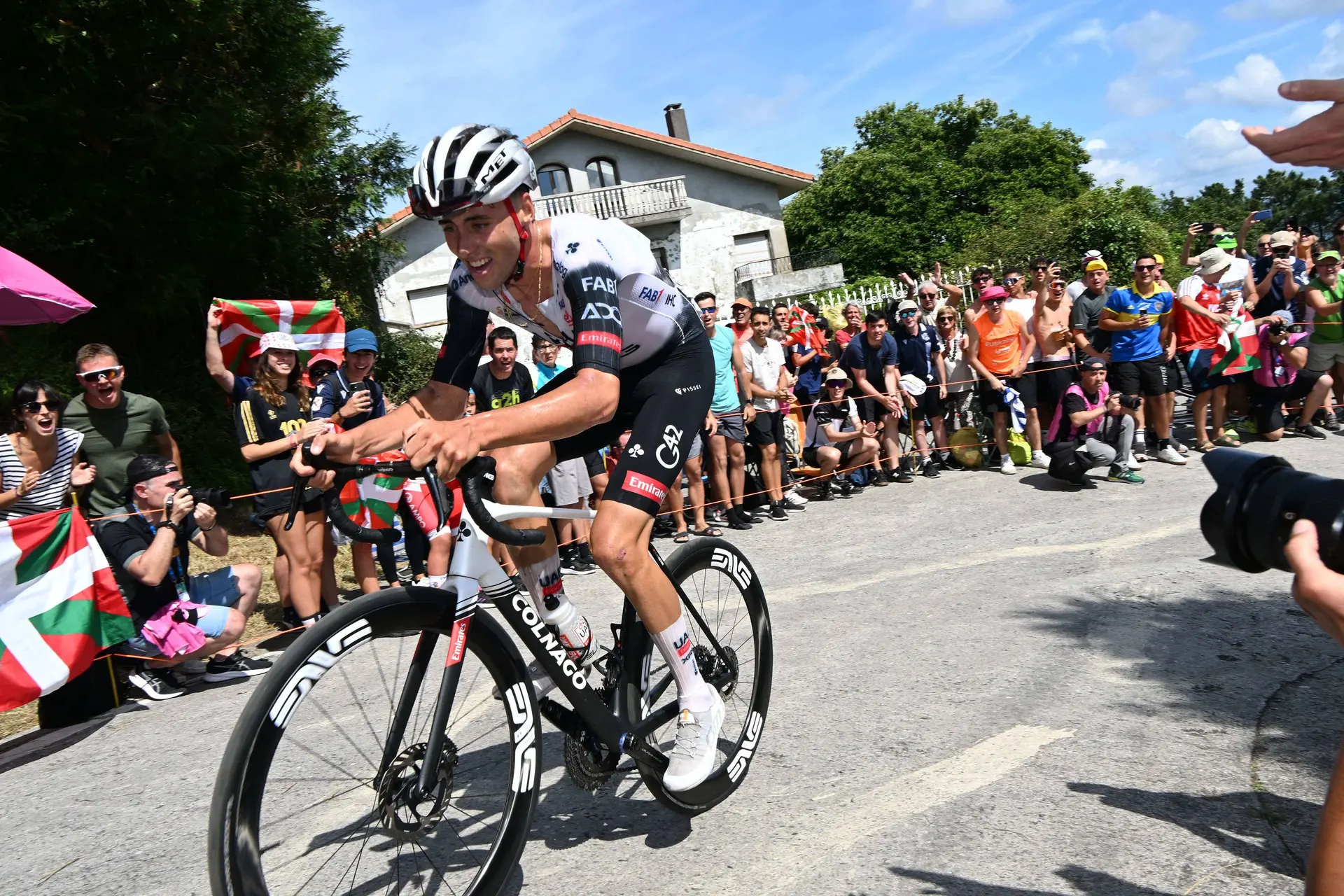
These are fair criticisms rooted in form and physiology, but
does not mean the Belgian can’t bounce back.
Jan Ullrich, however, took it a step further. Speaking on
the Ulle & Rick podcast, the former Tour winner said, “Remco has to learn
to deal with it. Even when things aren't going well, people are following him.
Remco needs mental help.” He then added, “His base wasn't sufficient. He's
simply missing thousands of kilometres of training. His foundation wasn't
strong enough, and then you can suddenly collapse completely as a rider.”
There’s truth in Ullrich’s assessment of the physical base.
You can’t fake Grand Tour condition, especially when your competitors have been
preparing at altitude since January and you only returned to racing in
mid-April. Evenepoel’s 2025 season, by his own admission, was built under time
pressure. “The winter months were taken over by rehab and recovery... the goal
gave me focus, but it also created a lot of time pressure,” he said in his
post-Tour statement.
But the suggestion that he “needs mental help” veers into
sensationalism. Evenepoel has shown resilience repeatedly, he has been able to
bounce back from many set backs before. He won the Brabantse Pijl on
return. He came back from near death at Il Lombardia in 2020. He recovered from
a spring crash in 2024 to light up his debut Tour. At this year’s Tour, he won
a stage against the clock, and held the white jersey.
It was only in the high mountains, after a fractured rib
from the Belgian Nationals and a bout of sinusitis, that he finally faltered.
When he stepped off the bike on stage 14, he called it “one of the rawest, most
vulnerable moments” of his career. “I broke,” he admitted. “And strangely
enough, I’m proud of it.”
Contrast that with the reaction to Wout van Aert this
spring. After a quiet start to the year, Belgian media pounced. Van Aert was
called finished, broken, and out of place. He then went on to win two of the
most memorable stages of the Giro d’Italia and the Tour de France. The
narrative flipped overnight, clearly another Belgian in Van Aert was written
off far too quickly.

Evenepoel and Van Aert have both suffered at the hands of the Belgian press in 2025
The question is: will the same media extend Evenepoel the
grace of a comeback?
It’s important to remember that Van Aert and Evenepoel both
entered 2025 with injuries. Van Aert began racing earlier, whilst Evenepoel had
to wait until mid-April. That’s six months without racing at the highest level.
Merckx’s claim that he’s “not strong enough uphill” ignores that Evenepoel
finished third overall at the Tour last year, and has won a grand tour before.
In many ways, Evenepoel is a victim of his own success. He
is naturally seen as one of the very few riders that can compete with the ‘aliens’
that are Pogacar and Vingegaard. The problem this year was not lack of talent
or desire, it was a lack of foundation.
As Horner put it: “Hopefully he has taken these last two
weeks off… and just rested on the couch… because if he did, there’s time to
prepare for the Worlds.”
And therein lies the next chapter. The World Time Trial
Championship and Road Race are still on the horizon. Evenepoel has three rainbow
jerseys too his name already, and if he can regain his form he will be a
favourite for a fourth and maybe even a fifth.
Criticism comes with stardom, and Evenepoel carries the
burden of being a national figure in a country that still measures greatness by
the Merckx standard. But perspective matters. He is 25, his palmarès already
rivals most retirees. And if 2025 has taught us anything, it’s that injury,
pressure, and human limitations can derail even the best.

Fin MajorCycling Journalist
Fin Major is a UK-based writer at CyclingUpToDate and has been part of the team since 2024. He is the site’s main writer for FAQs and evergreen explainers and has written around 2,000 pieces for the platform. Alongside this work, he focuses on in-depth analysis and covers the biggest races on the calendar, including the Tour de France, the Giro d’Italia, and La Vuelta a España, providing clear context around performance trends, tactics, and key storylines.
In his reporting, Fin uses reputable data sources such as ProCyclingStats for results, statistics, and historical context. He places strong emphasis on careful sourcing, editorial accuracy, and updating articles promptly when new, verified information becomes available. Outside of writing, Fin is an active cyclist, which supports his practical understanding of the sport and its demands.
claps 3visitors 3
Just in
Popular news
Latest comments
- Campenaerts looked like a rolling pumpkin with that all orange leaders skinsuit !frieders318-10-2026
- He can take his dumb a$$ politics somehwere else !frieders318-10-2026
- good to have her back. fingers crossed she‘ll be able to stay!Ketterechts17-10-2026
- A tenner and he wins the Tour next year, too 😂anonymouscyclist17-10-2026
- the answer is either stick to classics or GTs but not bothabstractengineer17-10-2026
- the exodus already stared with Ciccone. Already they were struggling with two sprinters, now there are three. Also Ganna will demand leadership. Gall is the most proven GC, Ayuso has the most potential. GC leadership for everybody will be impossible. Literally a UAE style mess without pogi.abstractengineer17-10-2026
- I raced as an amateur for 12 years, including six years on my country’s national road cycling team. I secured two national titles and competed in three World Championships plus more than 15 international stage races. At 23, we travelled to Italy for a training camp—or so I assumed. On a rest day, we watched a presentation about adopting a more “professional” training approach. It was crystal clear what “professional” meant. That moment first exposed me to this dilemma. After returning from Italy, I left cycling—at least at the competitive level I had known. Over the following two years, the whole team was caught doping. I hold that everyone is innocent until proven guilty. In my view, current stakeholders operate on a different scale, and the sums involved are vast. I am unsure whether any doping would ever be revealed. I try to stay positive and enjoy the show. My 2c.
 vannpelt17-10-2026
 - Fiver he wins 🤣
 leedorney17-10-2026
 - “…measures to reduce speeds.” Might as well shorten the race course to just 50km as well? ASO generates at minimum €300m a year and 30- 40% profit. Maybe stop being greedy and spend more of the profit to protect the riders instead.b3tlla17-10-2026
- he also had quite the life off the bike during his pro years. he used his celebrity status to full affect.mij17-10-2026
Loading
2 Comments