175-kilometer long attack to victory - Mathieu van der Poel shatters a monumental record that stood for a decade
CyclingMonday, 21 September 2026 at 15:30
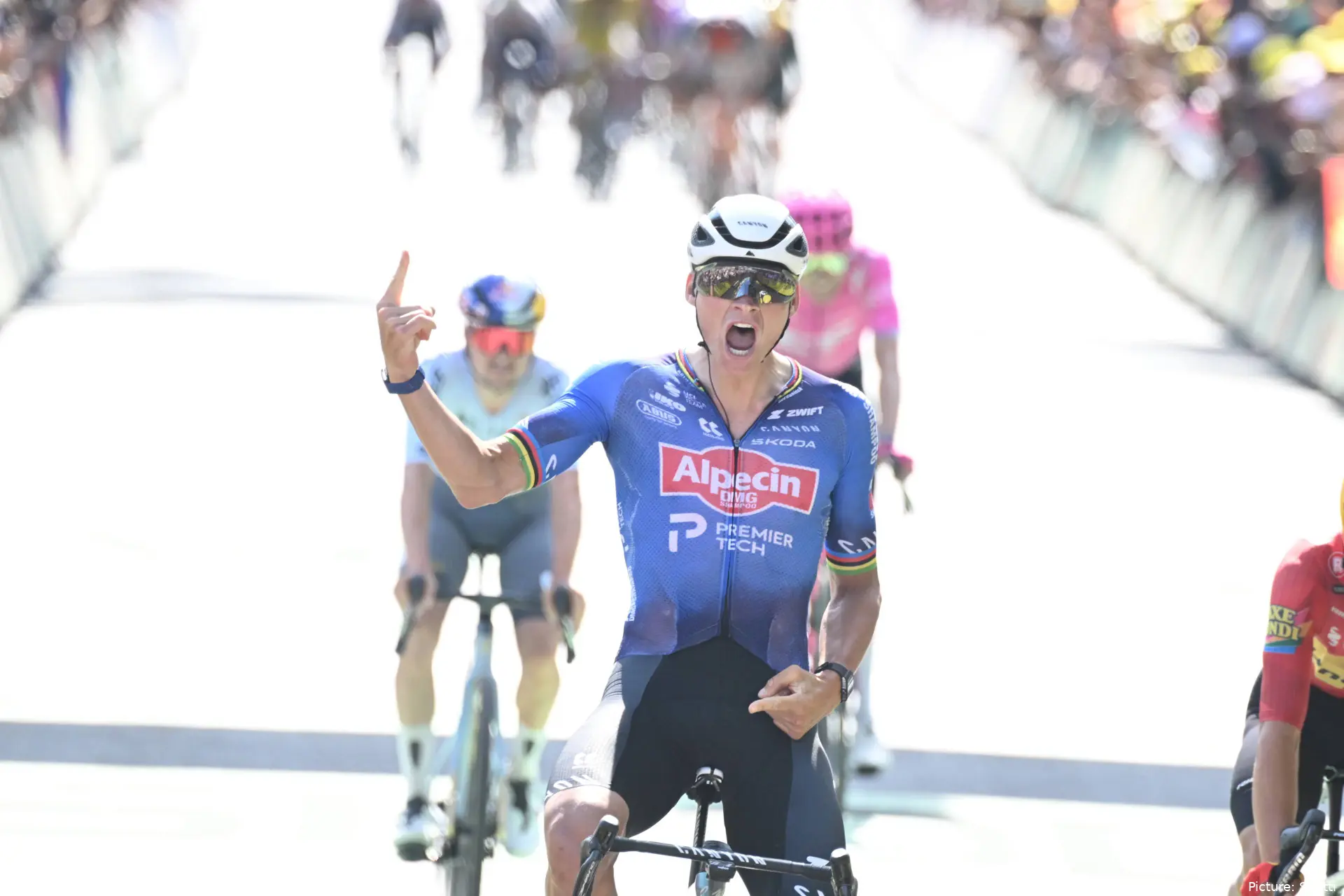
Mathieu van der Poel turned Sunday’s fifth stage of the Tour de Luxemburg into a stamina masterclass that is hard to match against any recent break. The Dutchman attacked virtually from the flag and spent 176 kilometres alone, a distance that drops straight into modern cycling’s history books for the scale of his raid.
It was not a conventional break in which a group opens a gap early and later fights for the win. Van der Poel rode almost the entire stage without company, while the peloton tried to control a situation that, far from settling as the kilometres ticked by, kept growing in scope. The effort was not only about holding speed, but also about managing the physical and mental toll of riding completely solo for hours.
According to data compiled by ProCyclingStats, Van der Poel’s mark is the longest solo break of the last ten seasons within the WorldTour and Pro circuits. The gap to the most notable precedents is striking, as the Dutchman comfortably eclipses some of the most memorable solo attacks of the past decade.
Until this ride, the record belonged to Diego Rosa. The Italian produced a 118-kilometre solo move at the 2016 Itzulia, a benchmark that stood for years. Van der Poel not only beat it, he did so by 58 kilometres, pushing the limit out to 176.
Second on this particular list is Hugh Carthy, who managed 99.8 kilometres alone at the 2019 Tour de Suisse. Next comes Rafał Majka, with 87.3 kilometres during the 2021 Vuelta a España. Both efforts, already extraordinary, now sit clearly below what the Alpecin-Deceuninck rider delivered.
The magnitude of the difference helps explain the performance in Luxembourg. It was not about edging the old mark by a handful of kilometres, but about adding nearly an hour of benchmark effort compared to some of the decade’s standout moves.

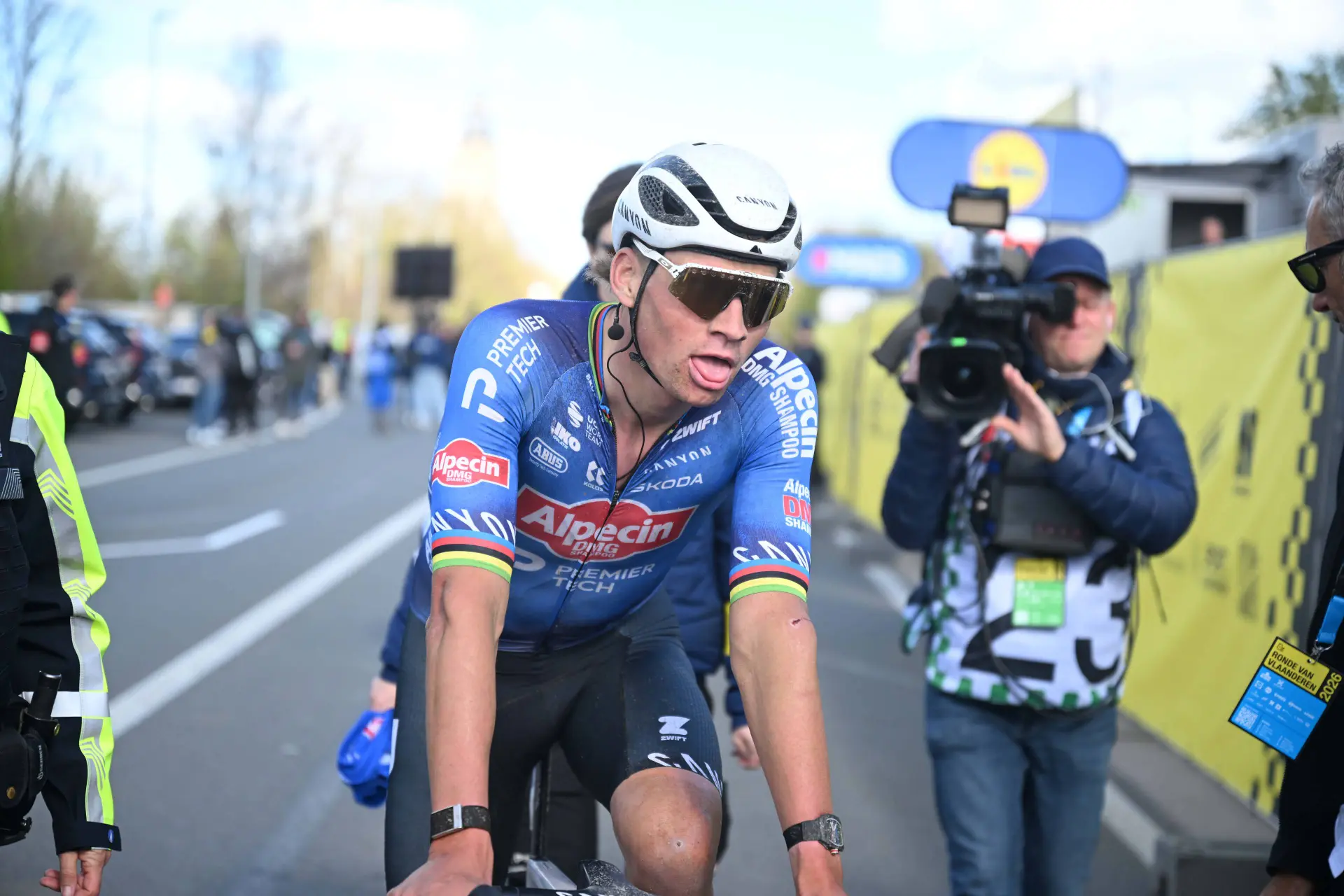
Mathieu van der Poel won stage 5 of the Tour de Luxembourg with a 175-kilometer long attack
Pogacar and Froome's solo wins overshadowed
The comparison gains even more weight when set against some of the most famous solo attacks in recent cycling. Not even Tadej Pogacar, a regular instigator of long-range moves, has reached a similar distance in the listed records.
The Slovenian rode 81.1 kilometres alone at Strade Bianche 2024, while in the 2026 edition he reached 79.2 kilometres. Those are outstanding figures in their own right, yet they sit far from Van der Poel’s 175 kilometres in Luxembourg.
Something similar applies to Chris Froome and his celebrated attack to Bardonecchia at the 2018 Giro d’Italia. The Briton rode 80.2 kilometres solo after attacking the Colle delle Finestre, which decided the overall classification that year - an era-defining attack. Van der Poel needed only a few more kilometres to double that reference.
The roll call of major efforts continues with Marco Frigo, who reached 78 kilometres, and Thymen Arensman, with 76, both at the 2025 Tour of the Alps. Pogacar appears again with 75 kilometres at that year’s European Championships, while Damiano Caruso logged 71.1 at the 2021 Vuelta and Rémi Cavagna hit 70 kilometres at the 2019 Tour of Guangxi.
All those moves live in the sport’s recent memory for their length and the race context. None, however, matches the scale of Van der Poel’s attack now.
Read also
175 kilometres without a turn or a wheel to follow
Beyond the stat, the difficulty can also be measured by the conditions under which Van der Poel had to cover the distance. The Dutchman faced the 176 kilometres completely alone, with no rider to share turns, regulate the pace, or offer partial shelter from the wind.
Sustaining such an effort for an entire stage forces you to manage every moment of the race. Fueling, hydration, focus, and the ability to hold a steady speed become even more important when there is no break companion to take on part of the workload.
The mental side changes entirely as well. Every kilometre passes with the peloton as a constant reference behind and with the need to keep pedalling even as the gap fluctuates. In a collective break there is always the option to share responsibility; Van der Poel had to shoulder it alone for almost the whole stage.
That is why the 176 kilometres are not just an eye-catching number in a historical table. They capture a day when Van der Poel pushed a solo move into statistical territory unseen in the last ten WorldTour and Pro seasons. His raid in Luxembourg leaves behind marks that stood as references for years and sets the bar at a distance that, for now at least, looks extraordinary.

Jorge BorregueroWriter
Jorge Borreguero is a journalist with a degree from the Complutense University of Madrid and has been a writer for Cyclinguptodate and Ciclismoaldia since early 2023. In this role, he has played a key part in the evolution of the website, particularly as a specialist covering Movistar Team. He regularly writes race reports, analytical pieces, and in-depth features about the team, and has conducted exclusive interviews and attended multiple team presentations, providing readers with firsthand insights into one of the leading professional cycling squads.
Throughout his career, Jorge has maintained a strong focus on sports journalism, gaining experience across a variety of disciplines, including basketball and football. However, his current work is almost entirely dedicated to cycling, contributing extensively to Ciclismoaldia and its sister website Cyclinguptodate. For these platforms, he combines thorough research with detailed reporting to deliver high-quality content, ranging from race previews and results to expert analysis of teams and riders.
Jorge’s reporting is marked by accuracy, depth, and a commitment to providing readers with reliable and authoritative information. His direct engagement with teams, athletes, and events ensures that his coverage reflects firsthand knowledge and professional insight. Through his work, he has established himself as a trusted voice in professional cycling journalism, bridging the gap between the sport and its global audience while maintaining rigorous editorial standards.
claps 4visitors 4
Just in
Popular news
Latest comments
- Some say the peloton let him win. While it is true that they weren't too bothered, it was still monumental. If't were easy, many'd have done't.
 Rafionain-Glas21-09-2026
 - it isn't about "not getting along". I would say the same about people in the conflict in the Middle East. you don't deserve a place at the table if you look at someone and judge them on their gender, race, religion, etc. and sorry if my words were a bit off-putting. I don't condone violence or actual erasure of anyone. I just mean removal from a serious discussion.mij21-09-2026
- because sometime a person feels the need to say something. if you want to got to historical context, how many times in the history of mankind did someone sit around complicit and should have said something. and yes, if you look at a person and on the basis of their skin color, looks, or other physical only appearances and make a judgement that they are no talent, only are at their position due to their looks, or assume the worst because of the color of their skin or religion - they you should be dismissed from any discussion. I mean who does that? how is there even a discussion that someone shouldn't judged on how they look alone? and yes I do this for 3 women in my life who have been judged on how they look. and its not because they look bad. so I'll carry this on because as a Dad and husband, I'll defend them and others in their position all I wish to.mij21-09-2026
- GOAT of road cycling. GOAT of overall cycling would be someone a bit more versatile.mobk21-09-2026
- Sagan was long part of the discussion as one of greats, what with three RR world championships in a row. Fabian Cancellara had the monument wins to go with the TTs, while Tony Martin was simply amazing in his own way. Ganna, between his wins and seconds, is the one who suffers from living in the wrong era. Evenepoel has plenty of time to win a 5th, 6th, and 7th time. He's won the European and the Olympics TTs, he's won at the grand tours, he's just an incredible time trials. In my mind, his career may not be done (may not even be at a half way point!), but quite clearly, he's the greatest time trialist we've seen. Time to attack the hour record, sir - both on a bike Merckx's and on a modern bike. Just because.RidesHills21-09-2026
- One of a long line of amazing Slovenian riders. My family is from right across the border to his hometown of Kranj, via the backroads to Eisenkappel, and I suspect he may end up biking those (amazing) roads in his retirement. Enjoy!!RidesHills21-09-2026
- I think it is pretty obvious that he is in the discussion, and with 4 in a row likely is. I don't know who would be considered better.mij21-09-2026
- Pogi, the best of everything else... The G.O.A.T. of over all cycling!!!PogiSloFans21-09-2026
- How is it that these two journalists don't make any mention of the Swede who also had a fantastic ride and most likely would have bumped Seixas off tge podium if he hadn't hit the deck....I guess they're just too start struck to be a bit more objective.Zone0Rider21-09-2026
- Hey Jumpin Johnny, do you really know who Mou is? Oh please, be so good and tell me.PogiSloFans21-09-2026
Loading
1 Comments